I was listening to the latest episode of This American Life yesterday, and at the end of the podcast, Ira Glass mentioned that this week’s episode will be themed “this week”–in other words, things that all happened in just the last seven days.
Well, things haven’t been too eventful out here in Georgia, but I liked the idea for the theme, so I decided to write up something as if it would appear on the show. Here it is:
Early Tuesday morning, before the sun rose, I woke up from a dream that I was in a faraway place somewhere on this planet. Then I opened my eyes and realized that I live in the Caucasus Mountains.
I’m an American teaching English in the Republic of Georgia, in a small village half an hour south of Kutaisi. I live in a farmhouse with a local family. The mother teaches math at the village school, her son teaches computer science and makes wine for a company based out of Tbilisi. My host mother’s sister in law also lives with us, and this week, she cooked the most delicious borscht I’ve eaten in my life. She told me she’d teach me how to make it, and I’m ecstatic.
We keep sheep, cows, chickens, pigs, a turkey, and grow about half of the food we eat. Last week, five of the chickens were eaten by a wolf, including a mother hen and three of her chicks. The last surviving chick has been struggling, so every day after school I take her out of the little cage where we’ve beek keeping her and feed her from my hand. She isn’t as afraid as she used to be, and seems to be getting stronger.
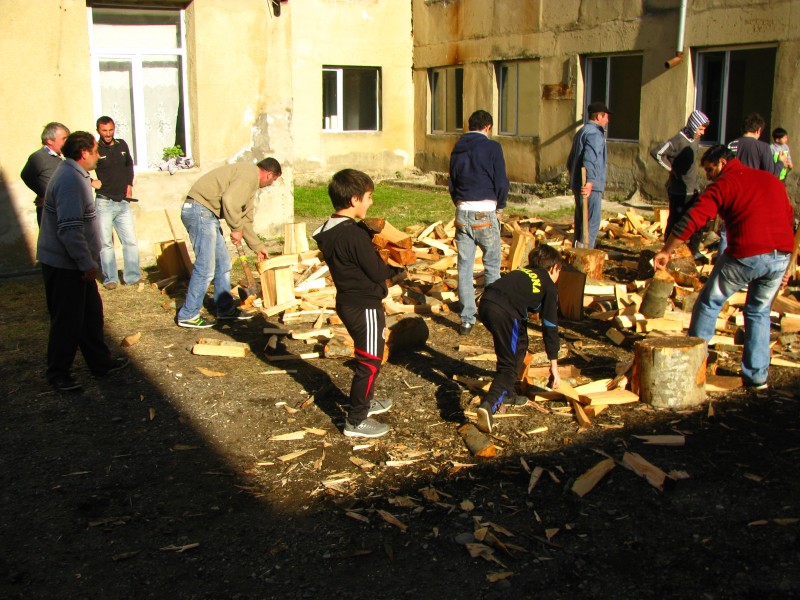
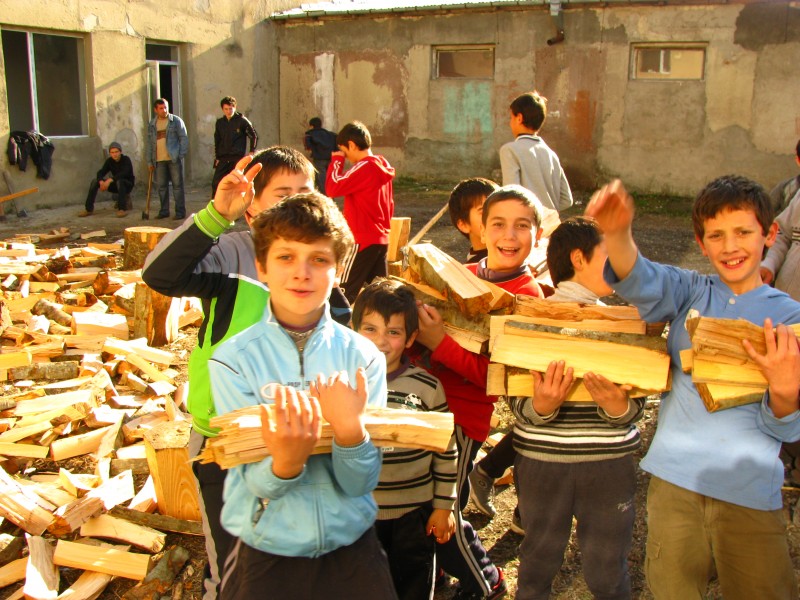
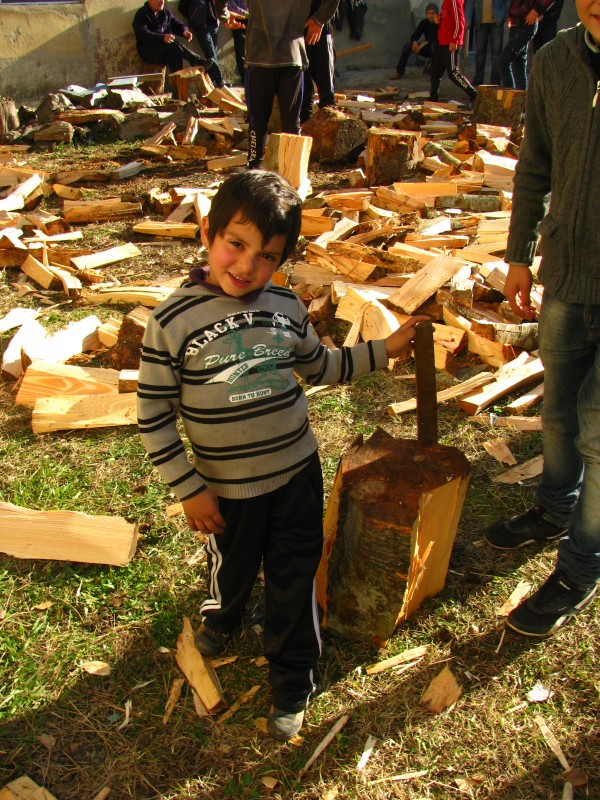
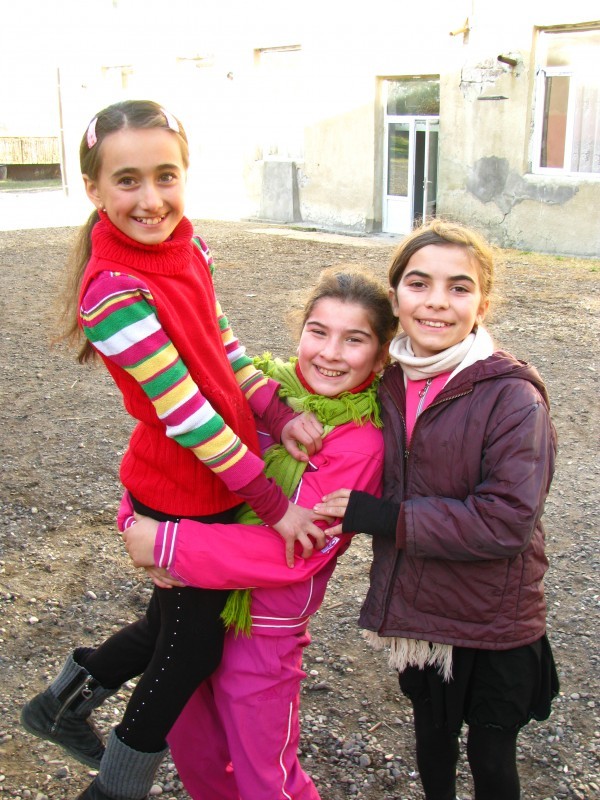
I teach grades I through VI at the village school, which amounts to about eighty kids. On Tuesday, we chopped wood for the winter. Each classroom has a small woodburning stove, and often smells like campfire smoke. It’s very warm, though–the teachers make sure of that, since cold leads to illness, and we can’t have that. The kids love learning, and I love teaching them. Every day after class, I say “goodbye,” and they run up screaming and laughing to give me high fives. I feel like a rockstar whenever I’m at school with them.
On Sunday, I went up to Kutaisi to use the internet. I use the internet maybe three times a week, sometimes four. The nearest place with reliable wifi is the McDonalds, and it takes half an hour and 1.5 lari to get there. On the way back, I chatted in the back of the marshrutka with some of the upper grade kids from my village. We sang songs by Michael Jackson, Justin Beiber, and Psy. Gangnam Style is very popular out here, and the kids think it’s hilarious when I do the dance for them at the village school.
It’s raining right now, which means that the power will probably go out soon. We have power outages almost every day, but they aren’t usually longer than one or two hours. Our water comes from a well, and our heat comes from the fireplace, where we also burn our garbage. When the rain lets up, I’ll help my host-brother cut down a few trees in the back and chop the wood.
Georgia is going through some difficult times politically right now, but we only hear about it through the TV. The country had its first peaceful democratic transition of power in October, and the new Prime Minister has been on a political witch hunt ever since. Some in the Western media find this disturbing, but my host-brother doesn’t think that Georgia has become less democratic because of it. We had a long conversation about politics on Monday night, which eventually turned into a discussion about the Israeli-Palestinian conflict, since the recent UN vote has also been in the news. He told me he’s pro-Palestinian because Israel’s occupation of Gaza and the West Bank sounds a lot like Russia’s occupation of Abkhazia and South Ossetia.
An expat friend of mine visited Abkhazia recently and posted the pictures on his blog on Tuesday. He called it an overpriced garbage dump, and from the pictures, you can definitely see why. Piles of trash in the courtyard of the biggest Orthodox church in Sokhumi, a derelict half-sunk ship rusting in the harbor, vines crawling up Soviet-era power lines that look about ready to fall over. And yet with Russia trying to keep Georgia from joining NATO, it looks like the status quo will remain in place for years to come.
Here in my village, though, that all seems far away. So do the economic problems back home, though they’re one of the reasons why I came out to Georgia in the firstplace. On Tuesday, I met up with a British friend of mine at McDonalds and we talked a bit about what we plan to do after we get home. He’s got a job lined up for him at the school where his mother works. I asked him if things are still tough in the UK, and he nodded. We didn’t have to say anything more than that to understand each other.
I don’t have a job lined up, but I’m actually not too worried. I’m a writer with a few science fiction stories self-published online, and on Tuesday I realized that I’ve earned as much money in the first four days of this month as I earned in the entire month of March earlier this year. It’s not enough to make a living yet–at least, not by US standards–but it’s growing.
On Sunday, I published another novelette, and on Wednesday, I went back to work on a fantasy novel that I started in October. The power hasn’t gone out yet, so I think I’ll get back to writing. It’s 3:32 PM and I have the rest of the day to myself, with maybe an hour to help my host brother cut down some trees. Life is good, especially out here in the Caucasus.
At this point, I should probably post some pictures:
In other news, I decided to drop my other projects and go back to writing The Sword Keeper. I think part of the problem I had before was that I was trying to go too fast, writing-wise and story-wise. This is my first time writing a fantasy novel, and I can already tell that it’s going to be a lot longer than I’d thought it would be.
Also, I took the time to draw up a map of the fantasy world where it takes place, and oh my gosh that changed everything. Maps are awesome. When I have access to a decent scanner, I’ll have to put it up.
That’s all. See you around!