Here’s my new pricing strategy

A few weeks ago, I had an impression that I needed to revisit my overall pricing strategy, not just for ebooks but for audiobooks too. So I sent out a few feelers, trying to see how other indie authors are pricing their books, and also ran a reader survey (thank you to everyone who participated in that, by the way!)

After all of that, I’ve put together a new pricing strategy that I will probably keep over the next few years, inflation notwithstanding. It’s not that much different from what I was doing before, but it is worth sharing with you, especially if you’re on a tight budget and you want to know the best way to pick up my books. So let’s go through each format, and I’ll share my plans.

Paperbacks

Until now, I’ve basically just been pricing all my paperbacks at a flat $14.99 USD, with equivalent price points in each of the major currencies. For shorter books, this meant that I took a hefty profit. For longer books, a hefty loss.

Moving forward, as I move to distribute all of my titles through Ingram via Draft2Digital, I am going to price my paperback titles such that I take at least a $2 profit through wide distribution. For most titles, this means they will fall somewhere in the $12.99 to $15.99 range. Some of the larger books may go as high as $18.99. This does not include shipping costs.

As always, if you purchase a paperback on my store, I will sign and personalize them for free if that is what you want me to do. Not all of them are up yet, but I hope to get them all up there over the next few weeks.

Audiobooks

Until now, I’ve been pricing my audiobooks on the lower end of the price range that human-narrated audiobooks can command, which means that most of them were either $8.99 or $16.99. That was just the list price, though, and I frequently ran month-long sales where they were all discounted to $2.99. And of course, if the ebook was already free, I also made the audiobook free.

But this was before AI-narrated audiobooks began to come out on the major platforms in large numbers. Now, it looks like one of the biggest trends in the book world is the explosion of AI-narrated audiobooks. I forget which podcast I heard it on, but some industry experts are predicting that within 10 months, most of the audiobook market will consist of AI-narrated audiobooks.

Obviously, it costs much less to produce an AI-narrated audiobook vs. a human narrated audiobook. In fact, without AI, none of my titles would be available in audiobook format, since they are all AI-narrated. And after asking around some of the author communities I follow, it appears that most authors are pricing their AI-narrated audiobooks closer to their ebooks, rather than their human-narrated audiobooks.

What was more surprising to me was to learn that of the readers who took my reader survey, those who listen to audiobooks felt fairly strongly that an AI-narrated audiobook shouldn’t cost more than the ebook. So it’s not just the authors who are driving this trend, but the readers as well.

With that in mind, and the data I gathered on ebook pricing points, I have decided to make the list price of all of my digital books, whether ebooks or AI-narrated audiobooks, priced at $4.99 moving forward. That’s just the list price, though: occasionally, I will run a $2.99 sale, where either all my audiobooks or all of my ebooks are discounted to the $2.99 price. And for certain titles, like my Sons of the Starfarers books, I plan to keep them on a $2.99 sale permanently, since it’s a nine book series and that’s what they were priced at before. Also, if the ebook is free, so is the audiobook.

And as always, if you buy an audiobook from my online store, you automatically get the ebook free as well.

Ebooks

Before, I used to price my ebooks at either $2.99, $3.99, or $4.99, depending on the book. In general, first-in-series books were permanently at $2.99, while the later books were all at $4.99.

Moving forward, however, I plan to keep all of my ebooks (except for the Sons of the Starfarers books) priced at $4.99, regardless of where they fall in the series, though I will occasionally run $2.99 sales across the board.

(The exception to all of this is box sets, which I plan to keep at $9.99. At this time, I only do box sets for the ebooks, and I don’t want to price those so low that they undercut my regular titles. I may discount them during a $2.99 sale, but I haven’t yet decided on how much.)

My goal with this is to make it so that price isn’t a factor in deciding which book to buy next. If they’re all the same price, then it shouldn’t make much of a difference—and if $4.99 is too much for your budget, then you can just wait until I run the next $2.99 sale, which should happen approximately every third month or so.

As always, you can get $1 off of the ebook with the coupon code “buy direct” when you purchase it from my store. This only applies to $4.99 books, however—if the book is currently on sale for $2.99, the coupon does not apply.

$2.99 sale November-December 2024

With all of that said, I am currently running a $2.99 sale on all of my ebooks and audiobooks, from now to the end of 2024. If you’ve wanted to read my books in ebook or audiobook format, but have ever balked at the price, now is a great time to pick them up! I have somewhere north of 20 novels out right now, and in the coming months, I plan to publish a lot more (which is another reason to run $2.99 sales, so that my readers don’t have to spend upwards of $100 to read all of my books).
It’s November already?

It’s November already? Wow, that went fast. October was so mild, it felt almost like summer. Then, about a week ago, a cold front blew in and it’s been feeling very much like autumn ever since.

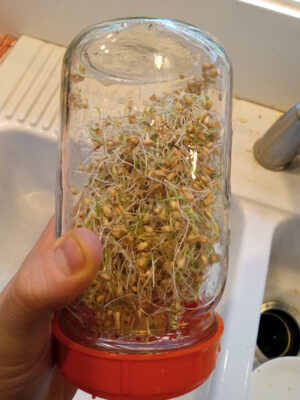
I figure I should share more pictures in these updates, so here is one of the food storage wheat I’ve been sprouting. I just started doing this, and the results from the previous attempt were quite delicious. The kids loved them! Since they’re super healthy, I figured we might as well make it a regular thing. They go great on salad, with a little bit of hummus on the side.

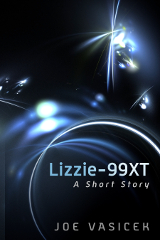
I’m getting ready to start a new novel WIP. This one is for my friend Ben, so I ran three book blurbs by him and had him pick his favorite. That’s what I do these days whenever I need to start a new project: I keep a document with pre-written book blurbs for the books I want to write, and I have a friend pick from them. That’s also how I choose who to dedicate the book to. Anyway, Ben chose the blurb for the novelization of my old short story, “Lizzie-99XT”:

To save the people she loves, she must become the machine.

The first wave of the alien invasion was just a few scouts—and they nearly conquered us. Now, a proper expeditionary force is on the way, forcing humanity to scramble their defenses fast. But the best defense is a good offense, and the XT starfighter program is the culmination of every space and weapons program since the war began.

Eliza never thought she would become a soldier, much less the human half of an AI/human hybrid starfighter. But when the recruiters seek her out for her rare genetic attributes that make her ideal for the program, she goes all in, dedicating her life—and her humanity—to saving the people she loves from the looming alien menace.

And thus, from the merger of human and AI, Lizzie-99XT is born. A superweapon capable of fighting at near-light speeds, the moon his her playground, the planets her backyard. But her power comes at a steep price. Whenever Eliza decouples from the machine, she feels as if she’s lost another piece of her humanity. And with each new battle, the world that she’s fighting for slips further into the past.

The XT starfighter squadron is the only thing standing between Earth and annihilation. But as the war drags on and humanity takes the fight to the enemy’s own stars, Eliza begins to wonder if death is truly the ultimate sacrifice.

So the plan is to write that one next. I’ve already imported the short story into Sudowrite, and have played around with it enough that I’ve even generated a few chapters. But most of that is stuff that I’ll probably end up throwing out, since I really need to write a thorough outline first. I have a pretty good idea of what the book will look like, but I need to meet with Ben again first to hash a few things out.

I would have already started the outline this week, but my four year-old came down with a really bad UTI. We though it was the flu at first, so we didn’t catch it until after her fever was spiking to 104 and she was really delirious (kind of surprised the clinic didn’t give her a urine test the first time we went in). But she’s on antibiotics now, and they appear to be working. Thank God we live in a time of cheap, safe, and effective antibiotics.

The other big thing I’ve been up to is figuring out what I want to do for my pricing strategy. It’s been about a year or two since I first started publishing my books as AI-narrated audiobooks, and until now, I’ve been pricing them similar to human-narrated audiobooks, but running frequent sales (for example, all of my audiobooks are currently on sale for $2.99). But the audiobook market is changing rapidly, and it appears that most other authors are pricing their AI-narrated audiobooks similar to their ebooks.

Perhaps I should do another blog post where I share the results of my survey. This is the third year that I’ve run it: the first time was in 2020, and the second time was in 2022. There have been some interesting changes compared to previous years. Basically, within the $2.99 to $4.99 range, people are more open to higher prices if they know and trust the author, but much fewer readers are willing to go higher, even for authors they know and trust. And for unknown authors, they are much less willing to go for anything higher than $2.99.

In short, it seems like readers are feeling the pinch of inflation, and are finding it much more difficult to justify spending more than $5 for an ebook. So what I plan to do is price all of my ebooks and audiobooks at $4.99, and run the occasional month-long sale where I drop the price of all my ebooks to $2.99, or all my audiobooks, alternating between the two. Hopefully, I’ll be able to get the best of both worlds that way.

Also, it being November and all, there’s an election going on. For the last week or so, I’ve been doing my best to tune it out. We don’t live in a battleground state, and my wife and I already filled out our ballots and dropped them off. On election night, I’ll probably tune into the livestreams, and I’ve been following the news through alternative and conservative media, but I’m really trying not to think about it more than that. I will say, though, that this AI-generated political ad was super, super hilarious:

Hey… if it were a novel, I’d at least check it out from the library. I’d probably DNF it, but I’d at least be willing to give it a try. In the hands of a good writer, it could even be a decent sci-fi novel… emphasis on the “science fiction.” LOL!

Inflation and book pricing

So with inflation being what it is, one of the questions on my mind these last few months has been whether I should raise my book prices to keep up with the increased cost of living. We’re definitely feeling it every time we go to the gas station or the grocery store, and I’m sure that all of you are feeling it too—and those of you overseas are probably feeling it much worse than we are.

Short answer: No, I do not plan to raise my prices in the immediate future. In fact, I’ve actually lowered some of my prices. When I do raise prices, it will be because Amazon and the other retailers have changed their printing costs and/or royalty structure.

Long answer: My books are currently priced according to the following schedule (all prices in USD):

  • Free or 99¢: Short-term sales and permafree books.
  • $2.99: Ebooks only, typically novellas.
  • $4.99: Ebooks only, typically novels and collections.
  • $8.99: Audiobooks only, where the ebook is $2.99.
  • $9.99: Ebook bundles and some paperbacks.
  • $14.99: Paperbacks.
  • $16.99: Audiobooks only, where the ebook is $4.99.

Every year, I conduct a reader survey around October-November. A couple of weeks ago, I got the results back from this year’s survey, and the answers to the pricing questions are largely unchanged. If anything, it seems like readers are more price conscious than they were last year.

And that makes sense, when you consider that books—especially genre fiction books—are a luxury item for most people. When the budget is being squeezed by the increasing price of food and gas, it makes sense that readers would cut back on their book buying habits. After all, paperbacks have very little nutritional value—ebooks and audiobooks even less so—and burning them is a very expensive way to keep warm.

All joking aside, though, I don’t think that now is the time to raise my prices. From a business perspective, the data just doesn’t support it, but also from a human perspective it just seems like a bad thing to do. I like my readers. I don’t want to put the screws to their wallets just because everyone else is, too.

(In fact, the data indicates that I’ve been making a mistake by pricing all the first books in my trilogies at $4.99. One of the questions on my survey was “from which of my series have you read at least one book?” and none of my series received more than a 45% response. This tells me that there isn’t enough series crossover happening, and that I need to treat the first book in every series as a potential entry point into my catalog. So I’ve decided to drop my ebook prices to $2.99 for every first book in a trilogy, even where I haven’t finished the trilogy yet.)

The other side of that, of course, is that my own wallet is getting screwed. Jeff Bezos famously said that “your margin is my opportunity,” and as much as we indies may love Amazon, Amazon is definitely not our friend. But so far, the screwing has not been much of a problem, at least as far as inflation is concerned.

When Amazon essentially created the indie ebook market, they did it on an agency model, where publishers set the prices and receive a percentage from the sale in royalties. For the last decade, that royalty structure has not changed: ebooks priced between $2.99 and $9.99 get a 70% royalty rate, and everything else gets 35%.

Things are a little different on the print side of things, which follows a wholesale model and delivers a physical product. Printing costs are definitely creeping up, though so far it’s only been by a few cents. At $14.99, I’ve got a fair amount of wiggle room, but if per-unit print costs go up by a couple of dollars, I will have to raise my prices.

Same thing with the digital products. If inflation continues to accelerate, or even if it continues at its current pace for a sustained period of time, there is a very good chance that Amazon will change their royalty structure for ebooks, and all of the other platforms will likely follow suit. If/when that happens, it really will put the screws on us indie authors, and you’ll probably see most of us raise our prices as a result.

I don’t know how I’ll respond when that happens, but I’ve decided that until it happens, it will be better to keep my prices where they are. So until the increasing print costs or changes to the ebook royalty structure force me to increase my book prices, I plan to keep them where they are.

Print vs. Ebook vs. Audiobook: Pros and Cons

Print

Pros:

  • A printed book is a hard, physical copy that cannot be altered, edited, deleted, revoked, remotely accessed, or otherwise tampered with by a third party who does not have physical access to the book.
  • The reading experience is totally private. Governments, corporations, and other third parties cannot easily know about what you read or how you read it.
  • Marginalia is easier with a print copy. All you need is a pencil and maybe some tabs or sticky notes.
  • It is easier to flip through a print book than any other book format. Much better for reference.
  • Print books are fantastic for sharing and borrowing. You don’t need any devices, permissions, or anything. Just take it off the shelf and put it into the borrower’s hands.
  • Does not require any sort of power source or electricity to read. Works perfectly fine when the power is down.
  • Print books can be quite collectible, and some are worth quite a lot, depending on first editions, cover art, etc.
  • You can get your copy signed by the author(s), which is always fun. It also makes the book more collectible.
  • When you finish reading the book, you have a totem or artifact to commemorate the reading experience.
  • The books that you choose to put on a public shelf can be a way of expressing yourself: your tastes, opinions, and any fandoms or communities to which you belong.
  • Used copies are typically very cheap, even for bestsellers and signed copies, and with enough patience and resourcefulness they are not too difficult to find.

Cons:

  • Because they exist in the physical world, print books take up space, and can be quite heavy and bulky.
  • Print books are prone to damage from things like water, mold, food, drink, fire, blood, parasites, etc.
  • Even though you don’t need electricity to read a printed book, you do need some kind of light source.
  • Print books are easy to lose, especially if you loan them out. A portion of the people who borrow your books will invariably lose them or forget to return them.
  • Because of their bulkiness, it is difficult to transport books, especially in large quantities. Even a single book has limited portability, especially if it is a hardback.
  • If you want to borror a printed book from the library, you have to go to the library to get it.
  • Print books are not text-searchable.
  • Print book$ can be quite expen$ive to buy new, e$pecially the hardback edition$.

Ebook

Pros:

  • Ebooks are the most portable format, by far.
  • The file size is tiny, typically just a few megabytes.
  • You can read an ebook on almost any digital device.
  • You can read ebooks in the dark, especially with an ereader that has a backlight. This makes it possible to read in bed when your spouse/partner is asleep.
  • Fonts are adjustable, so if you need large print to read, you can do that with any ebook.
  • It is very easy to borrow an ebook from the library. All you need is a library account and an internet connection.
  • Footnotes can be hyperlinked, so they don’t take up space on the bottom of the page (or worse, interrupt the narration).
  • You can easily save comments, highlights, notes, etc, and share them all with your friends.
  • Marginalia is not permanent with ebooks, nor does it mar or deface the book.
  • It’s easy to look up unfamiliar words using the ereader device’s (or app’s) dictionary.
  • If you’re reading something potentially embarassing, people in your immediate vicinity can’t tell.
  • Ebooks are length agnostic, meaning that the reading experience is the same for a short story as it is for a novel. No having to lug around a bulky chihuahua-killing doorstop of a tome. You can read a massive million-plus word box set just as easily as a pamphlet.
  • Indie books are typically very cheap, and you can fill up your ereader with free books quite easily.
  • With enough patience and a keen eye for good deals, you can even buy traditionally published ebooks at a good price.
  • Ebooks are text-searchable.

Cons:

  • Ebooks require a power source. While most ereader batteries hold a charge for quite a while, you do eventually need to recharge them.
  • While you don’t need an internet connection to read an ebook, you do require internet to download it to your device.
  • Legally speaking, when you purchase an ebook, you’re actually just licensing it and don’t technically own it.
  • Ebooks can be changed remotely by third parties, or even deleted and removed from your device.
  • Privacy is a potential issue with ebooks, as third parties can see what you’re reading, and corporate entities can—and often do—gather data on your reading behavior.
  • PDFs and images are clunky and difficult to read, at least on some devices.
  • Bad formatting is much more of an issue ebooks, and can actually make the book unreadable.
  • It is a lot more difficult to flip through an ebook.
  • Traditionally publi$hed ebook$ are ridiculou$ly expen$ive.
  • Sifting through all of the crappy self-published ebooks to find the few good ones can be quite a challenge.

Audiobook

Pros:

  • Unlike print books and ebooks, which require your eyeballs to read, you can listen to an audiobook while your attention is focused elsewhere.
  • Because listening is a more passive activity than reading, you don’t need to concentrate as much to listen to an audiobook as you do to read a print book or ebook.
  • It’s easier to get through (most) longer or more difficult books in audio than it is in print or ebook format.
  • Borrowing audiobooks from the library is easy: all you need is an account and reliable internet.
  • Audiobooks are as portable as your smartphone, tablet, or other device that you use to listen to them.
  • Audiobooks can fit reading into the interstitial spaces of your day, such as when you are commuting or doing chores. Time that would otherwise be spent in mindless activity can now be used to fit in your reading time, making it possible to read a lot more books.

Cons:

  • Audiobook file sizes are enormous. It’s difficult to fit a sizeable library of audiobooks on a single device.
  • It is almost impossible to browse or “flip through” an audiobook, so they aren’t great for reference and good luck if you ever lose your place.
  • Marginalia is difficult with audiobooks. Most apps allow you to take little audio clips, but it’s still quite clunky.
  • Just like ebooks, audiobooks can be altered or deleted by remote third parties.
  • Just like ebooks, privacy is a potential issue, with third parties gathering and selling data on your reading behavior.
  • Just like ebooks, you don’t technically own your audiobook. What you’ve purchased is the license, not the copy itself.
  • Audiobooks are much more temporally constrained. You can listen on 2x speed and higher, but that isn’t the same as skimming or speed-reading.
  • Because the reading experience is more passive, audiobooks tend to be more forgetable than print/ebooks.
  • A bad narrator or performance can kill an audiobook, much more than a bad presentation kills a print/ebook.
  • Because it requires less mental concentration, the reading experience is not as deep with an audiobook as with an ebook, and you may have difficulty recalling details.
  • Mo$$t audiobook$$ are ridiculou$$ly expen$$ive, even more $$o than traditionally publi$$hed ebook$$.

Did I miss any?

P is for Pricing

One of the most contentious issues among indie writers is how to price our books. With self-publishing, the decision is left up to the author, which can lead to some wacky rationales for pricing. Here are just a few of them:

My book is worth more than a cup of coffee.

This is clearly a rationale that is driven more by emotion than by reason, yet most of us fall into it when we first start out. I know I did. The idea that people would spend more for a cheap hamburger than for a novel that took me months of agony to write was a blow to my ego, one that took me a while to get over. But I’m glad that I did, because this reason is just silly.

Books are so different from hamburgers or ice creams or lattes that comparing them is like comparing apples to oranges–no, like comparing apples to transistor radios. So what if people are willing to spend more for cheap fast food than for your awesome, amazing, life-changing book? That fact is irrelevant, because the two are not analogous. The quicker you can learn to suck it up and disconnect your prices from your ego, the sooner you’ll learn to treat your writing like a career.

I have to price my books low because I’m a new, unknown writer.

This is another rationale you may be tempted to fall into when you’re first starting out. It grows directly out of impostor syndrome–the fear that you’re really just faking it as an author, and that someone is going to call you out on it if you don’t first.

This also comes more from the emotional side than the reasonable side. Believe it or not, there are readers who have never heard of Stephen King, or James Patterson, or J.K. Rowling, or Brandon Sanderson. Tracy Hickman is fond of pointing out that there are whole provinces in China where no one has ever heard his name. Everyone is an unknown to someone, but that doesn’t mean that your fans will love your books any less–or not be willing to pay any more for them.

For most readers, I think price is just one factor of many, and not nearly as crucial a factor as we might think. When I released my first Star Wanderers omnibus, I priced it at $4.99 while the other parts were at $2.99, and priced myself for the fall in revenue as readers abandoned the individual parts for the omnibus. Instead, both the omnibus and the parts sold about equally, even though the omnibus was clearly a better deal. I have no idea why that was, but it told me that not every reader pinches pennies, at least at price points under $5.

If I price my books too low, I will devalue my work.

This rationale grows out of the idea that sometimes, people are more willing to buy something that costs more because the perceived value is higher. Starbucks does this with coffee, and Apple does this with their devices. The idea is that consumers are conditioned to attach a product’s value to its price, or at least to correlate the two.

I used to believe this, but I don’t anymore. Instead, I think this is the kind of thing that authors want to be true, but they want it so badly that they blind themselves to how things actually are. I recently dropped my prices across the board, and I not only found that my sales increased, but that my overall revenue increased as well. In my experience, readers attach value much more to things like blurbs, samples, and cover art than they do to price, and that “devaluing” your work is a great way to hook more readers with a great deal. In fact, I now believe that the best price is the one at which other writers scream at you to stop devaluing your work.

I need to price my book high enough so that I’m earning at least minimum wage.

Books earnings don’t work like wage earnings at all, and confusing the two will cause even more problems than confusing your book with a cup of coffee. Seriously.

Writing isn’t about getting paid for putting in your time, it’s about getting paid for the value that you create. If you create something that the market deems has value, it becomes an income stream that will continue to pay you for years, perhaps even decades. With a wage job, on the other hand, all you get is a paycheck.

The two paradigms are so dissimilar that I don’t even know where to begin in explaining how stupid it is to compare indie writing to a wage job. When you are a self-published writer, you are not an employee–you are the boss. You don’t merely have a job–you own a business. Your earnings don’t come from payroll, they come from revenue. At a certain point, higher prices lead to lower revenue, and sometimes that point puts you below minimum wage. It sounds tough, but that’s just how the market works.

You’re not entitled to a living wage just because you wrote a book. Write more books, write better books, and keep on publishing them until your revenue does exceed minimum wage. Pretty soon, you’ll be shocked to find that you’re still getting paid for work that you did years ago, and still making money even when you take a day, or a week, or a month off. I know that I certainly am.

There are other weird and wacky rationales for book pricing, but those are the biggest ones that come to mind. As for rationales that actually make sense, I can think of only two:

  1. I want to maximize my revenue with my current books.
  2. I want to build a following for my future books.

Once you’ve figured out which one you want to follow, the only rational way to figure out what prices work the best is to experiment with them, even if the experiments make you cringe. You have to be data driven, and not emotionally driven, if you want to find the sweet spot.

For the past few months, I have been experimenting with the prices of my science fiction books, collecting the weekly data from Amazon and watching the trends. Here is what I’ve found:

Perma-free — The best price for attracting new readers, but only if the free book leads directly to another book, such as the next book in the series. This is also the easiest and most effective price point to promote.

$.99 — The best price for building an audience, and the most effective way to create a sales funnel in conjunction with a perma-free book. When I dropped the prices of my Star Wanderers stories to $.99 from $2.99, I saw a marked increase in the percent of readers who went on to buy Part II after buying Part I. I also saw an increase in positive reviews, both on Amazon and Goodreads.

$1.99 — A dead zone. It really is. This price point has all of the drawbacks of $.99 and $2.99, with none of the benefits. When I briefly priced my Star Wanderers books at this price point, sales AND revenue fell below what they were at $.99.

$2.99-$3.99 — The best price points for maximizing revenue, at least in science fiction. At $2.99, you jump from the 35%-40% revenue rate to the much more lucrative 65%-70% rate. And even though $3.99 might seem low, I’ve generally found that I sell enough copies at that price point to more than make up the difference from the increased earnings per sale (but lower sales) at a higher price point.

That said, when the Star Wanderers books were all $2.99, they didn’t sell nearly as well, even with the first book in the series perma-free. And the fall in revenue when I dropped the price to $.99 was not nearly as dramatic as I had expected. Instead of falling to 1/6th of what it had been at $2.99, it fell to more like half, due mostly to increased sales of the omnibuses, which stayed up at $3.99.

$4.99 — I’m not sure what I think of this price point. I priced my Gaia Nova books at $4.95 for years, and never saw many sales come from it. Then again, those books have yet to really take off, so I can’t say with any authority that this price point is really bad. However, I will probably avoid it in the future, except possibly for omnibus works.

$5.99 — Again, I can’t really say that this point is dead, but I can say that my sales were much more sporadic here than they were at $3.99. At best, though, I’d generally earn as much revenue per week at this point as I would at $3.99. At worst, I’d earn nothing.

I can’t say anything about the higher price points because I haven’t experimented with them. As for print books, I don’t sell enough to really be able to say. Again, this is only for science fiction–pricing varies widely from genre to genre, so what works for what I write may not work for what you write. Even within science fiction, I’m sure there are some differences.

At the end of the day, though, I think it’s important to recognize that pricing is an important part of the author-reader relationship. You don’t want your readers to feel like they’re getting screwed–you want them to feel like they’re getting a good deal. For a long time, I think I priced my Star Wanderers books a bit too high, and generated a bit of ill-will among readers for it. Even though I want to earn a living, I hate it when price becomes an obstacle to readers enjoying my books.

As David Gaughran put so astutely in one of his recent posts, value is something that readers attach to a book, whereas price is something that we as self-publishers attach to it. If the price is lower than the value, readers will be satisfied enough to keep coming back for more–and that right there is the key to building a career.

Experimenting with prices

So now that the last Star Wanderers novella is out and I’m hard at work on the next book, I’m thinking very seriously about experimenting with my prices. I haven’t done a lot of price experimentation, especially since writing became my main source of income about six months ago. I just recently landed a job to save up some money, though, so that gives me a little more space to try things out.

Right now, I’ve basically got three pricing tiers for ebooks: novels and omnibuses at $4.95, novellas at $2.99 (especially Star Wanderers), and short stories at $.99. My best sellers by far have been the Star Wanderers novellas. Now that Part VIII is out, though, I’ve noticed that fewer people who start the series are going through and finishing the whole thing. I’ve also got a fair amount of pushback in the reviews, saying that the $2.99 price for the novellas is too high.

The tricky thing is that at any lower price point, my royalties take a huge hit. At $2.99, I get a 70% royalty from Amazon and a 65% royalty from pretty much everywhere else. At anything less, I get a 35% royalty. That means that at $1.99, I have to sell three times as many books to make the same as I would from one $2.99 sale. At $.99, I have to sell six times as much.

But wait, it gets trickier. The general consensus (inasmuch as there is a consensus about any aspect of epublishing) is that $1.99 is a dead price point. In other words, a book priced at $1.99 will sell so many fewer copies than a book priced at $.99 that they earn less revenue. A $2.99 book may also sell less than a $.99 book, but the increased royalty rate makes up for the shortfall.

Up until this point, my pricing strategy has been to maximize revenue, so that I can have more time to write. That worked fairly well: I put out one novel and four novellas in 2013, finished up the Star Wanderers series, and started a number of other projects that will hopefully bear fruit in 2014. But now that Star Wanderers is complete, I think it might be time for a change in strategy.

What I’ve learned in the past month is that readers will drop out of a series early if 1) the series is long, and 2) the individual parts in the series are priced relatively high. A lot of readers either drop out after Part II or pick up the omnibus, but the ratio of sales between Part II + Omnibus I-IV and Part VIII frankly isn’t that great. From Part V to Part VIII, it’s almost 1:1, but a lot of readers are dropping out right at the beginning–a lot more than when there were only four parts.

Part of this may be that the story just isn’t engaging that many people, but another part may be that the price has become something of an obstacle, especially as readers look ahead at all the other books in the series. Length probably also plays a role–my Star Wanderers books are fairly short, leaning more toward the low-end of the novella spectrum. Combined with the fact that many full-length sci-fi novels are now priced at $2.99, that probably only makes readers balk all the more.

I want to see what will happen if I drop the price low enough that it ceases to be an obstacle. Will fewer readers drop out after the first couple of books? Will more of those readers move on to my other books? Exactly how much of a hit will my revenue take?

For all of these reasons, I’m going to drop the price of my individual Star Wanderers novellas to $.99 for a month to see what happens. To keep the omnibus price competitive, I’ll drop it to $3.79 and release the second omnibus at $3.79 as well. I will raise the list price of the print editions, though (mostly to shoot for extended bookstore distribution), and probably raise the price of my novels from $4.95 to $5.99.

I have no idea how this is going to turn out, which makes me kind of nervous. Since I want to move on to other projects, though, including a spinoff series that I hope to launch later this year, I think it’s more important to encourage readers to read through Star Wanderers as a whole without putting any potential obstacles in their way.

So yeah, that’s the plan. We’ll see how it goes. I’m open to any feedback or ideas, so if you have any thoughts to share either as a reader or as a writer, please don’t hesitate.

Things I’ve learned from STAR WANDERERS

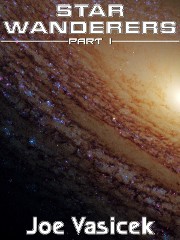
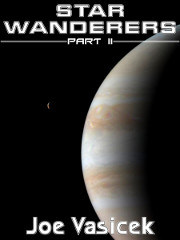
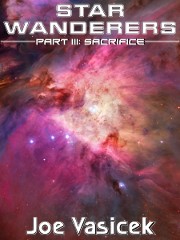
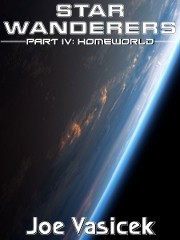
Star Wanderers I (thumb)Star Wanderers II (thumb)Star Wanderers III (thumb)Star Wanderers IV (thumb)SW-V Dreamweaver (thumb)SW-VI (thumb)SW-VII Reproach (thumb)

When I published the first couple installments of Star Wanderers, it represented both an experiment with a new publishing format and a departure from the more long-form styles that I was used to.  Now, a little over a year later, I can say it’s been a success.  The series isn’t finished, and I’m still learning as I go, but here are some of the big lessons that I’ve picked up:

Novellas are surprisingly well-suited to series. They read fairly quickly, contain enough focus to sustain an episode of a larger story, and yet at the same time contain enough space to develop a wider arc.  Plus, they are a lot quicker to write than novels and generally don’t require as much editing, since it’s easier to get the story right on the first pass.  This means that you can put out novellas faster and more regularly than long-form novels, maintaining good momentum for the series as a whole.

It’s hard to write anything shorter than a novella without leaving readers unsatisfied.  By far the biggest criticism I’ve received for Outworlder (which is really more of a novelette than a novella) is that the story feels too short.  If the novella (17,500 to 40,000 words, or 80 to 150 pages) has all the benefits of the novel and the short story, then it seems that the novelette (7,500 to 17,500 words, or 30 to 80 pages) has all of the drawbacks.  Then again, it could just be that I have yet to master the form.

The satisfying element in a series is at least as important as the returnable element.  Every successful episodic story has some sort of returnable element–something about the story that makes the audience ravenous for more.  Often, this takes the form of a cliffhanger, leaving something unresolved.  However, it’s not enough just to string readers along, holding back whatever your story has promised them.  In every installment, you have to deliver.

It’s a delicate balance, to be sure, but the advantage of erring on the side of satisfaction is that the satisfaction can actually become a major hook in itself.  If readers know that they’re going to be satisfied whenever they pick up one of your books, you don’t have to ratchet up the tension to eleven in order to keep them coming back.  Several Star Wanderers reviews mention that it’s more relaxing and not as fast paced as other space opera, but sales of parts III through VI are almost 1:1.

Readers love to revisit a good story from another character’s point of view.  Some of the most glowing reviews I’ve received for this series are for Dreamweaver, which is basically a parallel novella to Outworlder but from Noemi’s point of view.  In Outworlder’s Amazon also-boughts, it sometimes even appears ahead of Homeworld, which actually comes before it in the series order.  This tells me that readers love to revisit a story, or to hear the same story again but from a different point of view.  Head-hopping from episode to episode can be a great way to add variety and depth.

Plenty of readers are willing to pay $2.99 per book for a series they enjoy.  When I published the omnibus for Star Wanderers I-IV, I wondered if sales of the individual novellas would taper off since I priced the omnibus much lower than their sum.  To my surprise, sales for both the omnibus and the individual installments have actually remained about even.  Since the omnibus clearly shows up on Amazon’s recommendations, this tells me that $2.99 is not too high of a price, even for a novella.

Perma-free works; however, free and $.99 attract some bad apples.  Do not underestimate the power of free, especially perma-free for the first book in a series.  I credit that strategy for at least 90% of the Star Wanderers sales, since the series itself has boosted my total sales numbers by more than an order of magnitude.  However, there are people out there who never fail to find something to complain about.  These are usually the same people who don’t like to pay for anything, and when they realize that the rest of my series is not free, they tend to leave unhelpful and/or incomprehensible reviews.

I priced Fidelity at $.99 to try to give readers more of a hook from part I to part II, but the sales ratio between part II (Fidelity) and part III is about 2.5:1–in other words, pretty bad.  Judging from some of the reviews, it seems that a fair number of the people who are dropping out are the bad apples.  I haven’t decided whether to raise the price, but if things keep going the way they have been, I probably will.

Series don’t usually take off until the third or fourth installment.  Do you know how many sales Outworlder had in the month when I first published it?  About 10–and that was actually a surprise.  When I published Fidelity, I had even fewer, and Sacrifice hardly sold anything until Outworlder went perma-free.  When it did, sales of the other two novellas picked up, but it wasn’t until after I’d published Dreamweaver that the sales of Fidelity started hitting triple digits.  The lesson to me is clear: it takes time for a series to pick up steam, so don’t be like Fox.  Give it a chance to grow.

Nothing sells a book like writing and publishing more books.  This is probably the main driving factor behind the last point.  I’ve done almost no promotion for Star Wanderers, other than putting out new books on a fairly consistent basis.  Amazon’s algorithms have probably done their part (sales on other outlets haven’t been growing nearly as much), but at the end of the day, there is no substitute to writing more and better books.  Any sort of promotional or marketing activity that takes away from my writing time is just not worth it–not when I’ve got stories to tell.

Right now, I’m getting ready to start a new spin-off series, which hopefully will be even more successful.  I’ll to try out a few new things (mostly along the lines of better covers and meatier novellas), but mostly, I’m going to try to replicate the success I’ve achieved with Star Wanderers by keeping these lessons in mind.  I have no idea how this new series is going to go, but I figure I know enough about the publishing side now that I can focus my attention on writing an awesome story, which is the most important thing after all.

Thoughts on serials and ebook pricing

I’m going to do something potentially dangerous and discuss pricing strategies in a rather candid way.  I may risk turning off some of my potential readers, especially the ones who don’t like shorter works, but I want to be as open and transparent as I can, since I figure it’s only fair, especially to someone who’s just getting started with my books.

First of all, let me just say that if I could, I would make all my books free and write for love instead of money.  The trouble, though, is that I have to eat, and at some point in the (hopefully) not too distant future I’m going to have to feed a wife and children as well.  If I made all my books free right now, I would have to spend all my time and energy doing something other than writing, and as a result there would be far fewer books for you to read.

In the last year, I’ve discovered that the best way to make money self-publishing is to write in series, preferably at a short enough length that you can release a new installment every other month.  A lot of other writers are discovering this, which is why there is such an explosion of series and serials.

I know a lot of readers don’t like this.  And when a writer takes a perfectly good novel and splits it arbitrarily into parts, each one without a solid arc or story structure to hold it together, I get a little bit ticked as well.  But the reality is that if you can tell a story in a series of short, self-contained novellas rather than a single novel, it will probably meet with better commercial success.

The price points for novellas are kind of tricky, though.  For anything priced below $2.99, Amazon takes 65%, whereas from $2.99 to $9.99, the self-publisher takes 70%.  To give that some perspective, you would have to sell 10x the number of copies at $.99 to earn as much on one sale of a book at $4.99, and 6x for a book at $2.99.

The trouble, of course, is that for a series where each installment is priced at $2.99, the readers may end up paying a lot more, depending on the lengths of the story arcs and the size of each installment.  Novellas are kind of in a gray area, where $.99 seems kind of cheap for that much story, but three or four installments at $2.99 really add up–especially with so many other ebooks priced at $5 or below.

Now, I’d like to believe that most readers judge the value of a story by its quality and not by its word count, or by how much they have to pay per word.  There are books like City of the Saints that I don’t mind buying in $2.99 increments at all.  At the same time, though, I think there’s something to be said about keeping prices fair.

This is all on my mind right now because I’m getting ready to release the first Star Wanderers omnibus and expand that series considerably over the next year.  It’s the series that sells best out of any of my books, and the one with the most potential to make it so that I can go full time.  Plus, I really love writing in this universe, and have a lot more stories in it to tell.

Right now, this is the pricing structure I’m following:

  1. Outworlder — free (15,000 words)
  2. Fidelity — $.99 (17,000 words)
  3. Sacrifice — $2.99 (19,000 words)
  4. Homeworld — $2.99 (20,000 words)
  5. Dreamweaver — $2.99 (19,000 words)

Parts I through IV make a complete story arc, though of course each individual novella is a self-contained story on its own.  With Part I at free and Part II at $.99, I figure readers have a good way to figure out if these are the kinds of stories that they’ll want to read.  But if I keep pricing the stories at $2.99, at some point this series is going to get really expensive.

So here’s what I plan to do to alleviate that:

1) Make new releases free to newsletter subscribers.

For every Star Wanderers story up to this point, I’ve made it free for the first two weeks on Smashwords and given that code out through my email newsletter.  I did that originally as an incentive to get people to sign up for my newsletter, but I think it’s a good series strategy as well.  This way, if someone discovers Star Wanderers now, they can buy all the previous installments at the higher $2.99 price point and look forward to receiving any future installments for free.

Some may question the business sense of giving away free books to readers who are willing to buy them, but the way I see it, the fans are the ones who are selling these books, not me.  I’m willing to put a free book in the hands of someone who already loves the series, and is more likely to write a glowing review or to share it with a friend.  And since sales of this series continue to grow, that strategy would seem to be paying off (or at the very least, it’s not biting me in the ass).

2) Try to put more story into each individual installment.

If $2.99 seems a lot for a short novella, then maybe I need to expand on them, with things like extra subplots and viewpoint characters.  Of course I don’t want the stories to feel like they’re padded, but if I can enrich the story in a way that really adds to it, then that’s certainly something that I should do.

For all of the Star Wanderers series so far, each novella is told from the point of view of just one character.  This sort of focus can be good, because it really gets me into the head of that character.  However, sometimes it’s also good to play things off of another character’s story, both to act as a foil and to provide contrast.

That’s what I’m doing with Reproach (Part VII) right now.  It’s not just from Mariya’s point of view, but Noemi’s as well, and that adds a lot to the tension as you see their competing motives and the way their views of the world really clash.  It’s delicious.  Benefactor (Part VI) is just from Jakob’s viewpoint, just because I wanted the story to really focus on his character, but most of the other stories kicking around in my head have room for at least another viewpoint character without taking away from the spirit of the series itself.

3) Price the omnibus editions less than the sum of their parts.

For someone who is just getting started with Star Wanderers, $2.99 might seem like a lot to pay to get caught up.  That’s only going to get more daunting as the series gets longer.  For that reason, I’m inclined to price the omnibus editions much lower–at least $4.95, which is the price of one of my novels.  At 70,000 words or so for Parts I-IV, that seems only fair.

I am a bit worried that sales of the individual novellas will drop off once I release the omnibus, but I figure if I’m constantly releasing new ones, those should cover the slack.  Since Dreamweaver (Part V) is already out, and Benefactor (Part VI) will be out in another month or so, new readers who come in through the omnibus will have more than enough to keep them coming back.

The other benefit of doing it this way is that it reduces the chance that readers will drop out midway through the story arc.  It seems that a few of them are doing that, or at least taking a while to get from Part II to Part III to Part IV, etc.  By having them all in one omnibus and encouraging readers to buy that instead of the individual parts, hopefully they’ll have more of a chance to get hooked, making it all the more likely that they’ll keep coming back.

So that’s my plan, at least for now.  When The Jeremiah Chronicles comes out next week, I’ll price it on parity with my other novels, even though that’s somewhat less than all the individual parts.  I’ll make all new Star Wanderers novellas free for my newsletter subscribers, and do what I can to enrich them with extra viewpoints and subplots (without just padding them, of course).  This way, I hope my readers won’t feel like I’m ripping them off, and I’ll still have a good shot of making a decent living at this.

With the way things have been going, I’m actually really excited.  The slow build approach is working, and if it keeps up then I think I may be making enough to go full-time by this time next year.  I’ll be sure to keep you posted as things come along.

In the meantime, if you have any thoughts or comments, please don’t hesitate to share.  I’m still thinking this issue through, and there’s a lot I have left to learn.  In fact, I feel like I’m only just starting to figure it out, so any other perspectives on this topic would be much appreciated!

Arrrgh Smashwords!

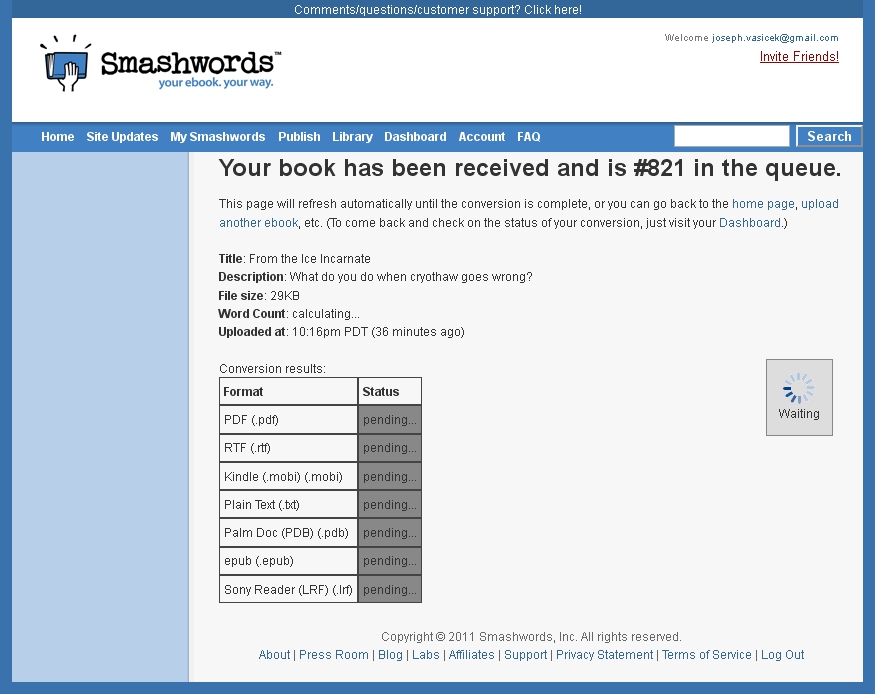
So I go to upload “From the Ice Incarnate” to Smashwords as a free give away, and this is what I see. Arrgh!  Why do I have to wait??  Why can’t my book be up nowww…?

Okay, seriously, it’s not that big of a deal.  I’ll just have to wait until tomorrow to start spamming everyone sharing it.  And unlike last week, I’m going to be more open about the fact that I’m giving this story away for free.

I decided last week to put up “Decision LZ1527” and “Memoirs of a Snowflake” for free on Smashwords, mostly to see if I could get Amazon to price match.  So far it hasn’t worked, but it has given me some very interesting insight into the minds of ebook buyers.

The results aren’t scientific, of course, but so far it’s confirmed what I’ve heard elsewhere: that there’s a HUGE difference between people willing to pay more than $1 for an ebook, and people who will grab anything because it’s free.  So far, 62 people have downloaded “Decision LZ1527,” 33 people have downloaded “Memoirs of a Snowflake,” but only 2 people this week downloaded the free sample of Genesis Earth–and no one has bought a copy.

Of course, this is only after one week.  Perhaps the people who downloaded the free stories are just taking a long time to read them.  Perhaps they just can’t afford to buy many ebooks right now, but because they read and enjoyed my stories, they’ll check it out when they have more time/money.  Maybe some of them will run across my ebooks years later and remember “oh hey, that’s the guy with that crazy sci fi dating story” and check me out then.  Or maybe they’re all cheapskates who only read stuff they can get for free.  I don’t know.

But I don’t think it’s the last one.  A friend from my apartment complex walked up to me today and told me he’d read and enjoyed my story.  It was pretty cool.  That’s what I’m really after at this point: exposure and readers.  So I think it’s a good idea to give at least some stuff away for free, even if it doesn’t push people to buy your other books in the short term.

Speaking of which, I’ve tried out something else new: raising the price of Genesis Earth from $2.99 to $3.85.  Why in the heck would I do that?  Mostly because of value perception; I want people to know that I have confidence that my book is worth at least #3.85, that I believe they’ll feel it was worth what they paid for.  The kind of books I want to write are the kind that people will want to read twice, and I want to see if changing the price to reflect that will build the kind of readership that is looking for that sort of thing.

I might be totally wrong, of course, but hey it’s worth a shot.  I’ve sold two copies so far this month, so at least it hasn’t totally killed sales.  I’ll probably keep it at that price for at least a couple of weeks, just to see what happens.

But I can tell you one thing I don’t think I’ll ever do: price a novel higher than $5.  I’ve always thought that $6.99 and $7.99 for a paperback is a little steep, even if the book completely changes my life.  That’s not something you can put a dollar value on, and even if you could, why would you want to charge that much?  If your book was so deep and meaningful, wouldn’t you want to give it away for free?

So yeah, I’m trying to suck my readers dry, only to find a business model that works.  And if you think $3.85 is too steep, please let me know.  I’d like to give my books away for free, but at the same time, I want to eat without spending my life as a wage slave.

In the meantime, if you haven’t already, check out my free stories!

Business Plan for an ebook venture

Alright, after watching the market and giving it some considerable thought, I’ve decided to venture into indie publishing, if only to test the waters.  I’ll release a couple of short stories first, mostly to learn how to format and release an ebook, and from there I’ll move on to other work.

I spent this afternoon drafting a business plan for the venture, using the resources available at the SBA website (thanks, Jerle).  Here’s what I have thus far:

EXECUTIVE SUMMARY

Mission Statement: To tell cool stories and have fun doing it
Projected Start Date: 31 March 2011
Founder and sole owner: Joseph M. Vasicek
Employees: 1 (services to be contracted on a freelance basis)
Location: Provo, UT (subject to change)
Product: Short stories, novels, and novellas

1) Summary of Growth

As the business has not yet been launched, there is no growth to report.

2) Future Plans

Stage One: Initial Release

In this stage, I will prepare and release two short stories, “Decision LZ1527” (previously published in issue 58 of The Leading Edge) and “Memoirs of a Snowflake” (previously unpublished) as ebooks on Kindle, Nook, and Smashwords.

The goals for this initial venture are to:
1) learn how to properly format and release an ebook,
2) gain familiarity with the ebook publishing system, and
3) gauge a general estimate of ebook costs and profits.

Stage Two: Initial Novel/Novella Release

At least 3 months after releasing “Decision LZ1527” and “Memoirs of a Snowflake,” I plan on releasing Sholpan, a novella based on the novel Bringing Stella Home. By doing so, I hope to:
1) learn how to properly outsource editing and cover art,
2) gauge the earnings potential for my novels, and
3) generate an audience for other books in the Gaia Nova series.

After releasing Sholpan, I will most likely wait for a few months to see what happens, submitting my other novels to traditional publishers in the meanwhile. If sales of my ebooks exceed expectations, I will consider moving to the next stage and fully implementing this business plan.

Stage Three: Full Ebook Release

If success in the previous stages justifies it, I will release my completed novels as ebooks, starting either sometime in July/August 2011 or after September 2012 (depending on how well my other works do, according to a metric which has yet to be determined). Currently, these consist of Genesis Earth and Bringing Stella Home, though Worlds Away from Home should be nearing the final phases of revision.

My business goals from here out are the following:
1) produce and release two novels each year (minimum of one),
2) consistently expand my audience through social networking,
3) obtain an agent to handle foreign/subsidiary rights,
4) obtain a print deal in order to build career prestige, and
5) earn enough to support myself entirely off of my writing.

If the works released in stage two do not sell well enough to justify moving on to stage three, I will continue to make them available as ebooks but will postpone releasing my novels until either my other works begin to sell well, or independent publishing becomes the generally accepted path for new writers.

Mainly, I just want to experiment with ebooks and figure out how they work. Since the initial costs are so low, my initial goal is not to make a lot of money, but to learn how to format and release an ebook. I was a little uneasy doing that with my novels, but I figure it wouldn’t hurt to practice on my short stories (all two of them).

So yeah, that’s the date: March 31st, 2011. I’ll release “Decision LZ1527” for $.99, and “Memoirs of a Snowflake” for $.50 or so (since it’s flash fiction). I’m not sure how well it will sell, but I hope that all of you reading this right now go and buy it!!!1!! (that includes you, Mom) Hehe, just kidding. ;P

But seriously, I’ll keep you guys updated closely on how the venture goes. A lot of ebook authors are very transparent with their numbers, and I plan to be no different. And if you have any feedback on the business plan, please let me know. I’m kind of new to this sort of thing, and while it’s surprisingly fun, I’m sure I’ll make a TON of mistakes. Your help would be appreciated!