How I would vote now: 2021 Hugo Award (Best Novel)

The Nominees

Piranesi by Susanna Clarke
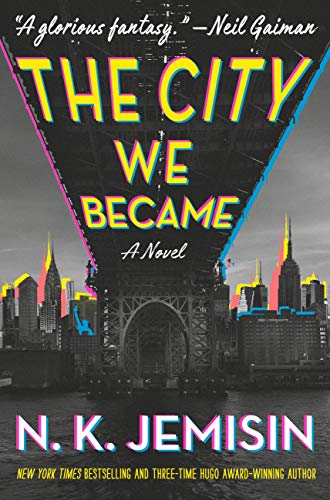
The City We Became by N.K. Jemisin

The Relentless Moon by Mary Robinette Kowal

Harrow the Ninth by Tamsyn Muir
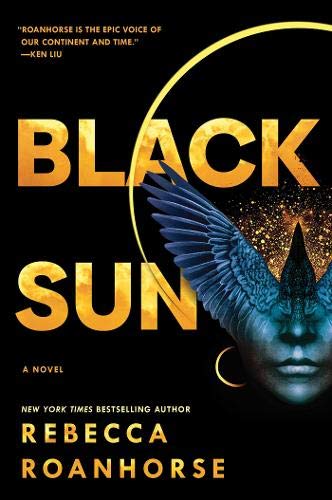
Black Sun by Rebecca Roanhorse
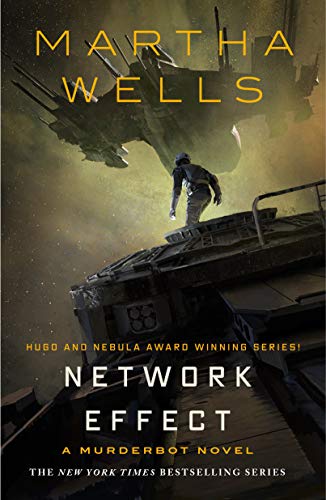
Network Effect by Martha Wells

The Actual Results

  1. The Network Effect by Martha Wells
  2. The City We Became by N.K. Jemisin
  3. Piranesi by Susanna Clarke
  4. Black Sun by Rebecca Roanhorse
  5. The Relentless Moon by Mary Robinette Kowal
  6. Harrow the Ninth by Tamsyn Muir

How I Would Have Voted

  1. Network Effect by Martha Wells
  2. No Award
  3. Piranesi by Susanna Clarke

Explanation

Network Effect was pretty good. In fact, it’s my favorite Murderbot book. There was a little bit of wokery, mostly in the form of the polyamorous relationships of the humans, but that didn’t bother me as much because part of the point of the Murderbot books is that the humans are (for the most part) aggravatingly dumb and slow, so the polyamory kind of blended into the rest of the nonsense that muderbot constantly has to deal with. But I can see how it would bother some readers.

I DNFed all the other books, but I didn’t want to lump Piranesi in with all the others because it just wasn’t my kind of book. All the other ones had woke themes or tropes or other issues that turned me off immensely. I DNFed the first Lady Astronauts book when it turned into a story about the brave little woman that could and her band of misfit minorities fighting back against Captain Patriarchy. The City We Became dropped half a dozen f-bombs in the first chapter, and I think it had a gay rape scene too. Also, I have no love whatsoever for New York City. As for Black Sun and Harrow the Ninth, they both suffer from the trope that I call “death is chic.” At best, it’s an aesthetic that turns me off, and at worst it’s just a cover for outright nihilism and a pro-death, anti-life worldview that undergirds everything that I hate about our current culture.

As a side note, I just want to say that when it comes to book blurbs, Neil Gaiman is one of the best contrarian indicators for my own personal tastes that I’ve found. He may have blurbed a book or two that I actually enjoyed, but for every book or author that I can remember, if he gave them praise, I not only didn’t like it, but actively hated it. He may actually be a better indicator for me than the Hugo Award itself, since I actually enjoyed the book that won this year—but I cannot think of a single book that Neil Gaiman blurbed that I didn’t despise.

Oh, Murderbot…

Why I initially enjoyed the Murderbot books

  • The character of murderbot was an interesting and highly entertaining take on the “depressed robot” trope.
  • I found the contrast between murderbot’s competence and the humans’ incompetence to be hilarious.
  • The futuristic sci-fi universe was interesting and immersive.
  • The politics, legal structure, and social/cultural makeup of the Corporate Rim was mildly fascinating.
  • Murderbot had a lot of cool gadgets/weapons and knew how to use them.
  • I really loved ART as a character: smart, competent, deadly, and possessing all the emotional maturity of a five year-old.
  • The alien infections subplot kept me interested.
  • There were lots of great plot twists, especially in Book 5.

Why I’ve decided I don’t enjoy them any more

  • The worldbuilding is super, super woke:
    • Way too much emphasis on fantasy genders and made-up pronouns—in fact, I would say that the clunkiness of “te/ter” and “vi/vir” inadvertently proves that using any other pronouns than those that are biologically derived is nonsensical and inherently ridiculous.
    • We’re supposed to understand that the Corporate Rim is evil because… capitalism, I guess? Anyone with power in the CR is the 21st century equivalent of a mustache-twirling victim, and everyone from the free colony resisting the CR is a good guy by default. Boring.
    • The good guys are all happily engaged in a polyamorous relationship, and to the extent that there’s ever any friction because of the arrangement, it’s solved when the wise mentor offers some trite and cliched advice about human relationships, like the moral at the end of an episode of Mister Rogers (if Mister Rogers had aired in an alternate free love universe).
  • As fun as Murderbot is as a character, the humans are all flat and uninteresting and blend together. Seriously, I can’t keep any of them straight.
  • Book 6 is a prequel novella to book 5, with a murder mystery plot that is really a side quest with no bearing whatsoever on the main series arc. Then, book 7 picks up immediately where book 5 left off, without any sort of setup or summarization to ease us back into what’s happening and remind us where everything stands. Way too much in media res.
    • Furthermore, book 5 has major spoilers for book 6.
  • By book 7, Murderbot’s snarkiness consists mainly of dropping f-bombs on every other page. That’s how we’re supposed to know that murderbot is funny. Because, fuck it. Ha ha ha.
  • Why are we supposed to care about this story or the world or any of the characters again? I forget.
  • The novellas are way too expensive.
    • Also, I personally think the first four novellas would work better if they had been written as a single novel, rather than four shorter books. But if that were the case, the publisher wouldn’t have made 4x profits. Remind me again how capitalism is totally evil? Right.