Just following my bliss

They say the way you know you’re a writer is if you can’t not write.  Well, last week I had the gratification of experiencing that again firsthand.

For all of August, I was more or less betwen projects and not writing a lot of new material. I’d just epublished Bringing Stella Home and was busy getting Sholpan ready for epublication.  Then Worldcon happened, and my writing dropped off precipitously.  I tried to get back in a groove, but found it difficult to choose between projects, none of which seemed to fit my writing schedule.

And then the creative half of my brain said “screw it” and ran off on an idea that came from practically out of nowhere.
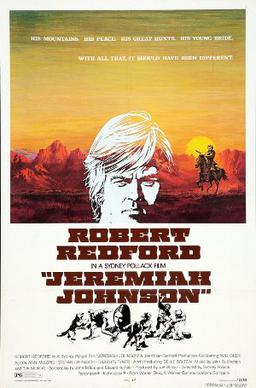
It all started when I was taking a power nap after a long day at work.  For some reason, my mind wandered to Jeremiah Johnson, an old Western with an awesome love story.

In the movie, Robert Redford unkowingly insults an indian chief by giving him several captured scalps.  The chief must return with a gift of equal or greater value, and so gives Redford his daughter, who doesn’t speak a word of English.  At first, things are hilariously awkward, but over time they grow into a beautiful and touching relationship.

Well, as I lay there thinking about the movie, I wondered: what if the same basic storyline were set in space?  Instead of a mountain man, the protagonist would be a space explorer / interstellar merchanter.  Instead of an indian chief’s daughter, the female protagonist would be the daughter of a station master whose colony is facing severe famine and widespread starvation.  When the merchanter boy unwittingly shows up at the doomed colony, the station master coerces him into taking his daughter to save her life.  And so, for the next two months, the boy finds himself crammed into a tiny little ship with a girl who doesn’t speak his language.  Hilarity ensues.

At first, I thought I’d keep it as a short story, but…yeah, that didn’t last long.  The more I run with it, the more ideas keep coming to me–ideas that I haven’t played with in a couple of years.  The story is set in the same universe as Gaia Nova and Bringing Stella Home, but about a thousand years earlier, back when things were, shall we say, more primitive.  I still don’t know where this story is going to take me, but I can tell it’s going to be a lot of fun.

The best part is that even if I expand this into a full length novel, the first part stands on its own so well that I could probably submit it to Writers of the Future.  That never happens!  It’s been years since I submitted to the contest; I always wanted to send something, but all I could ever write was novels with long, complex beginnings that couldn’t be cut off at the 17,000 word mark.

Anyhow, the working title of the novel is Star Wanderer (I can’t believe it’s not already taken), and it’s probably going to end up around 80k words or so.  I only have a vague idea at this point, but it’s much more intimate and personal than epic in scope, so I don’t expect it to go much longer.  I’ll probably finish the first part sometime next week and start looking for some first readers.  I’d like to finish the rough draft before I start the Desert Stars revision in October, but we’ll see whether that works out.

As for Edenfall, don’t worry, I’m still working on that project too.  One of the advantages of writing longhand is that it’s much easier to pick up and just go; instead of having to stop and think about what needs to happen next, the physical act of writing is slow enough that the ideas come much more organically.  I might not finish it before October, but if I can juggle it with Star Wanderer, I can probably juggle it with Desert Stars.  In any case, it’ll be good to work on new material and keep my writing sharp while I’m doing the revision.  We’ll see how it turns out.

So that’s what I’ve been up to in the last week.  I only wish I were doing this full time, so that I could spend all day working on these stories.  Soon, inshallah.
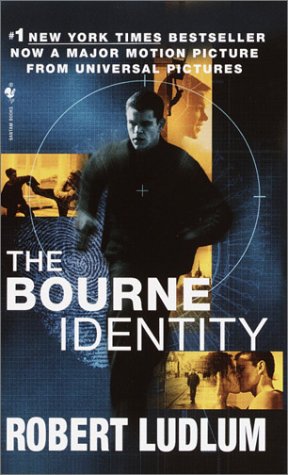
The Bourne Identity by Robert Ludlum

On a stormy night off the coast of Marseilles, a local fishing trawler recovers a man with a gunshot wound to the head.  The local doctor patches him up, but when he recovers, he has no knowledge of his past life.  Even his name is a mystery.

Fortunately, he has a clue to help him get started: a microfilm surgically implanted in his hip containing an account number for a bank in Switzerland.

When he arrives in Switzerland, he finds that the account contains millions of dollars, as well as a name: Treadstone 71.  Before leaving the bank, however, a squad of hitmen attack and nearly kill him, for no reason that he can possibly understand.

On the run from people he doesn’t know for things he doesn’t remember, Jason Bourne finds himself in a struggle, not only for his life, but to find his true identity.  But the answers, he fears, are much, much darker than he can possibly accept.

Okay, to start things off, let me say that this book is NOTHING like the movie.  NOT AT ALL.  The two are completely separate stories.  The beginnings of both are similar, with the whole amnesia thing and the bank account number implanted in his hip, but after Jason leaves Marseilles, everything gets different.  EVERYTHING.

For that reason, it’s difficult to say which is better, because they both try to do very different things.  The movie is more about the action and suspense; the book is more about the intrigue and character development.  Both succeed quite well at what they respectively set out to do.

That said, I enjoyed the book at least as much, if not more than the move.  Ludlum’s writing is quite good, and he paints an excellent picture of both the exotic European setting and the complex psychological portrait of his main character.  Unlike Crichton, whose characters often fall flat, Ludlum does an excellent job creating characters who stand up on their own right.

The suspense lagged somewhat in the middle for me, when the details about Cain and Medusa came to light (that’s one thing I’ve got to say about Crichton–he’s a master of suspense), but it wasn’t enough to keep me from finishing.  The ending, however, was atrocious–not in a clumsy way, but in a too-many-loose-ends kind of way that meant that the story wouldn’t truly be resolved until the sequel.  I hate stories that do that, but oh well, what can you do?

Overall, though, the book was quite good–better than I expected.  I can see why Ludlum was such a successful writer: he created interesting, capable characters and put them in exotic, foreign settings to fight ruthless, evil villains in a desperate zero-sum struggle for survival.

Interesting characters + exotic setting + high stakes conflict + good writing = win.  Oh, and Bourne is way more awesome than Bond. Just sayin’.

How Avatar should have ended

Before I came out to Washington DC, I saw Avatar in the theaters.  AWESOME movie.  Loved the concept, loved the characters, LOVED the science fiction elements and how well they were woven into the story.

However, like much of the stuff that comes out of Hollywood, I was disappointed with the ending.  It felt too cheap–kind of like Matrix: Revolutions.

ONCE AND FUTURE SPOILER WARNING!  MAJOR SPOILERS AHEAD!

The ending of the story didn’t really solve the initial problem–it only put off the inevitable defeat of the good guys.  Do you REALLY think that the corporations of Earth are going to let a band of primitive aliens keep them from exploiting the natural resources of Pandora?  No way–they’ll be back, and with much bigger guns than before.  The ending solves nothing.

What they should have done was created an interstellar authority that the corporation needed to answer to–a weak, toothless one, at least initially, but one that becomes more important as the movie progresses.  This is because the real bad guy was the CEO, not the colonel–the colonel always answered back to the guy running the company.  HE was the one who made all the real decisions for the bad guys.

Things started to get cheesy once the rogue pilot sprung Jake, Norm, and Dr. Grace from the holding cell.  She should have hidden the trailer for the outpost, then sprung them out, since the only place they would go after leaving the base was the remote outpost. Where else could they go to access the avatars?

Moreover, Jake and his allies wouldn’t want to hide the trailer near the alien holy place.  That’s one of the last places they’d want to go–the aliens would just kill them, after the destruction of the mother tree.

Capturing the red and yellow dragon bird was a good way to get the legitimacy Jake needed to lead the aliens, but would the young prince really cave in so easily? I think not–especially after Jake stole his betrothed.

And summoning all the other alien tribes from across the planet? This was when I thought things had gone too far–no way was a coalition of bow and arrow wielding blue people take down the human armada.

This is where the interstellar authority comes in.  Without any oversight, the corporation can do whatever it wants.  Even if the aliens drive them off the planet, they or someone else will just come back.  Instead, the authority should have played the key role in defeating the evil corporate bad guys.

The scientists working for the corporation should have been in connection with scientists back at Earth from the very beginning.  Once the corporation pulled the plug on the science operation, it would have created discontent back home–only among the scientific elite at first, but as knowledge of Pandoran biology and its secrets begins to spread, public sympathy for the alien’s cause would grow–and with it, political capital that the scientists could leverage to stop the corporation.

Knowing this, the CEO would do everything in his power to keep the alien sympathizers from sharing their full discoveries with the scientists back on Earth.  To counter this, the good guys would have to either use their spy or covertly break into the facility to transmit the information to the people who can leverage it.

This sets up a “time bomb,” so that the goal of the good guys is no longer to defeat the bad guys in one last spectacular battle (which, let’s face it, they never could have realistically won), but instead to hold out until the cavalry arrives to save them.

There’d be a show down with the colonel, and a big epic battle to save the holy place, but the REAL victory would come when the interstellar authority comes in, arrests the CEO and his staff, freezes their operations, and slaps a whole host of regulations on the corporation, effectively saving Pandora–FOR GOOD.

That’s the way I think it should have ended.  I look forward to seeing how the guys at How It Should Have Ended.com handle it.

In the meantime, check out their take on Twilight:

I agree 110%!

I want to see this movie

It looks really good. Dark, depressing, and very, very graphic, but good.

I mean, check out the animation:

Awesome.

I think my Middle East studies major has desensitized me to a lot of the violence in that part of the world. Probably not as much as if I were caught up in the conflict on the ground, but still, quite a bit.

Lots of material for stories, though. Lots of material.

Fistful of words

I’ve recently developed a taste for Ennio Morricone’s music. My writing process these days consists of me sitting down and watching this youtube clip:

After that, I’m all gunned up and ready to work!

Holy crap, today I sent out the first three chapters of Genesis Earth to the other two editors from the BYU Writers for Young Readers conference. What a rush! I spent a couple hours writing a chapter by chapter synopsis, rushed out a couple cover letters, bought $4.81 in wood pulp for both copies of the work, headed on over to the BYU Bookstore for the envelopes and all, and voila! Sent ’em off!

We’ll see what comes of them–probably more form rejections. It’s funny how when you print something off to send it out, it seems ten times worse than you remembered.

Well, I sent it out anyway. With writing, good things never happen to those who wait.

The question in my mind is now: does that synopsis count towards my daily word count goal? Because I only wrote 1,072 words in Genesis Earth 3.0 today (nothing in Ashes, sadly), but that synopsis was upwards of 2,800 words and took up a good chunk of my normal writing time. Eh, I’m counting it.

In unrelated news, I saw Star Trek the other day. Found it entertaining, but wasn’t very impressed. Too many holes that stretched the believability.

<spoilers>

For example, in the beginning, Kirk’s wife goes into labor during the evacuation and the child pops out…like, five minutes later? Or the red, fleshy monster on the ice world: no visible fat, no fur…how does that thing stay insulated in such a hostile environment? Or the Romulans drilling to the core of the world to create the black hole: why don’t they just create a black hole on the surface?  Gets the job done a lot easier.  Better yet, when Nero realizes that he’s gone back in time and his home world hasn’t yet been destroyed, why doesn’t he save his people instead of avenging himself on the Vulcans? Or…you get the point.

</spoilers>

I was never a big Star Trek fan growing up, though (except for Star Trek Voyager–I loved Voyager!). I can understand how the nostalgia would make a lot of people enjoy the movie. And really, it was very pretty–the graphics were great. Lots of action. It was entertaining, just…not as good as everyone makes it out to be, IMO.

I could say more, but that’s enough for tonight.  Have a wonderful Sabbath!