A glorious fisking and what it means to be a real man

Oh my heck, I just read the most glorious fisking of my life over on Larry Correia’s blog. The subject is a New York Times article titled “27 Ways to be a Modern Man” (is it just me or is the NY Times taking its cues from Buzzfeed?), and Larry pulls no punches. Glorious. Absolutely glorious.

It got me thinking, though, about what it means to be a real man. Jokes about meat and action movies aside, there seems to be a lot of confusion about the subject these days. It’s actually getting to be a serious problem with our society, as evidenced by the fact that a list as pathetic as Brian Lombardi’s can be taken seriously enough to be published in a major national newspaper.

So without further ado, here’s my list:

1) A real man provides for the needs of his family.

The traditional role of fathers is to provide, or to supply what is wanted or needed. There are many good reasons for this. Families have needs, some of which women are uniquely suited to fulfill, others of which men are uniquely suited to fulfill. Individual circumstances necessitate adaptations, but a real man knows that his duty is to his family.

A real man provides his family with shelter and security, with material support and protection. He makes his family feel safe, both from evil and from want. He provides them with love, with advice, with a positive example and role model for them to emulate. He provides his children with everything they need to grow up healthy and have families of their own.

A real man is not an absent father—unless, of course, the State steals his children from him and makes that impossible. Misandry is a far greater problem in our society than misogyny, especially within family law, but that’s a subject for another time.

2) A real man respects women and girls.

To respect someone is to regard them as being worthy of admiration because of good qualities, and to treat them in a proper way. A real man respects and values women, and treats them accordingly.

He does not see them as objects for his lusts, but as human beings. He recognizes the importance of their contributions to society, especially as wives and mothers, and helps them to feel wanted and appreciated.

A real man never lashes out at or physically abuses a woman. If a woman abuses him, he does not abuse her back.

3) A real man is someone that others can depend on.

A real man is dependable. He keeps his promises. He does what he says he will do. He understands that people are depending on him: his spouse, his children, his family, his parents, brothers, sisters, and friends. Inasmuch as it is within his power, he does not disappoint them.

4) A real man takes care of himself.

A real man understands that he cannot help others unless he first helps himself. For that reason, he strives for independence and self-reliance, so that he can better serve those who depend on him.

A real man does not need to be mothered, especially not by his wife or girlfriend. He cleans up after himself. He showers and keeps himself clean. He knows how to do his own laundry. He knows how to clean his own dishes. He knows how to eat healthy and how to exercise. He knows how to manage his time.

In short, a real man has his shit together. He may be a child at heart, but he is also a responsible adult.

5) A real man knows how and when to lead.

A real man does not wait for his parents or his wife to tell him what to do. He does not leave the decision-making to other people when it’s his responsibility to step up and lead. He knows how to take charge when people are looking up to him, and how to inspire confidence in those who look to him for direction.

Because he knows how to lead, he also knows how to follow. He does not his drag his feet or grumble about the tasks he’s assigned to do, but fulfills them to the best of his ability. He knows when to take charge, but he also knows when to step down. He also knows when to get out of the way.

6) A real man knows the difference between taste, quality, and value.

This was the biggest issue that I had with the NY Times article: 80% of the stuff on Lombardi’s list were merely matters of personal taste. A real man understands that different people have tastes that are different from his, and is perfectly willing to accept that. He does not condemn others for having “wrongfun.”

That said, he can also recognize quality and value. He understands that a $10 knockoff tool may, in the long-run, be more expensive than a well-made $50 tool. He knows how to use the right tool for the job, and how be efficient and do quality work.

7) A real man strives constantly to learn, grow, and improve.

At the same time, a real man recognizes that he is not an expert in all fields. When out of his area of expertise, he is able to admit what he does not know and to accept counsel from those who know more than him.

Life is a process of constant growth. Just like a muscle will atrophy if it is not exercised, so too will our minds and spirits deteriorate if we do not constantly strive for self-improvement. A real man recognizes this and does all he can to be a better man.

8) A real man faces his fears with courage.

Courage is not the absence of fear: it is the strength to overcome fear. The difference between heroes and cowards is often no more than the decision to stand up and do. A real man understands this, and overcomes his fears to do what is necessary. From the outside, he may appear fearless, but the truth is that he simply knows how to face his fears.

9) A real man helps others to achieve greatness.

A real man is not interested in petty infighting or drama. He does not keep score or hold grudges. He does not feel that he is diminished in any way by the achievements of others. Instead, he inspires and lifts those around him, often without even realizing it. People naturally look up to him, because he brings out the best in them.

10) A real man’s greatness is measured by the way he treats those he loves.

A real man is not overly concerned with titles or awards. He knows that greatness is not bestowed upon him by those in positions of authority, but is attributed to him according to how he treats those whom he loves. Because of this, he has developed a tremendous capacity to serve his fellow men, and exercises that capacity daily.

“Greater love hath no man than this: that a man lay down his life for his friends.” That is the true measure of a man: how much he gives of himself. Some men literally give everything, dying to serve and protect their loved ones. Others give their lives by living, giving freely of their time, talents, and love.

Regardless, a real man does not live for himself alone. He always lives for others.
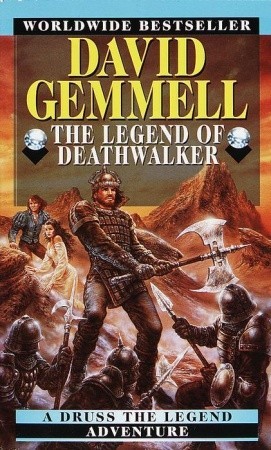
The Legend of Deathwalker by David Gemmell

legend_of_deathwalkerI’m not even going to try to write a synopsis of this story.  It’s just like all the other books in the Drenai series, which is why I love it so much.  Basically, this one gives the story behind the rise of Ulric, khan of the Nadir, and the origin of the Nadir people.  Interestingly enough, Druss the Legend plays a major role.
This was the last book in the Drenai Saga that I hadn’t read, so reading it was a very bittersweet experience.  On the one hand, this one is just as good as all the other books in the series, and made me want to revisit Legend and some of the others.  On the other hand, I knew that once I’d finished it, there wouldn’t be any more Drenai books left.  So I took it slow for the first half, but naturally I finished it at a breathless late-night sprint a day or two later.

I’ve been thinking a lot lately about why I love David Gemmell’s books so much.  There are many reasons, but I think the main reason is that his writing is honest.  He strips away all the incidental stuff and gets right at the heart of the stuff that matters.  He doesn’t pussyfoot around, either–if his characters do something despicable, he doesn’t make any excuses for them.  He tells it like it is.  This can make for a very brutal story, but it also makes for a very cathartic one.

The other reason I love his books so much is because he does such a good job depicting raw, unrepressed manhood–not the stupid stuff like driving big cars and eating meat, but manning up and facing your greatest fears.  It’s about friendship, and honor, and fighting with all of your strength for something you believe in.  It’s about all that raw, pent-up energy we all have, that animal urge that drives us to competitive sports and first person shooters, and channeling it for a heroic cause.

The craziest thing is that the fight itself is actually more important than whatever side the characters are fighting on.  In this book, Druss is actually fighting to help bring about the rise of the Nadir khan who later invades his homeland and kills him on the walls of Dros Delnoch.  None of that matters, though, because Druss doesn’t fight with malice.  For him, it’s all about fighting for something, not against something, and the battle itself is just as important as the victory.  I don’t think I can put it better than this:

“Can we win here?” Sieben asked, as the shaman’s image began to fade.

“Winning and losing are entirely dependent on what you are fighting for,” answered Shaoshad. “All men here could die, yet you could still win. Or all men could live and you could lose. Fare you well, poet.”

The best thing about David Gemmell’s books is the fact that none of the characters–not even the bad guys–are defined by their own evil.  The Nadir are supposed to be the evil chaotic race of the Drenai universe, but when you come to understand what they’re fighting for, their hopes and dreams for a better future, you can really see what’s good in them.  Likewise, the more civilized Gothir are kind of like the evil white men who want to put down the savages and keep them in their place, but there are good and honorable men among them too.

And yet, even though the two sides clash, and good men die on both sides, it somehow isn’t tragic.  That’s the crazy part.  It’s almost like you can feel the characters salute each other as they die in a good cause, the way Ulric gave Druss a proper funeral in Legend, even though the two were blood-sworn enemies.  In David Gemmell’s world, honor and courage are more important than life or money.  Everyone dies; dying well is more important than living without honor.

This book is incredible.  As I was reading it, I decided it was the best David Gemmell book I’ve ever read–which is something I do every time I read one of his books.  I feel like I’m a better man for having read them.  If he had written a hundred books in this series, I would happily read them all.  The fact that there are no more new ones deeply saddens me, but I know I’ll revisit these stories again in the future.

Trope Tuesday: A Man is Not a Virgin

I’m back from vacation, but I’m going to take a break from the Hero’s Journey trope posts to talk about something that I really feel passionate about.  I hope you’ll forgive me if this turns into a rant, but I think this is an important issue that has some very dangerous implications that need to be explored.

In modern fiction, there’s a very prominent trope that a man is not a virgin.  The basic idea is this: if the protagonist is an adult male and he hasn’t yet had sex with a woman, there’s something fundamentally wrong with him.  Of course, because of his adventurous lifestyle, he can’t be tied down in a committed relationship–that would spoil the story.  But he can’t be holding himself back, either, lest his manhood come into question.  And most of the time, he doesn’t really want to, anyway.

This trope has a whole host of unfortunate implications, though, all of which serve to reinforce constrictive gender roles, disempower both men and women, drive a gulf of misunderstanding between the sexes, and emasculate true manhood and its role in our society.

To demonstrate this, let’s take this trope to the logical conclusions that our society seems to have come to.

If a man is not a virgin, then sex is a rite of passage, and it isn’t rape if it’s female on male.

In fiction, the sex as rite of passage trope is often seen in stories about angsty teenagers trying desperately to get laid. These are not typically stories about love–they are stories about peer pressure, objectification, and power.  By equating sex as a rite of passage in this way, it actually divorces sex from any concept of love or commitment, and turns any form of physical intimacy into a caricature of itself.

It doesn’t stop there, though.  If sex is a rite of passage, then it’s only reasonable that the young novice should have an older mentor to help him through the initiation process.  Thus we get the professional sex-ed trope, where the boy’s mentors or guardians help guide him through his first sexual encounter.  The implications for pedophilia and underage sex are more than a little disturbing.

We can see this trope in action in the way we treat female sex offenders.  If a 30-something male teacher has sex with one of his female students, he gets a lengthy prison sentence and spends the rest of his life stigmatized as a predator.  If a 30-something female teacher has sex with one of her male students, she gets a slap on the wrist and TV spot.  She’s not a sexual predator–she’s just having a personal crisis.

Needless to say, this double standard is extremely destructive for the victims of such abuse.

If a man is not a virginthen men cannot help themselves.  Therefore, all men are perverts.

If a true man is not a virgin, then a true man doesn’t say no to sex.  Even if he can say no, he won’t because that’s just not what men do.  Therefore, being a man is functionally synonymous with being a pervert.

The danger here is that it reduces men to their basic animal urges.  If being a man means finding a warm, inviting place for your penis each night, then you might as well go out to the pasture and eat grass.  Whatever happened to self control and delayed gratification?  Do you think anything meaningful would ever have come out of our civilization if we couldn’t keep our pants on?

And yet, both men and women seem perfectly willing to believe that it’s not only unmanly for a man to control his animal urges, it’s impossible.  On the Kindle Boards forum about a month ago, there was a thread on erotica and marriage and one of the members posted this:

I used to work as a forums admin on a large women’s forum (over 100,000 members) and the relationships forum had a lot of heated discussions on this topic. I won’t of course refer to any specific threads, but the discussions went a lot like this:

One woman concerned that her husband was spending too much time watching porn
A massive amount of women telling her that it’s ok, that ‘all men watch porn’
A small amount of women saying either they don’t agree with it or that their men don’t view it
A percentage of women saying their men are addicted to porn and would rather watch it than go to bed with a willing wife
A percentage of women saying it’s not the porn itself that concerns them, but the type of porn their husbands watch
Another group of women saying they either watch it themselves, or watch it with their husbands
Yet another small group of women who either were or are prostitutes/strippers/involved in amateur porn (who are either for or against based on their experiences)
A very vocal percentage of women saying that if your man says he doesn’t watch it, he’s a liar
A heated discussion ensuing….

How does it possibly empower men to tell them that they cannot control their own sexual impulses?  It’s a self-fulfilling prophecy, which harms not only men but women as well.  If all men are perverts, then women can’t afford to wait for a decent man and should settle instead for a deadbeat porn addict.

But that’s not even the worst of it:

…and if all men are perverts and all women are prudes, then men and women are two entirely different species that are completely incapable of understanding one another.

This one really gets to me.  I hear it everywhere, even from people who don’t consciously buy into the logic behind it.  I used to buy into it myself.  It’s the idea that women are so complicated that they are impossible to understand, whereas men are as simple as an on/off switch.

In my experience, men and woman are both human.  Both of them are equally complex and equally emotional.  Yes, they are different, but in such a way that it’s equally difficult (or equally easy) for the one to understand the other.  Generally, women tend to externalize their complexity, whereas men tend to internalize it.  At least,  that’s what I’ve found.

Our society takes this to the next level, however, and teaches men that they should just swallow their emotions.  If they don’t, they risk being seen as weak or effeminate (never mind that equating weakness with femininity is a whole other can of worms in itself).  And after a lifetime of living this way, it can be hard not to believe that that’s just the way men are.

But this is perhaps the most insidious danger of all.  It’s the falsehood that real men don’t cry, or show emotion, or have any capacity for compassion or tenderness.  It’s the fallacy of equating strength with violence.  It’s the destructive belief that men will never rise above the lowest common denominator of their hormones, and should never even try.  And because men are so obviously different from women in this regard, any attempt to understand them would be futile.

But how can you have a committed relationship with someone you can’t understand?  How can you possibly hope to make the necessary sacrifices for each other to make the thing work out?  And if you can’t reach the understanding necessary for a committed, loving relationship, how can you ever hope to raise a family together?

So yeah, sorry for the rant, but this trope REALLY gets under my skin.  It doesn’t help that one of my favorite authors, David Gemmell, is a big fan of it.  I tried to get into his Rigante series, but this trope was so strong that I couldn’t finish the first book.

I should also clarify that the thing that irks me isn’t just the trope, but how much our society has bought into it.  By themselves, tropes are neither good nor bad, but when something like this becomes so prevalent that it defines the entire operating system on which our society is based, that’s when someone needs to speak out.

And for the record, I am a 28 year old single male who is not ashamed to say that he is still saving himself for marriage.  Am I gay?  No.  Has it been difficult?  Yes.  Am I anything less than a man because of it?  Hell, no.  In fact, I would argue that the wait has made me more of a man than I otherwise would have been, and I’m sure that my future wife will agree.

Real men aren’t defined by their hormones or their sexual history.  They’re defined by the way they treat the people around them, especially the ones who are most important in their lives.

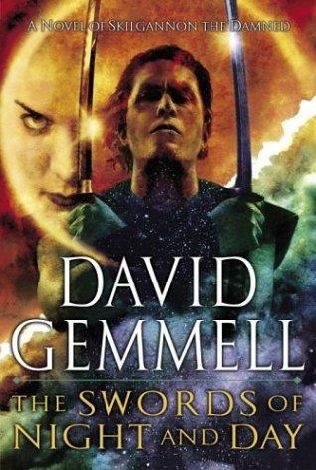
The Swords of Night and Day by David Gemmell

A thousand years ago, a young warrior named Skilgannon helped the princess Jianna escape an attempt on her life.  They became lovers, and when she retook her throne, she made Skilgannon her chief general.  When she ordered the abject annihilation of her enemies, he loved her too much to refuse her–and thus became Skilgannon the Damned.

Now, the wizard Landis has recalled Skilgannon back from Hell to defeat the tyrant queen known as the Eternal.  For hundreds of years, the Eternal has ruled the world, using the arcane arts of a fallen civilization to achieve immortality and crush all who oppose her.

When the Eternal learns of Landis’s treachery, the only hope for freedom lies with Skilgannon, the axeman Harad, the huntress Askari, and the Drenai ranger Alahir.  But how can they defeat an enemy who commands nearly all the armies of the world?  Who has lived a dozen lifetimes and simply steals the bodies of her clones whenever she is killed?

But most of all, how can Skilgannon defeat the Eternal when she is none other than Jianna, his beloved?

The Swords of Night and Day is a direct sequel to White Wolf, the first David Gemmell novel that I read.  I have to admit, I wasn’t particularly impressed with White Wolf; it meandered a lot and didn’t seem to have any clear direction.

That is most certainly not the case with The Swords of Night and Day, however.  I was hooked from the very beginning, and could hardly put it down until the shocking, mind-bending twist at the end.  It tied up all the loose ends from White Wolf and completed Skilgannon’s character arc in a surprising yet satisfying way.

One of the reasons I think I love David Gemmell so much is because he captures so perfectly the experience of being a man.  In that, I suspect that Gemmell is to me what Jane Austen is to most women.

But even though Gemmell’s characters might be crass, vulgar, chauvanistic, and downright detestable at times, there is always something heroic deep inside of them–something worth redeeming.  And when he does redeem them, it surprises me how powerful it is–even when he redeems someone I don’t want him to.

With The Swords of Night and Day in particular, one of the things that particularly fascinated me was the fictional cosmology of the Drenai universe.  With magic that can resurrect people’s spirits from hell, the story must inevitably deal with questions of the afterlife.  Yet even so, there’s still enough ambiguity and latent potential that it never felt stilted or labored.  If anything, it felt a bit like Tolkien’s cosmology in The Silmarillion, where all the stuff about gods, angels, and the undying lands only added to the sense of wonder.

I love just about all of David Gemmell’s books, but this one in particular was well worth the time and experience reading it.  I wouldn’t recommend starting with this one, though: better to read Legend, White Wolf, and The King Beyond The Gate first.  But if you’ve read and enjoyed those ones, you will DEFINITELY love this one.  I certainly did.

Winter Warriors by David Gemmell

Eons ago, in the Days of Fire, demons feasted upon the souls of men the way that men feast on cattle.  Those days ended when the second most powerful demon betrayed his people, damning them to purgatory so that men could inherit the Earth.

Four thousand years have passed, and the demons are beginning to come back.  The dread Kreyakin, advance guard to the demon invasion, have already passed into the world of men.  In order to open the portal to the other world, however, they must cast a spell requiring the lives of three kings.

Two of the kings have already been sacrificed.  The third lies within the womb of the Princess Axiana.

The fate of the mortal world now lies in the hands of three aged warriors–Nogusta the swordsman, Kebra the bowman, and Bison the brute–and a handful of unlikely fugitives.  Together, they must stand against the dread Kreyakin and all the forces of hell.

Alright, my attempt at a jacket blurb really doesn’t do this book justice.  I want to say it was one of the best Drenai books I’ve ever read, but the truth is it’s just like every other book in the Drenai saga, which is to say that it’s awesome.

I think I’ve figured out why I love David Gemmell’s books so much.  It’s because his books so perfectly capture what it means to be a man.  Women read Twilight because it perfectly captures the experience of being a teenage girl in love, and Gemmell’s books–all of them–capture what it means to be a man.

I’m not just talking about the platonic ideal of manhood–I’m talking about the everyday reality as well. Two men sitting together in “companionable silence.” A warrior who scoffs when his commander sends some lesser men to accomplish a mission, then after getting chided says “I spoke in haste,” and the matter is dropped.  Guys who tackle problem after problem, from fighting duels to fleeing from armies from helping the inexperienced princess with her messy childbirth, and do so without flinching, because hey, someone’s got to do it.

But the ideal is definitely there too, because in every single one of Gemmell’s books, circumstances conspire to push his characters right up to the very limits of their abilities.  When that happens, their true character shines out, and the most unlikely ones rise to great feats of heroism, often sacrificing their lives in the process.

Indeed, if there’s one underlying theme in all of Gemmell’s books, it’s about heroism and what makes a true hero.  It’s awesome.

The best part, though, is how Gemmell redeems even the darkest characters.  I can’t say much about this book without giving away the ending, but let me just say it was extremely satisfying.  Evil is not some slimy b-movie monster–it’s a quality that everyone possesses in varying degrees, alongside the potential for greatness.

In this way, I think Gemmell is the antithesis of George R. R. Martin.  While both authors write in shades of gray, Martin emphasizes how even the noblest, most honorable people have an ugly black stain somewhere in their character, whereas Gemmell focuses on the potential within all of us to rise above the darkness in our souls and accomplish feats of greatness.  His heroes are dark and gritty, but at the end of the day, they are heroes nonetheless.

In short, this book was awesome. If you’ve ever read a book by David Gemmell and loved it, I guarantee you’ll love this one.  I certainly did.