Easter in Trabzon

Orthodox Easter is April 15th, and in Georgia, most places take off four or five days for vacation.  In typical Georgian fashion, we didn’t know for sure how many days we had off until a couple of weeks before the break came up, but fortunately that was time enough to find out where some of the other TLGers in Kutaisi were going and tag along with them.

Our group consisted mostly of TLGers and embassy staff from Tbilisi, friends of my friends in Kutaisi who came out at the same time last year.  For 300 GEL (about $185 USD), we got a private marshrutka and tour guide for four days, 3- and 4-star hotels each night, breakfast and dinner, and tickets to some of the more interesting sights between Reza and Trabzon.  Multiple entry visas were $20 USD each, and the exchange rate in Turkey was quite favorable.

We met up at the McDonalds on Tchavtchavadze Street at noon and went up to see Motsameta Monastery.  In spite of the fact that it’s so close to Kutaisi, this was my first time going up there, and I must say I was quite impressed!  The monastery is situated on the top of an imposing cliff where the Tsqaltsiteli River makes a sharp bend.  The English translation of the river is “red water,” named for the two Christian martyrs who were executed on the site of the monastery by the Muslims shortly after their conquest of the region.
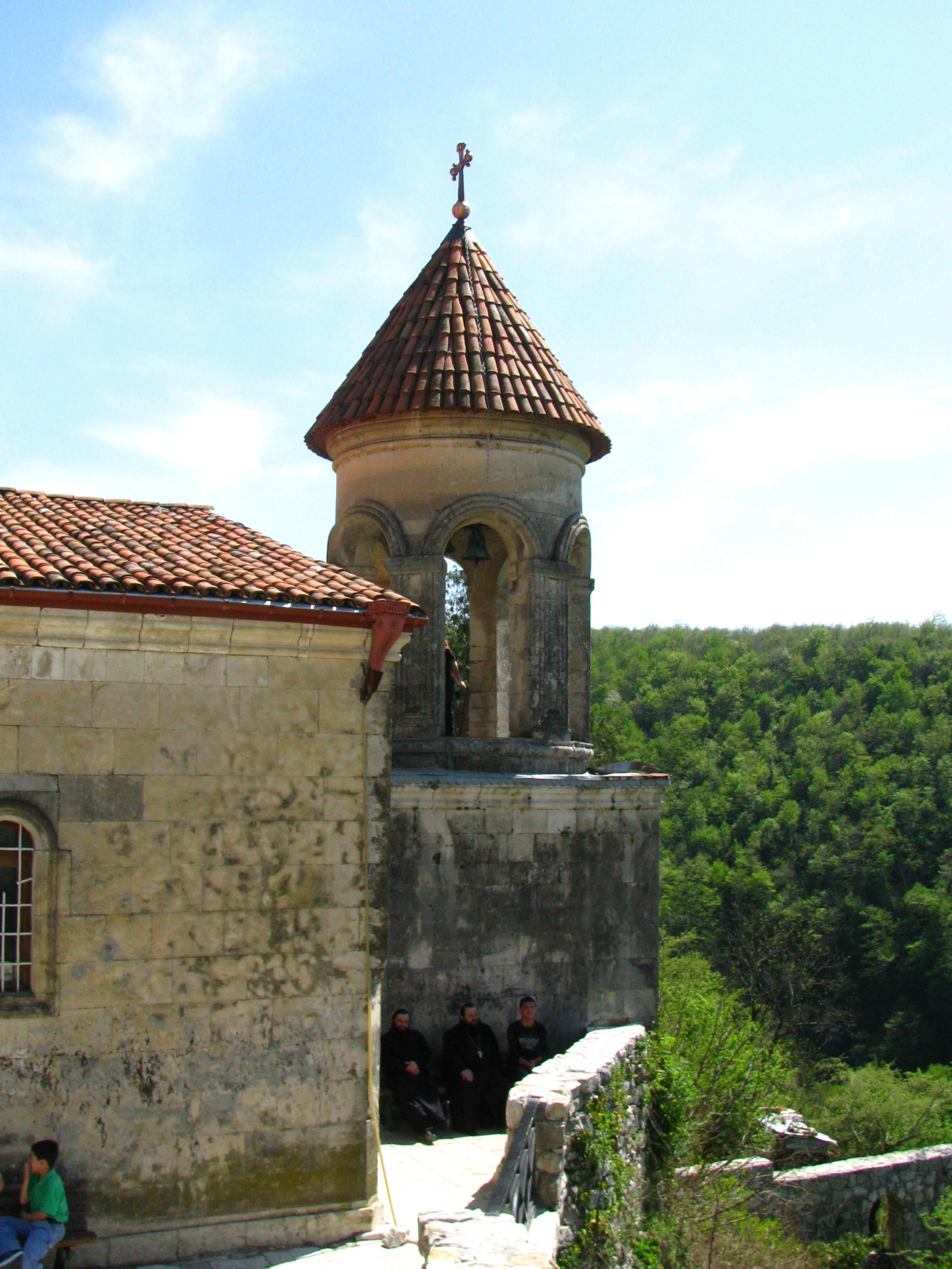
Some priests hanging out by the chapel on Easter Sunday.
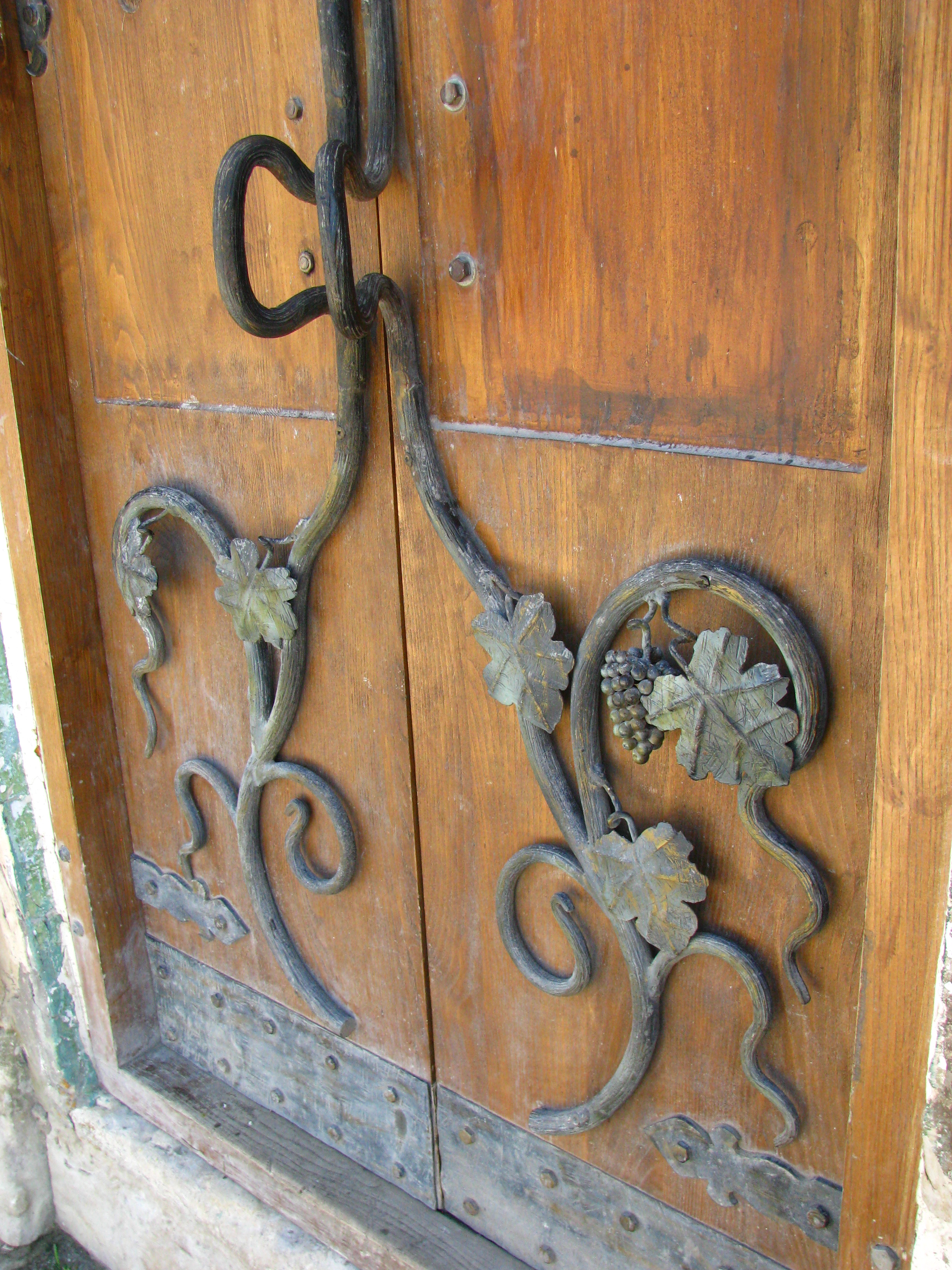
Detail on the door handles to the monastery chapel. Georgians take their grapes quite seriously.

I spent most of the vacation relaxing, so I didn’t take many spectacular photos.  But Motsameta was really fantastic–I’ll have to go back sometime to do it justice.  There’s a forest trail that goes between Motsameta and Gelati Monastery, where David the Builder is buried, and I’d like to hike that before I come back to the states.

Next, we drove down to Batumi on the Black Sea, where we spent some time wandering the Botanical Gardens.  It’s a really nice place, with trees and plants from all over the world right up against the seashore.  Very peaceful.  It’s pretty big, though–I walked for almost an hour along the main road without getting to the end.  And of course, there are many places along the way where you can stop and wander around for a while.
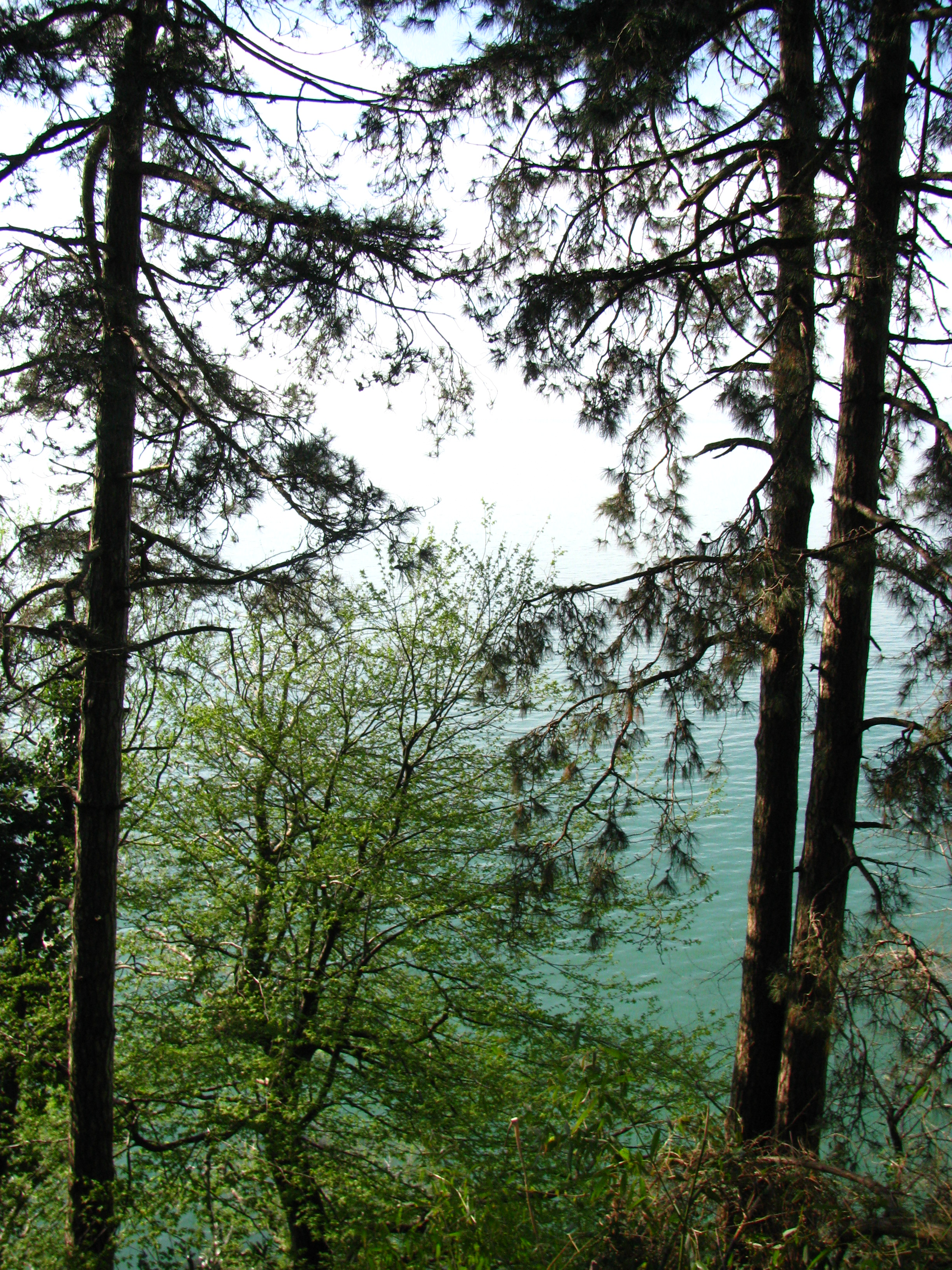
The Black Sea, visible through the trees of the Batumi Botanical Garden.
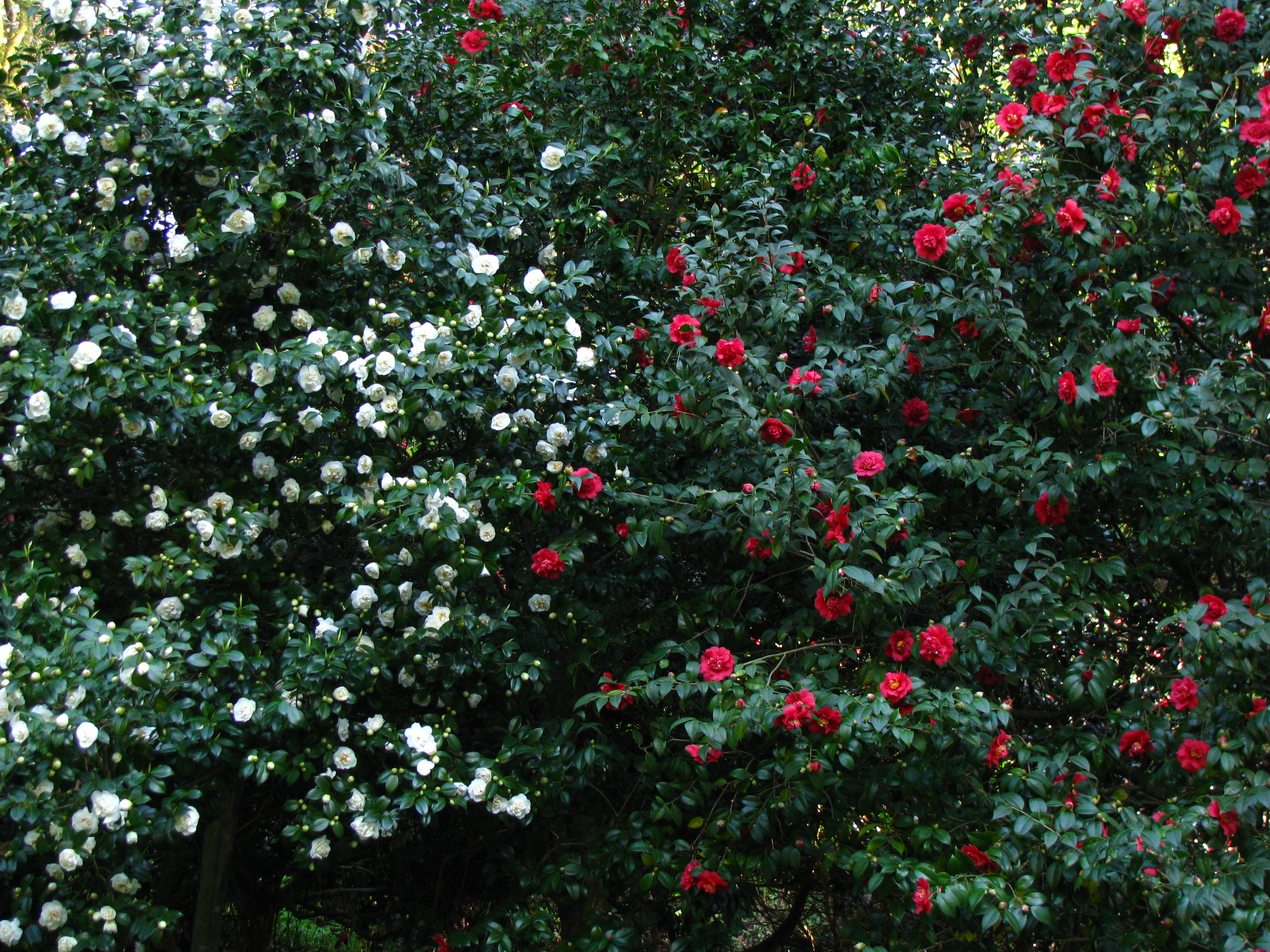
Some red and white rose bushes. There are tons of flowering plants in the gardens, so spring is a really great time to see the place.
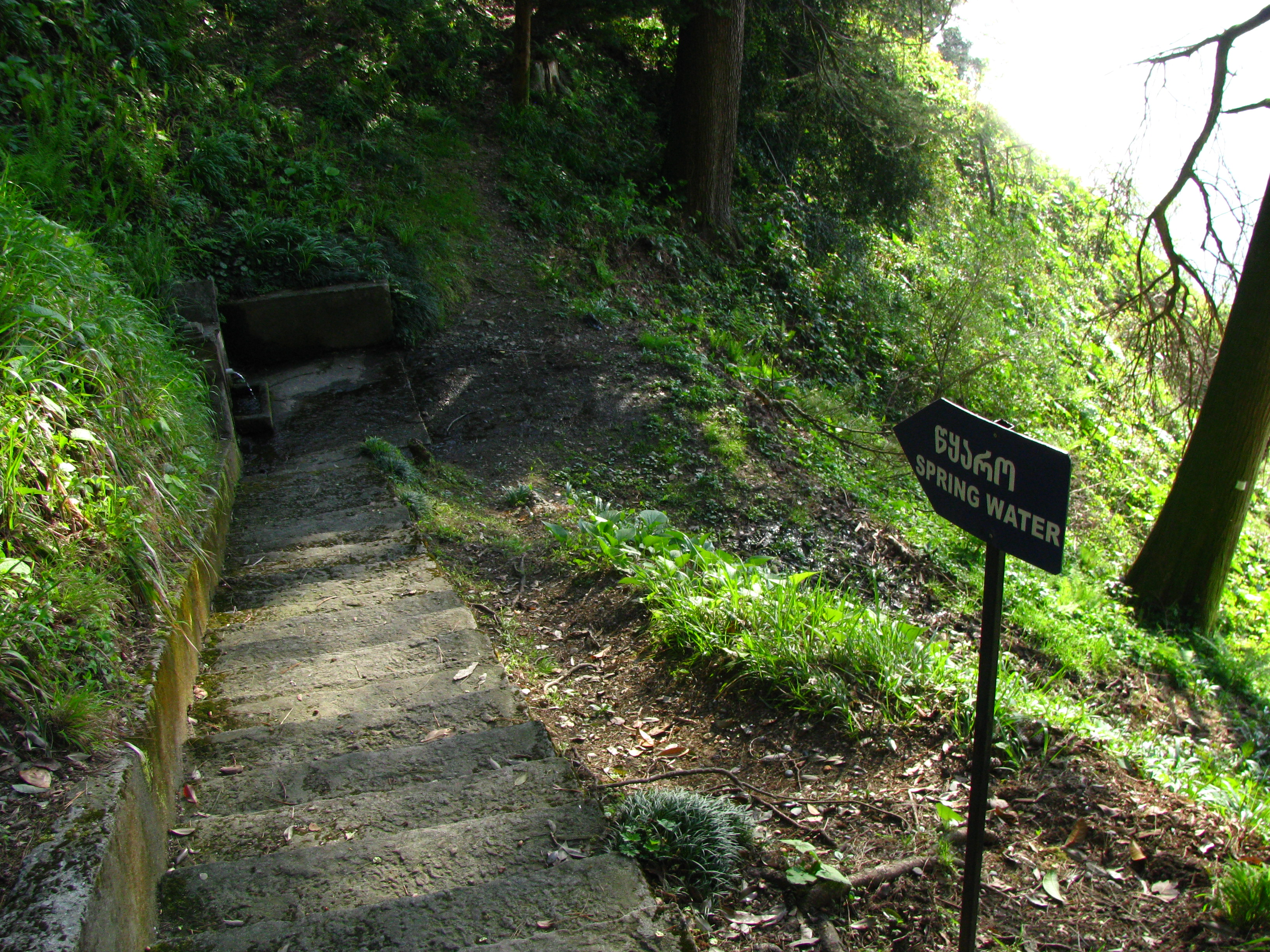
A small spring in the middle of the Batumi Botanical Gardens. There are springs like this scattered across Georgia.

Batumi is an interesting place–not as big a city as Kutaisi, but with more money, hotels, casinos, and resorts.  It’s right on the Black Sea, but the snow-capped mountains of the Lesser Caucasus range are right behind it, so you’ve got a big mix of climates and landscapes all within a short drive.
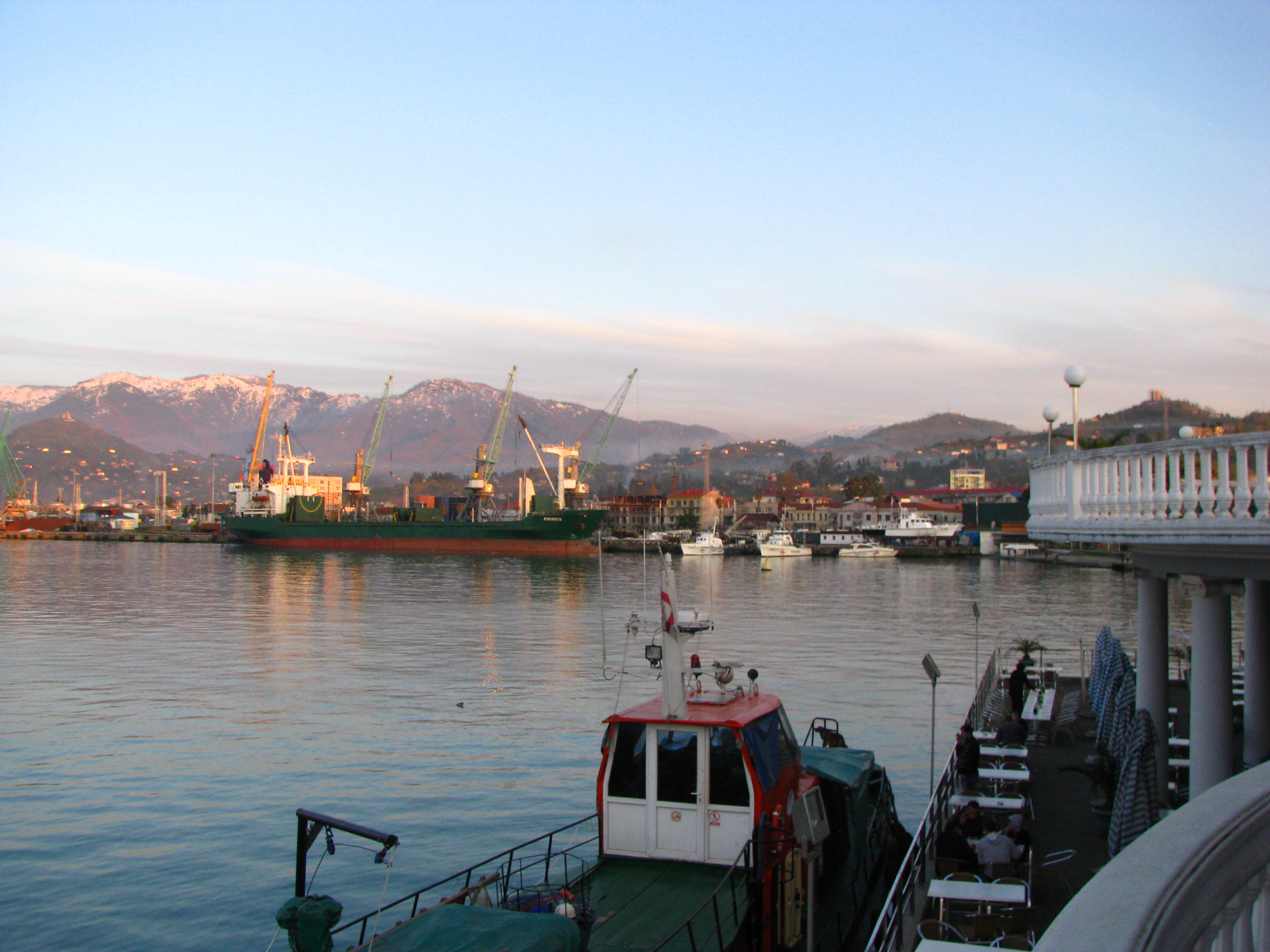
Batumi, Adjara Republic, Georgia.

The other TLGers were impressed to see that the roads are actually paved–apparently, there’s been a lot of construction in the past year or so.  It’s not completely finished, but walking around downtown is quite pleasant.  We hunted for ice cream and eventually settled on a smoke-filled cafe on some random street corner.  Good times.

We spent the next morning crossing the border, a process that was surprisingly disorganized.  The system on the Georgian side was pretty straightforward, but on the Turkish side we had to wait on the curb for a long time, with giant eighteen-wheelers driving past us and the sun beating down.  It wasn’t too bad, though–definitely not worse than the Allenby crossing.

We drove for an hour, stopped in Reza for tea and lunch, then went on along the seashore to Trabzon.  In Reza, I stood at the edge of a garden overlooking the city when the call to prayer started up.  It brought back a lot of fond memories. 🙂 Turkey is definitely a Muslim country, with mosques everywhere, pencil minarets dotting the cityscape like steeples, and women dressed in colorful hijabs.
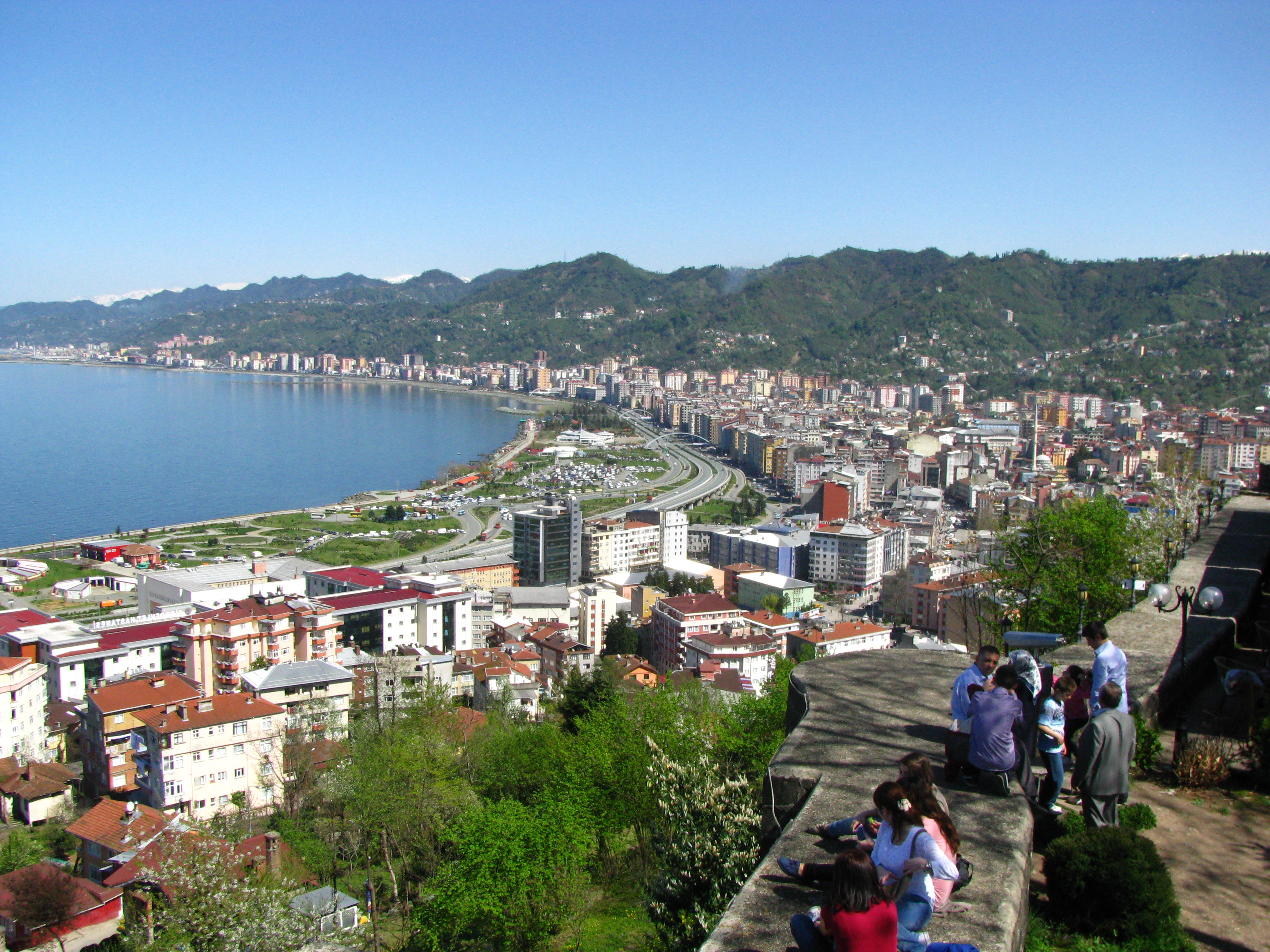
View of Rize from Rize Castle.
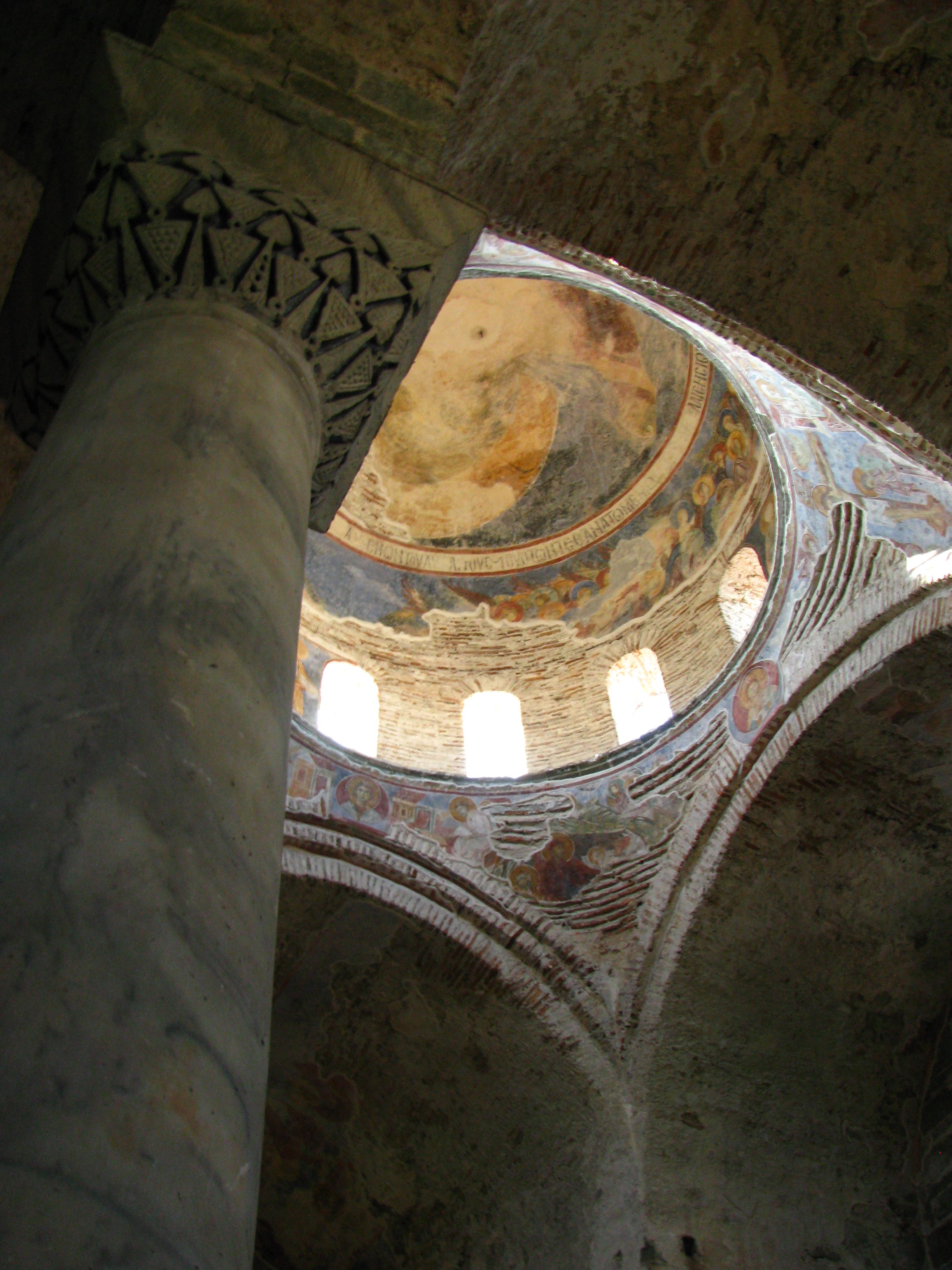
Interior of the Little Haggia Sophia at Trabzon. It’s a pretty modest sized basilica, now a “museum” which basically means it’s not used for religious services. It needs renovation.

Compared to Kutaisi, Trabzon is a large and well-developed city.  The downtown marketplace was packed, but the streets were well-paved, the shops were quite nice, there weren’t any beggars and basic amenities weren’t hard to find.  Almost no-one spoke English, which made communication difficult since I don’t speak any Turkish, but it was surprisingly easy to make friends.  We stopped for lunch at one place, and after a very difficult time trying to explain that we didn’t want any meat in our sandwiches (most of the girls in our group were vegetarian), the restaurant owner actually let us eat for free!

Some of the other volunteers had asked that we go to an American style mall, so we spent a few hours there before going to the hotel.  I must confess, I was bored out of my mind.  Nothing but clothes stores and Turkish fast food restaurants–it was identical to an American mall in almost every way.  I suppose that that’s why the others wanted to go there–after spending a year in Georgia, they probably craved someplace that feels like home.  But I’m not there yet, so that particular excursion was kind of boring.

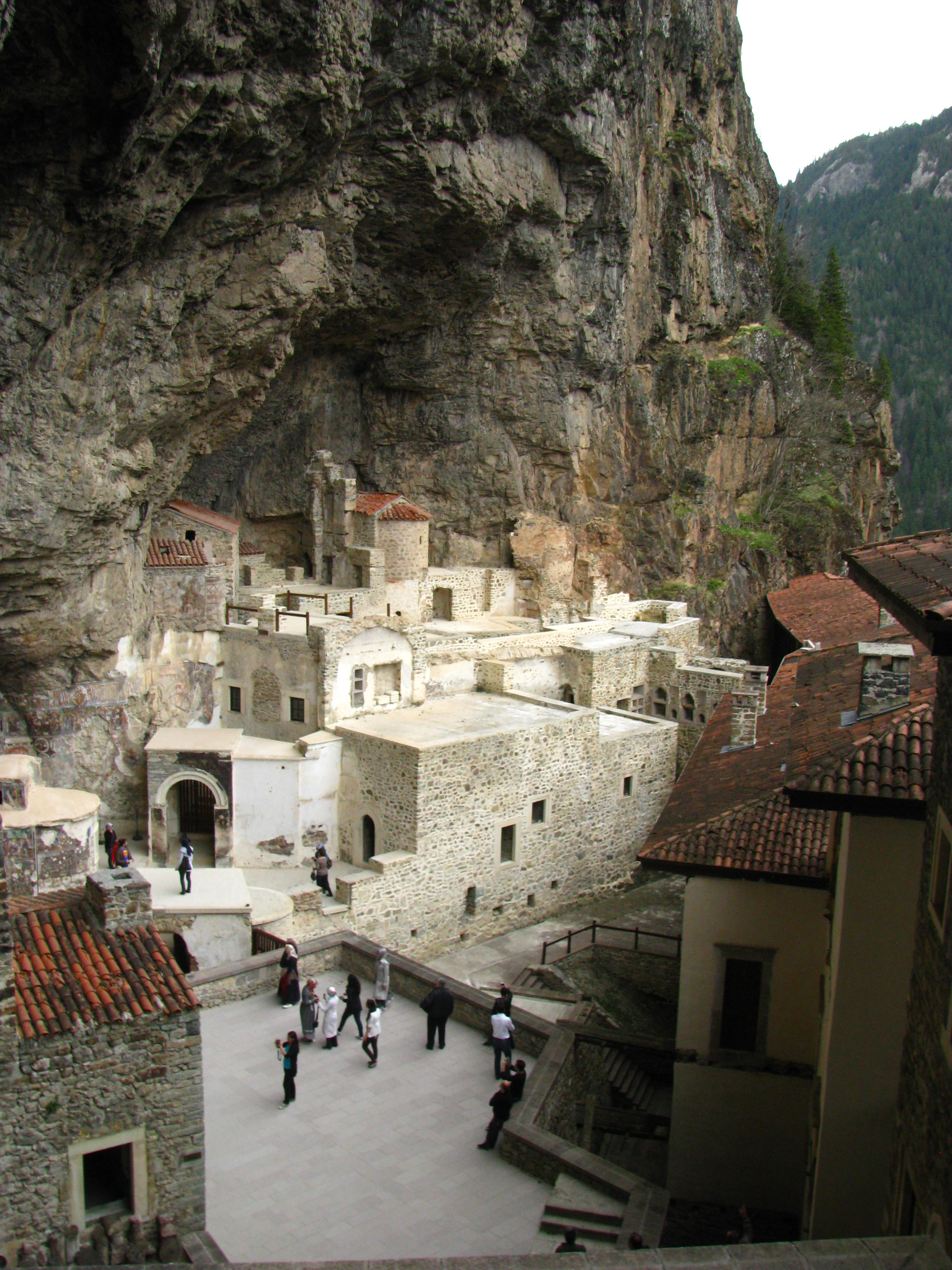
The next day, we went up to Sumela Monastery in the mountains, and from there to Lake Uzungol.  The monastery was quite cool, because it’s perched literally  on the side of a cliff, almost 500 meters above the valley floor.  Unfortunately, the friezes and other artwork was quite damaged,  so I didn’t feel compelled to take many pictures, but it was fun to hike up there and see the view.  A bunch of Turks laughed at the way I ran up the path, and the fountain at the top had some FREEZING cold mountain runoff.  It was a lot of fun.
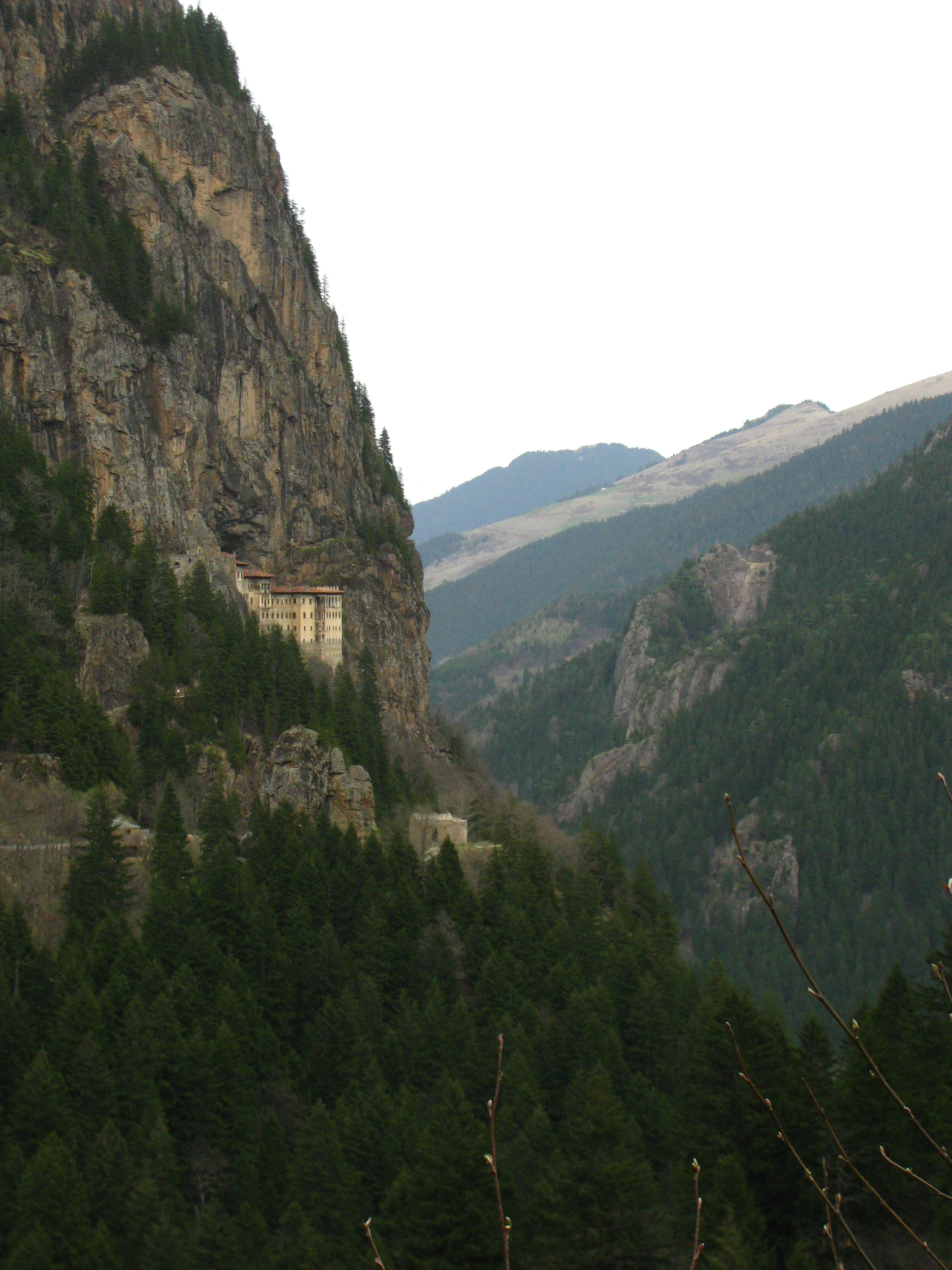
Sumela Monastery from the top of the canyon. The surrounding countryside is absolutely gorgeous.
Inside the monastery complex itself. Many of the buildings are new additions, but there are some original structures.

At the lake, I bought a piece of Turkish silverware for my host mom that ended up being a huge hit.  A lot of the shops were really touristy, but it was fun anyway and the landscape was quite beautiful.  Reminded me a bit of Colorado.  We stayed in a mountain cabin and the bedsheets smelled like cigarettes, but otherwise it was quite comfortable.
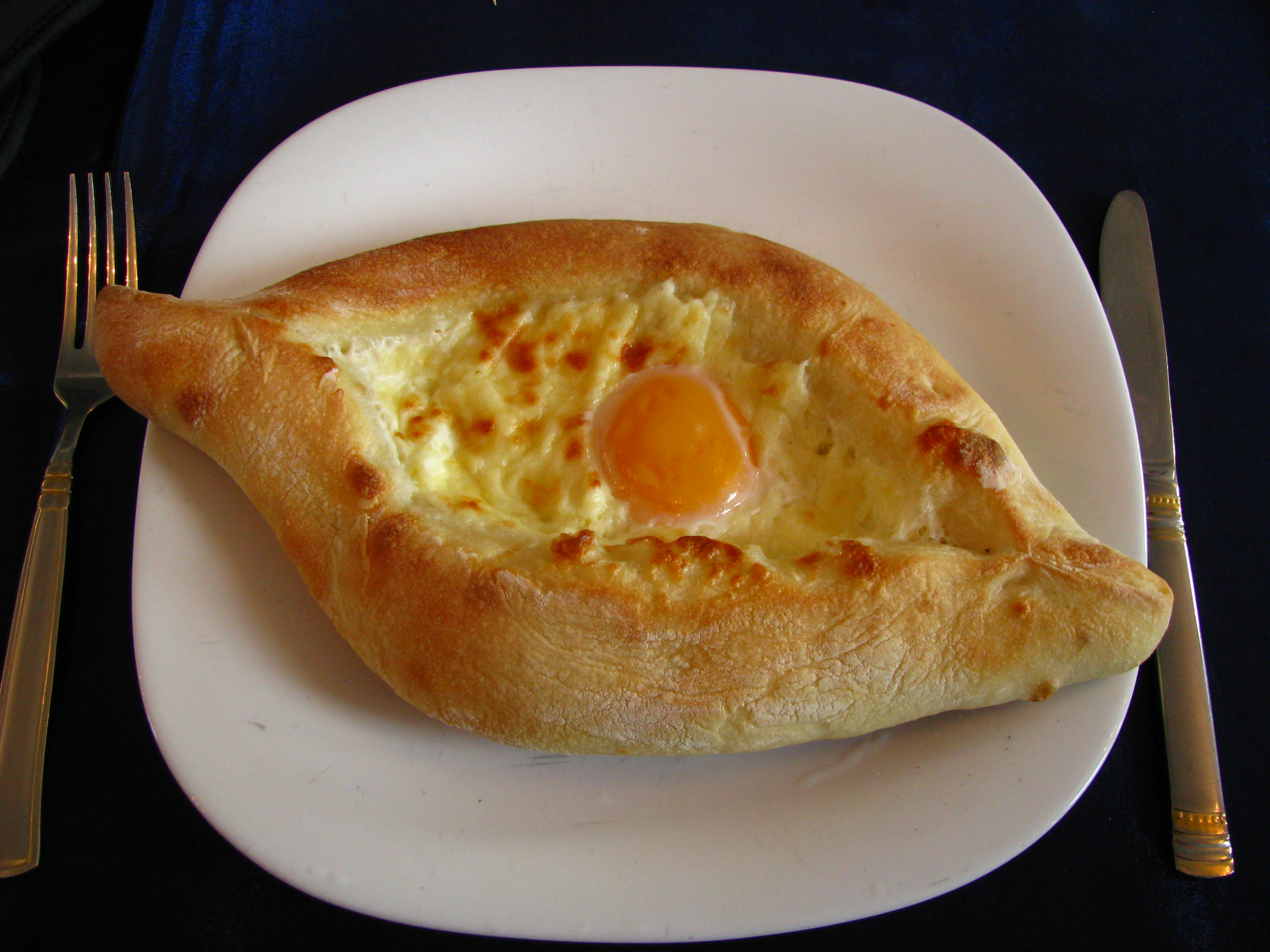
Adjaruli khatchapuri. If you eat this every day, you will have a short and happy life.

On the way back, we stopped in Batumi for dinner and had Adjaruli khatchapuri.  Khatchapuri is the main Georgian go-to food–it’s basically cheesy bread with a thick, doughy crust.  In Adjara, though, they take it a couple of steps further.

Immediately after taking the bread out of the oven, they crack an egg in the center, which gets cooked a little by the heat but otherwise remains raw.  They then take a huge slab of butter and plop it right in the center of the yolk, where it melts in and gets everywhere.  To eat it, you stir the egg around and work your way inward from the crust, dipping the bread in the molten gooey center.  Between the cheese, the egg, the butter, and the bread, you get a pretty heavy meal–delicious, but heavy.

After that, we took to the road again, talking about all sorts of stuff and having a generally good time.  Our tour guide was a great guy, and we had a lot of fun racking his brain.  The other lady from the company was quite delightful, and talked with me a lot about Racha, growing up in Kutaisi, her experiences living in the Persian Gulf, etc.  It was a long ride, but it went by pretty fast, and we pulled into Kutaisi around 9pm.

All in all, a fun, relaxing vacation, and a good chance to get out and see a little more in this part of the world.  Turkey was nice, but I have to admit, I felt a bit like I was coming home when we crossed the border back into Georgia.  It’s not as clean or developed, but it’s got a feel to it that isn’t quite like anything else.  I like it.
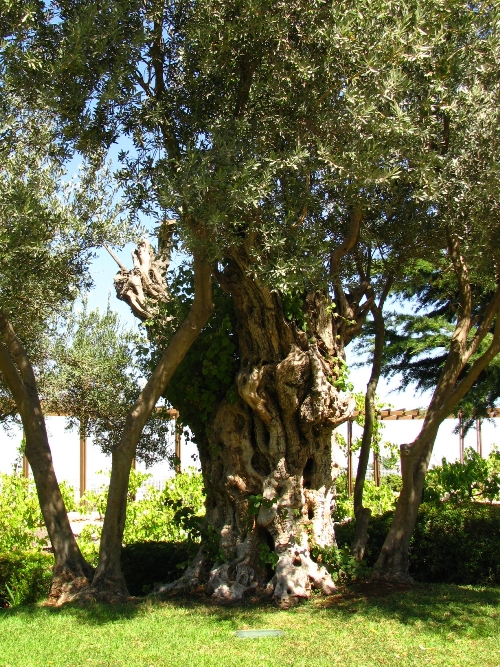
Writing is like tending an orchard

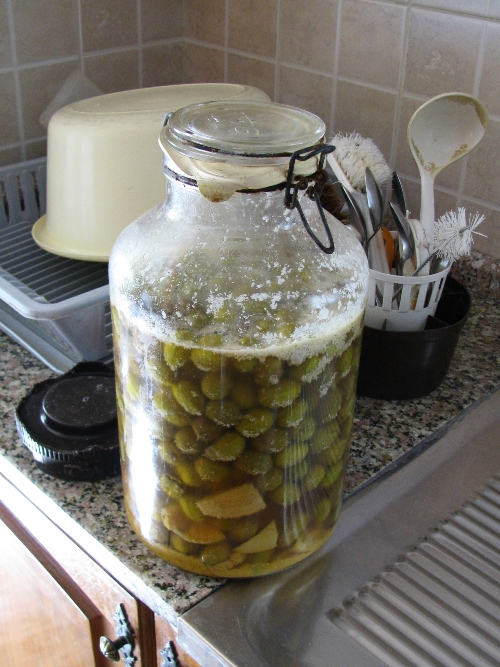
So I was hiking the Y tonight, pondering various things, and the thought occurred to me that writing is a lot like an olive orchard.

First, you’ve got the land, both cultivated and wild.  Cultivated land is like your conscious mind, where everything fits neatly into order and you have control over what you create.  The subconscious is the land beyond the fence, where things grow wild.

Ideas are like seeds; they’re everywhere, but only a few ever take root and sprout.  Those that do need to have new sprouts periodically grafted into the old, in order to preserve the entire tree.  These grafts may come from the cultivated ground of your cultivated mind, but more often than not they come from the wildlands of the subconscious.

Each novel is like an individual olive tree.  It takes a lot of time and work to grow one to maturity, but once you do, it can live for a long, long time.  The fruit itself is like the earnings you get by licensing copyright; if you prune the tree carefully (aka do a good job managing your intellectual property), it just keeps on producing.

Of course, in order to make sure your trees grow properly, you need to be constantly enriching the soil of your mind.  That’s where education and life experience comes in.

Since trees sometimes die, you have to maintain several trees at once in order for your orchard to succeed.  And even though it’s a hell of a lot of work, over the long run the returns are enormous.

For the ancients, olives were a major staple crop. In Greek mythology, Athena was chosen as the patron goddess of the city of Athens because her gift of an olive tree was considered more precious than any other.  And just as good books help us expand our minds, better understand and empathize with others, and generally rise above the boredom and mundane-ness of our daily lives, so also the fruit from this metaphorical orchard is truly of great worth.

Anyhow, those were some of my random ponderings, climbing down the mountain.  Someday, I want to have an orchard that covers an entire hillside and produces thousands of pounds of olives!  Just thinking of it makes me hungry.  Mmm, olives…

What’s for lunch?

So a few weeks ago, I decided I needed to make some changes in my life and start eating healthier.  I figured the best way to do this was to experiment with Middle Eastern cuisine, because:

1) it’s healthy,
2) it’s cheap, and
3) it’s fun!

First, I made a batch of pita bread, using this recipe (with 2 tbs sugar instead of 1).  Pita bread is way easy to make; just roll them out and toss in the oven for four or five minutes.  After letting the dough rise, it usually takes me about 45 minutes to an hour to make a batch.

Pita bread is both cheap and tasty.  A batch of pita bread roughly equals as much as a loaf of bread and costs considerably less (considering each ingredient by amount used).  One thing I’ve found, though, is that pita bread doesn’t keep very well–after only a week, it starts getting moldy.  This happens regardless of whether or not it’s refrigerated.

I’ve tried letting the dough sit in the refrigerator overnight to enrich the flavor, but I’ve found that doing that makes the final product drier and more crumbly.  Besides, I can barely taste the difference.  It takes a bit more time, but I prefer cooking it right after letting the dough rise, usually for 90 minutes to an hour.

Next, I made the hummus.  Store bought hummus is ridiculously expensive, especially considering that you can make it yourself from relatively cheap ingredients found in any American grocery store.  The one possible exception to that is the tahini, but you can still make a tasty batch of the stuff without it.

To make the hummus, I used:

  • one 2 lb bag of dried garbanzo beans (otherwise known as chick peas)
  • 6-10 cloves of garlic
  • 3-5 tbs lemon juice
  • 1-2 cups water
  • 2-3 tbs peanut butter
  • paprika, cumin, and salt to taste

I can’t say exactly how much of any ingredient I used because I eyeballed most of it.  That’s generally the way I cook everything.  Still, it turned out great!

I used dry beans instead of canned because I wanted to avoid the sodium.  Plus, dried beans are way cheaper.  I let them soak overnight (and found that they generally expand to 3 times their initial volume–plan on it!) and cooked them for about two hours–basically, until they were tender enough to mush apart between my fingers.

As an experiment, I substituted peanut butter for the tahini.  Tahini is basically sesame seed butter, and it tastes almost the same as regular peanut butter.  I found, though, that using too much peanut butter overpowers the flavor of the garbanzo beans and gives it a weird taste.  In the future, I’ll probably skip the peanut butter (or add sesame oil–I wonder if that would work?).

To make hummus, you really need to have a good quality blender.  I went to my brother-in-law’s parents and used theirs.  Of course, I left them a pie tin full of the stuff to say thank you!  With a two pound bag of dried garbanzo beans to start with, I had PLENTY left over, as you can see from the photo.

All told, if you know what you’re doing, you can make hummus in large quantities for extremely cheap.  I can make the equivalent of a $10 bucket of Costco hummus for about $2-$3 from scratch.  A pie tin of the stuff, with the whole beans, paprika, and olive oil sprinkled on top for presentation, would cost much less–yet in an American restaurant you’d probably pay $15 or more.

(By the way, pita bread with hummus and fresh cilantro tastes heavenly.)

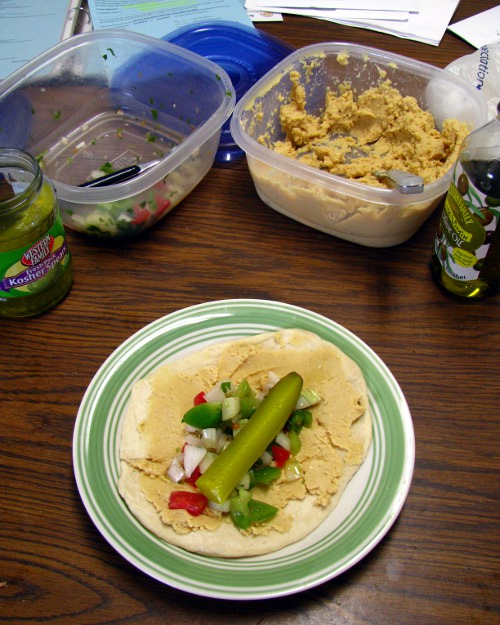
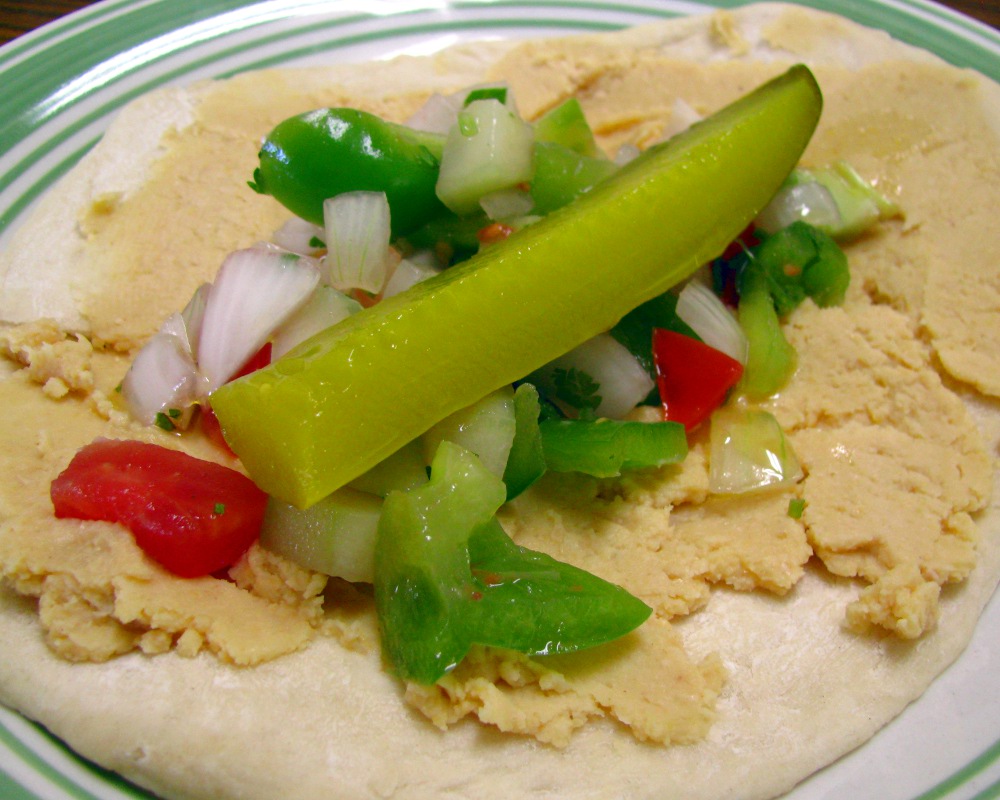
For the vegetable part, I diced up some cucumber, onion, tomato, bell pepper, and cilantro, with a touch of lemon juice.  For flavor, I added a pickle (the restaurants in Jordan serve pickles with just about every meal) with a tiny bit of olive oil on top.

Let me tell you, the end result was a resounding success! I’ve been eating this stuff for lunch for the past week, and it is delicious! Not to mention that it’s nearly twice as cheap as what I was eating before, and at least ten times as healthy.  Yeah!

My next culinary experiment will either be with Egyptian koshari or something to do with the million cherry tomatoes I picked at the McQueen’s house over the weekend.  I’ve also got a bag of frozen chicken, and I wonder if I can make some tasty shawarma if I marinate it in the yogurt I got on sale.  By the way, yogurt on pita bread with whole olives makes another delicious Middle Eastern snack.

Anyways, that’s what I’ve been up to.  If you want to try this out or have any ideas or suggestions, let me know!  I’d love to hear about it.

Dinner with friends

I had dinner tonight with one of my classmates from English 318 last year, who is a frequent commenter on this blog.  He and his wife were kind enough to invite me over to their apartment, where we ate, talked, hung out, and had a general good time.

It was great to see an old friend from Sanderson’s class!  We talked a lot about writing, and that was way cool–I haven’t been around people who can talk writing since I left Provo (not counting the IM conversations I have with Chuck every other day).  At one point, his wife had to stop and say “wait, let’s put this conversation on pause and let me get to know this guy”!

He showed me this interesting online compendium of Wheel of Time characters, which blew me away; I haven’t read the Wheel of Time series yet, but just looking at how many characters are in the books, I have no idea how anyone could write something like that.  I guess that’s the direction Fantasy is going in–enormous worlds, long books, dozens and even hundreds of characters.

We talked about all kinds of other things, too–school and work, career decisions, future plans, social pressures, life in general, etc.  It was great being with interesting people who are genuinely interested in what you have to say.  I tend to be a little self-conscious about the fact that I talk too much, but they got me to talk a lot–about how I decided to be a writer, how I wrote Genesis Earth from story idea to the latest draft, my future goals as a writer, etc etc.  It was a lot of fun.

We also talked about my current project (working title: Bringing Stella Home), and I shared the 30 second story blurb.  I then asked them what they think the title should be, and together we came up with an interesting title idea: Saving Ben and Stella.

What do you think of it?  I kindof think it has a nice ring to it.  Mentions Ben and Stella, which shows that Ben’s storyline is important as well as Stella’s. Then again, it’s not much of a change from the previous one.

In any case, I had an awesome time with Stephen and his wife.  It’s great to have friends wherever you travel, and meet up with old classmates after graduating from college.  Thanks guys!

Uh oh…more projects?

That’s right.  I recently formed a writing group with some friends, and decided to workshop Bringing Stella Home through it.  They went through the first chapter yesterday and tore it apart.  I appreciate the help a TON, but I’m going to have to start making revision to it now, so that subsequent submissions to the writing group won’t have the same issues.

So, that makes three major ongoing projects for me now: the Genesis Earth 3.0 revision draft, the Ashes of the Starry Sea 2.2 draft, and now, Bringing Stella Home 2.0.  It’s going to be very hard to juggle all three, and one of them will probably fall through  the cracks (probably Ashes, to be honest).  However, I’m going to do my best to give them all equal time.  We’ll see if I succeed.

In order to accomplish this, I’m probably going to have to make some changes to my daily routine.  Right now, I work out, eat breakfast, read the Book of Mormon, and arrive on campus ready to write…at about 11:00 am.  And that’s on a good day.  I write until about 2:00 or 3:00 pm, then go home for lunch, take a nap, check the internet, be lazy, etc.  At about 7:00 or 7:30 pm, I head back up to campus and write until about midnight.

So far, it’s been working.  I’ve been averaging 4k words per day pretty regularly these past couple of weeks.  However, if I’m going to work on these projects, I might have to focus and up that wordcount a bit.

Therefore, I’m going to try to cut back on IMing while I’m writing.  Usually, during the day, I’ve got gmail open on my browser and I check it from time to time.  I’ve got a couple of friends with whom I usually keep a running chat for the entire day, which can be maddening when you’re trying to concentrate.

I’ve been thinking about cutting back on the IMing for the last few weeks, but thus far it hasn’t been too much of an issue.  However, if I’m going to buckle down, something’s got to go.  Sorry.

(Of course, it remains to be seen if I keep this resolution.  Internet habits die hard.)

In unrelated news, I cooked the AWESOMEST chili today!  Best chili of my life, and what’s even better, I cooked it in MASSIVE amounts!  Here’s what I put in it:

corn
diced onions
ground beef
kidney beans
pinto beans
black beans
crushed tomatoes
diced jalapenos
plain yoghurt
spices

The secret ingredient was definitely the yoghurt.  Adds a creamy texture, like sour cream without the unhealth stuffy.  Also give it a rich and interesting flavor.

Good stuff!