Just a quick update on things:
I’m going camping this weekend up Huntington Reservoir with some friends, so I won’t be around for a couple of days. It should be fun; last trip was a good chance to step back and recharge, and I definitely could use that right now.
At the same time, I’m working on Sholpan, and it’s turning out to be a lot harder than I’d initially thought. I’m writing it as a companion novella to Bringing Stella Home, where the story covers Stella’s point of view through about the first half of the novel, with a few extras for the people who read the novel first, and enough loose ends to entice people who read the novella first to pick up the full-length novel.
It’s turning out to be a difficult balancing act, however. The first draft was basically just all of Stella’s scenes up to the last three/four chapters of the novel, and that ended up being too much. For those who read the novel first, it didn’t have anything new, and for those who hadn’t read it, it revealed far too much.
So for the next draft, I decided to trim it right up to the point where Stella’s story has its first major twist. Even though that includes a minor spoiler for the novel, it gives the novella a great story arc with a good reversal.
But that leaves the question: what does the story need in order to be satisfying to those who read the novel first?
I’m not a huge fan of flashbacks, but after wrestling over the last few days with the beginning, I think it’s better to start in media res, which makes flashbacks unavoidable. I’ll try not to botch them. Also, I think I’ll give some more background information about her and Lars, as well as develop her relationship with Narju. But the last thing I want to do is pad the novella with useless filler.
I dunno; what do you think? If you read and enjoyed a novel, what sort of shorter work based on that story would you want to see? And if you started with the novella first, how much would be too much, and how much would be too little?
Oh, and in case you’re interested, I took your feedback and redesigned the cover:
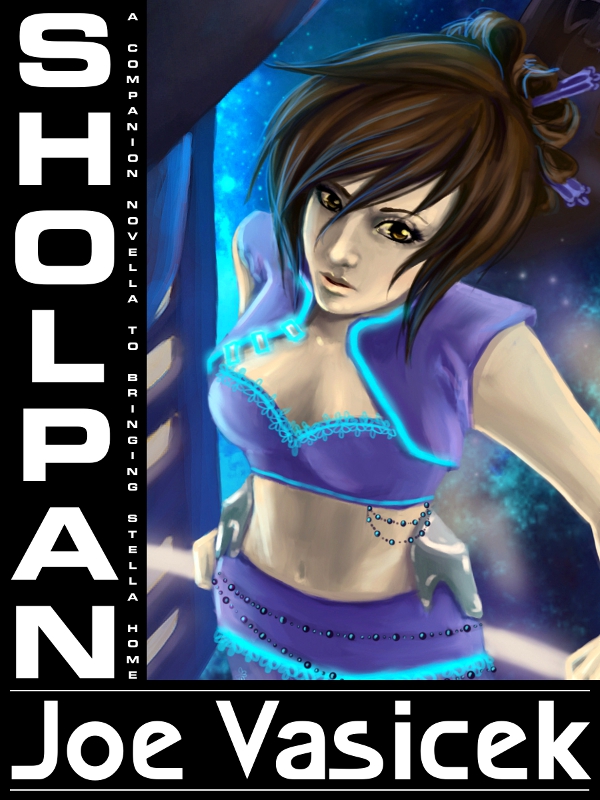
Thanks! I’ll see you when I get back in a couple of days.
 Skilgannon the Damned is one of the mightiest warriors in the world, yet every day the memory of the innocents he has killed haunt him. He seeks solace in becoming a monk, but as alliances break down and wars sweep the land, mob violence comes to the monastery and Skilgannon once again takes up the swords of Night and Day. The swords, however, are cursed with an enchantment that corrupts the soul of the one who wields them, and the old witch who gave Skilgannon the swords–and who cursed them–is behind the political machinations that threaten to drive Skilgannon into the hands of his greatest enemy: his old lover, the queen of Naashan.