To escape or to engage

A couple of weeks ago, I finally sat down and wrote a (semi-) formal business plan. It was an enlightening experience. I’ve kept it all organized in many different ways, but writing it all down in one place allows me to step back and take a wider look at what I do.

No business plan is complete without a mission statement. Here is mine:

To write and publish fiction that serves the truth, expands minds and hearts, and empowers my readers to be better men and women for reading my books.

To serve, expand, and empower. All of the books that have profoundly affected my life, from Ender’s Game and Lord of the Rings to The Neverending Story and A Wrinkle in Time, did those things.

“That’s very high and lofty, Joe, but what about just writing damn good stories that entertain people?” I don’t actually see a contradiction there. All of the best stories I’ve read that served, expanded, and empowered me were only able to do so because they entertained me first.

Entertainment is an important part of what I do. So is escapism. I have no idea how J.R.R Tolkien voted in the 1930s and 40s, nor do I care to know. I have a pretty good idea how Orson Scott Card voted in the 90s and 00s, but not from reading Ender’s Game. Sometimes I read authors for their politics (Ringo, Heinlein, Correia), but I didn’t read The Last Centurion to decide how I would vote in the last election; I read it because leading a stranded cavalry division across a post-apocalyptic Middle East sounded like a damn good story.

The surest way to kill a good story is to try to cram a message through it. The best stories never do this. They serve as a mirror that allows the reader to see themselves more clearly, whoever they may be. That’s what makes them timeless.

The world is becoming an increasingly scary and violent place. In the coming months, I expect that things will get a lot worse. This puts me in an interesting position. Should I try to write stories that engage with what’s happening in the world, or stories that provide an escape from it?

Or is there a contradiction between the two?

There’s a lot of outrage on social media from people who are trying to engage with the problems they see in the world. Unfortunately, the louder their outrage becomes, the more they seem to be part of the problem and not a solution to it. That’s part of why I deleted my Twitter account and radically scaled back my Facebook usage.

Does lashing out at injustice really make the world a better place? Adding outrage to outrage, pointing out everything that’s wrong? There’s a time and a place for that, sure. But there’s also a time and a place to disengage.

When times get hard, people need an emotional escape. That’s why they turn to things like sports, or movies, or books. But when this media instead tries to engage by bringing in politics or social justice or whatever, it deprives people of their escape. We see it all the time with the virtue signalling in Hollywood, or the issue dropping in TV and movies, or whatever the hell ESPN has become.

I don’t want to go that route. Not with my books, not with this blog—not with any aspect of my career. It’s tempting, sure, and I’ve flirted with it in the past, but it’s time to pull back. I may be convinced of my own views and opinions, but that’s not why I write. You don’t serve the truth by forcing it on other people. You don’t expand minds and hearts with moral outrage. You don’t empower people to become better by telling them that they’re wrong.

With the way the world is going, I think the best thing I can do is to focus less on trying to engage with it and more on providing an escape from it, through my books. Ultimately, I think that’s a better and more effective way to change the world.
The Gulf Between the Generations (Blast from the Past: February 2012)

Here’s a post I originally wrote in 2012. Given how most political commentary tends to lose relevance over time, it’s remarkable when something from the past is even more relevant now than when it was written.

Not that this post is overly political: more just a series of observations, including some red flags that, at the time, were still on the distant horizon. In recent months, those flags have drawn much closer.

Such a crazy world we live in. Stay safe, and thanks for reading.


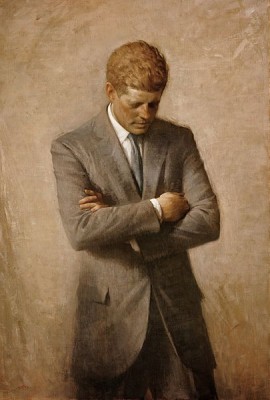
I just watched a fascinating interview with a 1960s White House intern who claimed to have an eighteen month affair with President John F. Kennedy. But the most interesting thing wasn’t the affair itself, but the way the President’s staff, the “fourth branch” of government (AKA the media), and the entire general public of 1960s America seemed more intent on keeping the secret than on facing the truth about JFK’s many affairs.

It seems that my parents’ generation had so much trust in their government that nobody would even raise the question—that to raise doubts about the integrity of the man who held the highest office in this country would itself be unconscionable. Rather than face the facts, the American public seemed unwilling to do anything that would shatter the gilded image of the man who led the free world. And that, quite frankly, is a mindset that I simply cannot understand.

In contrast, my own generation has very little trust in our government. We’ve been raised in an age of ambiguity, where the enemy doesn’t wear a uniform or pledge allegiance to a flag, but live quietly among us, until they strap a bomb to their bodies or turn a commercial airplane into a weapon of terror. Or at least, that’s the excuse our government gives us for an increasingly invasive security regime that infringes on our basic liberties, enables the military to hold us in detention indefinitely, and sends our soldiers overseas to fight increasingly senseless wars to “liberate” the people of oil-rich nations who don’t even want us there. As if that weren’t enough, the economic crash has taught us that all that stuff our parents taught us about equality and opportunity is really just a pack of lies—that the rich get bailouts while the rest of us foot the bill, and all that stuff about changing the world and being whatever you want to be… yeah. Lies, all of it.

My Dad had an interesting rebuttal to all this, though. He said that it wasn’t his generation that put the president on a pedestal—it was his generation that tore the pedestal down. During the 60s and 70s, the Vietnam era and the rise of the hippy movement, his generation fought back and made it acceptable for us to question the president, or to criticize the government, or to do all the things that we take for granted today. In fact, he said that we’re the ones who are backsliding into complacency, with our deafening echo chambers, our social media inanities, our reactive attachment to corporate brands and advertising, and our almost religious sense of entitlement.

I’m not totally convinced he’s right, but I do think there’s a fundamental gulf between these three generations. Our grandparents’ was the silent generation, where people were expected to keep to their own business and not rock the boat. Our parents’ generation was one of top-down media, where ABC, NBC, and CBS ruled the airwaves and told us all what to think, buy, and believe. Ours is a much more peer-to-peer generation, but I worry that we’re turning into a collection of mindless herds who are turning the culture wars into a messy riot where we abandon civil dialog and rational thinking for a much more destructive mob mentality that isn’t really building anything, but tearing it all down.

Sometimes, it gets so frustrating that it makes me yearn for the days of the frontier, when you could leave it all behind and reinvent yourself somewhere out in the west. That’s probably why I’m so drawn to science fiction, where space is the final frontier. There really are times when I wish I could go to the stars and escape to it all. Writing about that is the next best thing.

Maybe that’s why I feel so compelled to write Star Wanderers. It’s not all rosy, of course—space can be a cold, dark, and lonely place—but so can this world, when you’re lost and you don’t really know what you’re doing with your life.

I don’t know if I recognize anywhere as my own country anymore. Like Van Gogh, all I can say is the sight of the stars makes me dream.

Quarter Share by Nathan Lowell

Ishmael Wang never thought he would sign up with the crew of a solar clipper, traveling the stars as part of a merchant collective.  But when his mother unexpectedly dies, leaving him with barely enough money to pay next month’s rent, he finds himself without any other choice.  Fortunately, the starfaring life suits him quite well–surprisingly well.

I picked up this novel because it appeared in the “customer’s also bought” section of my own novel, Genesis Earth.  It was a fun read, though to be honest I put it down for almost seven or eight months before finishing it.  The reasons for that should be clear by the end of this post.

Don’t get me wrong; there are things that I liked a lot about this book. The beginning set up is excellent–I really felt drawn into the story, and felt for the challenges that Ishmael was facing.  As he started to make friends and explore his new world, the wish fulfillment factor became a major draw.  I mean, who wouldn’t want to sign up with the crew of a solar clipper and travel across the stars?

But somewhere in the middle, the book started to lose steam.  Ishmael’s internal conflicts with the death of his Mom faded into the background until they completely disappeared.  Everything that he set out to accomplish, he did so successfully after the first or second try.  The story took on a sort of video game quality, where the main focus was leveling up: from quarter-share to half-share, from this test to that test, etc.  Even some of the aspects of the world-building became mundane, with mushroom-growing asteroids and space station flea markets becoming just another way to make a profit.

While there were aspects of the trading game that I liked, the lack of any real conflict made me lost interest in the story. The beginning is very strong, and the middle, though weaker, is still okay, but the ending just sort of fizzled without a real climax.  If you’re only reading for wish-fulfillment, that probably isn’t a problem, but if you want something else, you’re probably better off looking elsewhere.

The gulf between the generations

I just watched a fascinating interview with a 1960s White House intern who claimed to have an eighteen month affair with President John F. Kennedy.  But the most interesting thing wasn’t the affair itself, but the way the President’s staff, the “fourth branch” of government (AKA the media), and the entire general public of 1960s America seemed more intent on keeping the secret than on facing the truth about JFK’s many affairs.
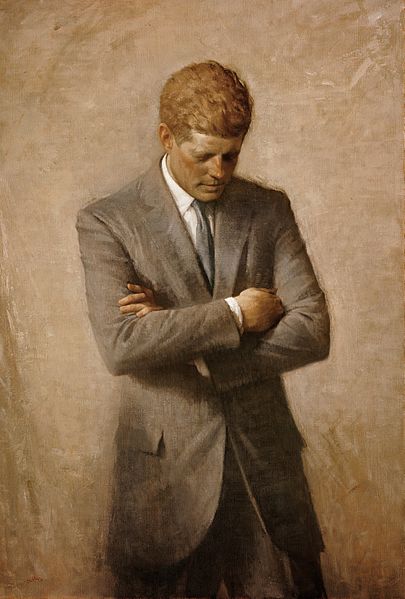
It seems that my parents’ generation had so much trust in their government that nobody would even raise the question–that to raise doubts about the integrity of the man who held the highest office in this country would itself be unconscionable.  Rather than face the facts, the American public seemed unwilling to do anything that would shatter the gilded image of the man who led the free world.  And that, quite frankly, is a mindset that I simply cannot understand.

In contrast, my own generation has very little trust in our government.  We’ve been raised in an age of ambiguity, where the enemy doesn’t wear a uniform or pledge allegiance to a flag, but live quietly among us, until they strap a bomb to their bodies or turn a commercial airplane into a weapon of terror.  Or at least, that’s the excuse our government gives us for an increasingly invasive security regime that infringes on our basic liberties, enables the military to hold us in detention indefinitely, and sends our soldiers overseas to fight increasingly senseless wars to “liberate” the people of oil-rich nations who don’t even want us there.  As if that weren’t enough, the economic crash has taught us that all that stuff our parents taught us about equality and opportunity is really just a pack of lies–that the rich get bailouts while the rest of us foot the bill, and all that stuff about changing the world and being whatever you want to be…yeah.  Lies, all of it.

My Dad had an interesting rebuttal to all this, though.  He said that it wasn’t his generation that put the president on a pedestal–it was his generation that tore the pedestal down.  During the 60s and 70s, the Vietnam era and the rise of the hippy movement, his generation fought back and made it acceptable for us to question the president, or to criticize the government, or to do all the things that we take for granted today.  In fact, he said that we’re the ones who are backsliding into complacency, with our deafening echo chambers, our social media inanities, our reactive attachment to corporate brands and advertising, and our almost religious sense of  entitlement.

I’m not totally convinced he’s right, but I do think there’s a fundamental gulf between these three generations.  Our grandparents’ was the silent generation, where people were expected to keep to their own business and not rock the boat.  Our parents’ generation was one of top-down media, where ABC, NBC, and CBS ruled the airwaves and told us all what to think, buy, and believe.

Ours is a much more peer-to-peer generation, but I worry that we’re turning into a collection of mindless herds who are turning the culture wars into a messy riot where we abandon civil dialog and rational thinking for a much more destructive mob mentality that isn’t really building anything, but tearing it all down.

Sometimes, it gets so frustrating that it makes me yearn for the days of the frontier, when anyone could leave it all behind and reinvent themselves somewhere out in the west.  That’s probably why I’m so drawn to science fiction, where space is the final frontier.  There really are times when I wish I could go to the stars and escape to it all, and I think that shows in my writing.

Maybe that’s why I feel so compelled to write Star Wanderers.  It’s basically 80% wish fulfillment, about a guy who goes from planet to planet on the kind of spaceship I wish I had.  It’s not all rosy, of course–space can be a cold, dark, and lonely place–but so can this world, when you’re lost and you don’t really know what you’re doing with your life.

Anyhow, those are just some of my random late-night thoughts about the situation in this country and how much things have changed over the decades.  If I had a time machine and got a chance to go back to the 60s (after seeing The Empire Strikes Back on opening night, of course), I don’t know I’d be able to recognize this as my own country.  But really, I don’t think I recognize anything as my own country anymore.  Like Van Gogh, all I can say is the sight of the stars makes me dream.