Journey to Jordan is now published!

My travel journals from the 2008 BYU Jordan Study Abroad are now available as an indie published ebook from Smashwords!

Originally published as a blog, I always wanted to make it available as a book someday.  I spent the last couple of months running through it, putting together all the old posts as well as a few private ones.

I’ve edited them to bring the quality of my writing up to date, but did my best to retain the original sense of enthusiasm and discovery.  I’ve also added a foreword and afterword to give it a little more context, especially in light of the past few years.

This is the unillustrated version; I’m not exactly sure how to format ebooks with pictures, so the illustrated version with the photographs will have to wait.  I can’t promise I’ll get it up before I head out to Georgia (I’m just waiting to get the call–I could be leaving as soon as next week), but I’ll do what I can.

This version will be exactly the same as the other except for the photos, however, so if that’s not important to you, the unillustrated version is cheaper and much less unwieldy (only 895 KB).  Also, until Smashwords allows for direct epub uploads in a little less than a year, the only version available from Smashwords will be this version.

It was a lot of fun putting this one together, and I’m excited to see it up!  As with all my books, thanks for taking the time to read it, and I hope you enjoy!

Desert Stars is now published!

Desert Stars, my third novel (and second in the Gaia Nova series), is now available as an independently published ebook from Amazon, Barnes & Noble, and Smashwords.  Within the next couple of weeks, it’ll be available through Kobo, iTunes, Diesel, Sony, and Xinxii as well.

It’s been a long journey, and I’m thrilled to finally see it come through.  I started the first draft back in the fall of 2008, but had been working on ideas for the world since 2005, when I returned from my LDS church mission in California.  Spending the summer of 2008 in Jordan was a major catalyst for my imagination, and I soon was bursting with ideas for a far-future story on a desert world.

I got stuck in the winter of 2009, however–right before taking Brandon Sanderson’s English 318 class.  Since he encourages all of his students to work on something new, I decided to write a book in the same universe in order to work through some of the world-building things that were holding me up.  That book became Bringing Stella Home, which was a thrill to write all of its own.

The strategy worked; by the time I’d finished that one, I had a much clearer idea where to go with Desert Stars, and an awesome ending that was nothing like anything I’d planned in the first draft.  And so, after graduating in April 2010, I soldiered through and finished the rough draft that summer.

It still had a lot of problems, though.  Fortunately, my first readers were extremely helpful both in pointing those out and in giving me fantastic ideas for other things I could do.  In the second draft that winter, I completely scrapped a major subplot in the second half of the book and focused on perfecting the character arcs for the two main characters: Jalil and Mira.

Around this time, I made the paradigm shift from traditional to indie publishing.  Other projects like Genesis Earth and Bringing Stella Home took my attention for a while, as I learned the basics of the new world and prepared those books for publication.  However, I always kept coming back to Desert Stars: I knew I had a good story there, and I was just itching to bring it to its full potential.

In the fall of 2011, I finally had that opportunity.  The last draft flew by in three weeks, and was one of the funnest writing experiences I’ve had since I started writing seriously in 2007.  By the end, I knew it was ready.  I sent it out to my editor, Josh Leavitt, and started to prepare it for publication.

In writing any book, there are always moments that stand out; experiences where things come together in an unexpected yet memorable way.  One of those came to me in Jordan, while I was walking down Queen Rania street from the University of Jordan to Al-Dustour, and the phrase “Temple of a Thousand Suns” flashed into my mind and sparked the whole novel.  Another of those moments happened while I was driving from Salt Lake to Provo, and Mira’s final words in the last chapter came to me; I literally could not stop screaming for two or three minutes.

I could share more, but if I did, I’d find it difficult to maintain the illusion that I’m not a loony psychopath. 🙂

In any case, it’s just awesome to see the story come to maturity and embark out into the world.  I’m sure this isn’t the end of the journey, but it’s definitely entering a new and exciting phase.  I sincerely believe that this is my best book yet, and I hope you find it as worthwhile to read as I have found it worthwhile to write.  If you do, I would appreciate it greatly if you took the time to post a review, or share it with a friend.  Every little bit helps, and I’m grateful for whatever support you can give!

In the next couple of days, I’m going to send out a newsletter with some freebies including desktop backgrounds of the cover art.  If you’d like to get in on that, be sure to sign up for the email newsletter via the form on the sidebar; you’ll also receive notices for other giveaways, as well as new releases.  It costs nothing and you can always unsubscribe, so there’s no pressure or obligation.

And that just about wraps it up.  Now: on to the next book!

Desert Stars cover art is in!

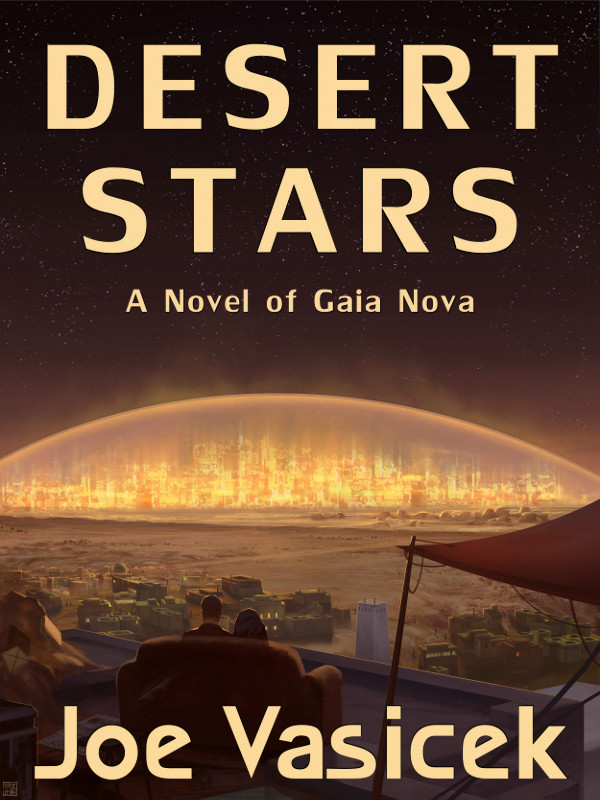
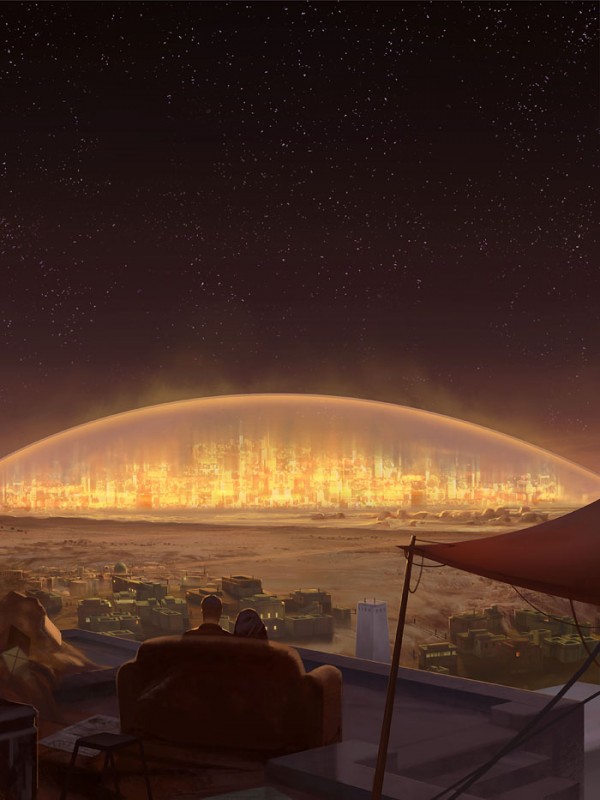
I just got the final version of the cover art for Desert Stars, and it looks great!  Here’s a preview:

Many thanks to Hideyoshi, who also did the art for Genesis Earth.

I’ll finish the cover and upload the ebook over the weekend.  By Monday or Tuesday, it should be up for sale across all sites.

Squee!  I’m so excited!

Why I won’t be signing up for KDP Select

In the last couple of weeks, there’s been a lot of discussion about Amazon’s new Lending Library program.  Just a few days ago, Amazon opened it up to indie writers with the KDP Select program.  By signing up, writers gain access to Amazon Prime members (US only), where readers can borrow the book for free and Amazon still reimburses the writer.

The catch?  Two, actually: writers agree to make their books exclusive to Amazon for 90 days, and payment for all KDP Select authors comes out of a monthly “fixed pot” of $500,000, where every writer gets a cut according to what percentage of the Lending Library downloads were for their books.

Reactions from the indie community have been mixed.  Within only a few hours, several thousand enthusiastic writers had signed up (the current number of participants is ~50k), but many others remain cautious and aloof.

The full range of reactions can be seen in the Kindle Boards thread.  Guido Henkel does a good job pointing out how the numbers don’t add up, while David Gaughran offers a compelling analysis that likewise dampers enthusiasm for the program.  On the Smashwords blog, Mark Coker pleads with writers to keep their options open, while at Writer Beware, A.C. Crispin points out some disturbing language in the terms & conditions that essentially amounts to a non-compete clause.

I’m sure that many others will weigh in on KDP Select in the coming days, and I look forward to reading their analysis, but I’ve already decided that I won’t be signing up with the program.  Even if no one else signs up, with 50k writer splitting a $50,000 pot, the average monthly paymentis only going to be $10.  Unless you’re one of the lucky bestsellers, you’ll probably make even less than that.

But the real reason I’m not signing up is because I don’t feel that it serves my readers.  If I put any of my titles through KDP Select, I’d be giving Amazon a 90 day exclusive, which means that my readers would be forced to either buy through Amazon or wait three months to buy my books.  I don’t feel that that’s fair to my readers, especially in territories where Amazon levies a $2 surcharge.

At this point in my career, my goal is to build up a dedicated fan base that looks forward to each new release.  To do that, I want to make my books available in as many places as possible.  Even if I’m not selling all that well right now at Barnes & Noble or the smaller retailers, it’s not worth it to cut those readers off and tell them to go to Amazon or wait.

However, the KDP Select program does foreshadow the next big phase of the ebook revolution, and that is the move to subscription services.  I expect that in the mid- to near-future, we’re going to see a lot of ebook lending models arise, kind of like Netflix for books.  The big question in my mind is how the writers are going to be compensated.

Like David, I have a lot of concerns with KDP Select’s “fixed pot” model.  Besides the lack of any guaranteed or minimum rate of compensation and the general opaqueness of the system, it fundamentally pits writers against each other in a zero-sum game, where one writer’s gain is another one’s loss.  To me, this represents a giant step backward.

When a reader finds something they like, they’re more likely to try out another book just like it.  This is how readers have historically found new writers, and it fosters a sense of community, where writers work together to reach out to new readers and expand the scope of the genre.  The “fixed pot” model disincentives all this and replaces it with a Machiavellian system that, at its worst, works against the natural advantages of the medium and undermines the genre community.

For all these reasons, I won’t be signing up for Amazon’s KDP Select.  The exclusivity hurts writers and readers, the numbers just don’t add up, and the “fixed pot” model represents a fundamental shift in bookselling that I cannot support.

How to make an ebook

Since I plan on publishing a number of books this next year, I decided to write down the step-by-step instructions for how I make my ebooks.

There’s 50 steps altogether and the process can get a little complicated, but if you follow the instructions it should all be very straightforward.  It takes me about two hours now to run through all the steps, and when I’m finished I have a .mobi file for Amazon, an .epub file for Barnes & Noble, a .doc file for Smashwords, and a couple .jpg files for cover art and thumbnails.

The best part is that all the programs are free, so once you know what you’re doing, it costs nothing but a couple hours of your time to actually make the ebook files.  Other than maybe another hour (if that) to upload the files to Amazon, B&N, and Smashwords, that’s all it takes to publish.

Since publishing isn’t a zero-sum business and all of us benefit when writers have options, I’m making this short manual available as a free PDF.  It may or may not work for you the way it works for me, but if it helps you to climb the steep learning curve that all of us face when we first start out, then I’ve done my job.

Vasicek epublication manual

Also, if any of you are more knowledgeable about formatting than I am, please let me know if you have any suggestions.  I’m always looking out for ways to make my books better, so none of this is set in stone (or print, for that matter 🙂 ).

Heinlein’s rules for the digital age

I’ve been thinking a lot about Heinlein’s rules and how they apply to my own writing career.  While a lot of newer writers like to debate Heinlein, all of the long-time professionals tend to agree with him.  For that reason, I think it’s worth taking a serious look at his rules and doing my best to follow them.

The trouble is that Heinlein formulated his rules before the digital age, when self-publishing was non-viable and writers sold to editors, not to readers.  While I wouldn’t go so far as to say his rules are outdated, I do think that they need to be tweaked a little in order to apply to today’s aspiring professionals.

As a disclaimer, I should say that I’m only a beginning writer without much authority or experience.  However, my goal is not to debate Heinlein, but to explore ways in which his advice can be adapted to myself and writers in my position.  If any of you have any thoughts or input, I would very much like to hear it.

So anyhow, here we go:

Rule One: You Must Write.

Pretty straightforward: if you want to write for a living, then the bulk of your time should be spent writing.  Too many indie writers spend all their time and energy promoting their one book when they should be writing others.  If promotion gets in the way of writing, then you should stop promoting and just go write.

Personally, I could probably spend a lot more time writing new material as opposed to revising stuff I’ve previously written (yes, that’s the infamous third rule; I’ll get to it in a minute).  I tend to spend a month writing something new, then take a couple of months to revise old works without producing new material.  If I want to be strict about following Heinlein’s rules, I should probably change that.

Rule Two: You Must Finish What You Write.

Another straightforward rule, but you’d be surprised how hard it is when you know you can publish whatever you write.  Kris Rusch calls these ideas “popcorn kittens,” after a popular youtube video that embodies what goes on in our minds when we have the freedom to create anything.  The problem with too much freedom is that it’s a struggle not to flit from one idea to another, dabbling in all of them but carrying none to completion.

I myself had this problem over the summer, and to some extent I’m struggling with it now.  The key is just to buckle down and have the discipline to finish what you start.  Pretty straightforward.

Rule Three: You Must Refrain From Rewriting, Except to Editorial Order. 

This is Heinlein’s most controversial rule, especially for new writers.  However, I think he has a good point.  If a story is fundamentally broken, revising it is no more effective than stirring around a pile of crap; and if the story works, revising it without first getting a trusted second opinion could actually make it worse.  After all, writers are often the worst judges of their own work.

The key question, then, is where to go for that second opinion.  In the old days, money flowed from the editors to the writers (or at least from the publishers, who employed the editors), but in the new world of publishing, it’s exactly the opposite.  Most of us can’t afford to hire editors for extensive developmental edits, especially when we’re just starting out, and while it’s possible to publish a rough draft, for most of us it’s probably not a good idea.

My approach is to share my unpolished work with a network of trusted first readers, and use their feedback to guide me in the revision process.  I don’t always adopt all of their suggestions, but I carefully consider each one.  Most of the time, I use them to see where the problems are, then use my creative mind to come up with a solution, sometimes taking the book in an entirely new direction.  And if something works well for some but doesn’t for others, I figure it’s not a problem but a judgment call that requires my attention.

Using this method, it currently takes me about four or five drafts before I feel confident enough to publish something.  If I really wanted to follow Heinlein’s rules, I would probably try harder to nail it on the first draft, but I’ve found that my creative process works better in revision mode than while writing new material.  So long as I can revise efficiently enough to produce at least two novels each year, I think I’ll be in good shape.

Rule Four: You Must Put Your Story on the Market.

In the old days, this meant submitting your manuscript to contests, magazines, and publishing houses, not self-publishing.  For short stories, contests and magazines are probably still the best place to start.  However, with novels, indie publishing is generally much better.

The trouble is that publishing your own work is as scary as hell, especially when it’s close to your heart.  This is probably the main thing keeping most new writers from going indie: the need for external validation which grows out of a lack of much needed self-confidence.

The key, I believe, is to get some emotional distance between yourself and your work.  As a rule, I don’t respond to reviews, good or bad.  As for external validation, I don’t seek it at all.  I only publish the stories that I believe in, and even if I’m nervous about sending them out into the world, I figure it’s better to suck it up and do it anyway.  It was the same with writing queries; the only difference is that the market is now the readers, not the editors.

Rule Five: You Must Keep It On The Market Until It Has Sold.

This is especially challenging for indie writers.  When weeks go by without a single sale, it’s easy to believe that your work is crap and that you should just take it down.  It’s even worse when your book isn’t selling and you get a bad review.

Just like with queries, however, the key is to keep your work out there until it finds its natural audience.  With indie publishing, you have all the time in the world, provided you don’t lose confidence.

The key question in my mind is whether to take down your old, crappy stuff as your writing improves, or to leave it up alongside your newer, better work.  Personally, I think it should come down to the readers; if the old stuff is consistently getting bad reviews, it’s probably better to take it down, but if not, might as well keep it up.

So there you have it.  From Heinlein’s rules, I’ve more or less crystalized the following approach:

  1. Always make time to write, even at the expense of promotion.
  2. Only chase new ideas if you know you can finish what you start.
  3. Don’t revise without first getting feedback from trusted readers.
  4. Don’t wait for external validation before you publish.
  5. Keep your work up, even if it doesn’t sell.

Not quite as pithy as Heinlein’s rules, but they seem pretty reasonable.  I don’t have the experience to say whether they follow his, however, so if you have any comments or suggestions, please chime in.
Random updates before leaving

I’m spending Thanksgiving with my parents this year, which means I’m leaving for Massachusetts tomorrow…by train.  Well, technically, Sunday morning, since the cross-country trains come through Salt Lake City in the wee hours, but to my way of thinking it’s tomorrow and not Sunday.  Either way, I won’t be posting anything until Tuesday night, since that’s when I arrive.

You may have noticed that Amazon recently bumped the price of my two short stories, Memoirs of a Snowflake and Decision LZ1527,” back up to $.99.  I decided to raise the price because giving them away for free wasn’t having any sort of effect on sales of my other novels.  Sure, it exposed my work to more readers, but I want to be known for my science fiction series, not because of a couple of cute stories that aren’t a whole lot like anything else I’ve written.

However, after reading Kris Rusch’s recent post on this subject, I decided to drop the price of Sholpan to free for the next couple months.  Sholpan is a novella taken from Bringing Stella Home, and is a great place to start for my Gaia Nova series.  It’s a complete story on its own, but I’m hoping it will drive interest in the full length novel, and later in Desert Stars.

If the price dropping process is anything like it was for the short stories, though, it will be a while before Sholpan is free across all platforms.  Amazon doesn’t allow you to set the price to free yourself; you have to get all the other places to do it first, so that Amazon’s bots will detect it and price match.  To do that, you have to drop the price on Smashwords first and wait for it to trickle down.

In short, it will probably take three to five weeks for Amazon to make Sholpan free.  Hopefully it’ll happen in time for the holiday season, and probably for a month or two afterward.

In the meantime, I just noticed that Memoirs of a Snowflake is on both the science fiction anthology and fantasy anthology top 100 lists on Amazon.  Woot!  It’s not going as fast as it was when it was free (I think I’ve had just five sales in the past 48 hours), but it’s still going.  It will be interesting to see how long it holds up; it would be awesome to crack the top 10 on either of those categories!

And that’s about it.  I’ll leave you with the following quote:

All journeys have secret destinations of which the traveler is unaware.

–Martin Buber

Should I keep it free?

My first three ebooks have been available for free for several months, and I’m happy for all the attention they’ve received, but I’ve got mixed feelings now about keeping them free indefinitely.  Downloads have more or less bottomed out, and they aren’t really driving any interest in my other work, so part of me wonders if I shouldn’t just raise the price to $.99.

If I could, I would love to give away all my work for free.  However, I also want to make a living as a writer, so that isn’t really practical.  Granted, I don’t expect to make much selling these stories at $.99, but from a business side of things, I need to get at least some kind of recompense for my work.

What I really want to do is have the readers set the price for these stories, so that you can pay what you feel is fair.  If finances are tight or you just want to try me out, you can download them for free and that’s great.  If you’ve enjoyed my other work and want to support me, that’s great too.

Right now, Smashwords is the only place I know of that has that option.  If there aren’t any strident objections, I’m going to do that and make these stories $.99 at every other outlet.  I’ll keep them available for free at least until November, though, so if you haven’t already picked them up, feel free to do so now.

I also want to do this for the experiment: how does raising the price from free to $.99 affect sales?  I think the “free train” has more or less run its course, so it will be interesting and useful to see where the new equilibrium ends up.

New upload and thoughts on ebooks

Yesterday, I reformatted Genesis Earth and uploaded the new version to Amazon, Barnes & Noble, and Smashwords.  Basically, I took everything I’ve learned about ebook formatting in the last few months and brought it up to date.

Here’s the complete list of changes:

  • Revised author’s note to include Facebook and Goodreads links, mention of newsletter, etc.
  • Added teasers for BSH and Desert Stars.
  • Credited my editor on copyright page.
  • Put table of contents on one screen.
  • Added nav points using KindleGen.

If you’ve got the old version, the book itself is pretty much the same; basically, I just uploaded a cleaner version, with links to my other works.  Genesis Earth continues to sell better than Bringing Stella Home and Sholpan, so I figured it would be good to update it.

As for how sales of my ebooks have been going, to be honest they’ve dropped off quite a bit.  At Amazon, my free short stories have more or less equalized at 20-80 downloads per week, and they’re starting to get some traction on the new Amazon FR store, but the paid stuff has slowed down quite a lot.

What this tells me is that I haven’t yet built up enough of a reader base to be self sustaining.  It’s not enough just to upload your work to Amazon and the other ebook retailers (though that’s certainly important);  you’ve got to find ways to reach new readers and get your name out there.

I’m not too worried; I figure the most important thing right now is to build my list.  After all, if you want to get discovered, the most important thing is to have something that people can discover.

Beyond that, though, I’m going to try a variety of strategies, including submitting work to more traditional markets (especially short stories).  The biggest breakthrough would probably come from Writers of the Future, so I plan to put a lot more effort into that contest.

I’ll also focus a lot on the email newsletter, since that’s the best direct connection I have with my readers.  For those of you who have already signed up, expect to see a lot more free and exclusive content.  And for those of you who haven’t–what are you waiting for??  Check out the sidebar and sign up!

In the meantime, I’m going to keep writing novels and indie publishing them.  It’s definitely worth it, even if sales are initially slow.  Like Howard Tayler says, the first step to making grizzly bear soup is killing the grizzly bear–everything after that is just making soup.

To publish or not to publish?

That’s what I’m wondering about right now with my latest project, Star Wanderers. The full-length novel isn’t complete yet, but the first part forms a self-contained novelette that has been sooo much fun to write.

The story takes place in the Gaia Nova universe, about five hundred Earth years before the events of Bringing Stella Home.  The main character is a 20-something boy who, as is customary in the outworlds, left his home to wander the stars, searching for a suitable place to settle down and start a family.

While visiting a remote space station, he unwittingly gets roped into marrying this girl, whose father is trying save her from starvation by sending her away. The problem, though, is that neither the boy nor the girl speak the same language.

So basically, he just wants to drop her off at the next port and be done with it, while she thinks that she’s his wife and is trying to live up to those expectations.  Over the course of their voyage, though, they gradually fall in love and become a couple.  That’s where the novelette ends, and the second part of the novel begins.

Because I’m a total dork, I looked up all the major tropes in Star Wanderers on tvtropes.  Here’s just a few of them:

So yeah, I’m really excited to share this story with people.  The only problem is I want to submit it to the Writers of the Future contest, and I’m not sure if they’ll consider it if it’s already self published.  The contest guidelines say that all the rights remain with the author, and defines “professional publication” as something with >5,000 sales/downloads, but that doesn’t say whether it’s okay to publish the piece you’re submitting.  I’ll probably have to shoot someone an email or something.

In any case, I’ll probably put up the first part of Star Wanderers before I publish the novel.  For everyone who’s signed up for the newsletter, I”ll probably give it out as a free ebook.  If Writers of the Future is okay with it, I’ll  do that in the next month or so; if not, I’ll submit it to the contest first and wait to see what happens.

But either way, I really want to share this story!