
Things I’ve learned from STAR WANDERERS

Star Wanderers I (thumb)Star Wanderers II (thumb)Star Wanderers III (thumb)Star Wanderers IV (thumb)SW-V Dreamweaver (thumb)SW-VI (thumb)SW-VII Reproach (thumb)

When I published the first couple installments of Star Wanderers, it represented both an experiment with a new publishing format and a departure from the more long-form styles that I was used to.  Now, a little over a year later, I can say it’s been a success.  The series isn’t finished, and I’m still learning as I go, but here are some of the big lessons that I’ve picked up:

Novellas are surprisingly well-suited to series. They read fairly quickly, contain enough focus to sustain an episode of a larger story, and yet at the same time contain enough space to develop a wider arc.  Plus, they are a lot quicker to write than novels and generally don’t require as much editing, since it’s easier to get the story right on the first pass.  This means that you can put out novellas faster and more regularly than long-form novels, maintaining good momentum for the series as a whole.

It’s hard to write anything shorter than a novella without leaving readers unsatisfied.  By far the biggest criticism I’ve received for Outworlder (which is really more of a novelette than a novella) is that the story feels too short.  If the novella (17,500 to 40,000 words, or 80 to 150 pages) has all the benefits of the novel and the short story, then it seems that the novelette (7,500 to 17,500 words, or 30 to 80 pages) has all of the drawbacks.  Then again, it could just be that I have yet to master the form.

The satisfying element in a series is at least as important as the returnable element.  Every successful episodic story has some sort of returnable element–something about the story that makes the audience ravenous for more.  Often, this takes the form of a cliffhanger, leaving something unresolved.  However, it’s not enough just to string readers along, holding back whatever your story has promised them.  In every installment, you have to deliver.

It’s a delicate balance, to be sure, but the advantage of erring on the side of satisfaction is that the satisfaction can actually become a major hook in itself.  If readers know that they’re going to be satisfied whenever they pick up one of your books, you don’t have to ratchet up the tension to eleven in order to keep them coming back.  Several Star Wanderers reviews mention that it’s more relaxing and not as fast paced as other space opera, but sales of parts III through VI are almost 1:1.

Readers love to revisit a good story from another character’s point of view.  Some of the most glowing reviews I’ve received for this series are for Dreamweaver, which is basically a parallel novella to Outworlder but from Noemi’s point of view.  In Outworlder’s Amazon also-boughts, it sometimes even appears ahead of Homeworld, which actually comes before it in the series order.  This tells me that readers love to revisit a story, or to hear the same story again but from a different point of view.  Head-hopping from episode to episode can be a great way to add variety and depth.

Plenty of readers are willing to pay $2.99 per book for a series they enjoy.  When I published the omnibus for Star Wanderers I-IV, I wondered if sales of the individual novellas would taper off since I priced the omnibus much lower than their sum.  To my surprise, sales for both the omnibus and the individual installments have actually remained about even.  Since the omnibus clearly shows up on Amazon’s recommendations, this tells me that $2.99 is not too high of a price, even for a novella.

Perma-free works; however, free and $.99 attract some bad apples.  Do not underestimate the power of free, especially perma-free for the first book in a series.  I credit that strategy for at least 90% of the Star Wanderers sales, since the series itself has boosted my total sales numbers by more than an order of magnitude.  However, there are people out there who never fail to find something to complain about.  These are usually the same people who don’t like to pay for anything, and when they realize that the rest of my series is not free, they tend to leave unhelpful and/or incomprehensible reviews.

I priced Fidelity at $.99 to try to give readers more of a hook from part I to part II, but the sales ratio between part II (Fidelity) and part III is about 2.5:1–in other words, pretty bad.  Judging from some of the reviews, it seems that a fair number of the people who are dropping out are the bad apples.  I haven’t decided whether to raise the price, but if things keep going the way they have been, I probably will.

Series don’t usually take off until the third or fourth installment.  Do you know how many sales Outworlder had in the month when I first published it?  About 10–and that was actually a surprise.  When I published Fidelity, I had even fewer, and Sacrifice hardly sold anything until Outworlder went perma-free.  When it did, sales of the other two novellas picked up, but it wasn’t until after I’d published Dreamweaver that the sales of Fidelity started hitting triple digits.  The lesson to me is clear: it takes time for a series to pick up steam, so don’t be like Fox.  Give it a chance to grow.

Nothing sells a book like writing and publishing more books.  This is probably the main driving factor behind the last point.  I’ve done almost no promotion for Star Wanderers, other than putting out new books on a fairly consistent basis.  Amazon’s algorithms have probably done their part (sales on other outlets haven’t been growing nearly as much), but at the end of the day, there is no substitute to writing more and better books.  Any sort of promotional or marketing activity that takes away from my writing time is just not worth it–not when I’ve got stories to tell.

Right now, I’m getting ready to start a new spin-off series, which hopefully will be even more successful.  I’ll to try out a few new things (mostly along the lines of better covers and meatier novellas), but mostly, I’m going to try to replicate the success I’ve achieved with Star Wanderers by keeping these lessons in mind.  I have no idea how this new series is going to go, but I figure I know enough about the publishing side now that I can focus my attention on writing an awesome story, which is the most important thing after all.
Thoughts on serials and ebook pricing

I’m going to do something potentially dangerous and discuss pricing strategies in a rather candid way.  I may risk turning off some of my potential readers, especially the ones who don’t like shorter works, but I want to be as open and transparent as I can, since I figure it’s only fair, especially to someone who’s just getting started with my books.

First of all, let me just say that if I could, I would make all my books free and write for love instead of money.  The trouble, though, is that I have to eat, and at some point in the (hopefully) not too distant future I’m going to have to feed a wife and children as well.  If I made all my books free right now, I would have to spend all my time and energy doing something other than writing, and as a result there would be far fewer books for you to read.

In the last year, I’ve discovered that the best way to make money self-publishing is to write in series, preferably at a short enough length that you can release a new installment every other month.  A lot of other writers are discovering this, which is why there is such an explosion of series and serials.

I know a lot of readers don’t like this.  And when a writer takes a perfectly good novel and splits it arbitrarily into parts, each one without a solid arc or story structure to hold it together, I get a little bit ticked as well.  But the reality is that if you can tell a story in a series of short, self-contained novellas rather than a single novel, it will probably meet with better commercial success.

The price points for novellas are kind of tricky, though.  For anything priced below $2.99, Amazon takes 65%, whereas from $2.99 to $9.99, the self-publisher takes 70%.  To give that some perspective, you would have to sell 10x the number of copies at $.99 to earn as much on one sale of a book at $4.99, and 6x for a book at $2.99.

The trouble, of course, is that for a series where each installment is priced at $2.99, the readers may end up paying a lot more, depending on the lengths of the story arcs and the size of each installment.  Novellas are kind of in a gray area, where $.99 seems kind of cheap for that much story, but three or four installments at $2.99 really add up–especially with so many other ebooks priced at $5 or below.

Now, I’d like to believe that most readers judge the value of a story by its quality and not by its word count, or by how much they have to pay per word.  There are books like City of the Saints that I don’t mind buying in $2.99 increments at all.  At the same time, though, I think there’s something to be said about keeping prices fair.

This is all on my mind right now because I’m getting ready to release the first Star Wanderers omnibus and expand that series considerably over the next year.  It’s the series that sells best out of any of my books, and the one with the most potential to make it so that I can go full time.  Plus, I really love writing in this universe, and have a lot more stories in it to tell.

Right now, this is the pricing structure I’m following:

  1. Outworlder — free (15,000 words)
  2. Fidelity — $.99 (17,000 words)
  3. Sacrifice — $2.99 (19,000 words)
  4. Homeworld — $2.99 (20,000 words)
  5. Dreamweaver — $2.99 (19,000 words)

Parts I through IV make a complete story arc, though of course each individual novella is a self-contained story on its own.  With Part I at free and Part II at $.99, I figure readers have a good way to figure out if these are the kinds of stories that they’ll want to read.  But if I keep pricing the stories at $2.99, at some point this series is going to get really expensive.

So here’s what I plan to do to alleviate that:

1) Make new releases free to newsletter subscribers.

For every Star Wanderers story up to this point, I’ve made it free for the first two weeks on Smashwords and given that code out through my email newsletter.  I did that originally as an incentive to get people to sign up for my newsletter, but I think it’s a good series strategy as well.  This way, if someone discovers Star Wanderers now, they can buy all the previous installments at the higher $2.99 price point and look forward to receiving any future installments for free.

Some may question the business sense of giving away free books to readers who are willing to buy them, but the way I see it, the fans are the ones who are selling these books, not me.  I’m willing to put a free book in the hands of someone who already loves the series, and is more likely to write a glowing review or to share it with a friend.  And since sales of this series continue to grow, that strategy would seem to be paying off (or at the very least, it’s not biting me in the ass).

2) Try to put more story into each individual installment.

If $2.99 seems a lot for a short novella, then maybe I need to expand on them, with things like extra subplots and viewpoint characters.  Of course I don’t want the stories to feel like they’re padded, but if I can enrich the story in a way that really adds to it, then that’s certainly something that I should do.

For all of the Star Wanderers series so far, each novella is told from the point of view of just one character.  This sort of focus can be good, because it really gets me into the head of that character.  However, sometimes it’s also good to play things off of another character’s story, both to act as a foil and to provide contrast.

That’s what I’m doing with Reproach (Part VII) right now.  It’s not just from Mariya’s point of view, but Noemi’s as well, and that adds a lot to the tension as you see their competing motives and the way their views of the world really clash.  It’s delicious.  Benefactor (Part VI) is just from Jakob’s viewpoint, just because I wanted the story to really focus on his character, but most of the other stories kicking around in my head have room for at least another viewpoint character without taking away from the spirit of the series itself.

3) Price the omnibus editions less than the sum of their parts.

For someone who is just getting started with Star Wanderers, $2.99 might seem like a lot to pay to get caught up.  That’s only going to get more daunting as the series gets longer.  For that reason, I’m inclined to price the omnibus editions much lower–at least $4.95, which is the price of one of my novels.  At 70,000 words or so for Parts I-IV, that seems only fair.

I am a bit worried that sales of the individual novellas will drop off once I release the omnibus, but I figure if I’m constantly releasing new ones, those should cover the slack.  Since Dreamweaver (Part V) is already out, and Benefactor (Part VI) will be out in another month or so, new readers who come in through the omnibus will have more than enough to keep them coming back.

The other benefit of doing it this way is that it reduces the chance that readers will drop out midway through the story arc.  It seems that a few of them are doing that, or at least taking a while to get from Part II to Part III to Part IV, etc.  By having them all in one omnibus and encouraging readers to buy that instead of the individual parts, hopefully they’ll have more of a chance to get hooked, making it all the more likely that they’ll keep coming back.

So that’s my plan, at least for now.  When The Jeremiah Chronicles comes out next week, I’ll price it on parity with my other novels, even though that’s somewhat less than all the individual parts.  I’ll make all new Star Wanderers novellas free for my newsletter subscribers, and do what I can to enrich them with extra viewpoints and subplots (without just padding them, of course).  This way, I hope my readers won’t feel like I’m ripping them off, and I’ll still have a good shot of making a decent living at this.

With the way things have been going, I’m actually really excited.  The slow build approach is working, and if it keeps up then I think I may be making enough to go full-time by this time next year.  I’ll be sure to keep you posted as things come along.

In the meantime, if you have any thoughts or comments, please don’t hesitate to share.  I’m still thinking this issue through, and there’s a lot I have left to learn.  In fact, I feel like I’m only just starting to figure it out, so any other perspectives on this topic would be much appreciated!

Star Wanderers: four novelettes or a novel in four parts?

So my plans to publish Star Wanderers have run into a little snag…Part II was rejected for distribution to iTunes, Sony, and other retailers, with an order to unpublish both parts and republish them as one work.  The order probably came because of this clause in the Smashwords Terms of Service:

9d. You further warrant the book represents a complete work:
• this is not a work-in-progress;
• the uploaded file is not a partial sample or sample chapter, or is not a collection of sample chapters, or not simply a catalog advertising other books
• the uploaded book represents a complete story with a beginning, middle and end; not a short serial

Now, I do not believe that I have knowingly violated any part of the agreement.  Each installment of Star Wanderers is a complete 15,000 to 17,000 word novelette with its own arc, including a beginning, middle, and end.  I have finished all four installments and only need to revise them before publishing, hopefully in a couple of months.  None of them contain sample chapters from any other work.

However, up until now I have seen this story mainly as a novel published in four parts, kind of like how Tolkien originally intended Lord of the Rings to be one giant book, published in three parts.  In my mind, “a novel in four parts” and “a series of four novelettes” are not mutual exclusive.  Apparently, Smashwords doesn’t think so.

All this makes me wonder, though: should I just drop my plans to publish this as a whole novel and instead keep it as four separate novelettes?  I intend to write a parallel series of the same events from Noemi’s point of view, and may expand that to include other viewpoint characters.  Maybe I should wait to novelize this series until I can include other scenes and chapters, turning it into a substantially different work.

This kind of puts me in an awkward position, though.  I’d originally planned to drop the price of Part II to $.99 after Part III comes out, and Part III to $.99 after releasing Part IV.  The idea was to keep the total price of all four parts below $4.95, the price point I’ve chosen for all my other novels.  But if Star Wanderers in its current form remains a series of four novelettes, it doesn’t make a lot of sense to drop the price of any one of them below $2.99 (except for the first one, which I still intend to make permanently free).

If I have to make a choice between unpublishing parts I and II of Star Wanderers and publishing it as one novel, or simply repackaging the parts that are out as separate and distinct works, I’d much rather do that.  It seems a truer reflection of the overall story structure, and gives me a lot more flexibility to add more in the future.

This is a pretty big shift, though, and I worry it may offend readers who expected me to drop the price according to the previous plan.  I really don’t have any excuse for that: it’s entirely my fault for misreading the Smashwords TOS, and I apologize.

For newsletter subscribers, though, I still plan to make each subsequent release available for free for the first two weeks following publication.  That’s a promise I made to my readers, and I’m not going to go back on it, no matter what I end up doing.  And if I do repackage Star Wanderers as a series of novelettes instead of a novel in four parts, I’m not going to make any substantial changes to the actual story of Part I or Part II–just the titles, and possibly the author’s note at the end.

All of this is still in the air, though, so if you have any ideas or suggestions to offer, I would very much like to hear them.  I still have a lot to learn as a writer, and the publishing landscape is changing so quickly that I really have no idea what I’ll be doing even a year from now.

The only thing I know for sure is that I’ll still be writing.

Finding the right price

One of the most controversial parts of indie publishing is deciding what price to set for your books.  Epublishing is so new that there isn’t any good data to base pricing decisions off of, and everyone seems to have a different feeling as to what is “fair.” Most readers (including me) agree that $12.99 is a little outrageous for an ebook, but beyond that, the opinions are all over the map.

When I published Genesis Earth, I priced it at $2.99 and haven’t changed it since.  It remains my best selling novel, but at maybe 5 to 10 sales per month, that really doesn’t mean much.  Besides, it’s impossible to know whether price has been the main factor in that.  I briefly dropped my other novels to $2.99, and it had absolutely no effect.

My ultimate goal is to make a living off of my writing, so if my books aren’t going to sell much better at $2.99 as they are at $4.95, from a business perspective I’d rather go with the higher price.  However, as a reader, I’m opposed to paying more than about $5 for an ebook, even from an author I love.  Others might be willing to pay more, but if I can build a readership large enough to support myself at the $4.95 price point, I’d much rather do that.

So, after experimenting with price points and thinking things through, here’s the scheme that I think I’m going to follow:

  • Short stories: $.99
  • Novellas and novel installments: $1.49
  • Short novels (under 90k words): $2.99
  • Longer novels (over 90k words): $4.95

The important thing, of course, is to build a readership that is willing to pay for my work.  I have no idea how to go about doing that, but as far as pricing goes it’s probably important to pick a scheme and be consistent.  Some of my friends are doing quite well at $2.99, while Dean Wesley Smith advises charging much more, but this is the scheme that makes the most sense to me–which honestly isn’t saying much.

About the only thing I can say is that the best way to push a title is to make it free.  All of my short stories were free at one point or another, and even after the initial rush was over, I was still getting around 80 to 100 downloads per week, sometimes more.  I have no idea how many of those people actually read the stories, or how many of those people went on to buy my other titles, but sales did seem to be slightly better across the board when I had at least something out for free.

Now that I’ve got eight titles out, I think it may be a good idea to drop the price of at least one of them for free and keep it there permanently.  David Gaughran recently featured a guest blogger who used this strategy to push her other titles at places like Barnes & Noble, which isn’t as indie friendly/agnostic as Amazon or Smashwords.

For that reason, I’ve decided to make Sholpan free again and to keep it there for the foreseeable future.  It’s already available for free at Barnes & Noble, KoboSmashwords, and Diesel, but Amazon hasn’t matched the price yet–and that’s where you can help me.

If you go to Sholpan’s Amazon page and scroll down to the Product Details, there’s a link that says “tell us about a lower price.” If you click on that, it asks for a link to the site that’s selling the ebook at a reduced price.  If enough people fill that out, I’m hoping that Amazon’s algorithms will take notice and match the price–so if you could take a moment and do that for me, I’d greatly appreciate it!

Also, if you’ve read the novella and enjoyed it, I’d appreciate it greatly if you’d take the time to post a favorable review.  Amazon has some weird thing where they copyright reviews written on their site, but for everywhere else you can just copy and paste the same review across multiple sites.  And a lot of them allow you to just leave a rating without writing a review, including Goodreads (Sholpan’s page is here).  I don’t want anyone to be disingenuous, of course, but if you enjoyed the book and took the time to rate it or leave an honest review, I would greatly appreciate it.

Thanks so much!  Until next time, I’ll see you around.

Journey to Jordan is now up on Amazon and Barnes & Noble!

That’s right–my travel journals from the 2008 study abroad to Jordan are now up on Amazon, Barnes & Noble, and almost everywhere else!  Here’s a complete list:

Kindle | Kindle UK | Kindle DE | Kindle FR | Kindle ES | Kindle IT | Nook | Smashwords | Kobo | Diesel | Xinxii | Sony | iTunes

Kobo, Xinxii, and Sony should be coming in the next couple of weeks.

I initially set the price for the illustrated version at $4.95, but the transaction fees are a lot less than I thought they would be, so I’ve decided to drop it down to $2.99 with the unillustrated version.  The changes should be reflected on Amazon and Barnes & Noble in a few hours.

I had an amazing, life-changing experience in Jordan, and after coming home, I had big dreams of turning my travel journals into a book.  Because of ebooks and indie publishing, that dream is now a reality.  From the description:

In 2008, Brigham Young University partnered with the University of Jordan to organize a summer study abroad program for its Arabic students. Scattered across West Amman in home-stays coordinated with Amideast, these students spent the summer living, studying, playing, and adventuring in the Middle East.

This is the travel journal of one of those students, and gives a detailed and intensely personal account of his time there. Besides the cultural experience of living with a Palestinian family in an Arab country, it tells the story of a critical juncture in his life, and how traveling across the Middle East helped to shape his personal growth, his spirituality, and his love for a people far from his American home.

Kind of cheesy, but yeah. 🙂 I hope you like it–please share it if you do!

I’m about to embark on another adventure, so this probably won’t be the last travel journal I do.  Who knows–maybe a year or two from now, I’ll be doing a book like this on my experiences in Georgia.  Or better yet, I’ll make it back to the Middle East and do a before-and-after.  Whatever I do, I’ll be sure to keep you guys updated frequently–so definitely stay in touch!

Why I’m not submitting to the 2012 Amazon Breakthrough Novel Award contest

Last year, I submitted Genesis Earth to the Amazon Breakthrough Novel Award contest and made it to the quarter-finals.  I’m pretty sure I could do at least that well this year, but after reading the contest rules, I’ve decided not to participate.

Why? Because of this:

5. GRANT OF RIGHTS. By submitting an Entry and if you are selected as a Quarter-Finalist or Semi-Finalist, you grant Penguin the exclusive first publication rights to your Entry. If you are selected as a Quarter Finalist, Penguin’s exclusive first publication rights to your Entry terminate when you are eliminated from the Contest (unless you are selected as a Semi-Finalist); and if you are selected as a Semi-Finalist, Penguin’s exclusive first publishing Rights to your Entry terminate after June 30, 2012.

But mostly because of this:

A. Grand Prize. If you are selected as the Winner in a category, you will receive one of two Grand Prizes each consisting of a full publishing contract with Penguin to market and distribute your Manuscript as a published book…you may not negotiate the publishing contract with Penguin, and you must sign it “as is” upon receipt of the executable contract.

The language is a little unclear as to whether the grand prize winner can elect to turn down the publishing contract, but considering how merely submitting to the contest constitutes a grant of publication rights, I’m guessing no.

So why is this a big deal?  Because it gives the writer no room to negotiate.  Suppose the boilerplate contract is unfavorable when it comes to rights reversion, non-compete clauses, or derivative works.  Penguin could conceivably retain the rights to my book indefinitely, even if I’m earning less than $10 a year on it.  With a non-compete clause, they could forbid me from writing or publishing any other books.  Even worse, they could conceivably buy up rights to the world or the characters, making it impossible for me to write any other books in my own series without their approval.

But even if none of those unfavorable terms are in the contract, the standard royalty for erights is 25% of net, not gross.  For those of you who know the difference between net and gross, that’s a red flag in itself, but even supposing Penguin does pay me the full 25% of the 70% it receives from Amazon, that comes to only 17.5% of the cover price.  Right now I’m getting 70%.  Is it really worth it?

I checked the sales rankings for the last three years of ABNA winners, and they aren’t all that great.  The ebook versions for the 2010 winners have a slightly better ranking than mine, but they can’t be selling more than a couple of books a day.  At the prohibitively high price of $9.99, that’s $.30 less per unit than what I’m earning for Genesis Earth at $2.99.  And the 2009 winners?  Their sales rankings are abysmal.  Whatever Penguin did to market those books, it either didn’t work or they’ve given up and moved on to other things.

Now, I don’t expect to win the grand prize even if I submit to this contest.  Most of the previous winning novels are either literary, mystery, or mainstream YA–no science fiction.  Even so, by submitting to this contest, I would not be able to negotiate a publication contract with any other publisher until my book is eliminated.  That’s a headache I could do without.  And as for the consolation prizes, if this year’s Publisher’s Weekly reviewer is anything like last year’s, I already know what she’ll say: “science fiction is garbage.”

So yeah, I won’t be submitting to this year’s ABNA contest.  If I win, I’m forced to sign a contract that I haven’t seen and have no power to change, and if I lose, I get an unnecessary hassle for all my time and effort.  Thanks but no thanks.

Random updates before leaving

I’m spending Thanksgiving with my parents this year, which means I’m leaving for Massachusetts tomorrow…by train.  Well, technically, Sunday morning, since the cross-country trains come through Salt Lake City in the wee hours, but to my way of thinking it’s tomorrow and not Sunday.  Either way, I won’t be posting anything until Tuesday night, since that’s when I arrive.

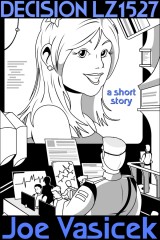
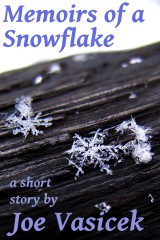
You may have noticed that Amazon recently bumped the price of my two short stories, Memoirs of a Snowflake and Decision LZ1527,” back up to $.99.  I decided to raise the price because giving them away for free wasn’t having any sort of effect on sales of my other novels.  Sure, it exposed my work to more readers, but I want to be known for my science fiction series, not because of a couple of cute stories that aren’t a whole lot like anything else I’ve written.

However, after reading Kris Rusch’s recent post on this subject, I decided to drop the price of Sholpan to free for the next couple months.  Sholpan is a novella taken from Bringing Stella Home, and is a great place to start for my Gaia Nova series.  It’s a complete story on its own, but I’m hoping it will drive interest in the full length novel, and later in Desert Stars.

If the price dropping process is anything like it was for the short stories, though, it will be a while before Sholpan is free across all platforms.  Amazon doesn’t allow you to set the price to free yourself; you have to get all the other places to do it first, so that Amazon’s bots will detect it and price match.  To do that, you have to drop the price on Smashwords first and wait for it to trickle down.

In short, it will probably take three to five weeks for Amazon to make Sholpan free.  Hopefully it’ll happen in time for the holiday season, and probably for a month or two afterward.

In the meantime, I just noticed that Memoirs of a Snowflake is on both the science fiction anthology and fantasy anthology top 100 lists on Amazon.  Woot!  It’s not going as fast as it was when it was free (I think I’ve had just five sales in the past 48 hours), but it’s still going.  It will be interesting to see how long it holds up; it would be awesome to crack the top 10 on either of those categories!

And that’s about it.  I’ll leave you with the following quote:

All journeys have secret destinations of which the traveler is unaware.

–Martin Buber

Should I keep it free?

My first three ebooks have been available for free for several months, and I’m happy for all the attention they’ve received, but I’ve got mixed feelings now about keeping them free indefinitely.  Downloads have more or less bottomed out, and they aren’t really driving any interest in my other work, so part of me wonders if I shouldn’t just raise the price to $.99.

If I could, I would love to give away all my work for free.  However, I also want to make a living as a writer, so that isn’t really practical.  Granted, I don’t expect to make much selling these stories at $.99, but from a business side of things, I need to get at least some kind of recompense for my work.

What I really want to do is have the readers set the price for these stories, so that you can pay what you feel is fair.  If finances are tight or you just want to try me out, you can download them for free and that’s great.  If you’ve enjoyed my other work and want to support me, that’s great too.

Right now, Smashwords is the only place I know of that has that option.  If there aren’t any strident objections, I’m going to do that and make these stories $.99 at every other outlet.  I’ll keep them available for free at least until November, though, so if you haven’t already picked them up, feel free to do so now.

I also want to do this for the experiment: how does raising the price from free to $.99 affect sales?  I think the “free train” has more or less run its course, so it will be interesting and useful to see where the new equilibrium ends up.

How do you know when you’ve succeeded?

With books and publishing changing so quickly, a lot of writers are wondering how they can tell when they’ve actually “made it.” It’s a valid question, one that I think we all need to answer if we want to write seriously.  For myself in particular, as an indie writer, how will I know when I’ve achieved success?

The question made me think about my experience as a Mormon missionary in California, and the definition of success that my mission president (the ecclesiastical leader and father figure for the missionaries) often quoted:

Success is peace of mind which is a direct result of self-satisfaction in knowing you did your best to become the best you are capable of becoming.

— John Wooden

This definition taught me that success isn’t just about external things that may or may not be in your control (for example, the number of convert baptisms per month), but is more about doing the things that are in your control to stretch yourself and reach your full potential.  To be sure, external factors are important measures of success, but at the end of the day, it’s not just about the numbers.

That said, for a writer like me who hopes to make a living at it, the numbers are pretty dang important.  At my current standard of living, I need to sell between 550 and 750 ebooks per month priced at $2.99 and $3.95 to accomplish that goal.  Right now I’m doing about 30 to 50, so I still have a ways to go.

But is that the best measure of commercial success?  If I have 10 titles selling around 55 to 75 copies each per month, will those books be hitting their full potential?

Probably not.  For that reason, I’ll probably end up signing a deal with a publisher at some point in my career; there’s only so much that I can do by myself.  However, in order for me to do that, the terms have to be right; I’m not going to sell myself short just to see my name in print.

(This is one thing that bugs me whenever I hear writers discuss whether traditional or indie publishing best fits their goals.  If all you want is “to see my name in print,” or “to see my book in a bookstore,” how is that any different from vanity publishing?  If that’s really your goal, fine, but don’t think it somehow puts you above indie writers–many of whom have goals that are much more pragmatic than yours.)

Artistically, I think the best way for me to achieve success is to take on a new challenge with every project and still feel like each book is better than the one before it.  Contests and reviews have their place, but going back to the definition, success is all about self-satisfaction and peace of mind.  I don’t want to tie any of those to someone else’s opinion about my work–that way lies madness.

But really, I think it all comes down to the readers.  Unless you stuff your manuscript in the closet, writing is never a solitary act: it is an act of collaboration with the reader.  If I have any measure of success, it will be because someone took the time to read my words.  To be sure, I can’t please everyone, but that doesn’t matter; it only takes one person to make a story come alive.

When I was a missionary, I constantly asked myself whether I was doing the will of God in the life of every person that I met.  That’s how I knew that I had succeeded: when I felt the peace of mind that came from knowing I’d made that personal difference in someone’s life.

I expect it to be similar with my writing.  Commercial success is great, but numbers aren’t everything.  What really matters is telling a story that connects with people on a deep and personal level, transforming them in some meaningful way.  If I can do that and make a living at it, that’s how I’ll know I’ve succeeded.

Sholpan 2.0 is finished!

Today I finished the second draft of the novella Sholpan, only two days after the deadline I set for myself.  Here are the stats:

ms pages: 173
words: 37,466
file size: 94 KB
parts: 5
start date: 1 Aug 2011
end date: 15 Aug 2011

I decided to divide it into parts because I read somewhere that novellas aren’t typically divided into chapters, and I felt that foregoing chapter divisions would give it more of a sense of unity.

Still, I divided it into five parts, which essentially function as very large chapters.  I did this because it seemed that the story needed it, to better develop conflict and theme, as well as the transitions and turning points.

Like I’ve said in the earlier posts, this is a “companion novella,” which means that it repeats one of the story lines from the novel with additional scenes that (hopefully) elaborate and flesh out that particular story line.  Ideally, this will entice readers of the novella to pick up the full-length novel, and give readers of the novel a satisfying experience by using the new scenes to cast everything else in a new light.

By my entirely non-scientific calculations, Sholpan contains about 80% repeated material from the novel (with a little touching up and fleshing out to get more inside of Stella’s head) and 20% entirely new material, most of it in the form of flashbacks to Stella’s life before she was captured and enslaved by the Hameji.  It ends about halfway through Stella’s story arc from Bringing Stella Home, and includes one of the major twists, but hopefully that won’t spoil too much.

In terms of story, I think there are some subtle deviations between Stella’s arc in the novel, and Stella’s arc in the novella.  Even though the novella ends just after one of the novel’s major shifts, the ending felt very satisfying–almost a little too much.  Still, it’s good for the story to be complete in itself, and there are enough loose ends that I think it will drive interest in the novel.

Anyhow, I’ve sent the project out to a couple of alpha readers, just to get a sense for whether or not I’m totally off base.  If all goes well there, I’ll send it out to my copy editor and get it up for sale sometime in mid-September.  I haven’t tried out the $.99 price point yet, so this will be a good test case to see how it works.

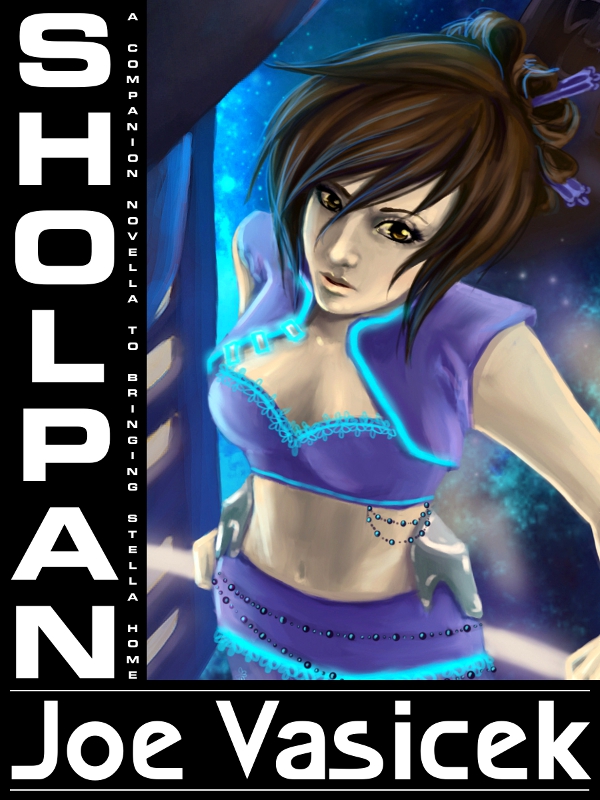
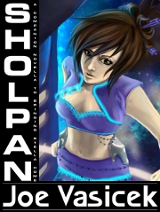
For those of you who are interested, here’s the cover:

And that’s about it.  I’m leaving the day after next for Worldcon, so I’ll do a post on that before I head out.  Probably won’t write much this week, but hopefully the con will help me make connections, pick up a few pointers, and get a good feel for the current zeitgeist in the science fiction and fantasy genres.  More on that to come.