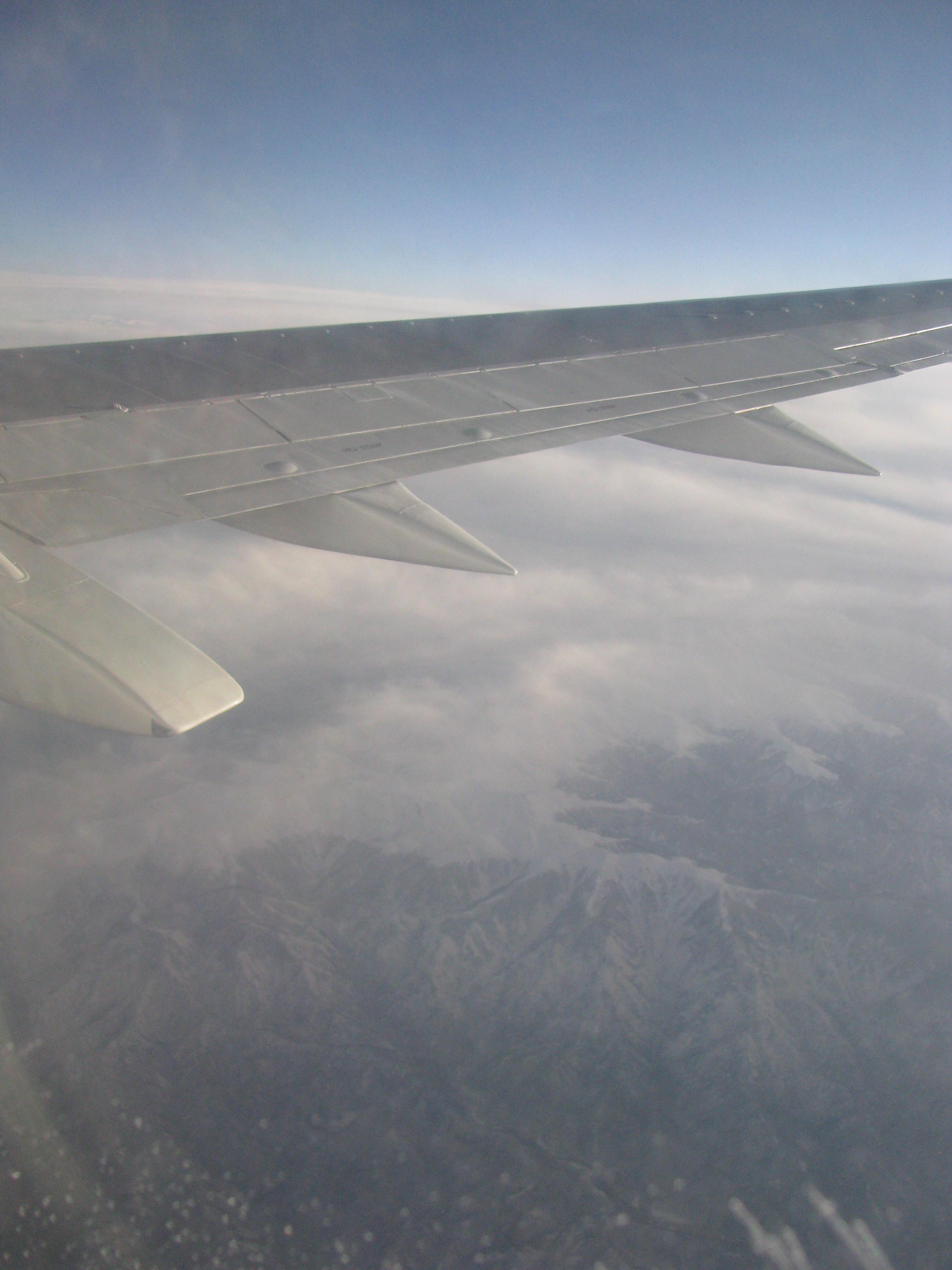
So I think I’ve clocked in about 1,000 kilometers this past week, mostly between Kutaisi and Tbilisi. Seen some interesting things, met a lot of interesting people, made some good memories, and thought a lot of deep and poignant thoughts.
Unfortunately, all this travel isn’t conducive to blogging. I’ve got five days before I fly back to the States, and updates are probably going to be sparse until then. If you were wondering what happened to the Trope Tuesday posts, don’t worry, I plan to get back to them (and hopefully pulling in some guest bloggers) after this week.
Tomorrow, I’ll head out to Racha, one of the more remote areas in Georgia. It should be interesting. Here’s a video with some photos of the region (and traditional music):
I have no idea what we’ll find there, but it’s definitely going to be an adventure.
As far as the writing goes, I’ll probably finish Star Wanderers somewhere between here and New York City, and publish part I in July after I’m a little more settled. Didn’t finish it this weekend, but I’m only two scenes and an epilogue from the end, so if all else fails I’ll just finish it on the airplane.
As for the next project…you know, I’m not even going to try and look that far ahead. I’ve got plenty of ideas tugging on my brain and I’m sure the next story will more or less write itself, so long as I don’t get in the way. Instead, I’ll leave you with this:
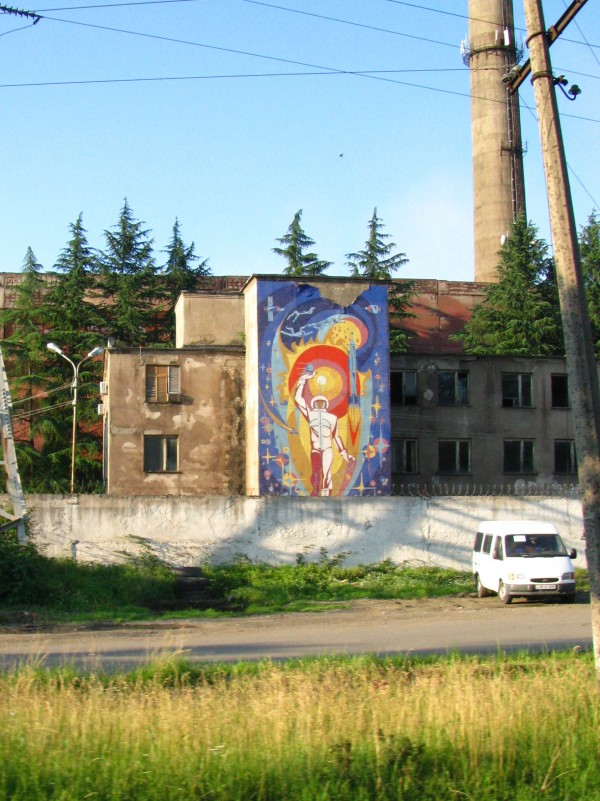
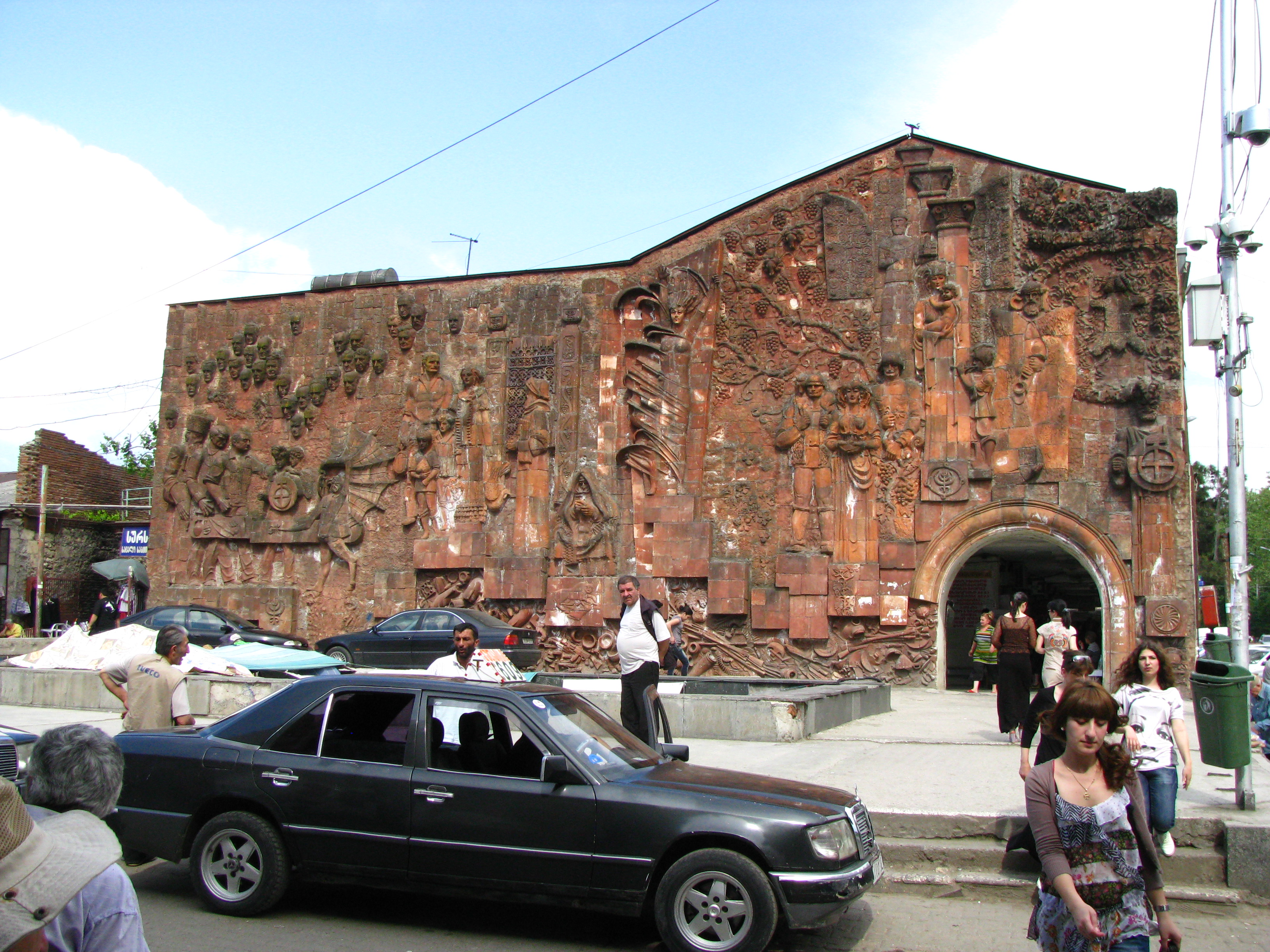
It’s an interesting piece of Soviet-era art on the side of a factory in Zestaponi. When I come back in September, I’ll have to do a post on all the crazy-cool Soviet-era stuff that’s still around. The USA wasn’t the only country that made it into space–or even really the first!
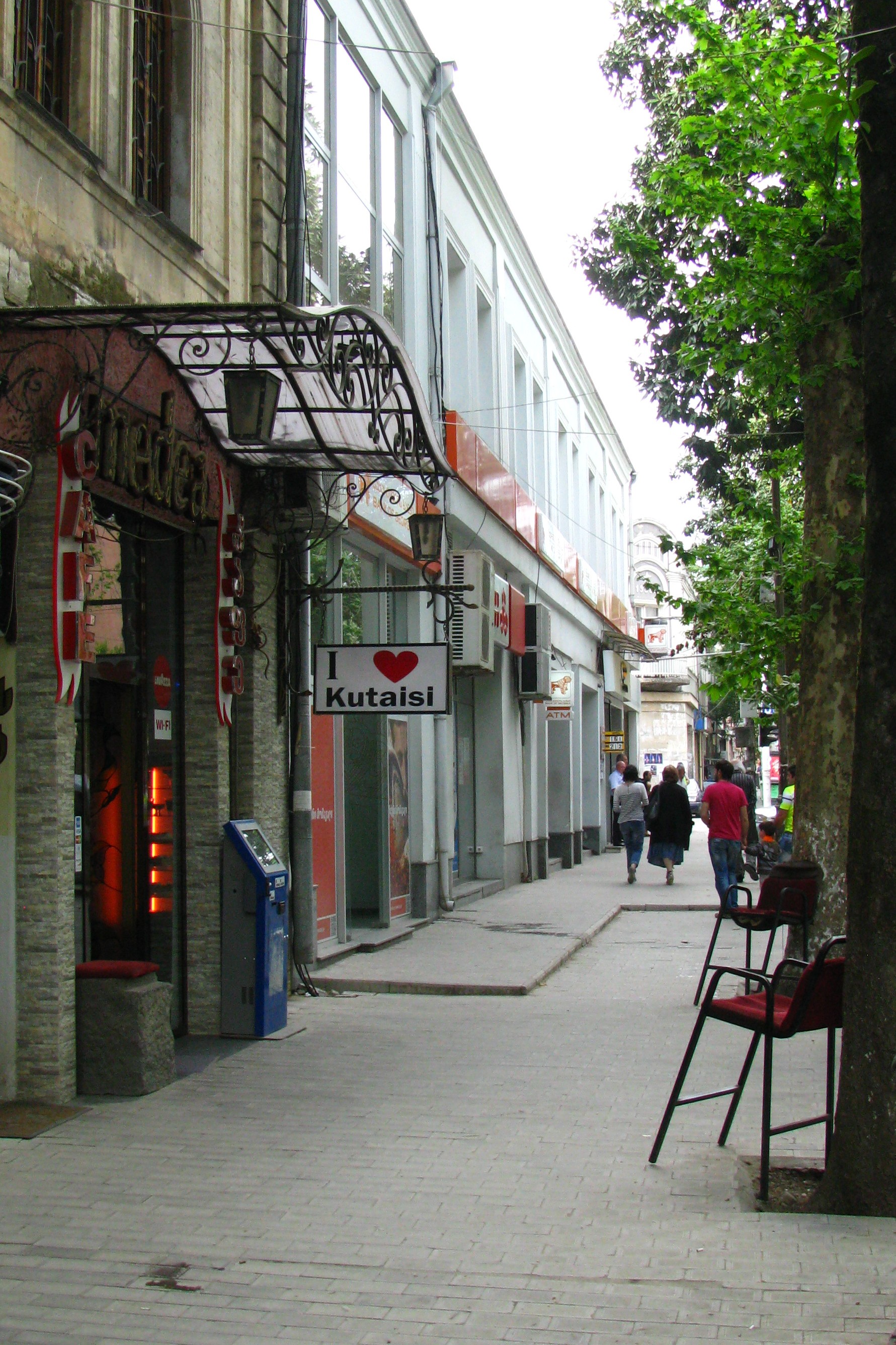
Medea Cafe & Bar, a popular expat hangout in downtown Kutaisi. It’s also something of a landmark because of the conspicuously English street sign.
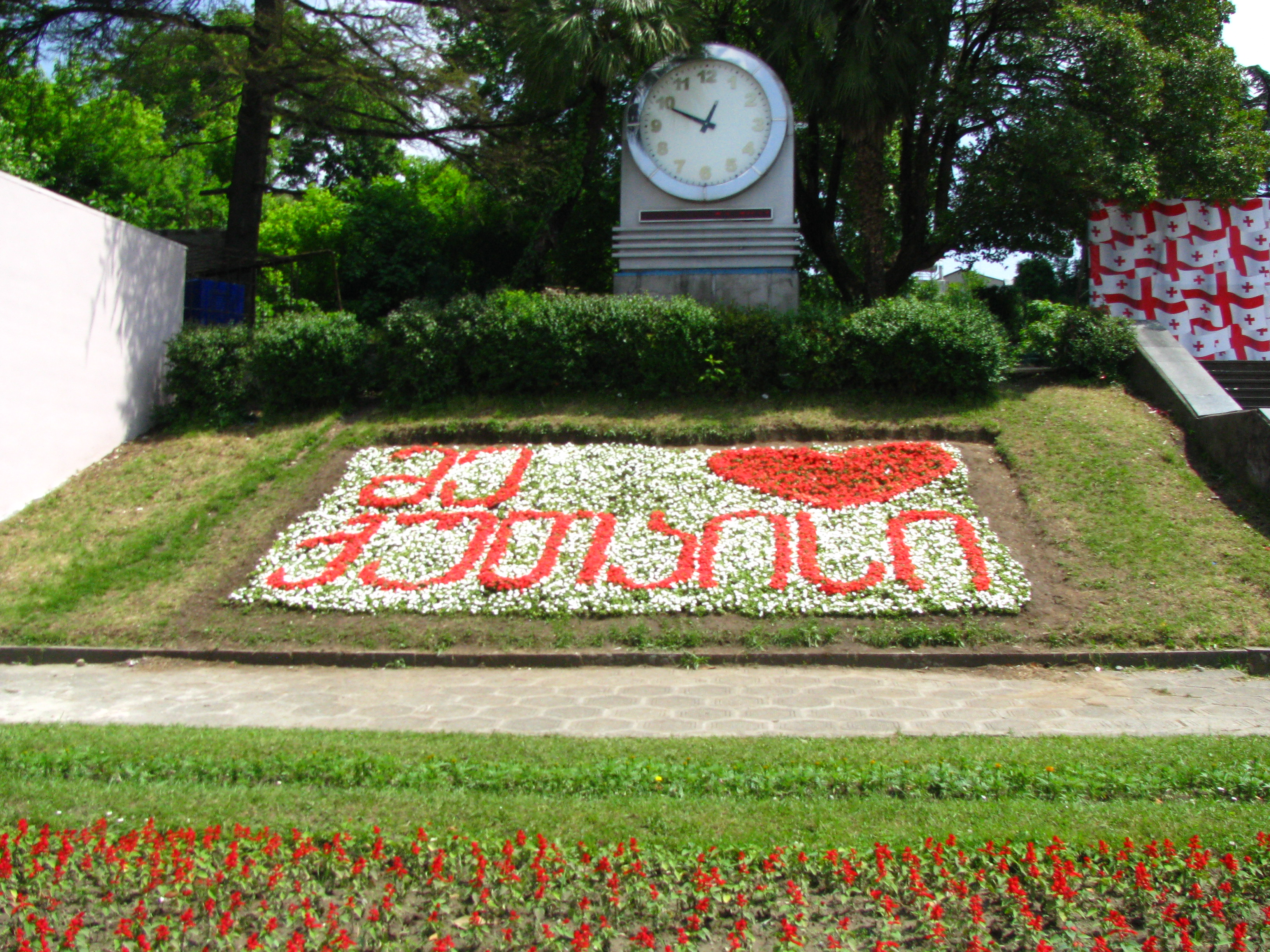
That’s Georgian for “I ♥ Kutaisi.” Like the New York City ad campaign on which it’s based, it’s become a part of the local culture. You can see it on billboards, street signs, stickers, t-shirts–unlike the US, where it’s uncool to wear a band’s t-shirt at their own concert, everyone was wearing their “I ♥ Kutaisi” shirts at Kutaisoba last week.
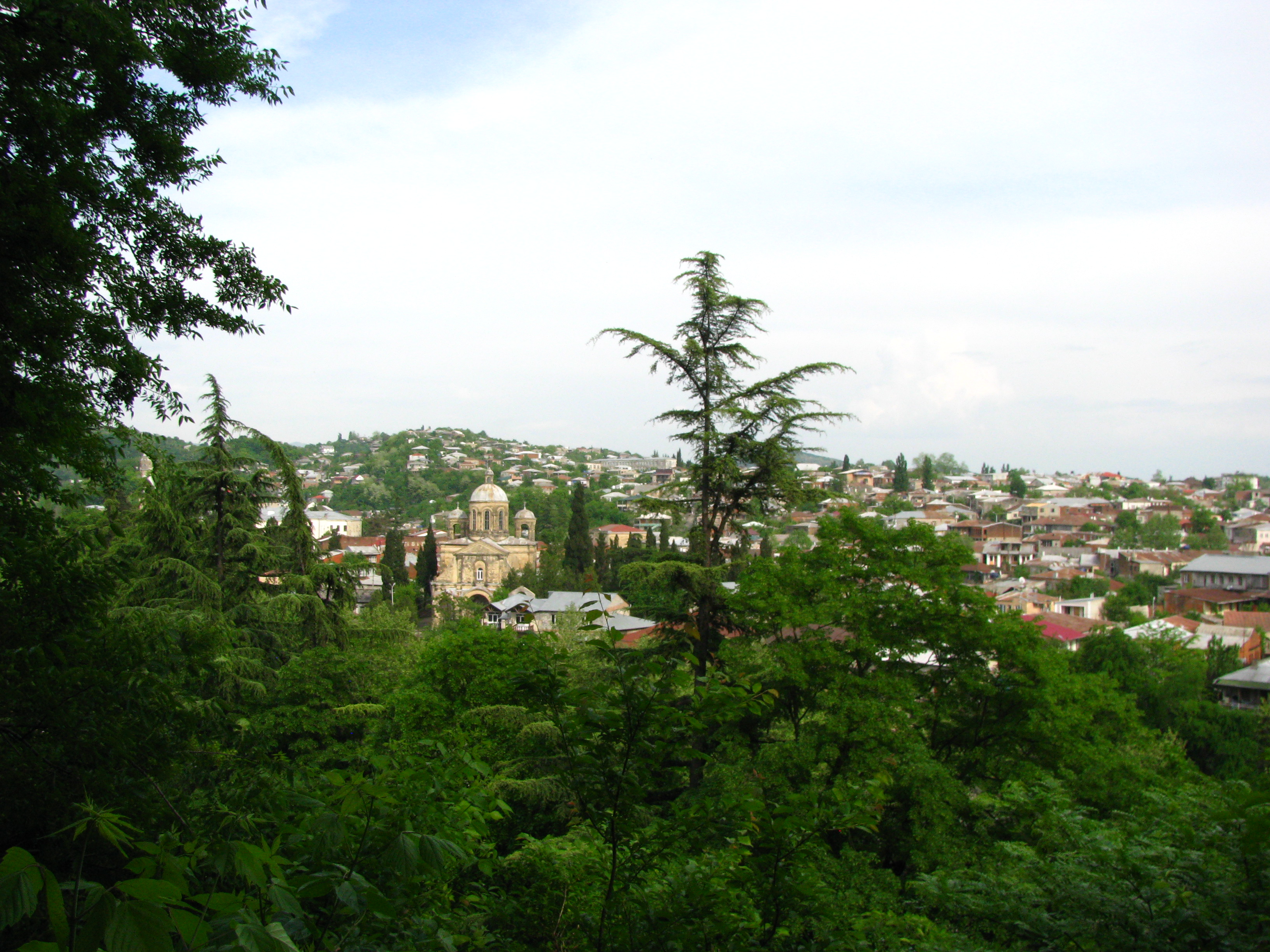
So since I’ve been living here in Kutaisi for almost three months, I thought I’d give you all a virtual tour of the city–or at least the downtown area, since Kutaisi is really more like a very big village with a city in the middle. But that’s why I love it.
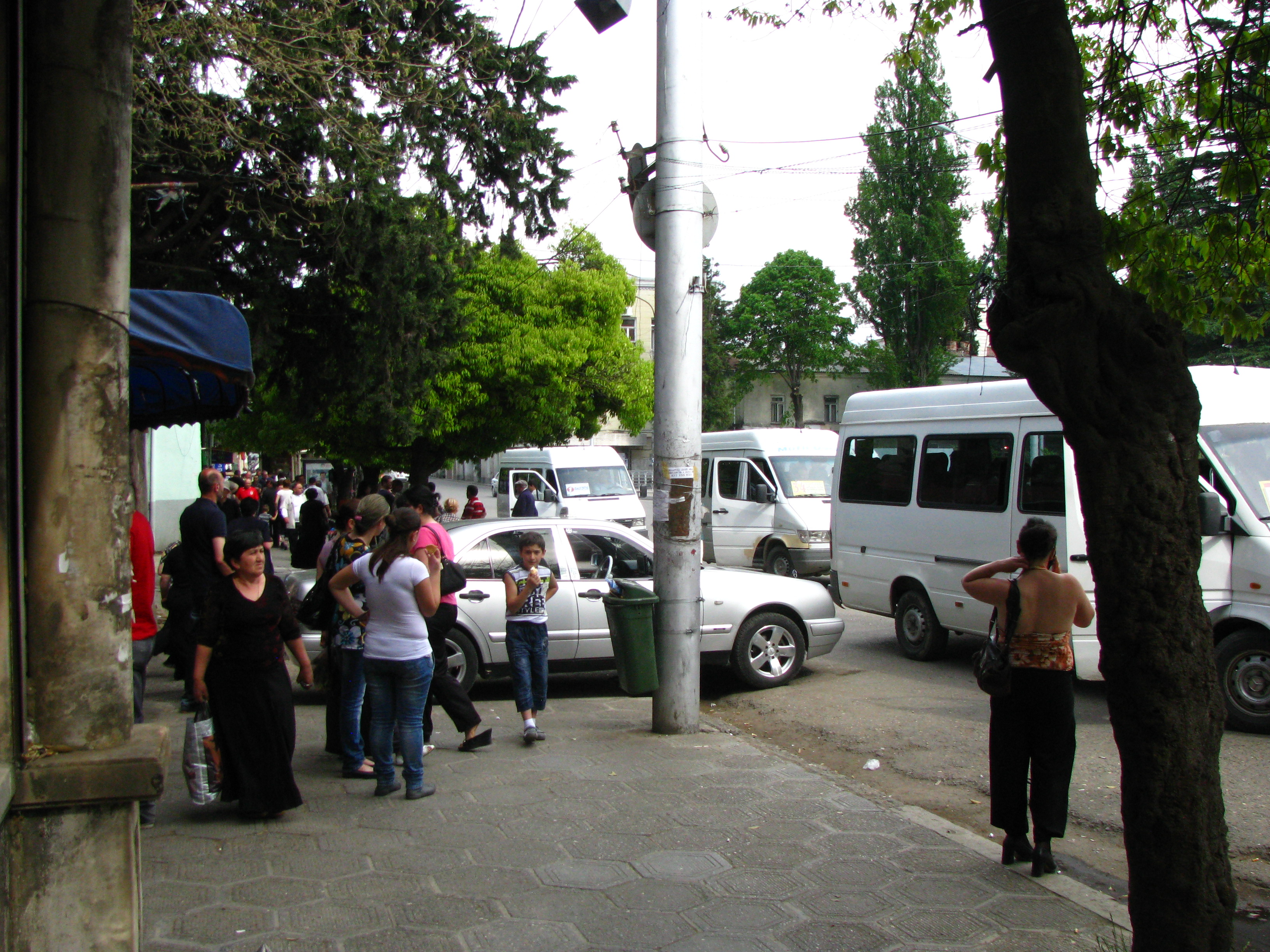
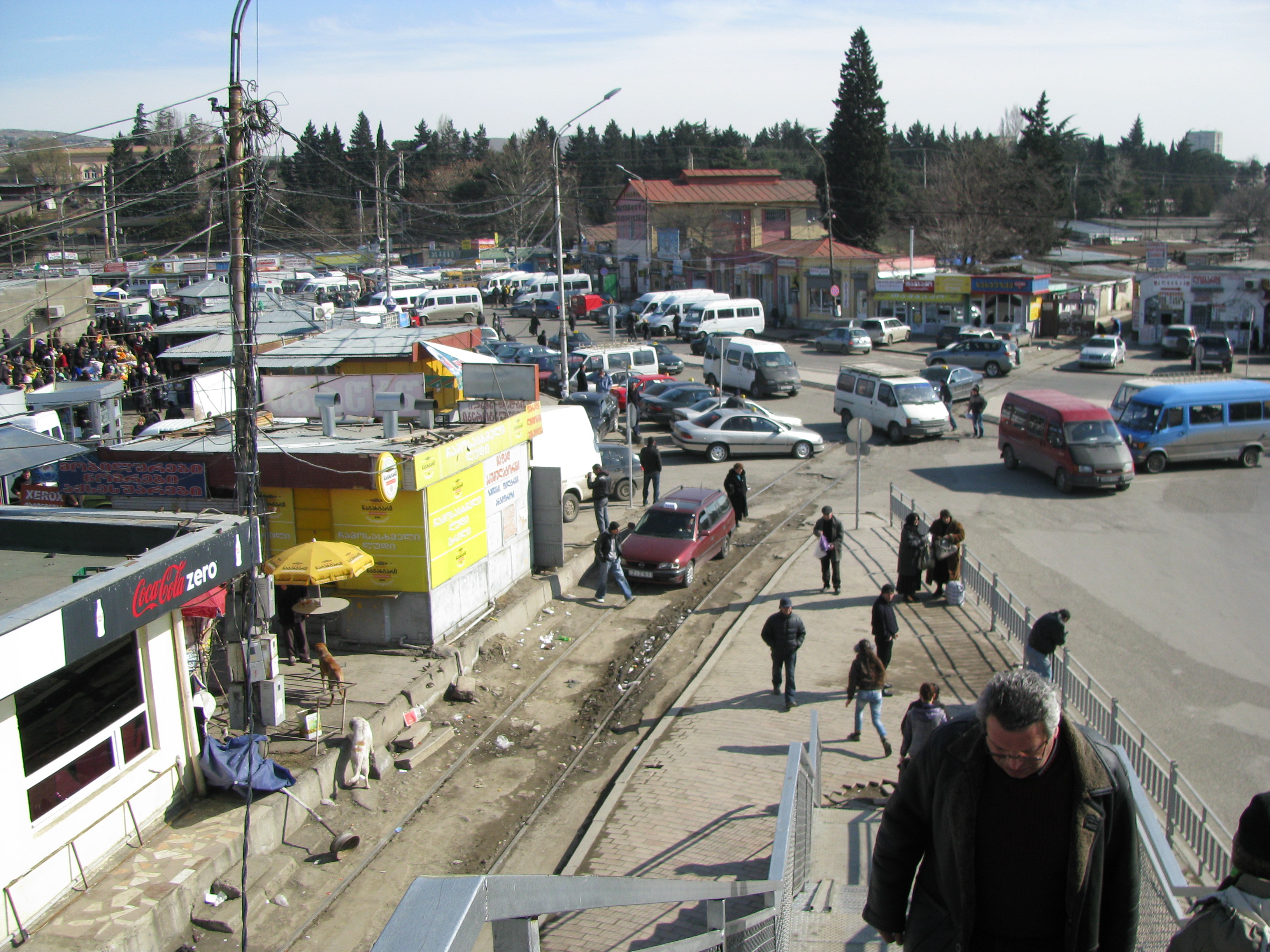
Tsitelikhidi, or Red Bridge Station.
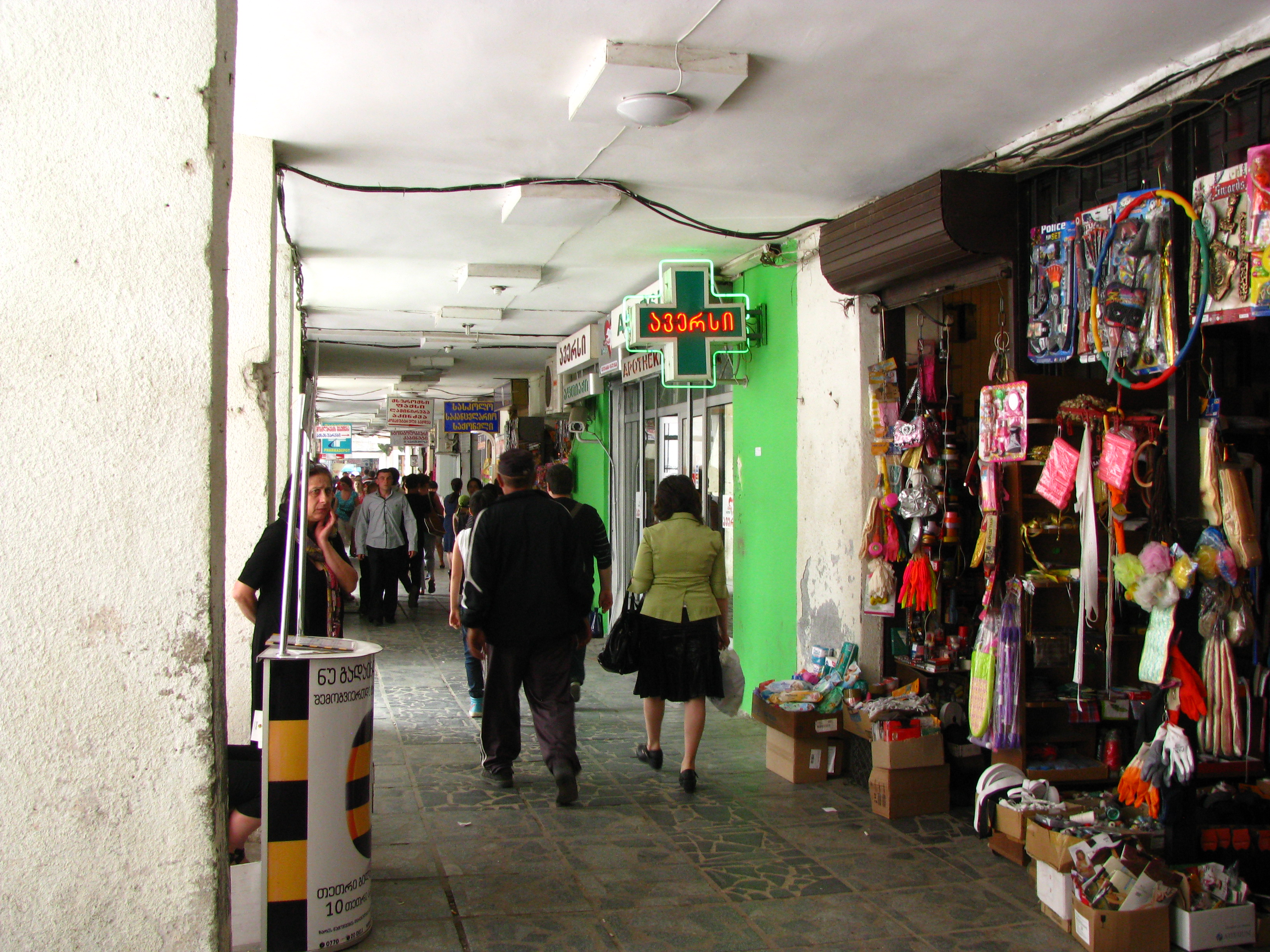
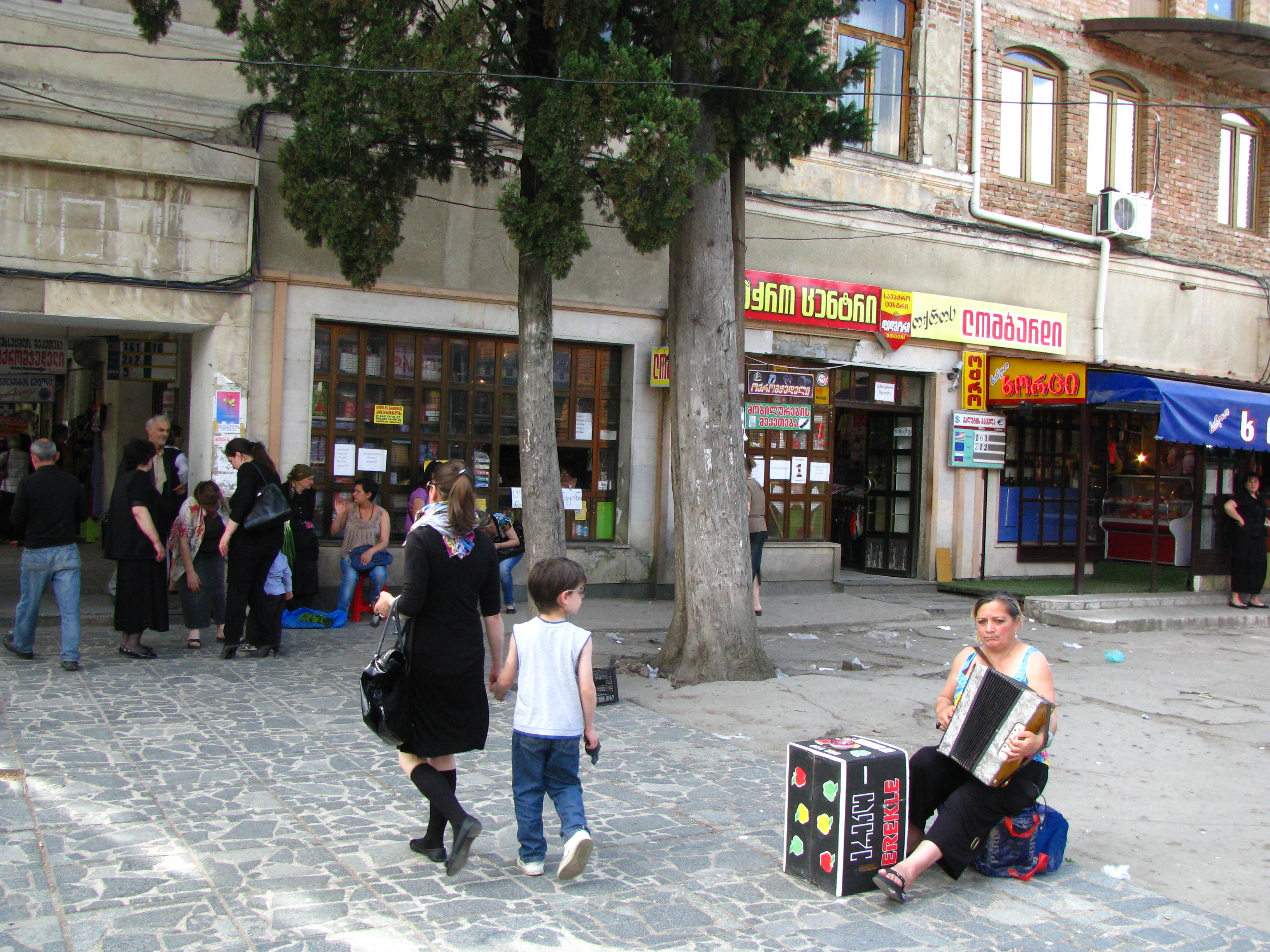
Our tour starts at the main marshrutka terminal downtown, Tsitelikhidi, or Red Bridge Station. The place is a wonderfully chaotic mess of taxis, buses, and marshrutkas, while their drivers pass the time by smoking cigarettes and yelling at each other. Old women wander around the crowds selling khatchapuri and lavash, while people are constantly coming and going. Interestingly enough, this is also where you can find one of the largest concentrations of apothekas (pharmacies) in the city.
I bought an earwax removal kit from this apotheka, along with a bulb syringe obviously meant for babies. The pharmacist thought that was hilarious.For street performers in Kutaisi, the accordion is the instrument of choice.
The sidewalk leading away from the station leads into a long narrow corridor typical of most Georgian street markets, with stalls and vendors packing every available space. Here you can find cookies, ice cream, and cold drinks, both soft and hard; candles, religious icons, and other “souvenirs,” as the vendors like to call them; cheap plastic goods from China, wrapped in dusty plastic; freshly killed meat hanging from butcher’s windows; and all sorts of other random things. But as busy as this place seems, it’s nothing compared to the main marketplace.
I have no idea what’s all on this frieze, but it looks pretty cool. Also, bangs are very much in fashion.This is actually a pretty good place to buy a belt.
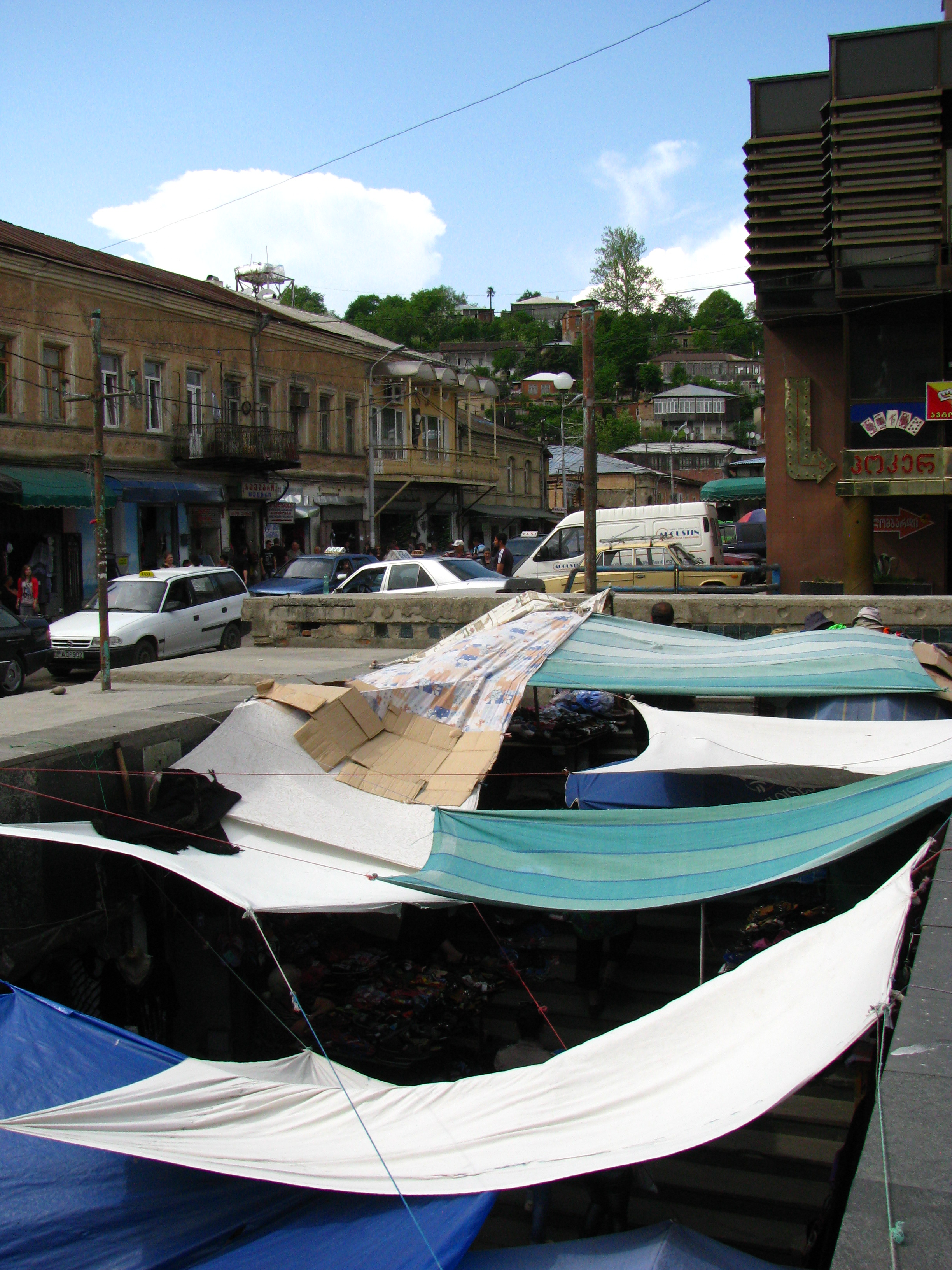
The corridor opens up at the end of the block, to a tunnel which leads underneath the main road (Rustaveli, named after the great medieval Georgian writer) to Mirzani restaurant on the far side. At the mouth of the tunnel, tarps and blankets stretch haphazardly over vendors selling clothes, cheap shoes and cigarettes. Further down the tunnel, you can find more clothes, belts, brassieres, more shoes, and all sorts of fabrics.
We continue past an old building with a giant frieze, presumably depicting scenes from the history of the city. There’s a lot of history to choose from–Kutaisi was the capital of ancient Colchis, and a major regional center throughout the Middle Ages, when locally-born King David the Builder united all of Georgia, turning it into a “land between two seas.”
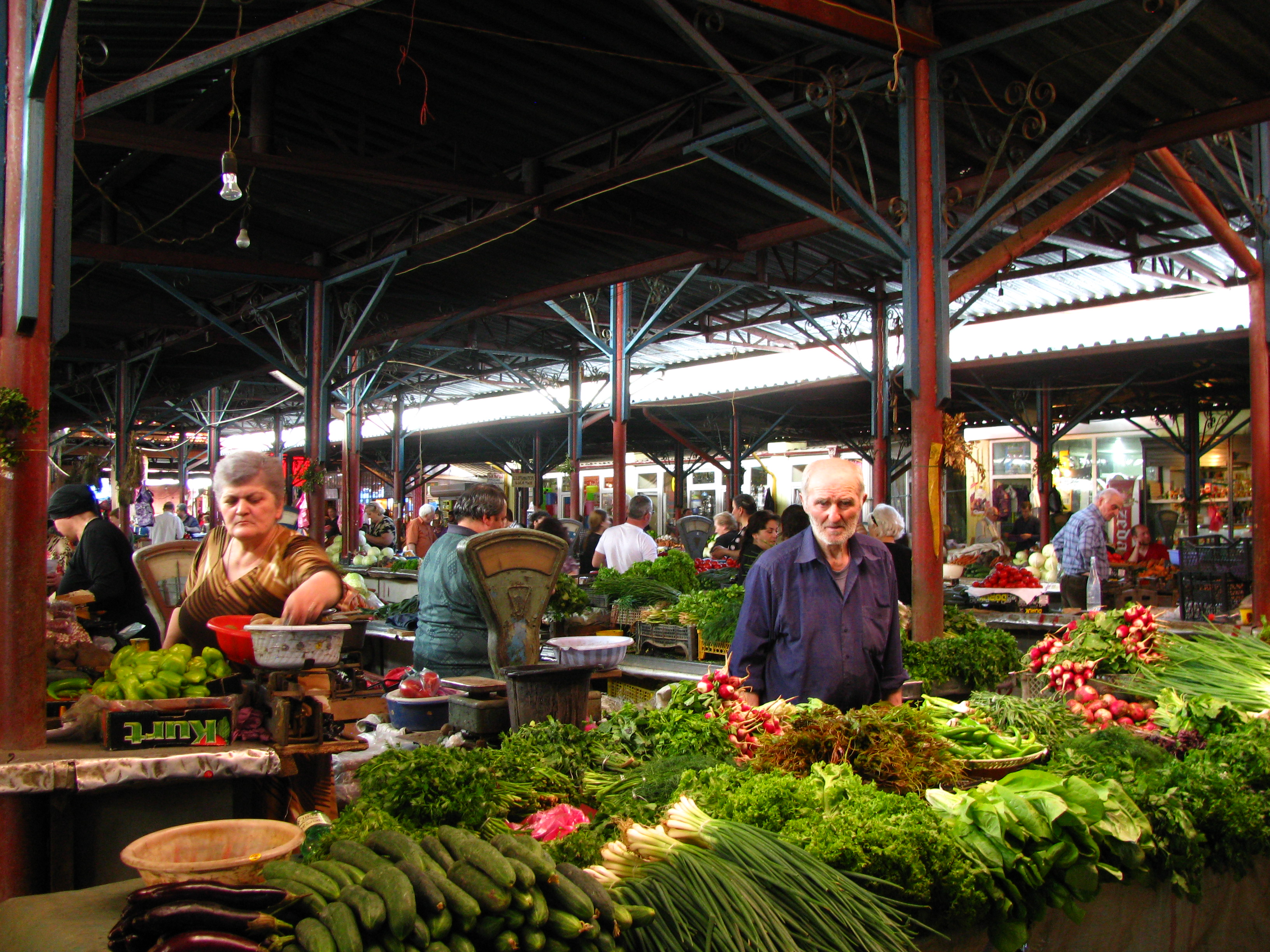
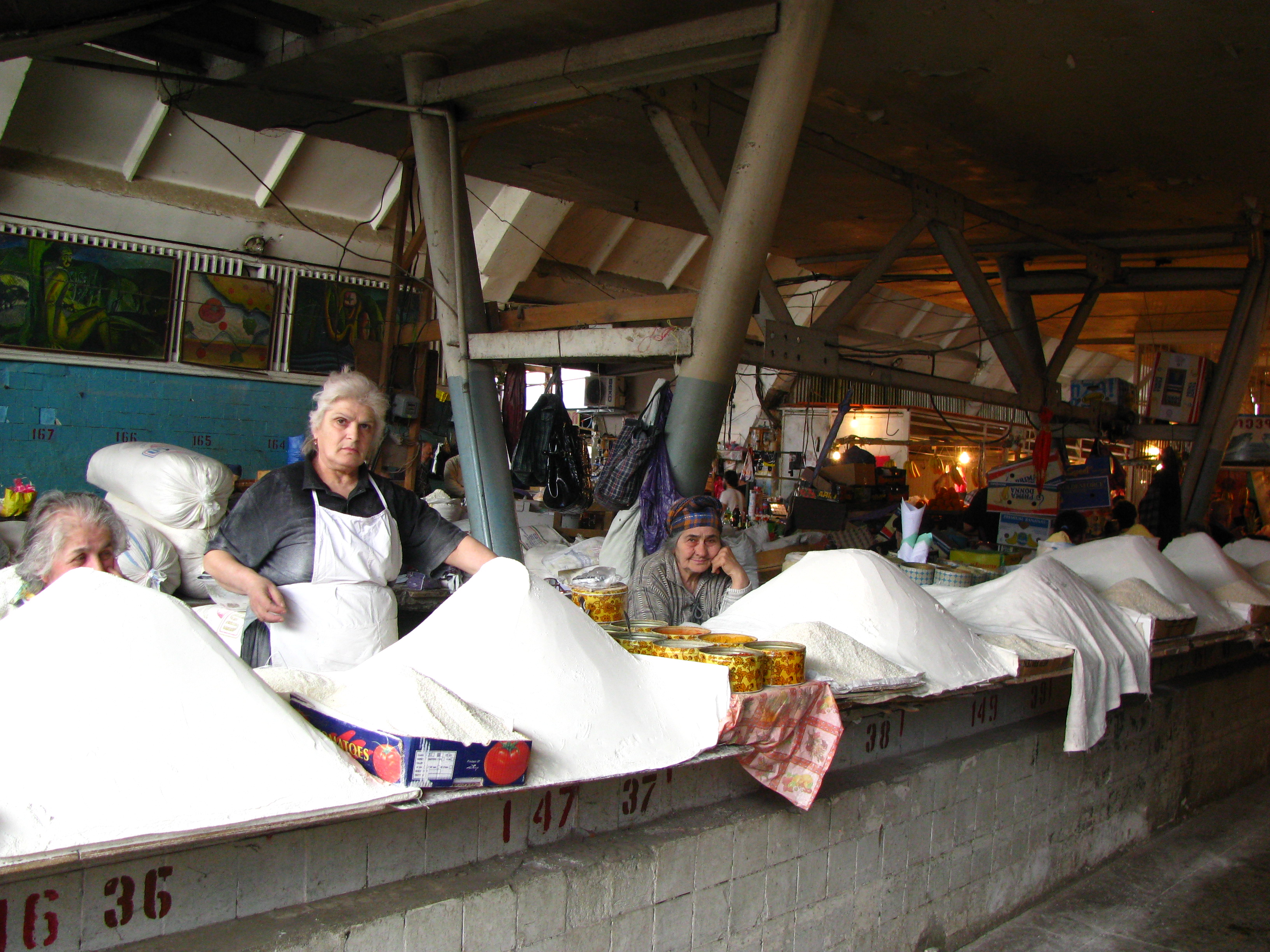
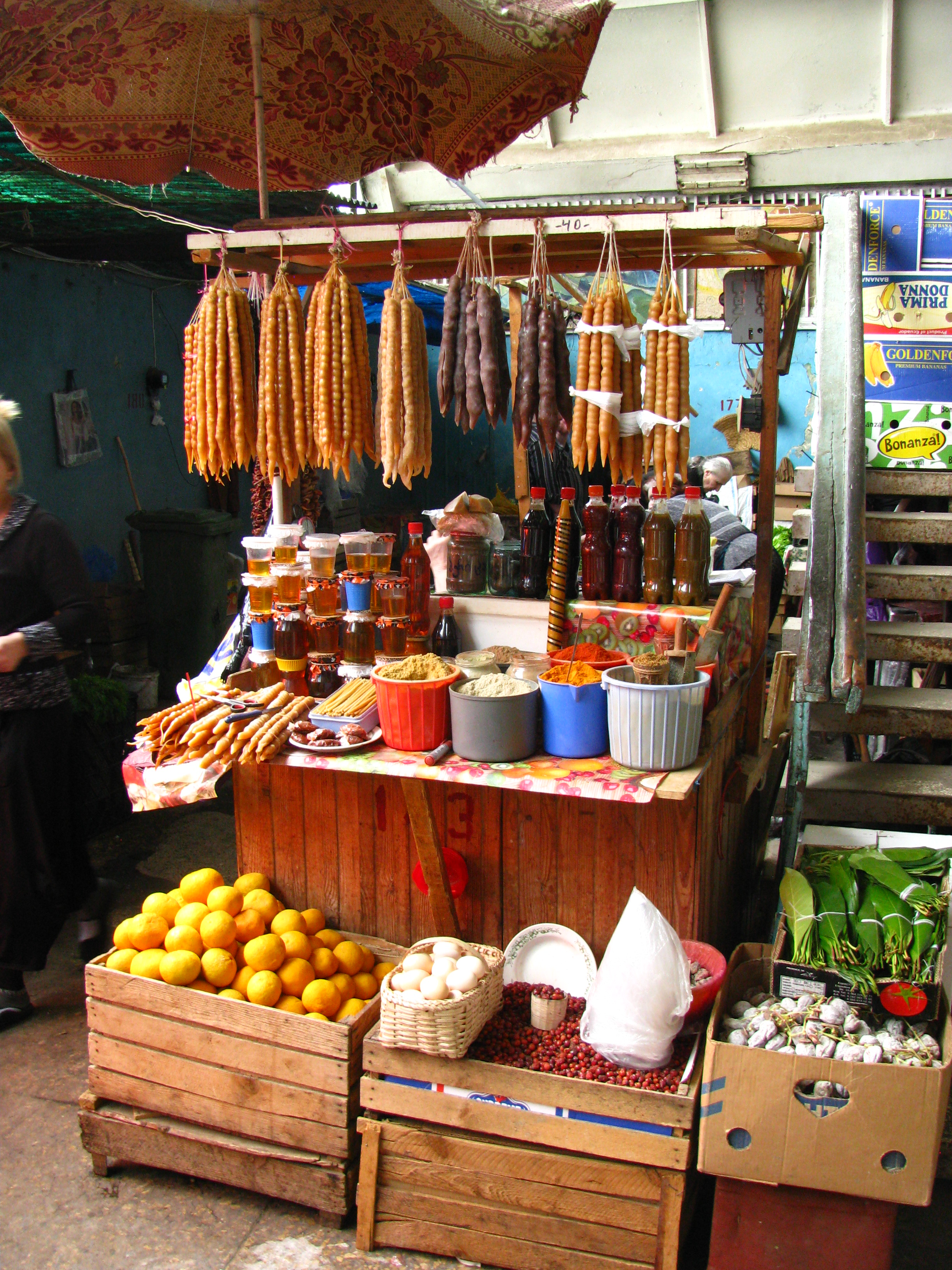
Alas, no hot peppers.This is where you come to buy flour.The candle-like stuff hanging from the top is churchkhela, strings of hazelnuts dipped in congealed grape extract. I assume the jars immediately beneath them contain wine.
Next, we take a left and promptly get lost in a giant bazaar. Here, you can find all sorts of fruits and vegetables, beef and chicken, bread and cheese, wine and beer–basically, anything that you would usually get from a grocery store in the US. Georgians have grocery stores too, but the bazaars are usually cheaper and fresher. Plus, they’re a whole lot more fun. I’ve heard that you can haggle with the vendors, though the prices are so low (1.5 GEL for a kilo of apples) that I’ve never felt a need.
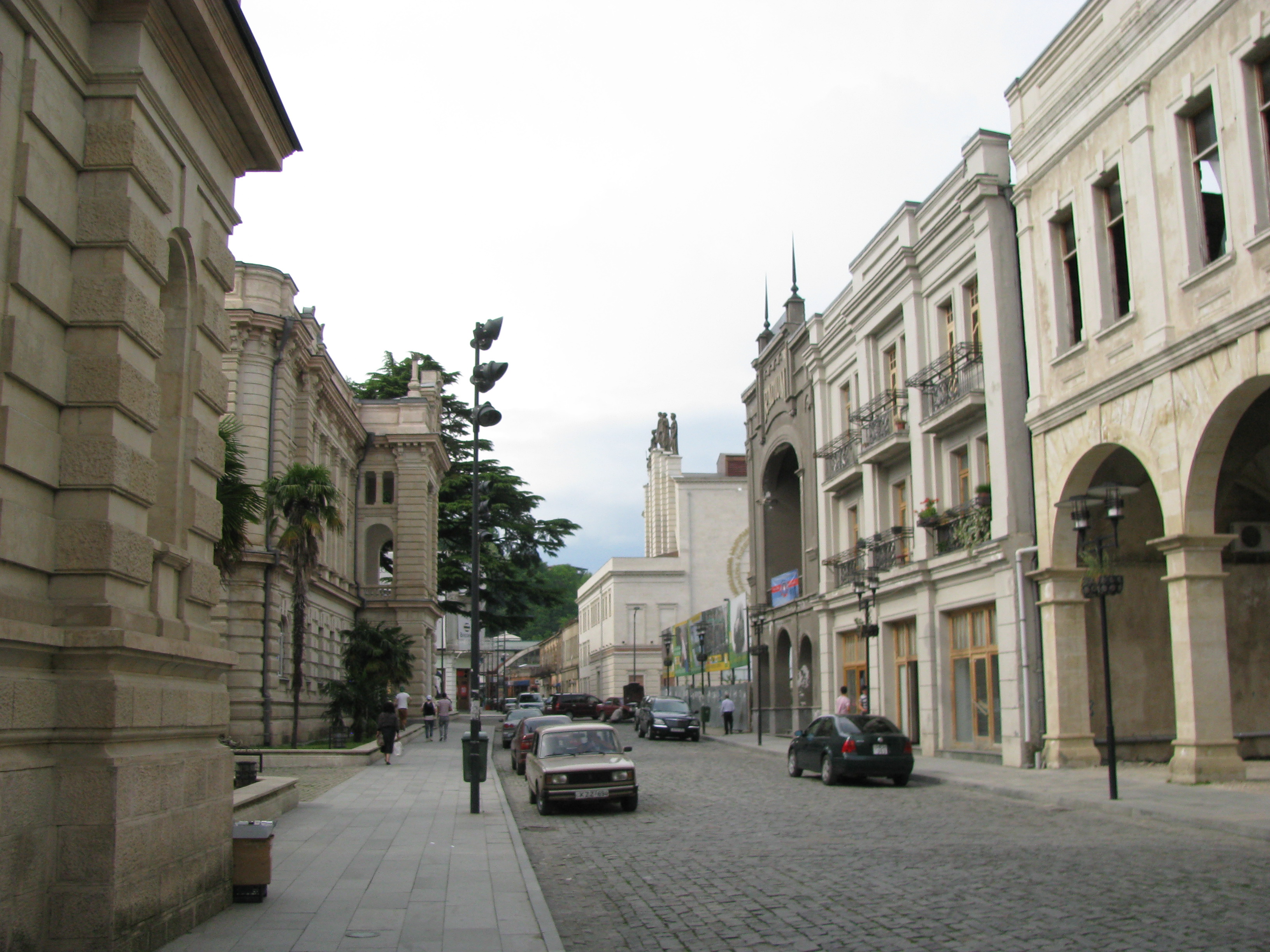
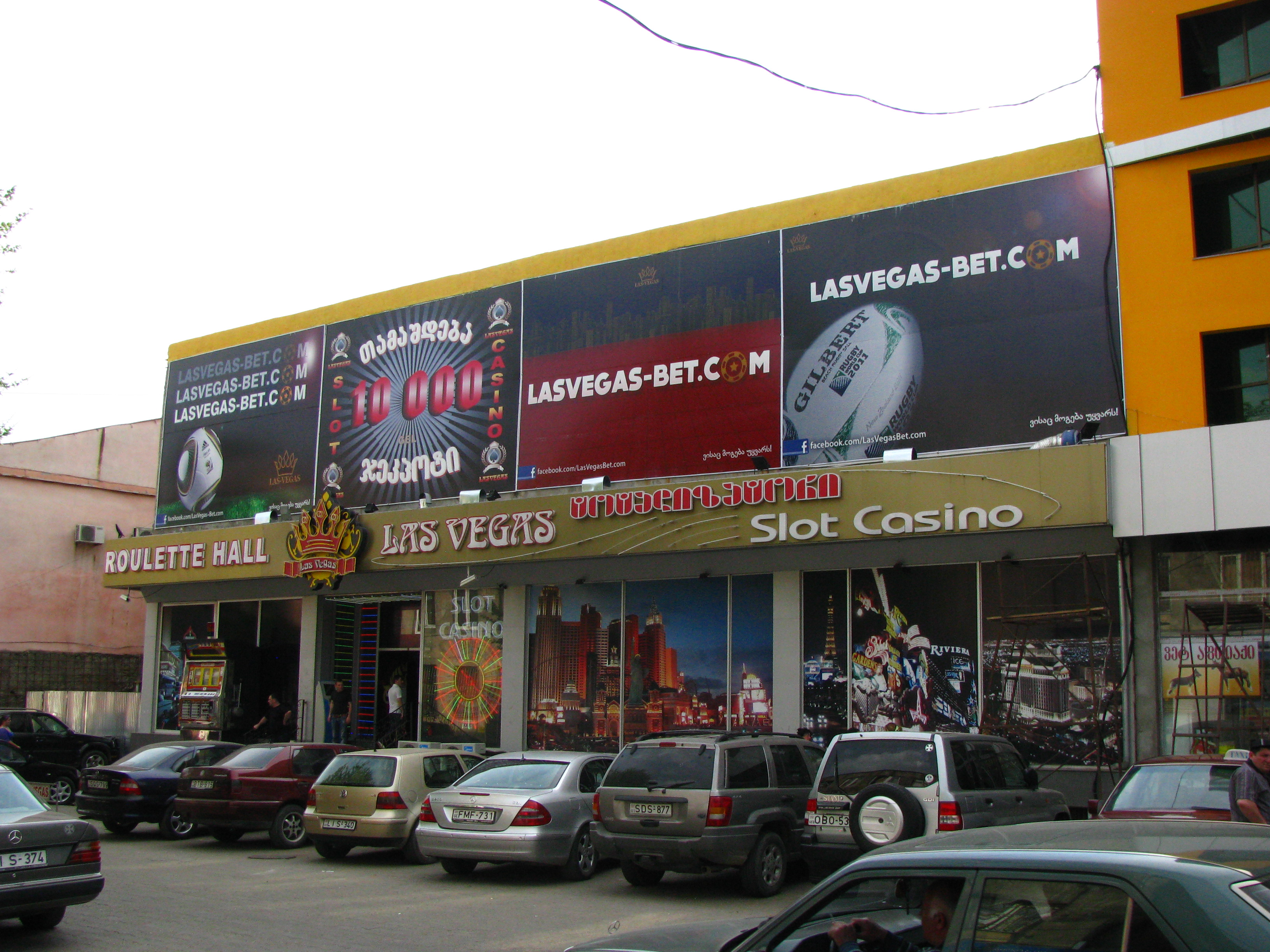
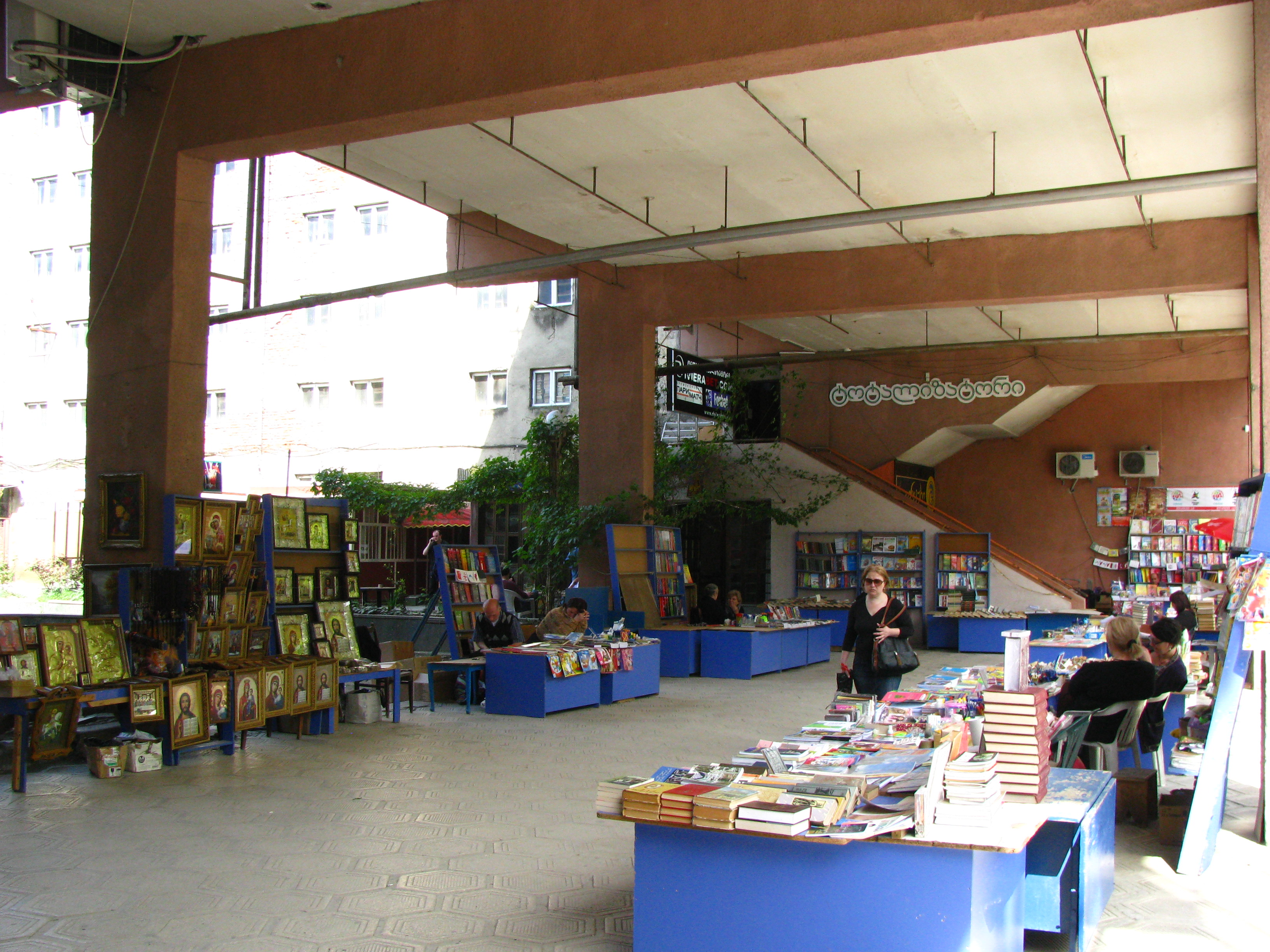
Rustaveli Avenue.Las Vegas casino. Gambling is big in Georgia.The book market. If I could read Georgian, this is where I would spend most of my time.
We spend a little bit of time wandering around before going to the main city park. Heading up towards Jatchviskhidi, you can find all sorts of pawn shops, casinos, and money exchanging places, while near the library (at least, that’s what I think it is) there’s a mini-bazaar with all sorts of books. Of course, that’s one of my favorite places to check out!
Along Rustaveli Avenue, however, the city takes on a pleasant European feel, with attractive cobblestone streets, wide boulevards, and Napoleonic architecture. Here, you’ll find the opera house, the mayor’s mansion, and the central school (of 44 public schools citywide).
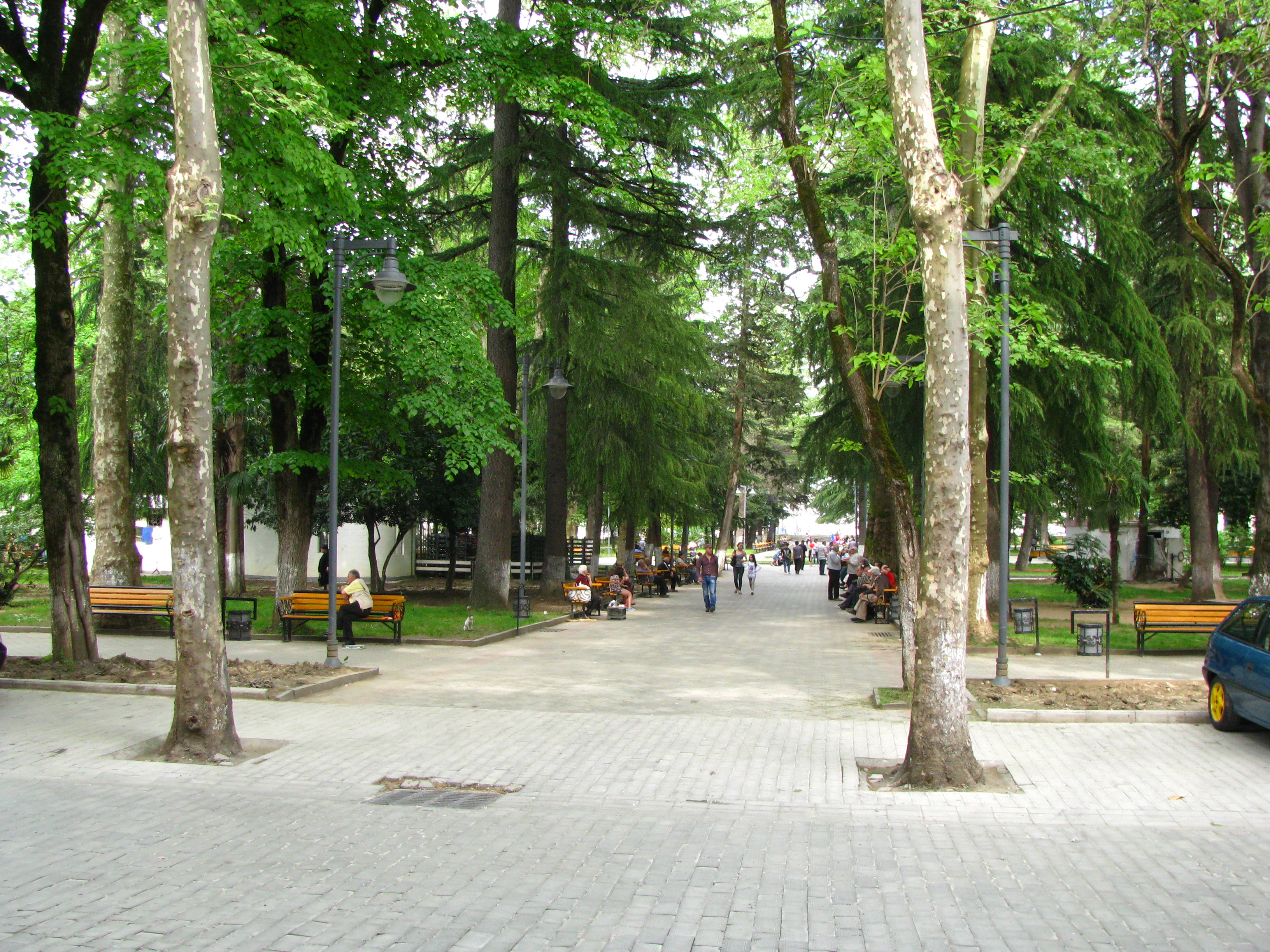
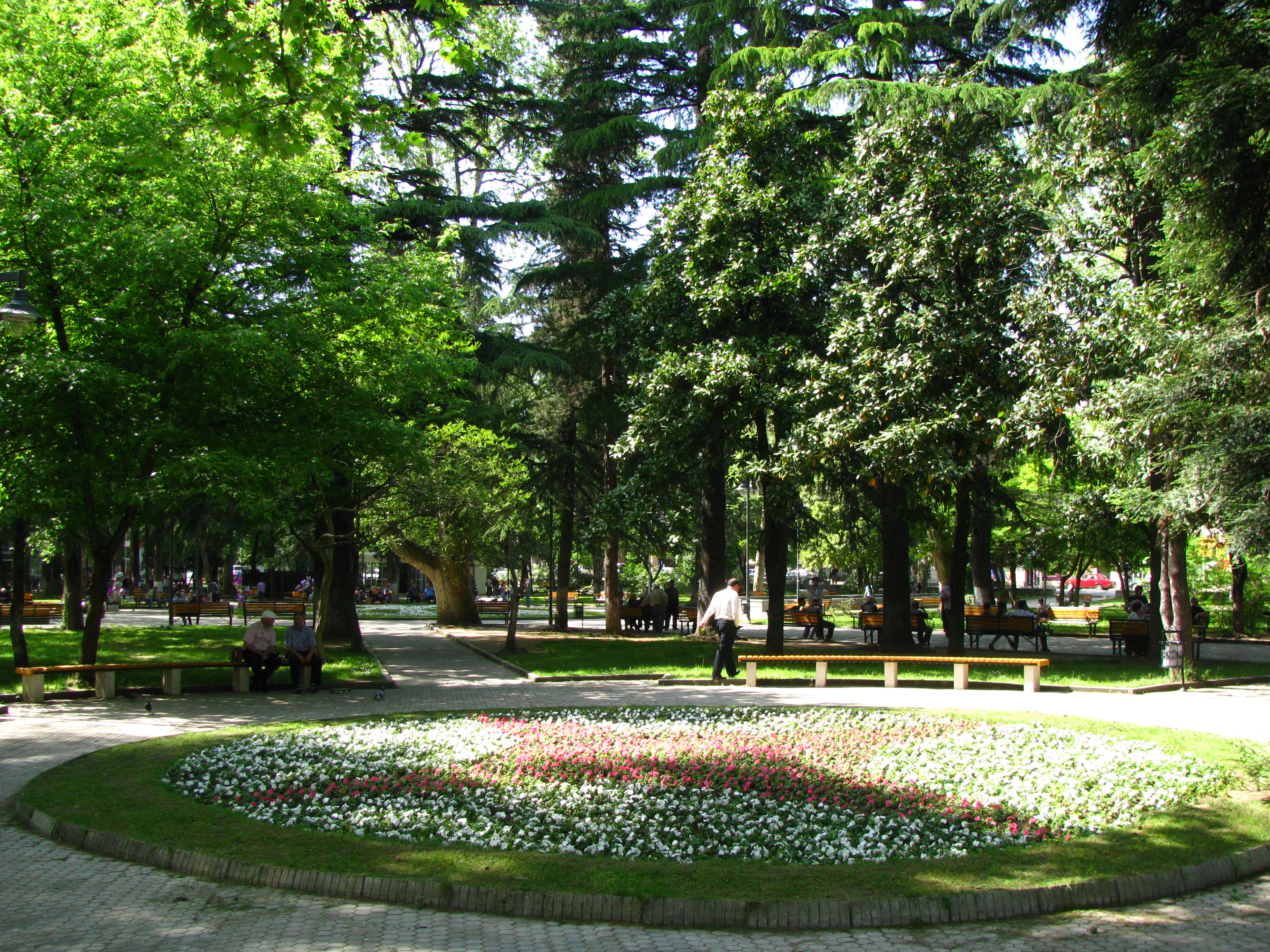
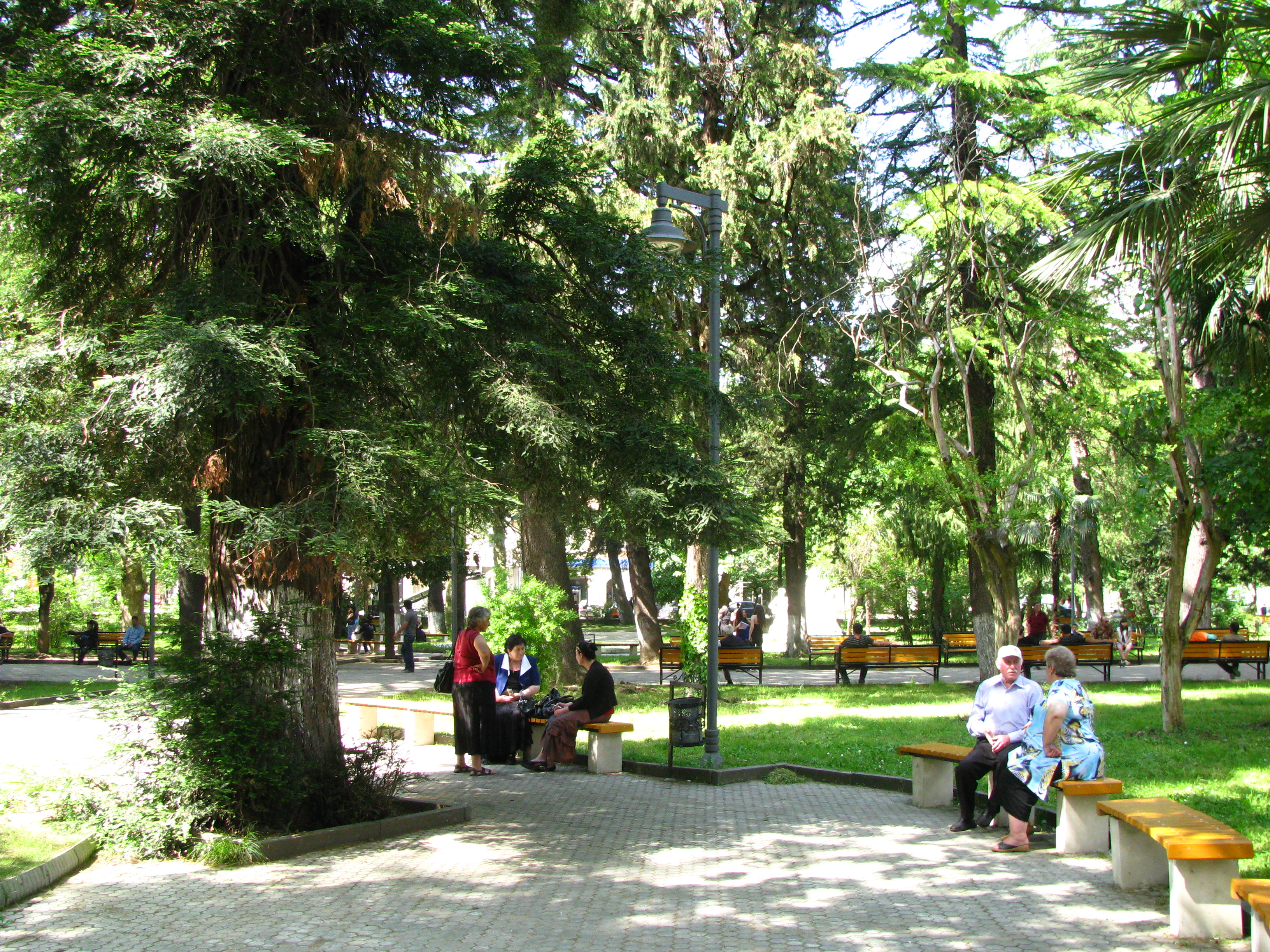
The view from just outside Medea Cafe.One of the many flower gardens in central park.One thing Georgians (or at least, Kutaisians) know how to do right is their public parks.
Next we come to Bulvari, the main central park of Kutaisi. On a hot, muggy day, this is the perfect place to relax, with shady palm and pine trees, attractive public fountains, and plenty of benches to go around. Vendors sell balloons, candy, and ice cream, while at the center, old men with cheap plastic cars take children for a ride around the main circle.
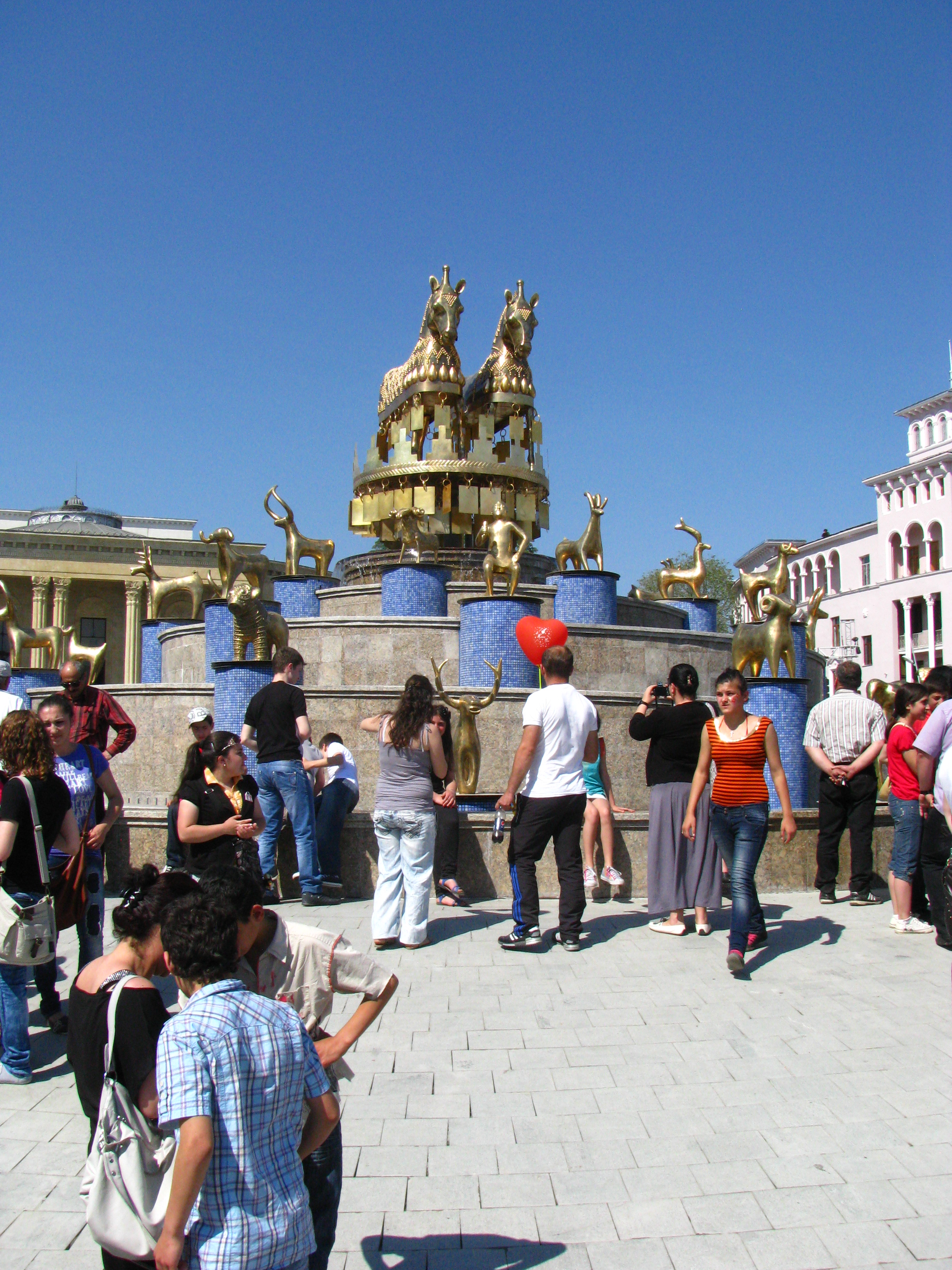
The new fountain at the main square. Some TLGers think it looks kind of tacky, but I think it’s a pretty good attempt to capture some of Kutaisi’s ancient heritage. There’s certainly plenty to choose from.
The main city square is on the other side of the park, with the theater on the left, the banking district on the right, and a giant fountain in the center depicting replicas of ancient Colchian artifacts found in Imereti province. It’s one of the many interesting ways the city has been trying to reinvent itself since the end of the Soviet Union. The statue of David the Builder that once graced this square now stands in front of the train station, at the end of the boulevard that bears the same king’s name.
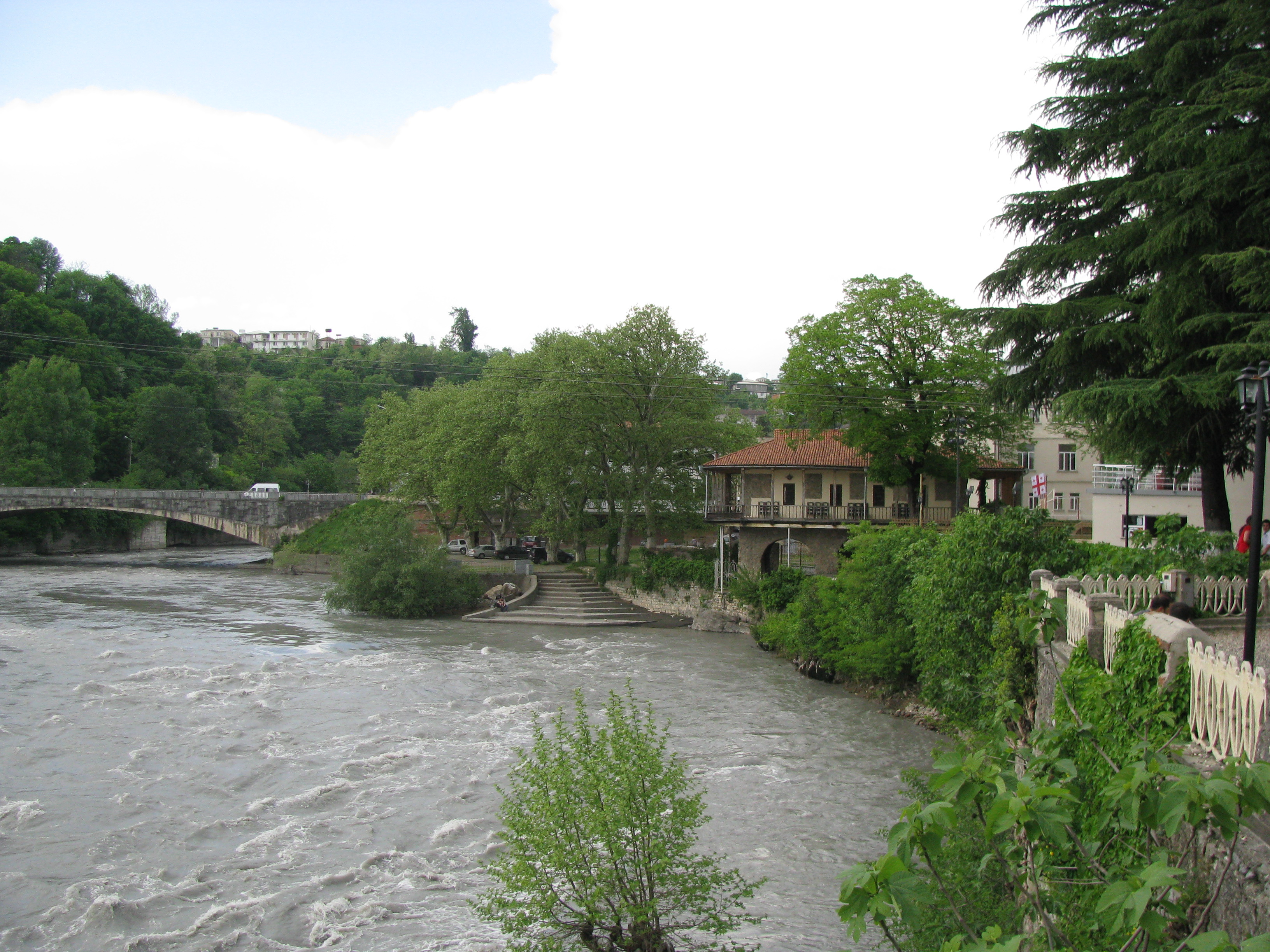
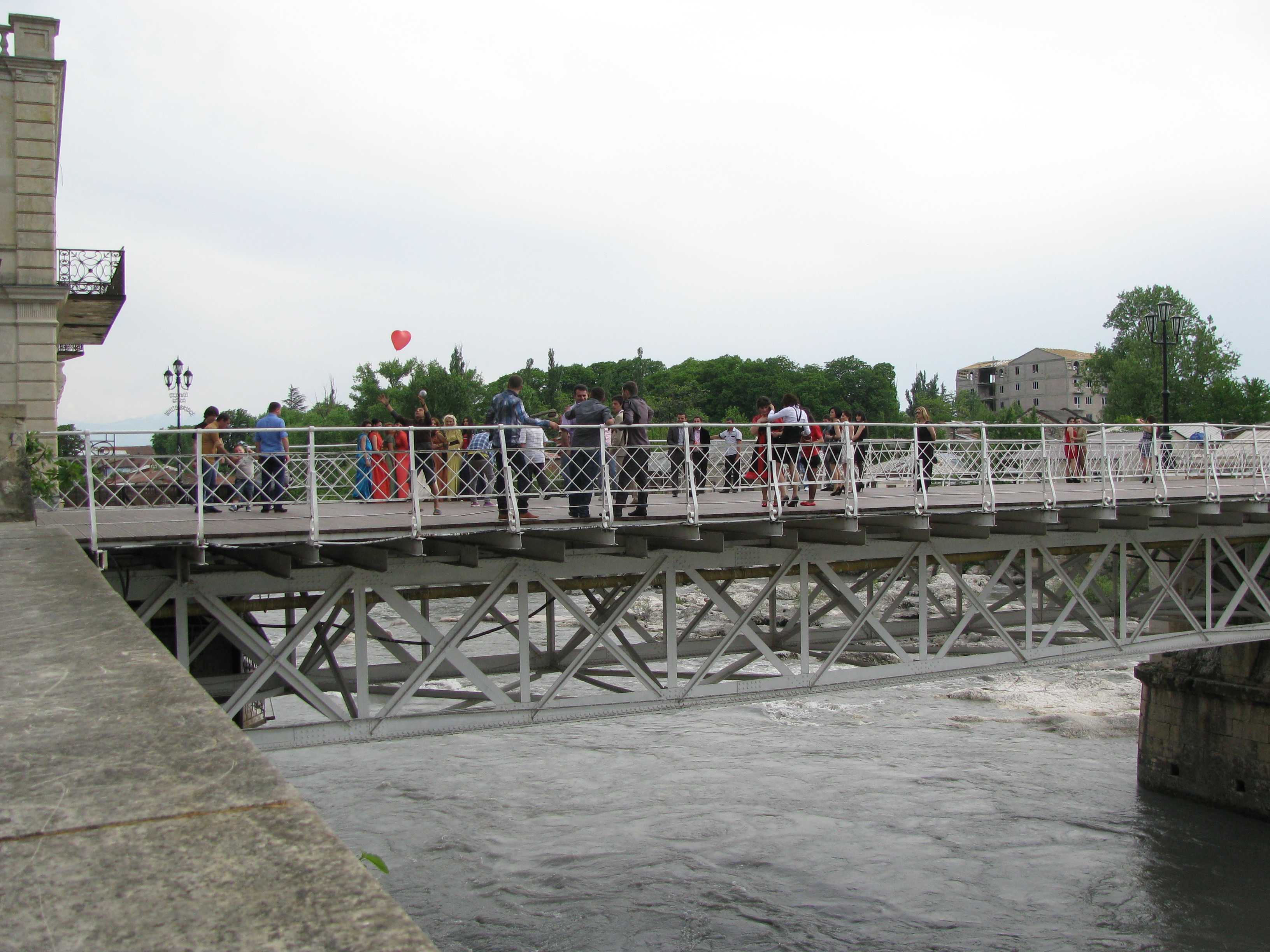
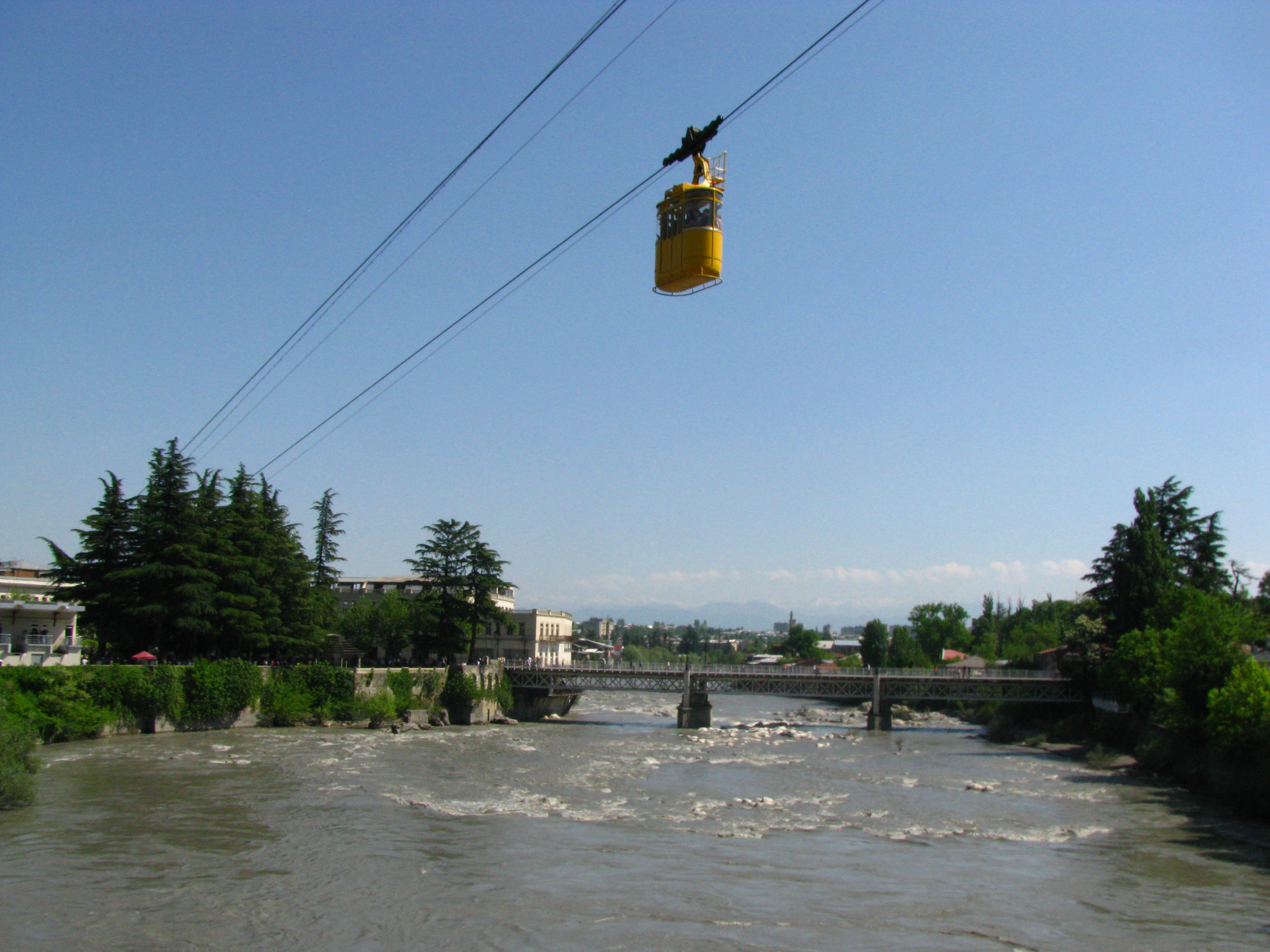
You can see the back of Mirzani’s across the river. It’s probably the best restaurant in town.Tetrikhidi (White Bridge), with a wedding party posing for photos.The Kutaisi gondola. I don’t know why, but Georgians seem to have a thing for gondolas.
Looping back around, we return to the Rioni river and the neighborhood immediately surrounding Tsitelikhidi. There are actually three bridges here: Tsitelikhidi (Red Bridge), Rustaveliskhidi (Rustaveli Bridge), and Tetrikhidi (White Bridge), a pedestrian bridge next to another attractive garden. From here, a gondola takes visitors over the river to an amusement park at the top of a hill. On the weekends, wedding parties often stop here to take pictures, then speed around the city honking their horns and making noise.
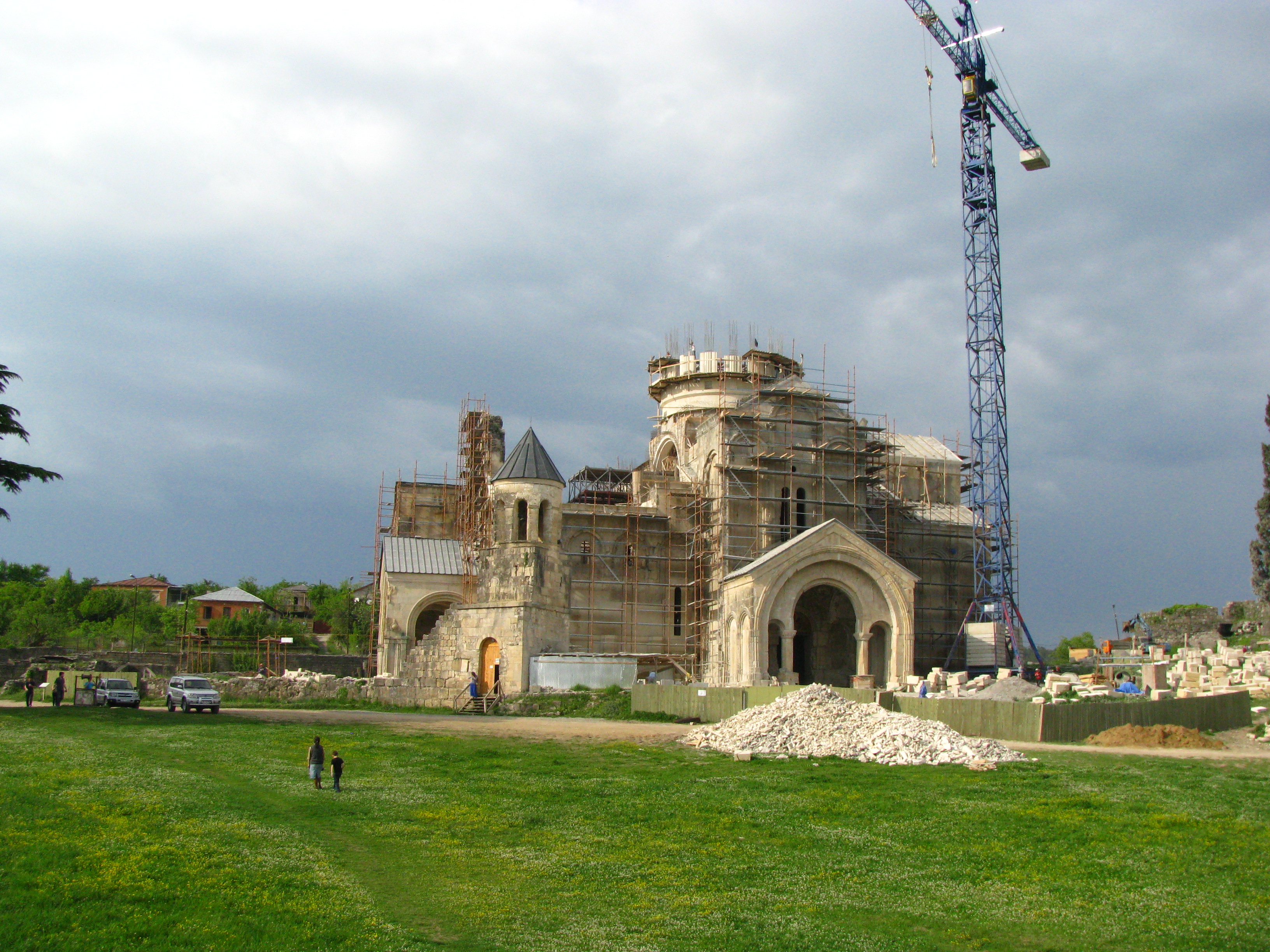
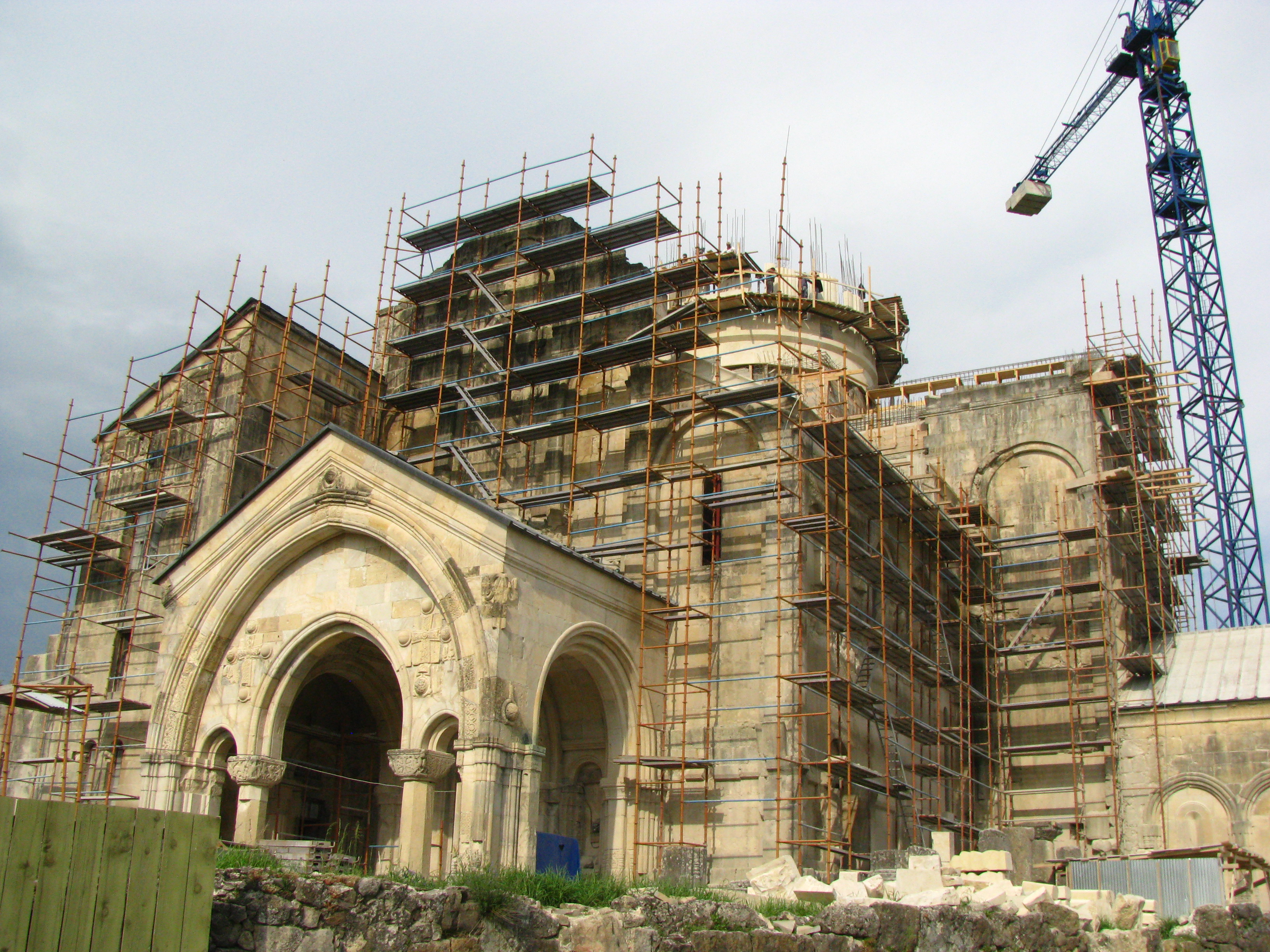
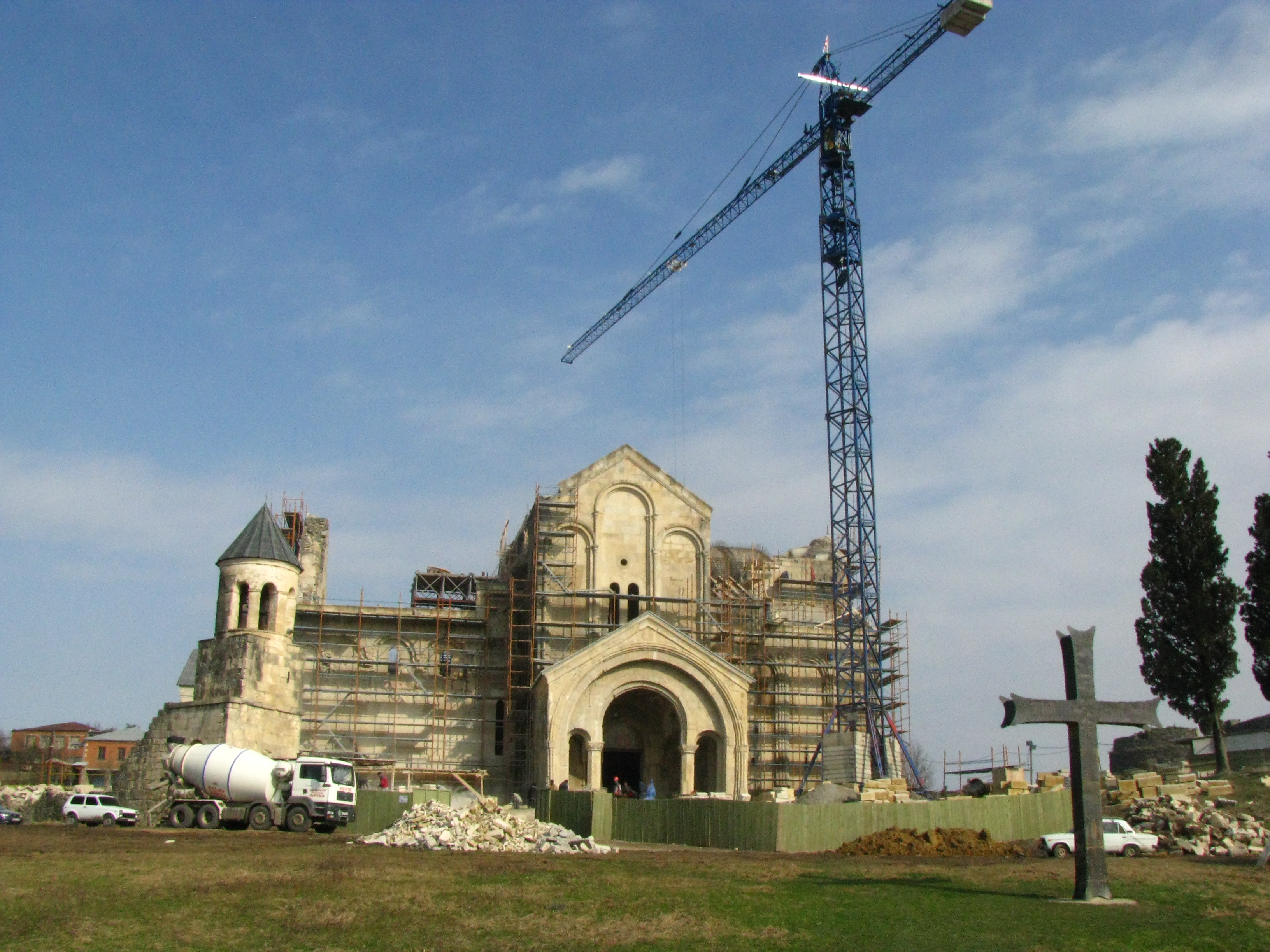
Bagrati Cathedral in the spring.Close up of Bagrati. The reconstruction is actually progressing fairly rapidly.
Heading north, we pass through the markets again and cross over Jatchviskhidi (Chain Bridge) to the right bank of the Rioni. After passing another curbside station–this one for marshrutkas heading to the northern villages–we climb a 200 step staircase and find ourselves at the foot of Bagrati Cathedral.
Bagrati is a thousand year-old Georgian Orthodox church, the largest and most important in the city. After the Turks razed it in the 18th century, it lay in ruins for hundreds of years. But now, with Georgia’s newly-won independence and the economic boom fueled by the IMF and other foreign investors, the historic cathedral is under reconstruction. I probably won’t be here when it’s finished, but I definitely want to come back and see it when it is.
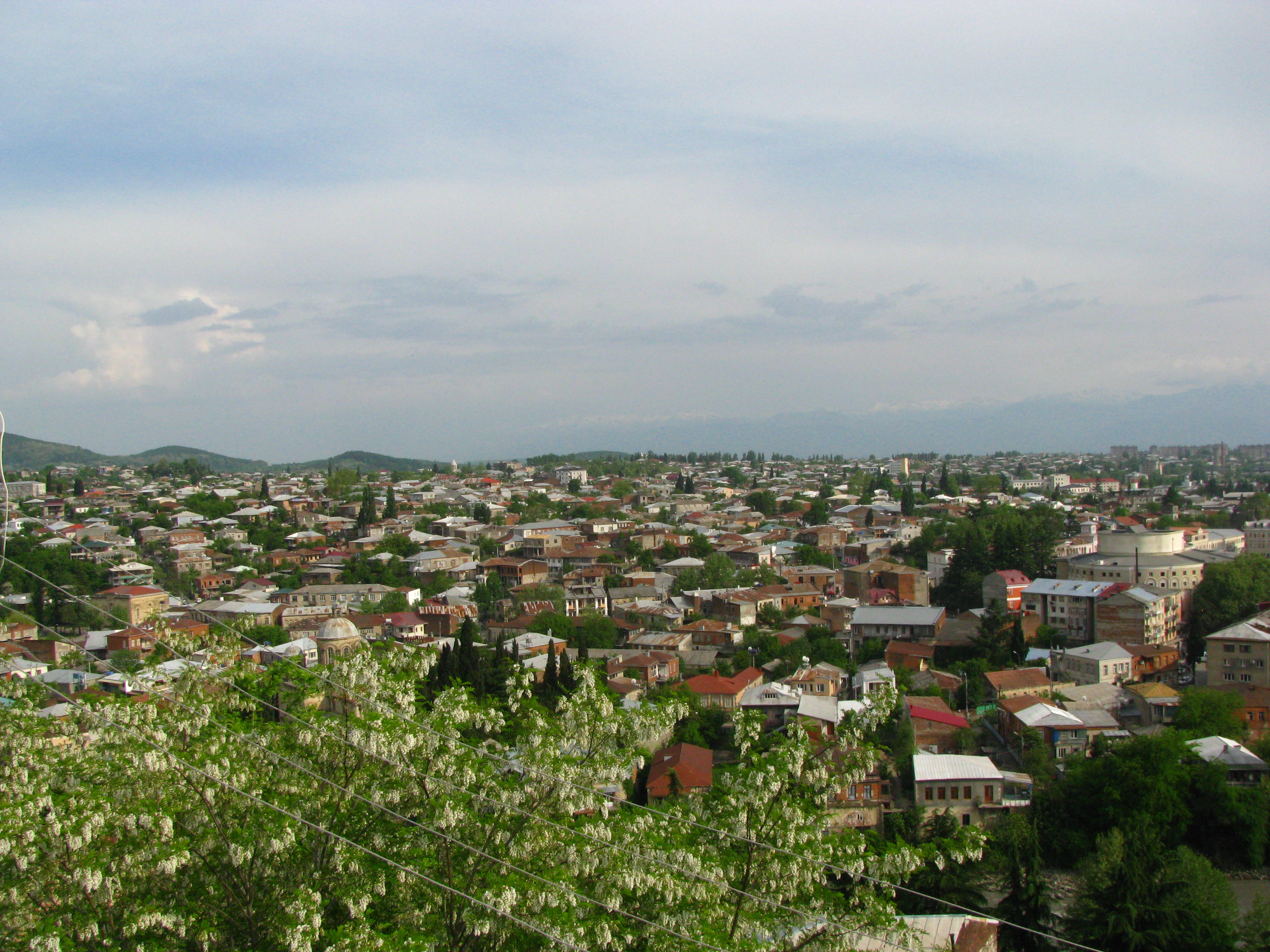
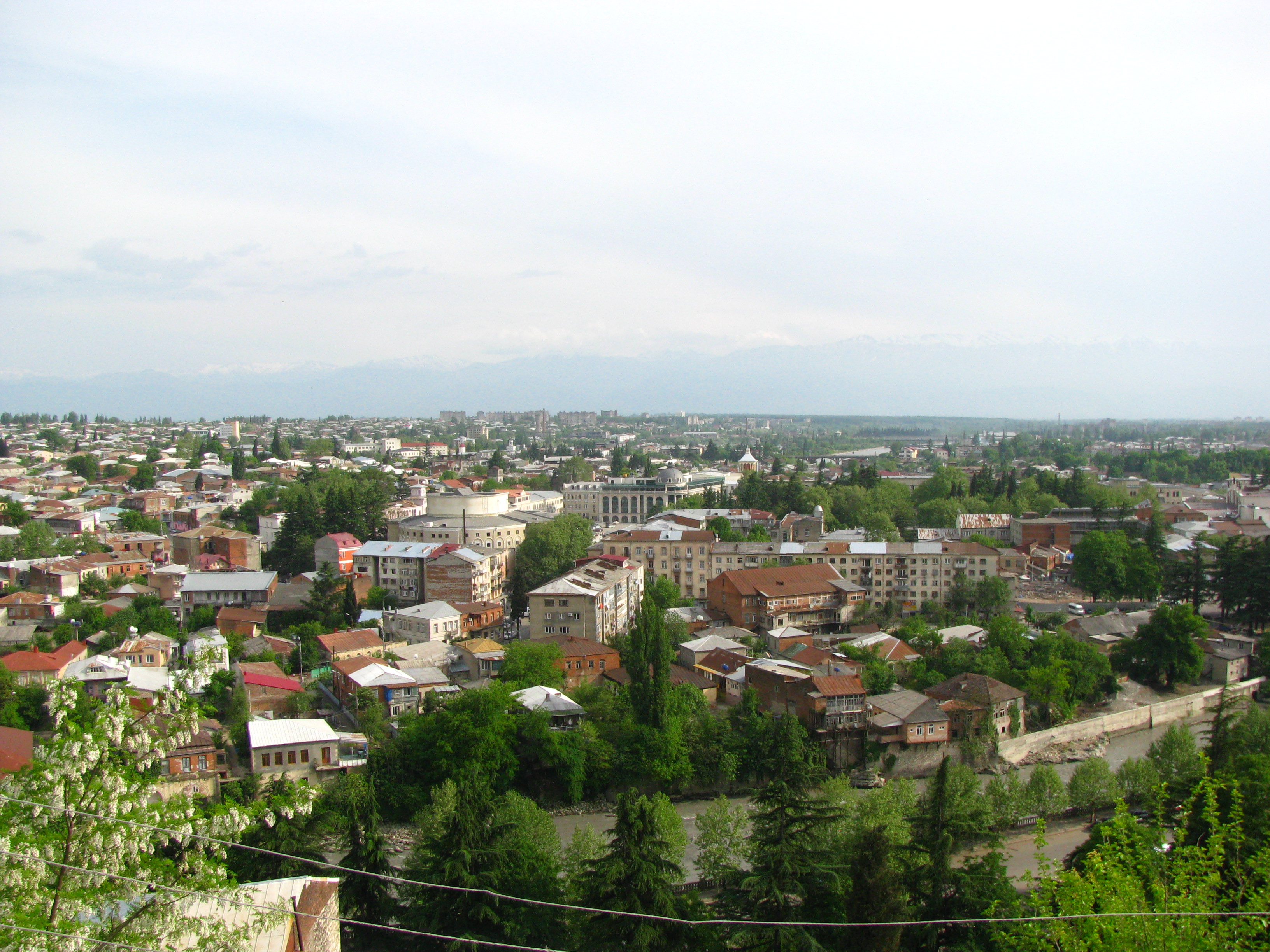
The view looking southeast.The view looking southwest. The mountains in the distance are the Lesser Caucasus, about 4000 meters above the elevation of the city.View from the steps leading up to Bagrati. Kutaisi has a lot of churches.
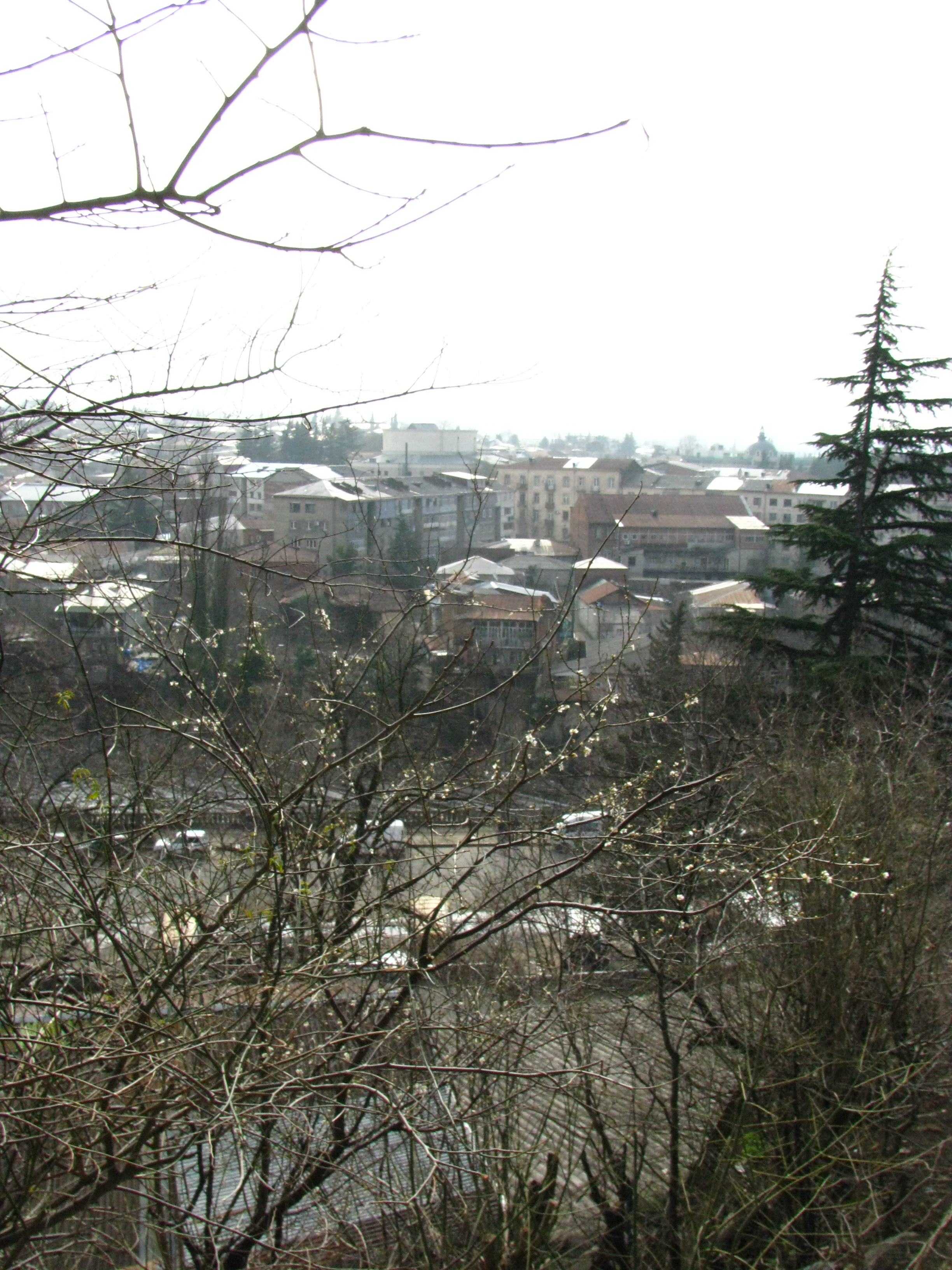
Bagrati Cathedral sits on an imposing hill with a magnificent view of the whole city. Here, you get a sense of just how big Kutaisi really is. It’s not a tall city, or a particularly busy city, but compared to the rest of Georgia outside of Tbilisi, it’s pretty huge.
Unlike Tbilisi, however, the city has had very little exposure to the West. People still stop to stare curiously at foreigners, and hardly anyone speaks English. It’s much quieter than Tbilisi, too, with fewer cars, more parks, and lots of gardens and orchards, even in the more crowded districts. People live closer to the land, and travel often to the outlying villages where they still have friends and family.
Perhaps the best way to put it is that Kutaisi still possesses that sense of rustic Caucasian innocence that Tbilisi has since lost. You can hear it in the way people laugh and see it in the way they kiss and are kissed by their children. For a city that was legendary long before the maps showed America as a separate continent, that’s no small thing.
Orthodox Easter is April 15th, and in Georgia, most places take off four or five days for vacation. In typical Georgian fashion, we didn’t know for sure how many days we had off until a couple of weeks before the break came up, but fortunately that was time enough to find out where some of the other TLGers in Kutaisi were going and tag along with them.
Our group consisted mostly of TLGers and embassy staff from Tbilisi, friends of my friends in Kutaisi who came out at the same time last year. For 300 GEL (about $185 USD), we got a private marshrutka and tour guide for four days, 3- and 4-star hotels each night, breakfast and dinner, and tickets to some of the more interesting sights between Reza and Trabzon. Multiple entry visas were $20 USD each, and the exchange rate in Turkey was quite favorable.
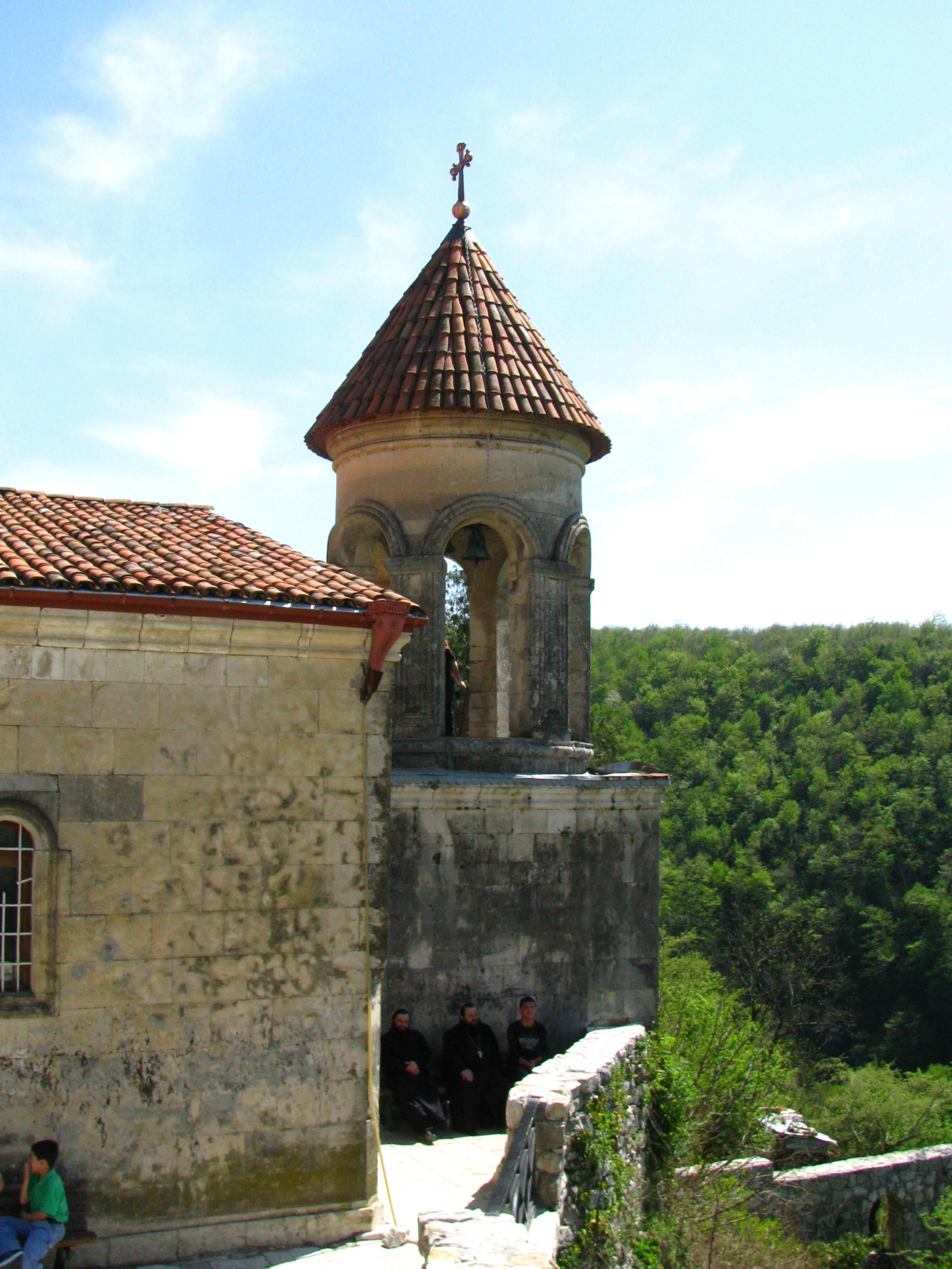
We met up at the McDonalds on Tchavtchavadze Street at noon and went up to see Motsameta Monastery. In spite of the fact that it’s so close to Kutaisi, this was my first time going up there, and I must say I was quite impressed! The monastery is situated on the top of an imposing cliff where the Tsqaltsiteli River makes a sharp bend. The English translation of the river is “red water,” named for the two Christian martyrs who were executed on the site of the monastery by the Muslims shortly after their conquest of the region.
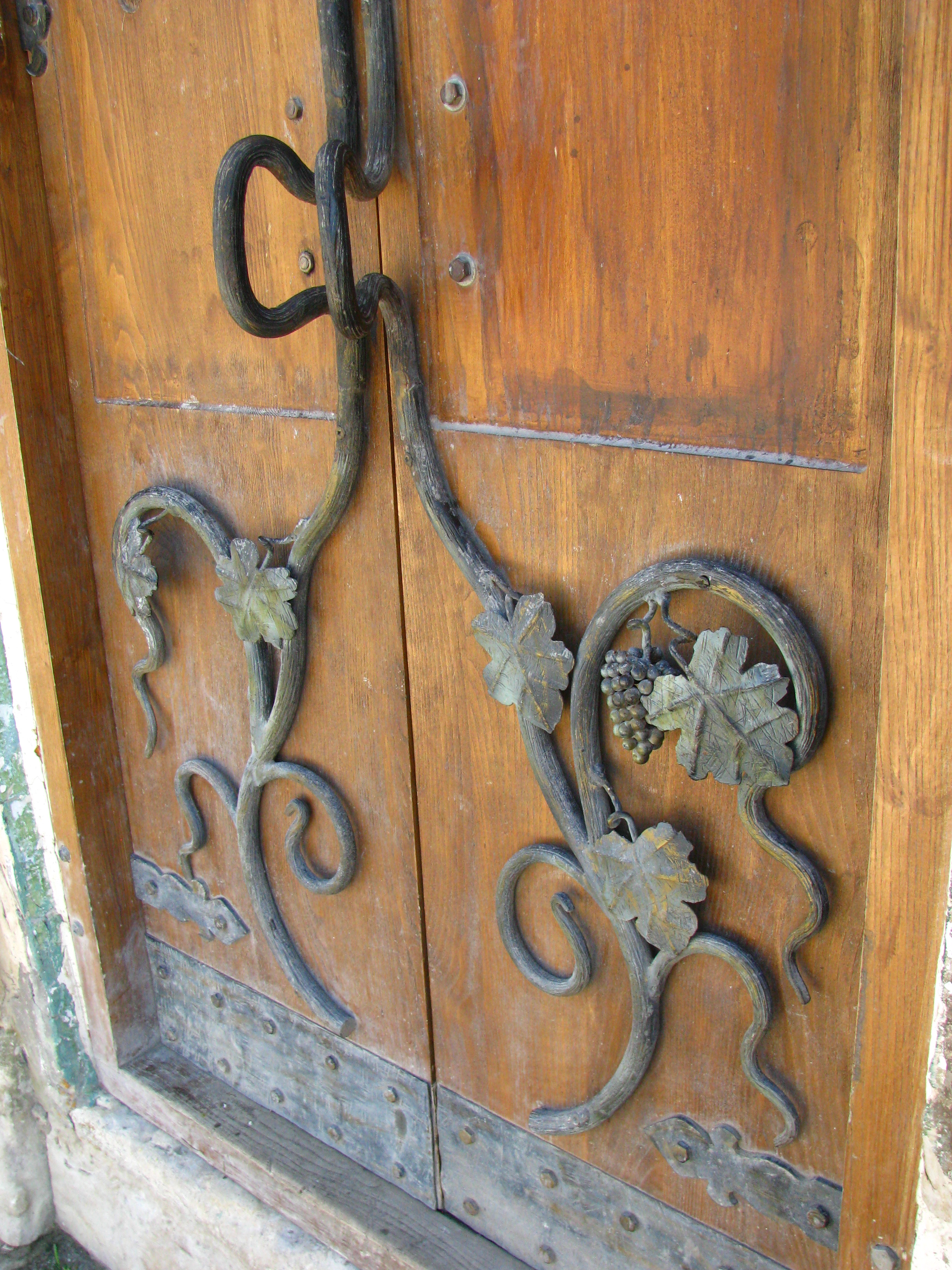
Some priests hanging out by the chapel on Easter Sunday.Detail on the door handles to the monastery chapel. Georgians take their grapes quite seriously.
I spent most of the vacation relaxing, so I didn’t take many spectacular photos. But Motsameta was really fantastic–I’ll have to go back sometime to do it justice. There’s a forest trail that goes between Motsameta and Gelati Monastery, where David the Builder is buried, and I’d like to hike that before I come back to the states.
Next, we drove down to Batumi on the Black Sea, where we spent some time wandering the Botanical Gardens. It’s a really nice place, with trees and plants from all over the world right up against the seashore. Very peaceful. It’s pretty big, though–I walked for almost an hour along the main road without getting to the end. And of course, there are many places along the way where you can stop and wander around for a while.
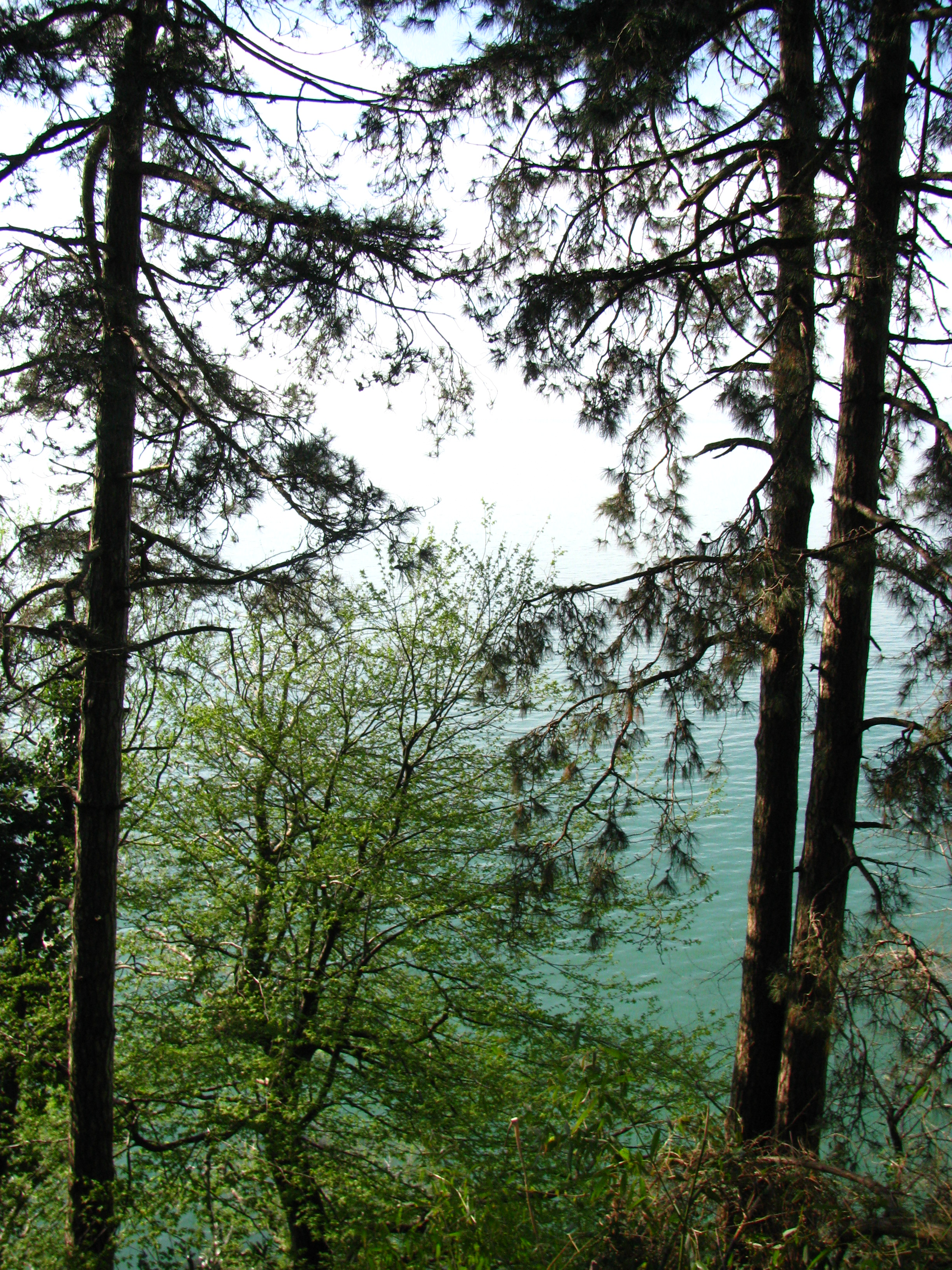
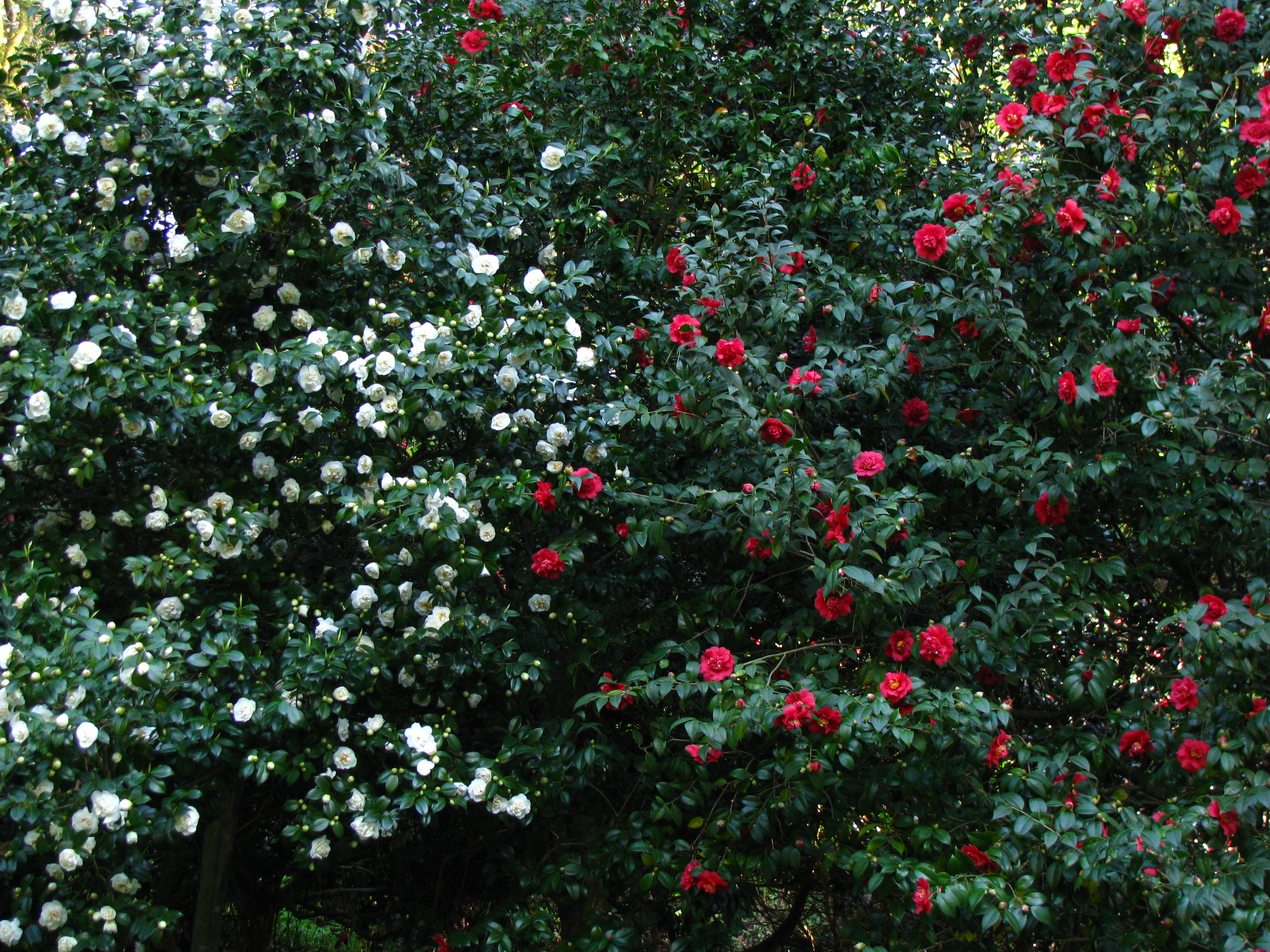
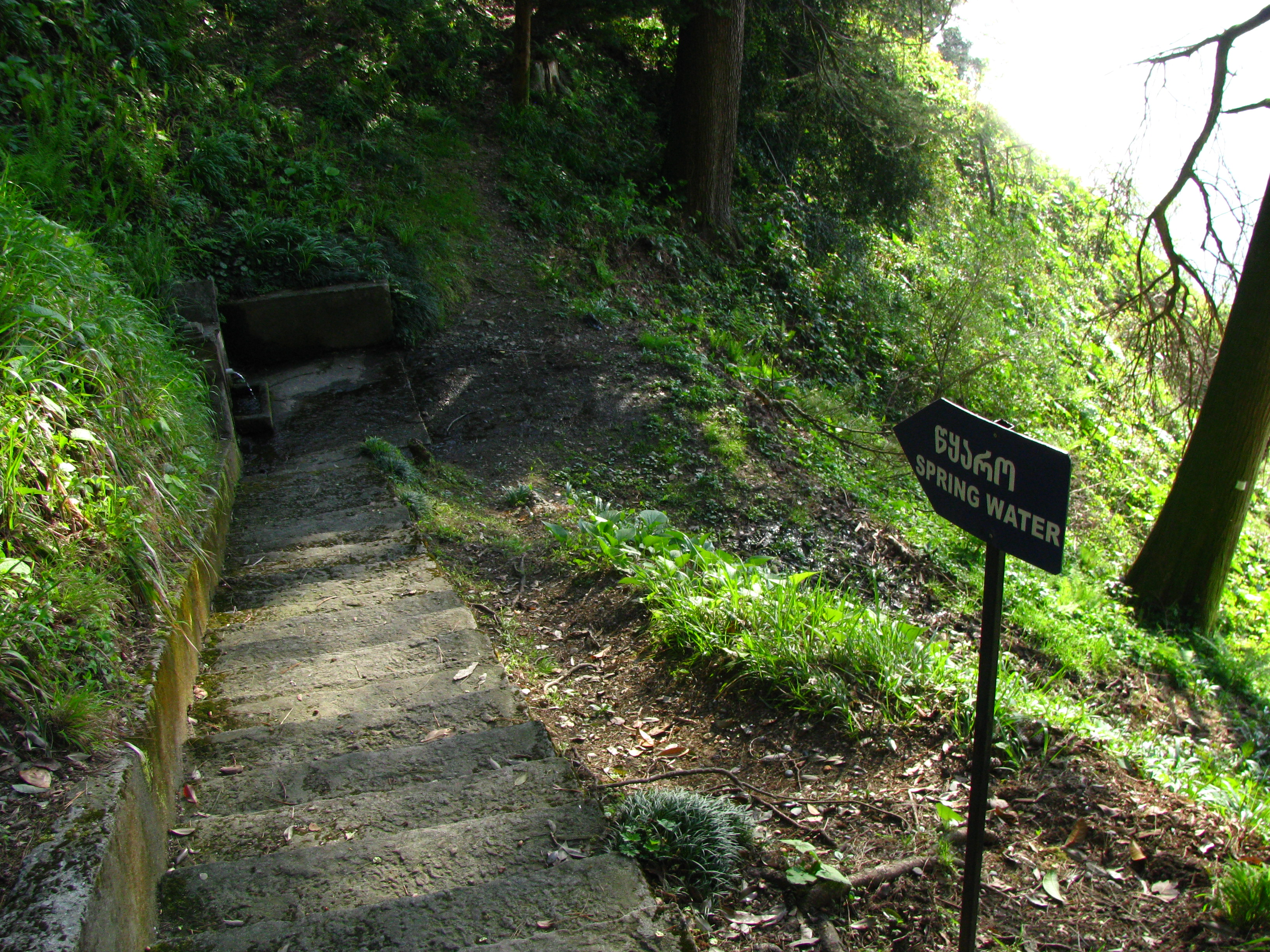
The Black Sea, visible through the trees of the Batumi Botanical Garden.Some red and white rose bushes. There are tons of flowering plants in the gardens, so spring is a really great time to see the place.A small spring in the middle of the Batumi Botanical Gardens. There are springs like this scattered across Georgia.
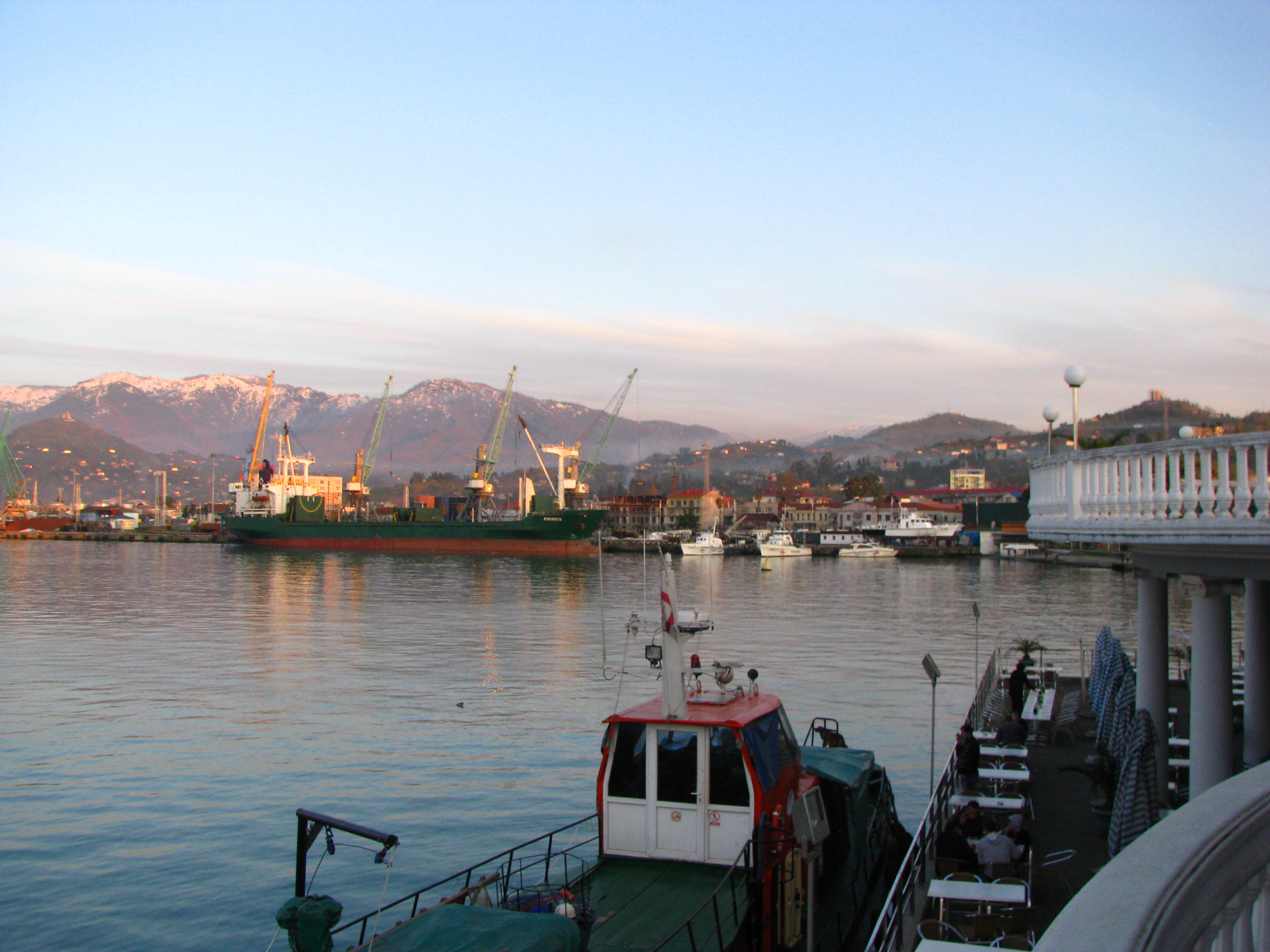
Batumi is an interesting place–not as big a city as Kutaisi, but with more money, hotels, casinos, and resorts. It’s right on the Black Sea, but the snow-capped mountains of the Lesser Caucasus range are right behind it, so you’ve got a big mix of climates and landscapes all within a short drive.
Batumi, Adjara Republic, Georgia.
The other TLGers were impressed to see that the roads are actually paved–apparently, there’s been a lot of construction in the past year or so. It’s not completely finished, but walking around downtown is quite pleasant. We hunted for ice cream and eventually settled on a smoke-filled cafe on some random street corner. Good times.
We spent the next morning crossing the border, a process that was surprisingly disorganized. The system on the Georgian side was pretty straightforward, but on the Turkish side we had to wait on the curb for a long time, with giant eighteen-wheelers driving past us and the sun beating down. It wasn’t too bad, though–definitely not worse than the Allenby crossing.
We drove for an hour, stopped in Reza for tea and lunch, then went on along the seashore to Trabzon. In Reza, I stood at the edge of a garden overlooking the city when the call to prayer started up. It brought back a lot of fond memories. 🙂 Turkey is definitely a Muslim country, with mosques everywhere, pencil minarets dotting the cityscape like steeples, and women dressed in colorful hijabs.
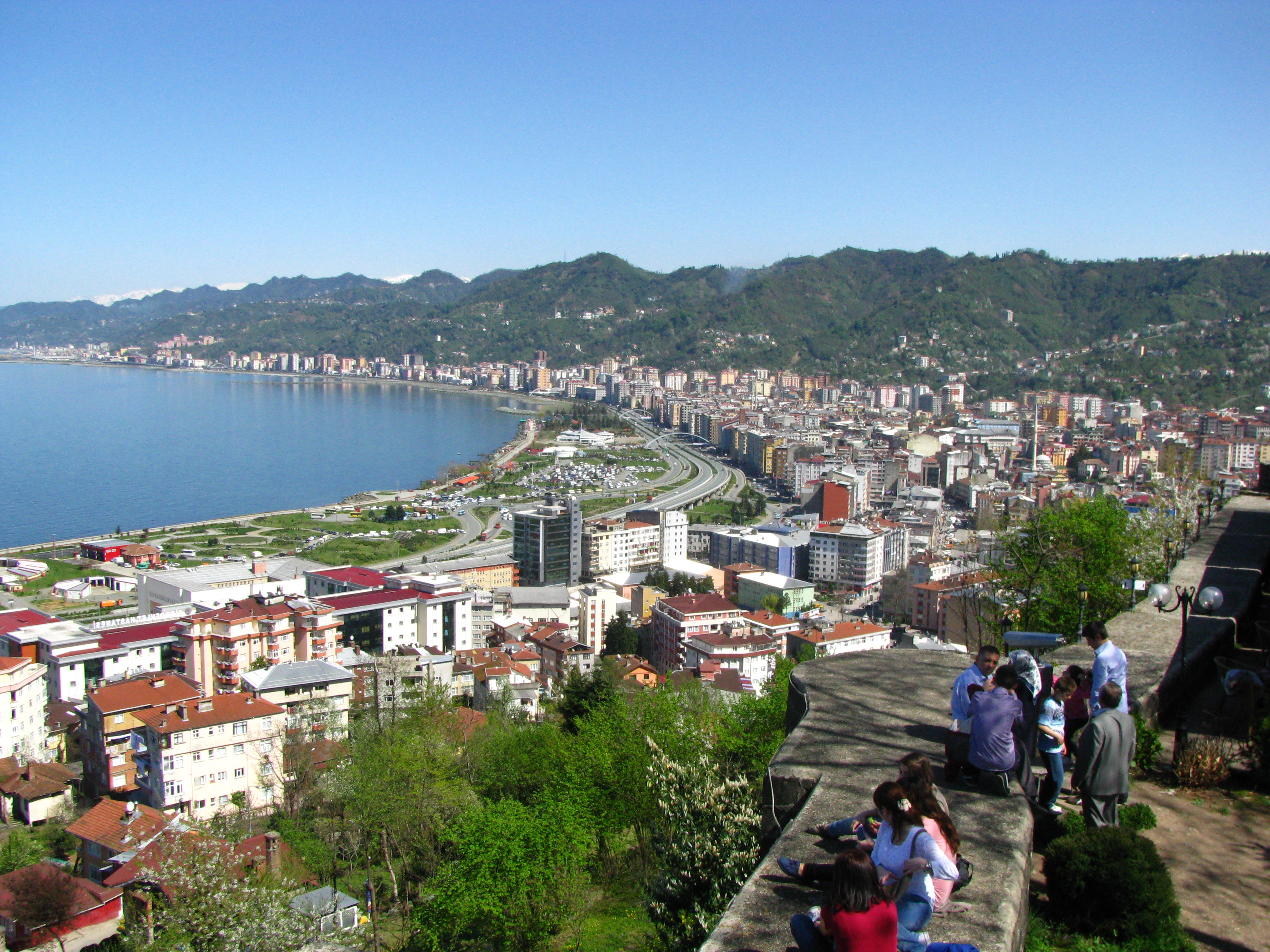
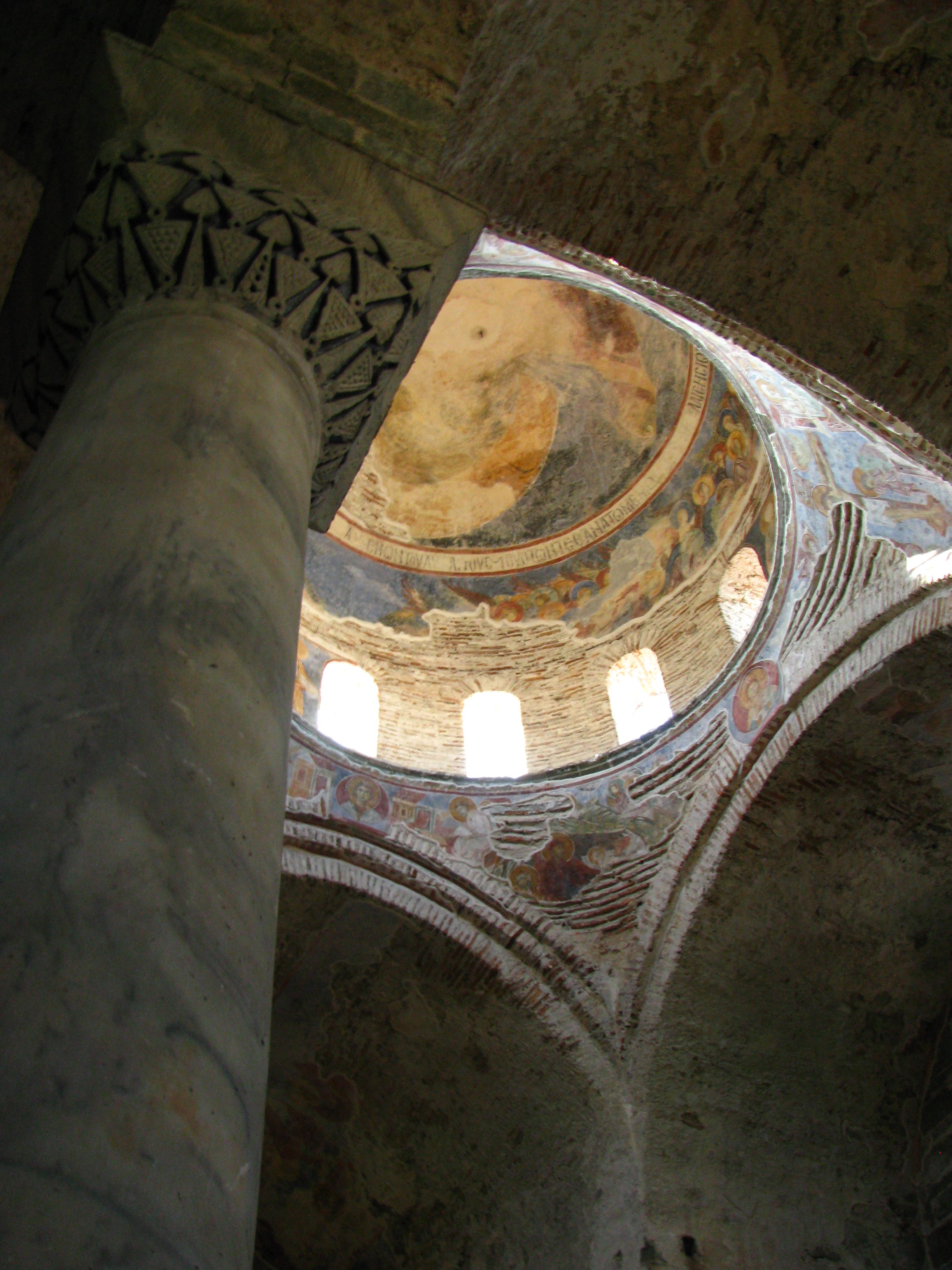
View of Rize from Rize Castle.Interior of the Little Haggia Sophia at Trabzon. It’s a pretty modest sized basilica, now a “museum” which basically means it’s not used for religious services. It needs renovation.
Compared to Kutaisi, Trabzon is a large and well-developed city. The downtown marketplace was packed, but the streets were well-paved, the shops were quite nice, there weren’t any beggars and basic amenities weren’t hard to find. Almost no-one spoke English, which made communication difficult since I don’t speak any Turkish, but it was surprisingly easy to make friends. We stopped for lunch at one place, and after a very difficult time trying to explain that we didn’t want any meat in our sandwiches (most of the girls in our group were vegetarian), the restaurant owner actually let us eat for free!
Some of the other volunteers had asked that we go to an American style mall, so we spent a few hours there before going to the hotel. I must confess, I was bored out of my mind. Nothing but clothes stores and Turkish fast food restaurants–it was identical to an American mall in almost every way. I suppose that that’s why the others wanted to go there–after spending a year in Georgia, they probably craved someplace that feels like home. But I’m not there yet, so that particular excursion was kind of boring.
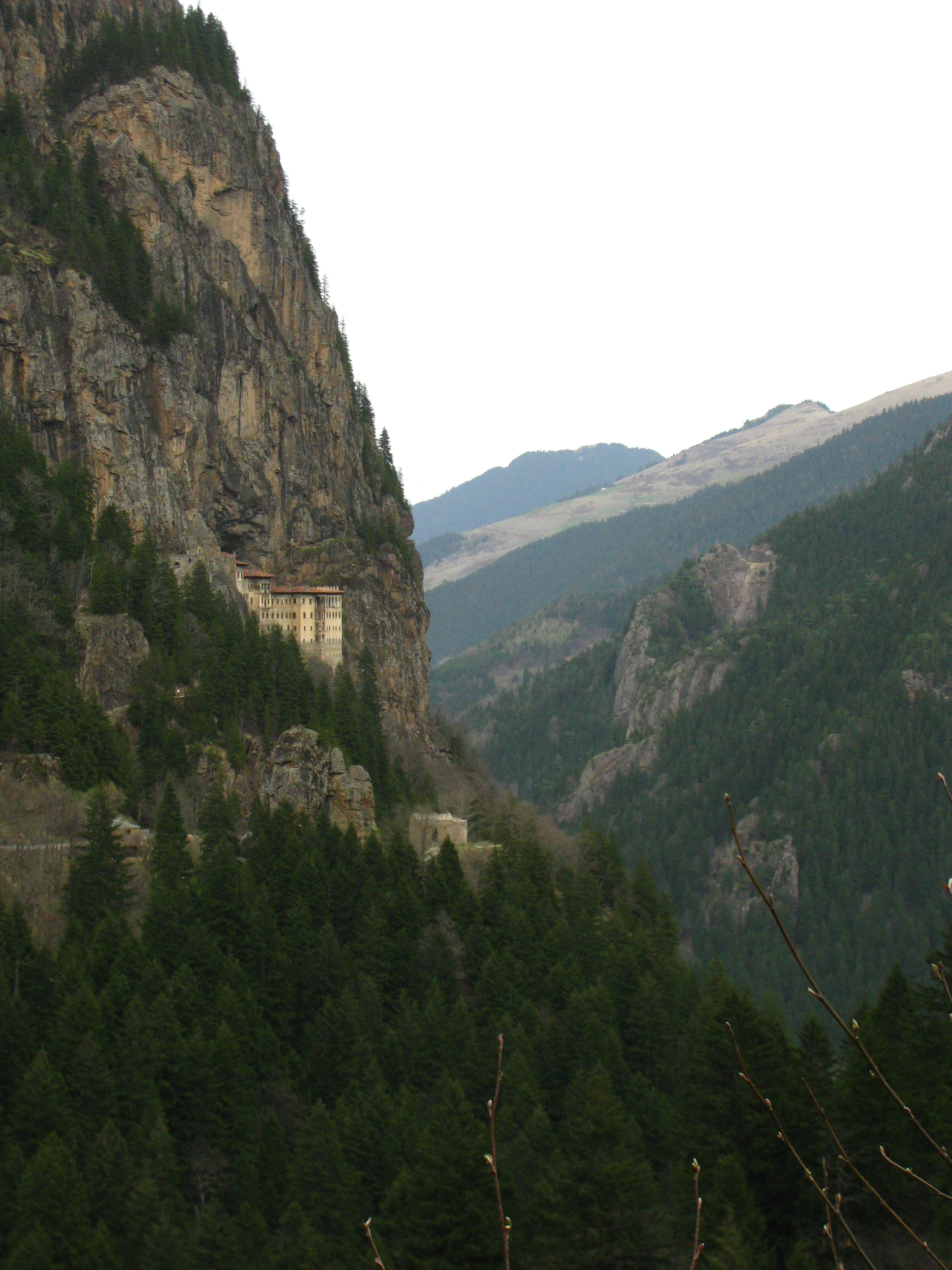
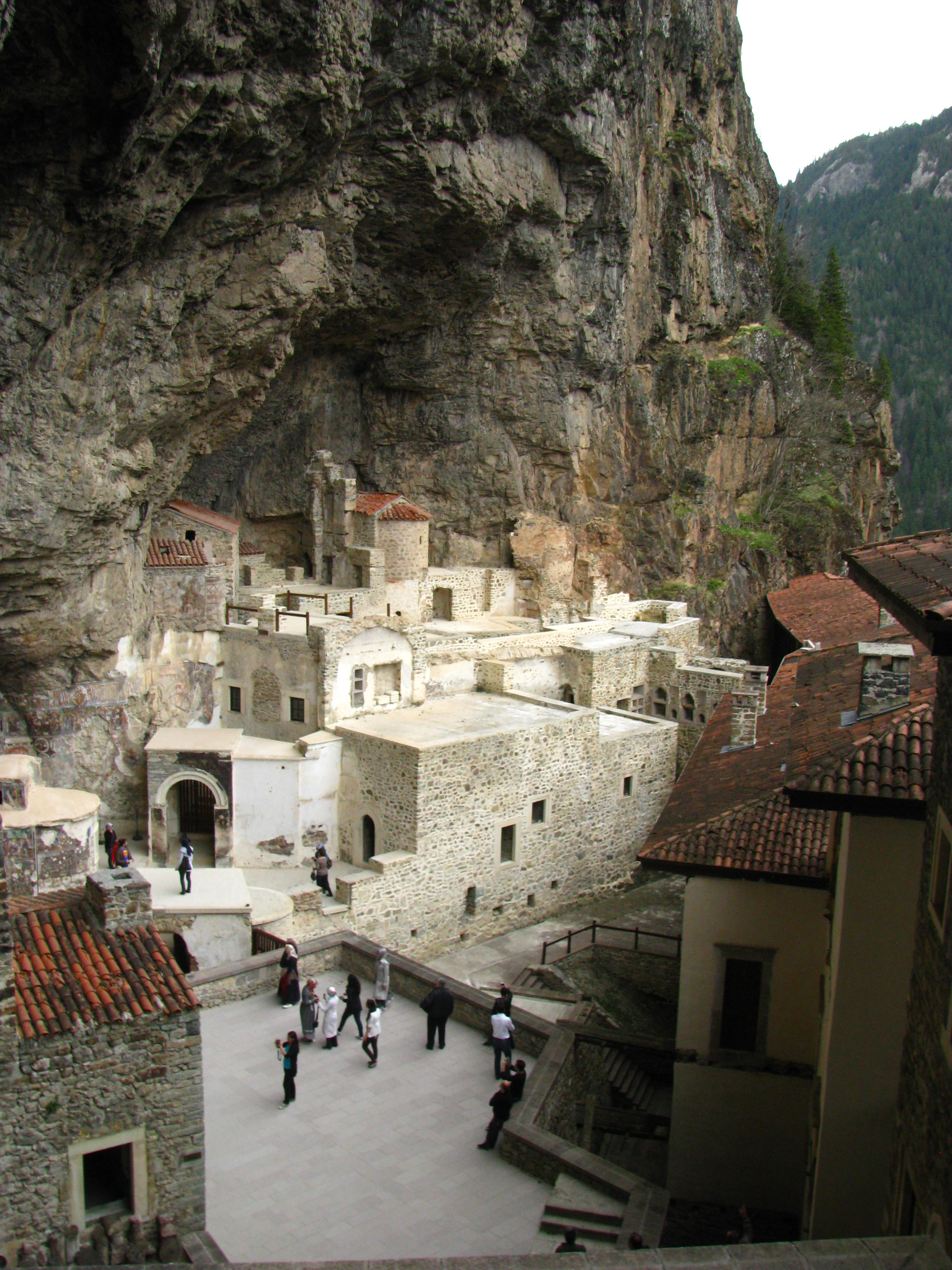
The next day, we went up to Sumela Monastery in the mountains, and from there to Lake Uzungol. The monastery was quite cool, because it’s perched literally on the side of a cliff, almost 500 meters above the valley floor. Unfortunately, the friezes and other artwork was quite damaged, so I didn’t feel compelled to take many pictures, but it was fun to hike up there and see the view. A bunch of Turks laughed at the way I ran up the path, and the fountain at the top had some FREEZING cold mountain runoff. It was a lot of fun.
Sumela Monastery from the top of the canyon. The surrounding countryside is absolutely gorgeous.Inside the monastery complex itself. Many of the buildings are new additions, but there are some original structures.
At the lake, I bought a piece of Turkish silverware for my host mom that ended up being a huge hit. A lot of the shops were really touristy, but it was fun anyway and the landscape was quite beautiful. Reminded me a bit of Colorado. We stayed in a mountain cabin and the bedsheets smelled like cigarettes, but otherwise it was quite comfortable.
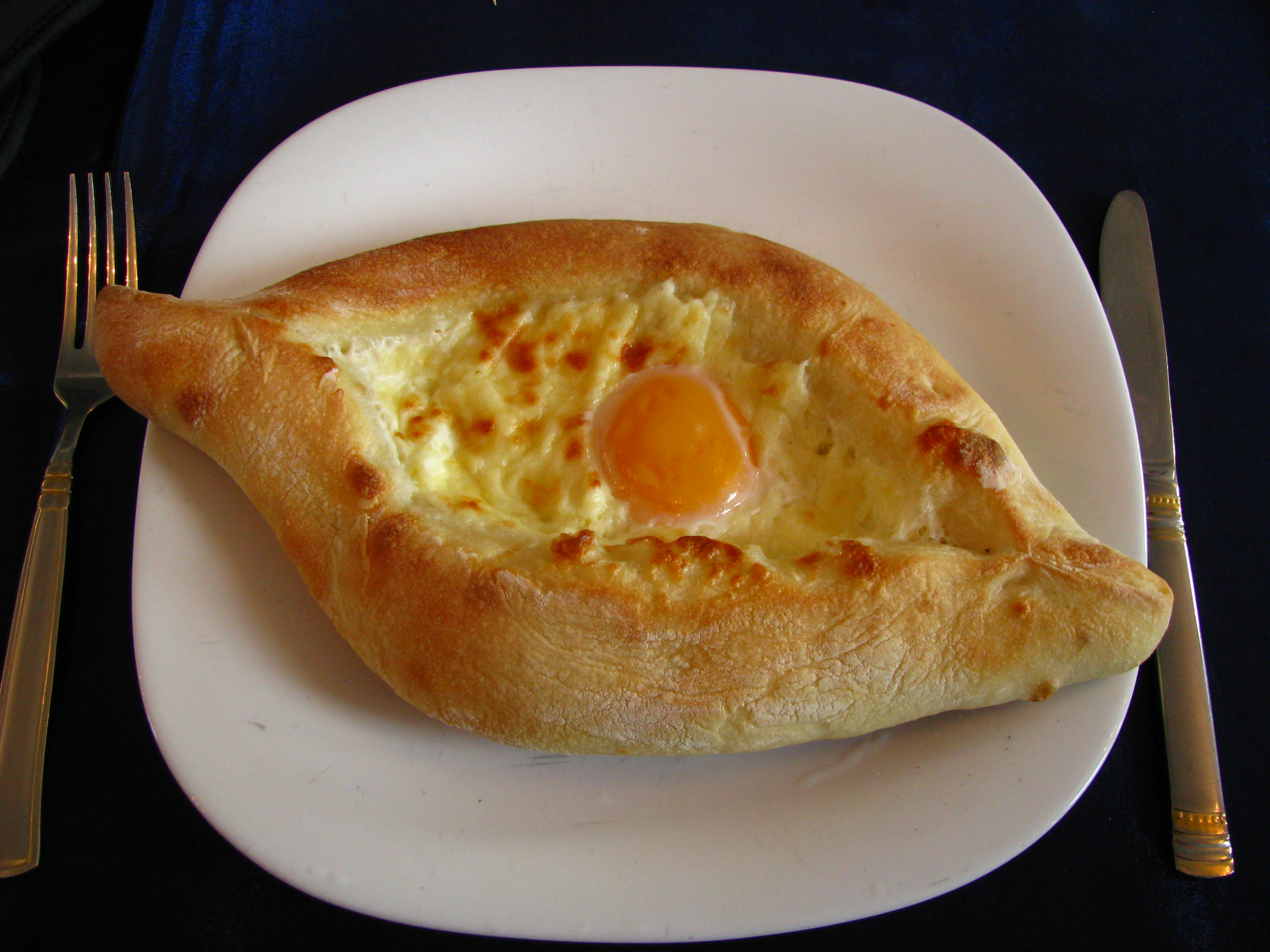
Adjaruli khatchapuri. If you eat this every day, you will have a short and happy life.
On the way back, we stopped in Batumi for dinner and had Adjaruli khatchapuri. Khatchapuri is the main Georgian go-to food–it’s basically cheesy bread with a thick, doughy crust. In Adjara, though, they take it a couple of steps further.
Immediately after taking the bread out of the oven, they crack an egg in the center, which gets cooked a little by the heat but otherwise remains raw. They then take a huge slab of butter and plop it right in the center of the yolk, where it melts in and gets everywhere. To eat it, you stir the egg around and work your way inward from the crust, dipping the bread in the molten gooey center. Between the cheese, the egg, the butter, and the bread, you get a pretty heavy meal–delicious, but heavy.
After that, we took to the road again, talking about all sorts of stuff and having a generally good time. Our tour guide was a great guy, and we had a lot of fun racking his brain. The other lady from the company was quite delightful, and talked with me a lot about Racha, growing up in Kutaisi, her experiences living in the Persian Gulf, etc. It was a long ride, but it went by pretty fast, and we pulled into Kutaisi around 9pm.
All in all, a fun, relaxing vacation, and a good chance to get out and see a little more in this part of the world. Turkey was nice, but I have to admit, I felt a bit like I was coming home when we crossed the border back into Georgia. It’s not as clean or developed, but it’s got a feel to it that isn’t quite like anything else. I like it.
So I’ve decided to stay here in Georgia for another semester. Things are working out really well, I enjoy teaching English, and for the full experience I think it will be better to stay for a full year.
I’m not sure if I’ll stay in Kutaisi yet, though. It’s a convenient place to live, but I have upwards of 30 kids in my classes, which can be a real challenge. I’d kind of like to spend the next semester in a village or small town, where I can know all the kids by name. Then again, I really like it here in Kutaisi, and I’m doing so much where I am that I’d kind of like to stay, just to see how things turn out.
Currently, I’m teaching grades 1-6, 9-10, and 12. It sounds like a lot, but I’ve got great co-teachers who help out a ton. I teach 18 class periods per week, which is enough to keep me busy but not so much that I feel overwhelmed. My favorite grade to teach is probably 4th or 5th, where the kids know enough to surprise you but don’t have all the issues that come with teenagers. There are different things I enjoy about each grade, though, so it’s good to have a mix.
The second semester doesn’t start until September, so that’ll give me a few months off to do whatever I like. My current plan is to come home and work on getting print editions of my books out. TLG will pay for my flight out and back, and my parents will let me stay at their place over the summer, so I think things will work out quite well.
As for what to do in December once this tour is finished–that’s an entirely different question. I could probably leverage my experience here in Georgia to get a much higher paying job in Asia or the Persian Gulf, but all I’m really looking for is a job situation to tide me over until my writing career takes off. That, and an awesome cultural experience.
What I’d REALLY like to do is find some remote desert village in the Middle East, where the locals will pay for room and board, my book royalties will pay the rest, the cultural experience will give me a chance to practice my Arabic, and my teaching skills will make a real difference in the local community.
Towards that end, I found this site called Workaway. A friend of mine used it to get a short-term job in a Bedouin camp in Wadi Rum, and there are TONS of other opportunities listed just like it. I freaked out a little when I saw it, because it looks AWESOME. When I was in Jordan, I used to fantasize about spending some time in the desert with the Bedouin, so getting the chance to actually do that would be amazing!
TLG will pay for my flight home at the end of the second semester, but I can opt to go anywhere else, so long as the ticket price isn’t any more than Tbilisi to JFK. Since this is the year my sister’s get together with their in-laws for Christmas, it might be better to go straight from Georgia to my next job at the end of December.
I was thinking about it as I walked around my neighborhood earlier today, and it made me wonder: why did I wait so long? There are so many awesome opportunities overseas–if you don’t have any debt or anyone you need to support, you could spend years hopping from one random adventure to the next. I could spend years doing that. And with epublishing, all I really need is my netbook and periodic internet access to put up new books as I write them–everything else more or less takes care of itself. It’s fantastic.
In any case, that’s the plan for now. I’m taking the night train to Tbilisi tonight, so I’d better go get ready for that. See you around!
From what I hear from my friends, it’s been a pretty mild winter back in the States. Here in Georgia, though, it’s been a much different story.
I think we’ve had only three sunny days since I arrived here in Kutaisi almost four weeks ago. The natives tell me that this is highly unusual. The temperature hovers right around 0 degrees Celsius, which means the snow is wet and melts extremely fast. It’s pretty for a day or two, then it turns to rain again, and that means mud…lots and lots of mud.
During a break in the snow, I ventured outside to take a few pictures of my neighborhood. In a couple of weeks, the weather will hopefully be warmer and things will look a lot different, but still, I thought it would be good to give you guys an idea of what this place looks like.
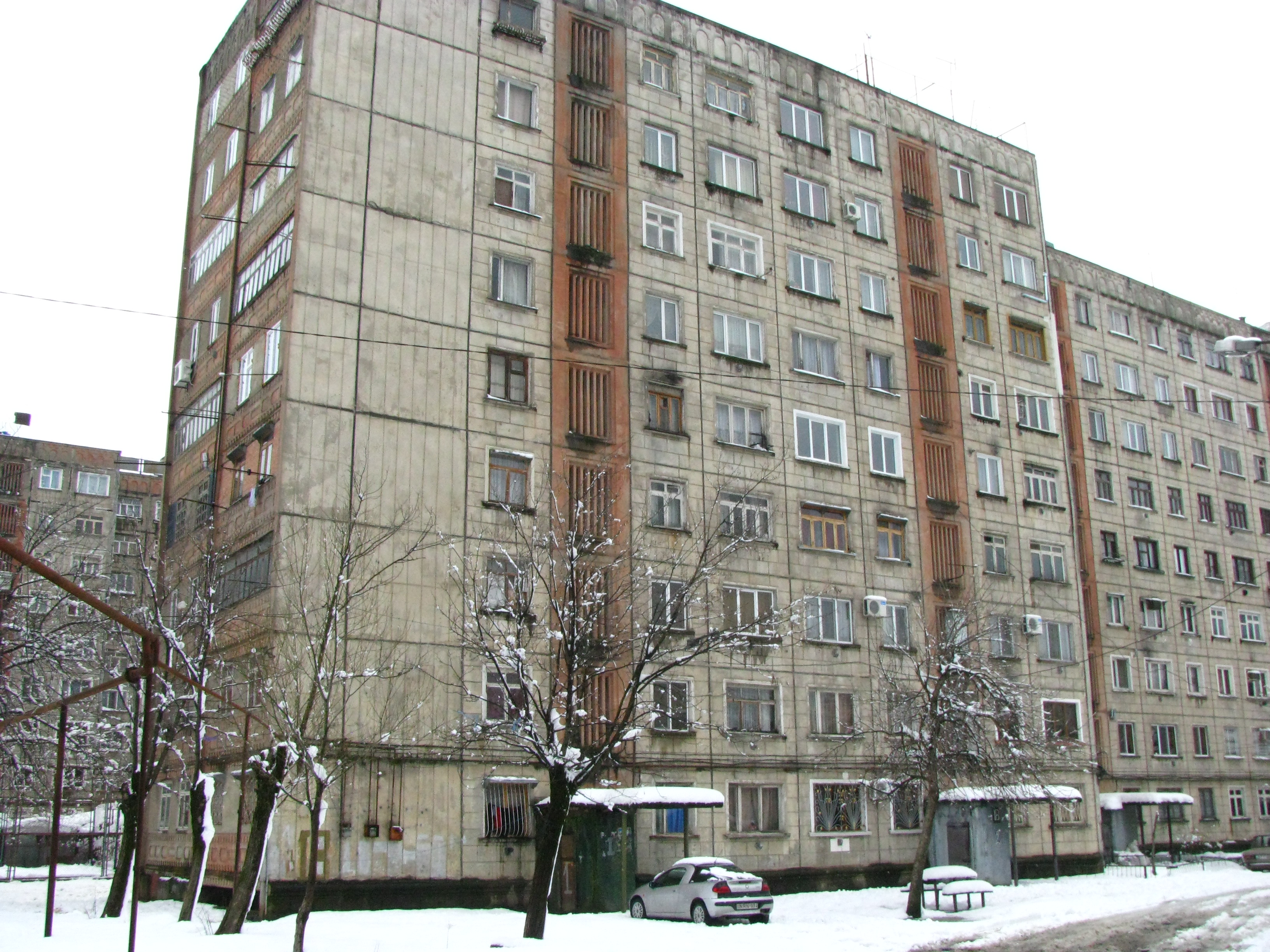
My host family's apartment. We live on the second floor, which is good since there isn't an elevator.
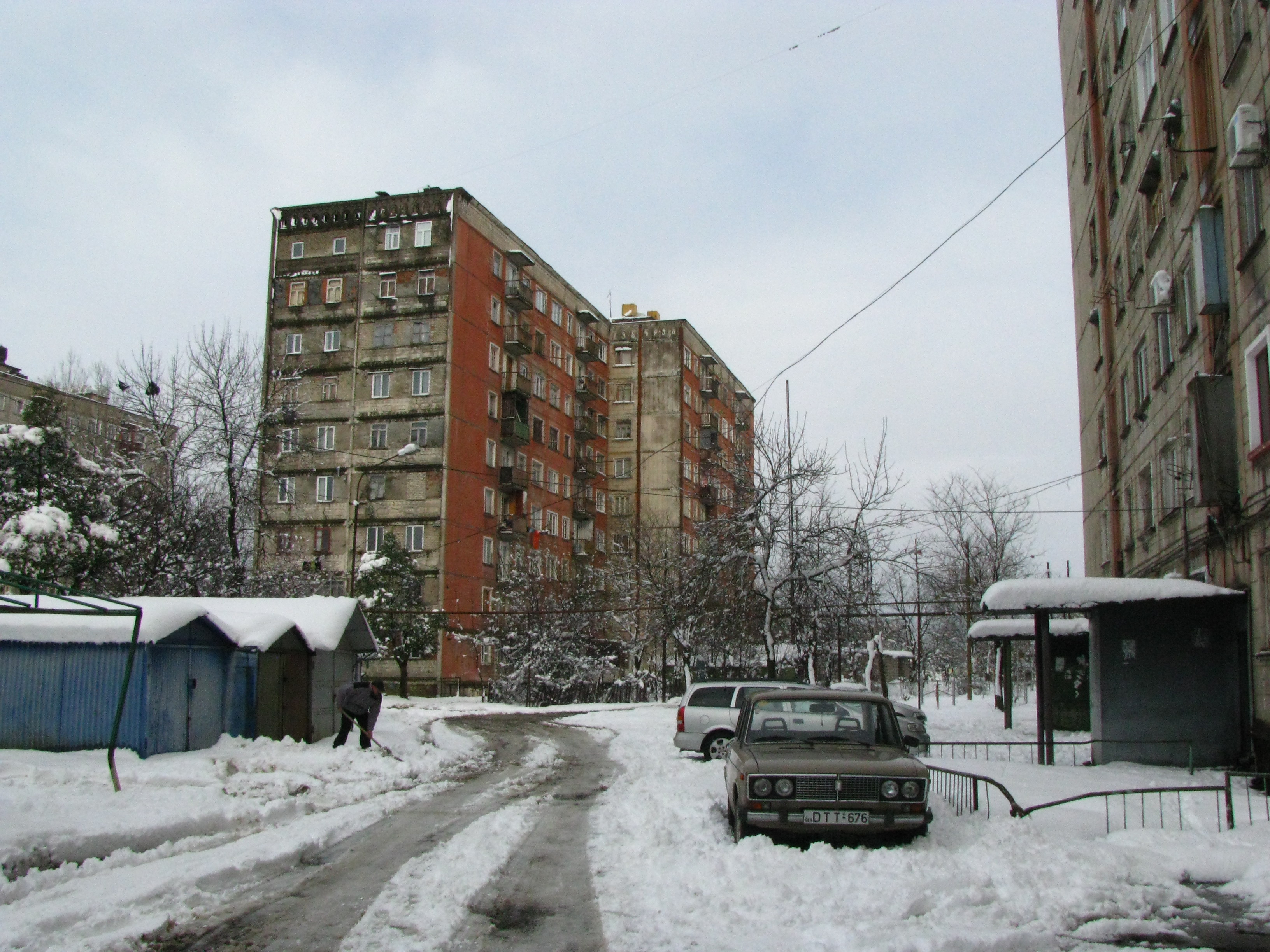
I live in the Avtokarkhana settlement, near the old Soviet auto factory. The apartments are about 50 years old, and haven’t been renovated much since then. It’s a poor neighborhood, but it’s comfortable enough, with all of the basic amenities like water and heating.
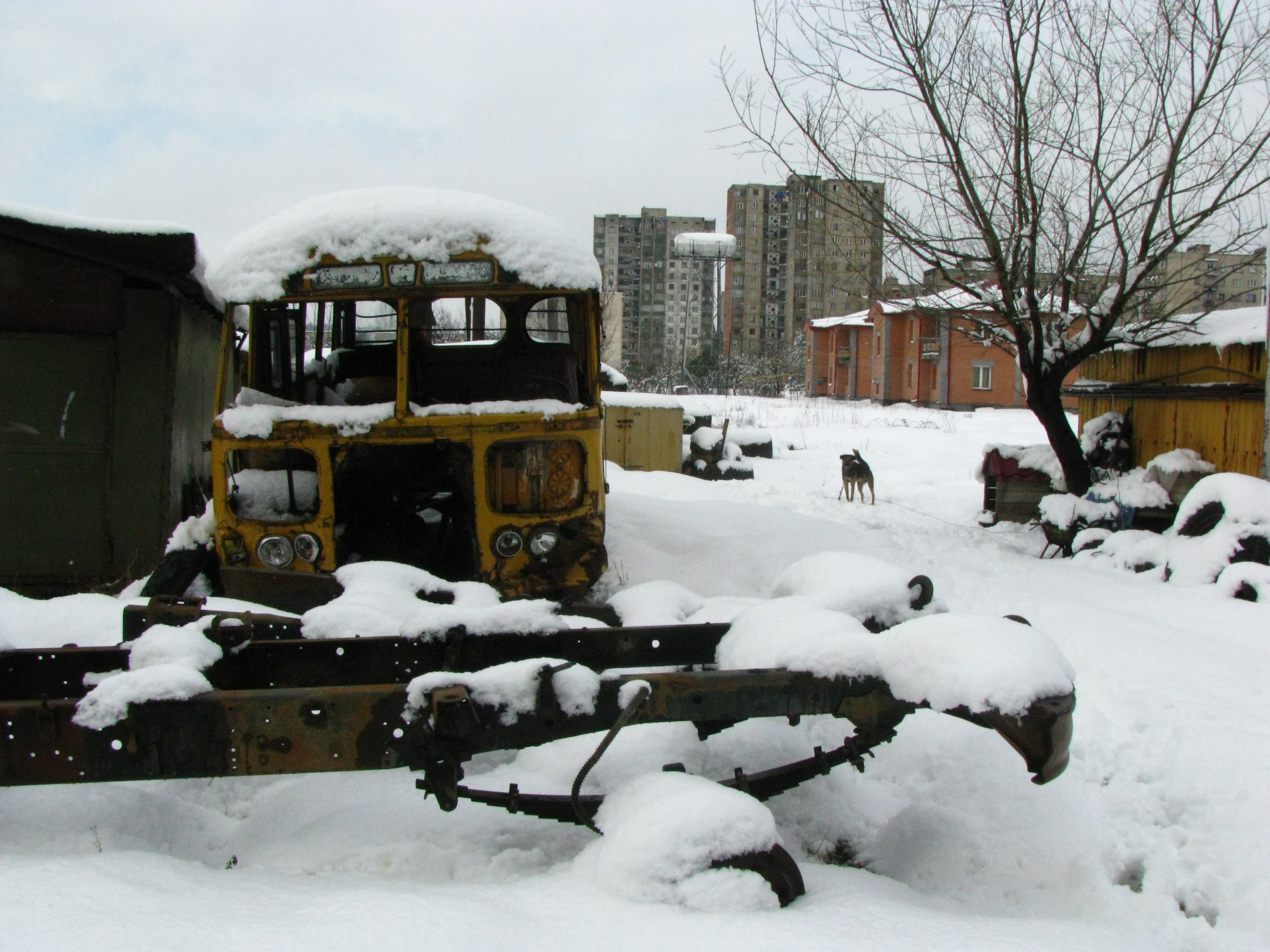
An abandoned bus along the road to my school. My host father has some choice words to describe his Russian-made vehicle.In Soviet Russia, puddle splash YOU!
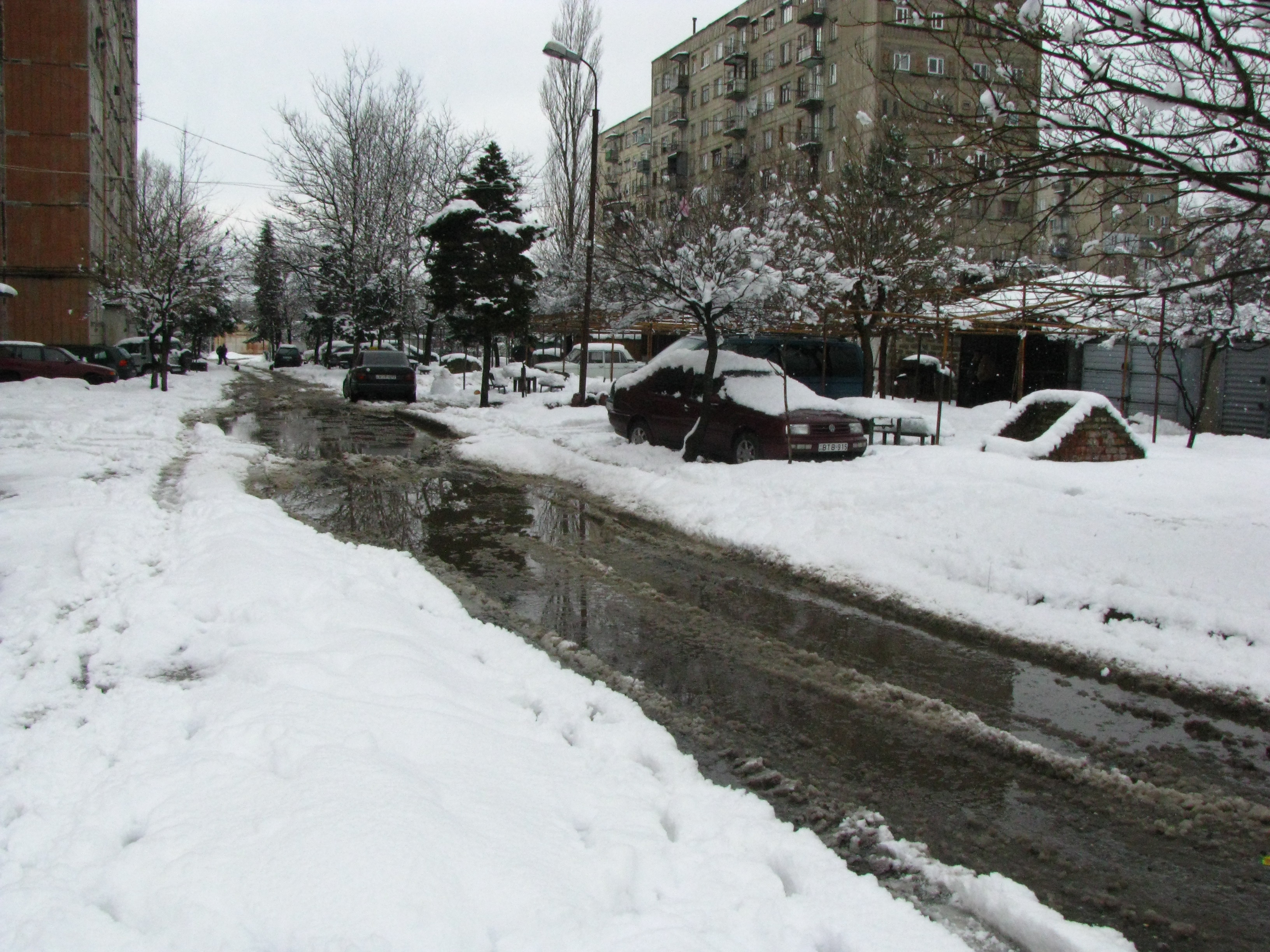
The roads are pretty nasty; they haven’t been repaved in decades, and the potholes are so deep you practically need a raft to get across the street. Most of the locals wear rubber boots during the rainy season, but I recently treated my boots with beeswax and that seems to be doing fairly well. Besides, after a while, you figure out where the stepping stones are, and then it’s not so bad.
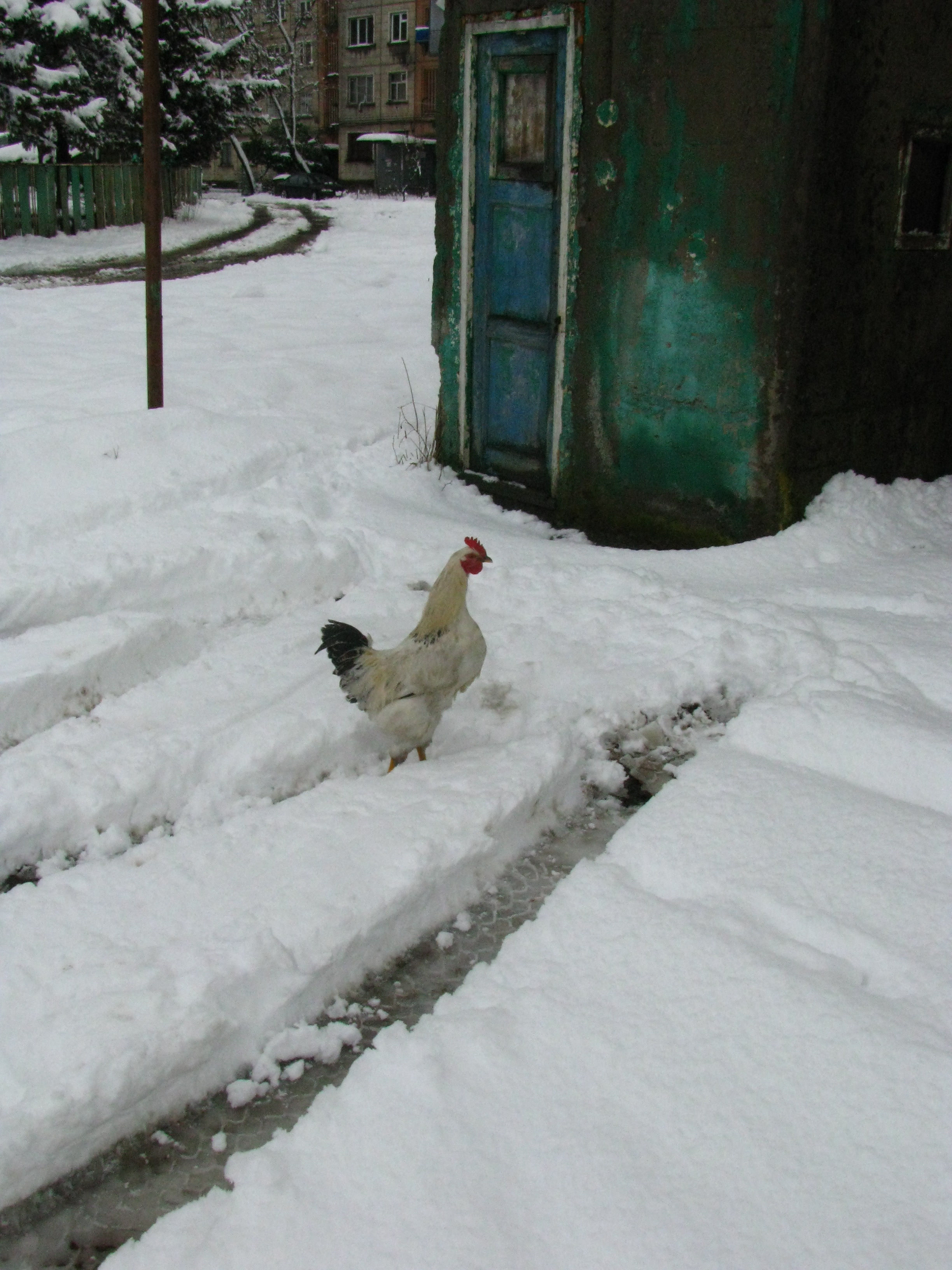
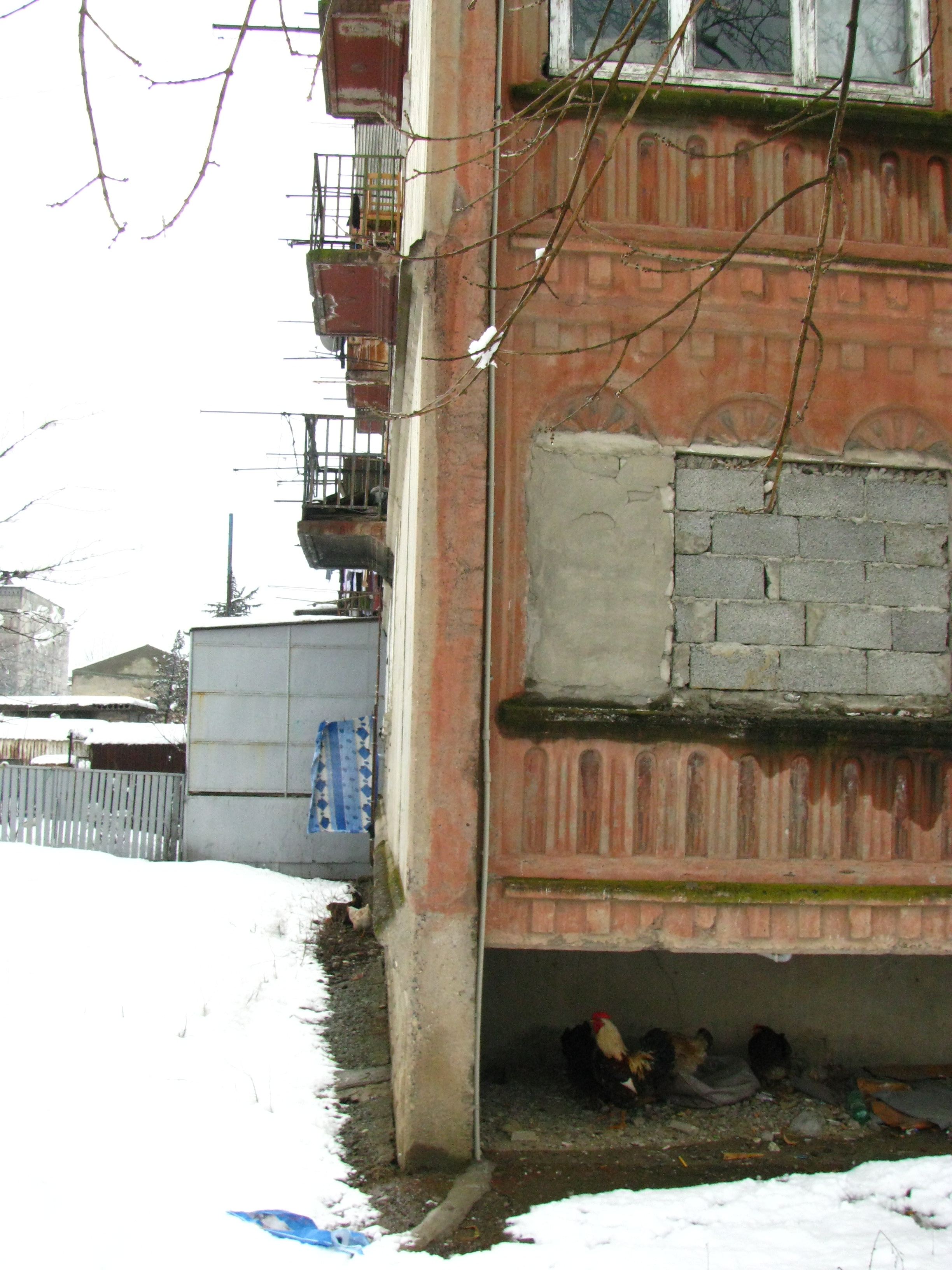
One of the local free-range chickens. There's a cow, too, but she was staying out of the snow.Where the chickens go to keep warm. My host family laughed when I showed them this picture.
Even though Kutaisi is a fairly large city, I get the feeling that there’s still a few lingering elements of the village mentality. How else would you explain all the free-range chickens that people still keep? The school is within walking distance, as are the stores where we buy our bread, and even though the pharmacy is a short drive away, I could probably walk there in fifteen or twenty minutes.
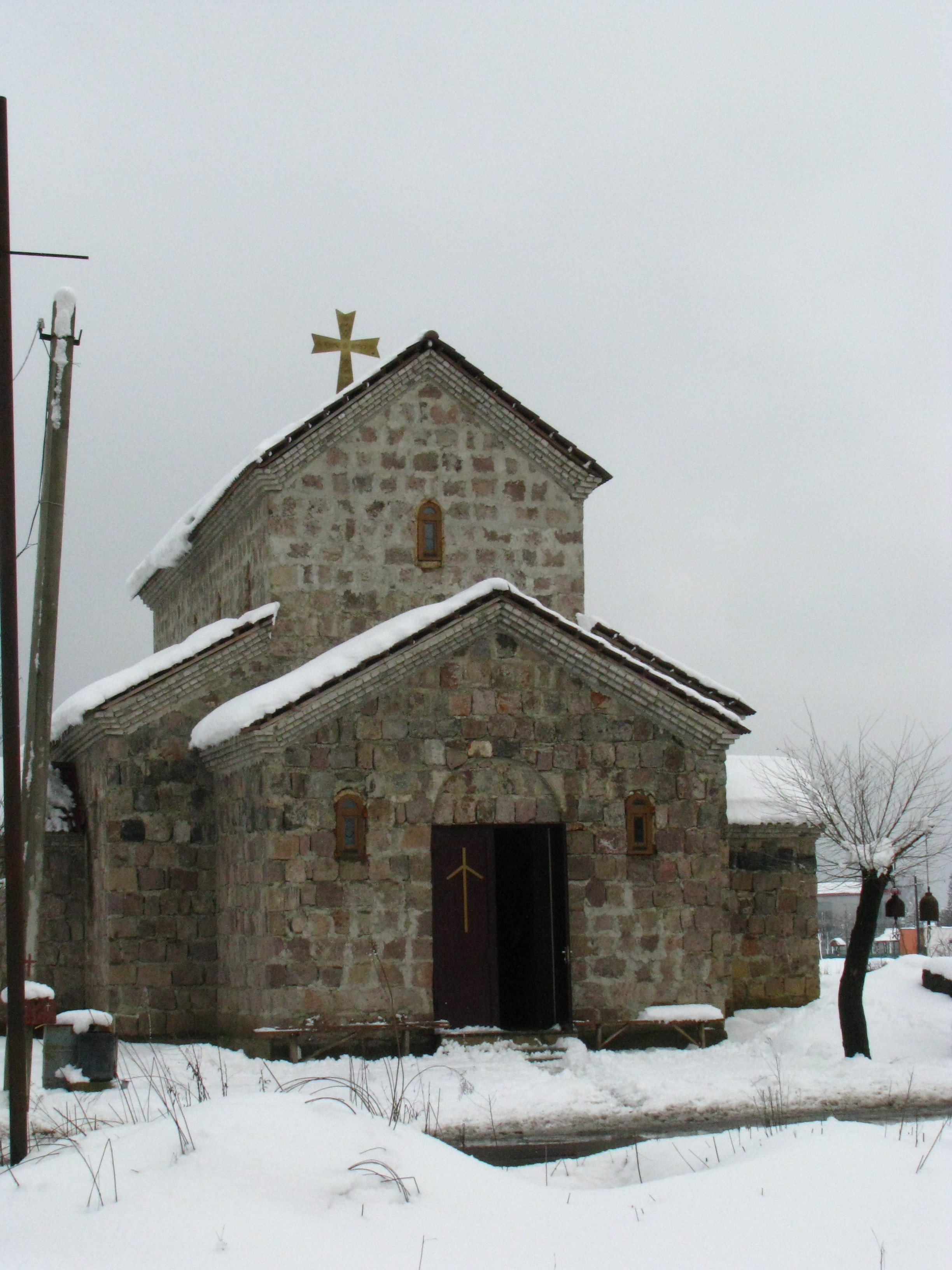
The local church. It seems pretty small, but Georgians don't really have weekly worship meetings like we do in the States.
Because of the snow, I haven’t gotten out much in the past few weeks. I haven’t been stranded, though; there are about a dozen other TLG volunteers in the city, and we’ve had a few parties and get-togethers. Kutaisi is a small city, as far as cities go, but there are plenty of interesting places if you know where to look, and even in the dead of winter, it’s still quite pretty.
The road I walk back from school every day.
So yeah, that’s what my neighborhood is like. When the weather gets better, I’ll bring my camera to school and take some pictures of my school. I should also take some pictures of my host family’s apartment, come to think of it. What else do you guys want to see?
About three weeks have passed since I came to Georgia, and I’m starting to feel comfortably settled in this new place. I like it a lot out here: my host family is great, I get along really well with everyone at the school where I work, the kids are so crazy eager to learn it’s awesome…really, I couldn’t ask for more.
Of all the places in Georgia where TLG volunteers are placed, Kutaisi seems like one of the best. It’s the second largest city in the country, so it has access to several amenities such as markets, hospitals, restaurants, parks, and basically anything else you’d expect in an urban center. However, it’s about 200 km from Tbilisi and has very little exposure to the West, so culturally it’s very authentically Georgian. It’s also much less crowded, and (in my opinion) much more beautiful.
My host family is great; I get along with them real well and already feel like a member of the family. My youngest host brother, Kako, is 9 years old; I showed him Star Control II over the weekend, and he’s been addicted to it ever since. We also play chess, and I’ve kind of taken him under my wing to teach him the basics of good strategy. He’s getting steadily better!
Gura and Kati are the two teenage kids; they also speak English, so we’ve had some fun discussions. Besides Facebook and her cell phone, Kati is really into books; I showed her my Kindle, and she wants me to help her persuade her father to get her one! Gura is into Call of Duty and spends a lot of time hanging out with his friends; he lacks confidence when it comes to English, but he knows it better than he thinks he does.
The parents don’t speak much English, but they are really good people. It’s a working class family; the dad works as a welder, and the mom is a nurse part-time and a home-maker full time. They spend an amazing amount of time and energy on their kids, which is pretty typical for this part of the world. They’re both non-smokers, and they’re very respectful of the fact that I don’t drink coffee, tea, or alcohol. Some of the extended family keeps trying to push wine on me, but in the land known as the cradle of wine, that’s to be expected.
We basically spend all of our time in the family room when we aren’t sleeping; it’s where the heater is, so despite the relatively cramped space it’s the most comfortable room in the apartment. Furniture consists of a couch, a computer desk and office chair, a bucket seat from an old van, a folding table, several small wooden chairs and a stool. The TV isn’t quite a member of the family, but when the power isn’t out, it’s usually on.
The neighborhood is this bizarre mix of urban and rural elements. The roads are super muddy and free-range chickens wander everywhere at will, but everyone lives in 9-story apartments that were built back in the Soviet days, when Kutaisi was a major center for the auto industry. The school was built 50 years ago this year and has barely been renovated since, but it’s just starting to get some much-needed attention, with a computer center and a resource room for special needs students. When the weather clears up, I’ll bring my camera to school and take some pictures so you can see what the classes are like.
I’ll have to do a post later on Georgian culture; there are some really bizarre and paradoxical juxtapositions, such as the way they mix religion and alcohol, or their strong belief in the nuclear family with their easy-going acceptance of bride-napping as a “Georgian tradition.” I have yet to really get a handle on all this stuff. However, as a culture, they have a great respect for literature; when people ask my profession and I tell them I’m a writer, their eyes light up, and they show me a degree of deference that I never would have gotten back in the States.
Partly to have something to talk with them about, I’m reading War and Peace by Leo Tolstoy right now. I just finished Book III, where Napoleon smashes the Russians and Austrians in the Battle of Three Emperors. Everyone says that it’s the best novel ever written, and now that I’m in the thick of it, I’m starting to agree with them. There’s a lot of really good storytelling here, as well as passion and depth. I have the feeling that I’m going to be on a Russian literature trip for a while, though I should probably pick up some Rustaveli and Kurban Said as well.
As far as writing goes, I’ve had some difficulty settling down into a solid routine, not because of lack of time so much as trouble with my current WIPs. Star Wanderers has more or less stalled; I ran into another wall midway through part III, and I’m still not quite sure how to get past it. I’ve decided to take a break for a while, but I think my experiences here with the Georgian language are going to give me what I need to really make this novel come together.
In the meantime, I’m working on the 2.0 draft of Stars of Blood and Glory. I’ve decided to try something new: revising not by chapter, but by viewpoint character. Isolating each of the five viewpoints is helping me to see which ones work, and which ones are missing something. I’ve also been using Dan Well’s 7-point outlining method, which is helping out a ton.
It feels like I could be writing more, but I’m not pushing myself too hard at this point. I’m still adjusting to life in this totally new culture, and I’m also spending a lot of energy getting my TEFL career off on the right foot. It’s paying off; I’m having a great time teaching, more than I thought I would. Pretty soon, though, I’m going to start putting more energy into my writing. I just hope that I’ll have enough mental space left over to really immerse myself and make it work.
I had a realization as I was visiting Tbilisi this weekend: I love traveling.
I love standing beneath a tattered, windswept tarp surrounded by market stalls and people bartering in a language I barely understand. I love walking down the dusty pavement of a chaotic bus station in the developing world, and the confidence that comes from knowing how to navigate it.
I love the thrill of knowing that I’m on the other side of the world from most of my friends and family. I love laughing at the email alerts I get for all the mundane, dead-end jobs like office support or market research that I used to chase after so desperately. I love being in a place where I can make a real difference in people’s lives.
I love never quite knowing exactly what’s going on, but getting along anyway. I love taking things one day at a time and letting tomorrow take care of itself. I love being surrounded by strange and interesting sights, and by people whose hospitality amazes and humbles me. I love entering an alien culture as an outsider and becoming part of the society before I leave.
Is this all just part of the “honeymoon” phase of culture shock? Perhaps, but this isn’t the first time I’ve traveled. In many ways, the experience here in Georgia reminds me of my experience in Jordan, and I think I’ve been able to adapt better because of it. In spite of all the cultural differences, I feel quite at home here. Kutaisi is a great place, and I’m looking forward to getting to know the people and the city better.
One of the really interesting things about Georgian culture is the way the people’s eyes light up when I tell them I’m a writer. They seem to have a lot of respect for that profession, more than in the states. I haven’t been writing a whole lot other than in my journal, but things are more or less falling into place at the school and I think I’ll have a lot of time for other pursuits. Hopefully, by this time next week, I’ll be able t start writing regularly again.
In the meantime, all of these cultural experiences are really great, and I think they will enrich my writing considerably. I’m not thinking much about that now, of course, but I’m sure I’l come away from this place with a wonderful pool of experiences and images to pull from. But right now, I’m about to pass out and crash, so I’d better call this a blog post and send it up with the others. Good night!
This is the city where I'm going to be living for the next 4+ months.
So the training period for TLG is finally over, and I’ve received my assignment: I’m in Kutaisi, the second largest city in Georgia! It’s about a four hour haul from Tbilisi; I spent it cramped on a bus with my host-mom and brother watching Georgian sketch comedy, with rampant cross-dressing and men getting bride-napped by women. Hilarious.
I live in an awesome dilapidated Soviet-era apartment with a fairly large family: mother and father, grandmother, and three kids ages 17, 15, and 9. The father works full-time as a welder and the mother works part-time as a nurse. There’s another son, age 18, but he’s in Tbilisi for college. Only the kids speak English, but
The other host brother showed me around Kutaisi today, and it was pretty interesting. This probably doesn’t make any sense, but it feels a little bit like something out of an Asterix comic, fast forwarded to the modern era. In any case, the city is really nice; cleaner and not as crowded as Tbilisi, with cobblestone streets and European-style buildings with a giant park in the middle.
I’ve already figured out how to get from my host-family’s apartment to the city center and back by marshrutka–if this were a video game, that would be an achievement. Crossing the street would also be an achievement, though it’s much harder in Tbilisi than it is here.
Some more pictures:
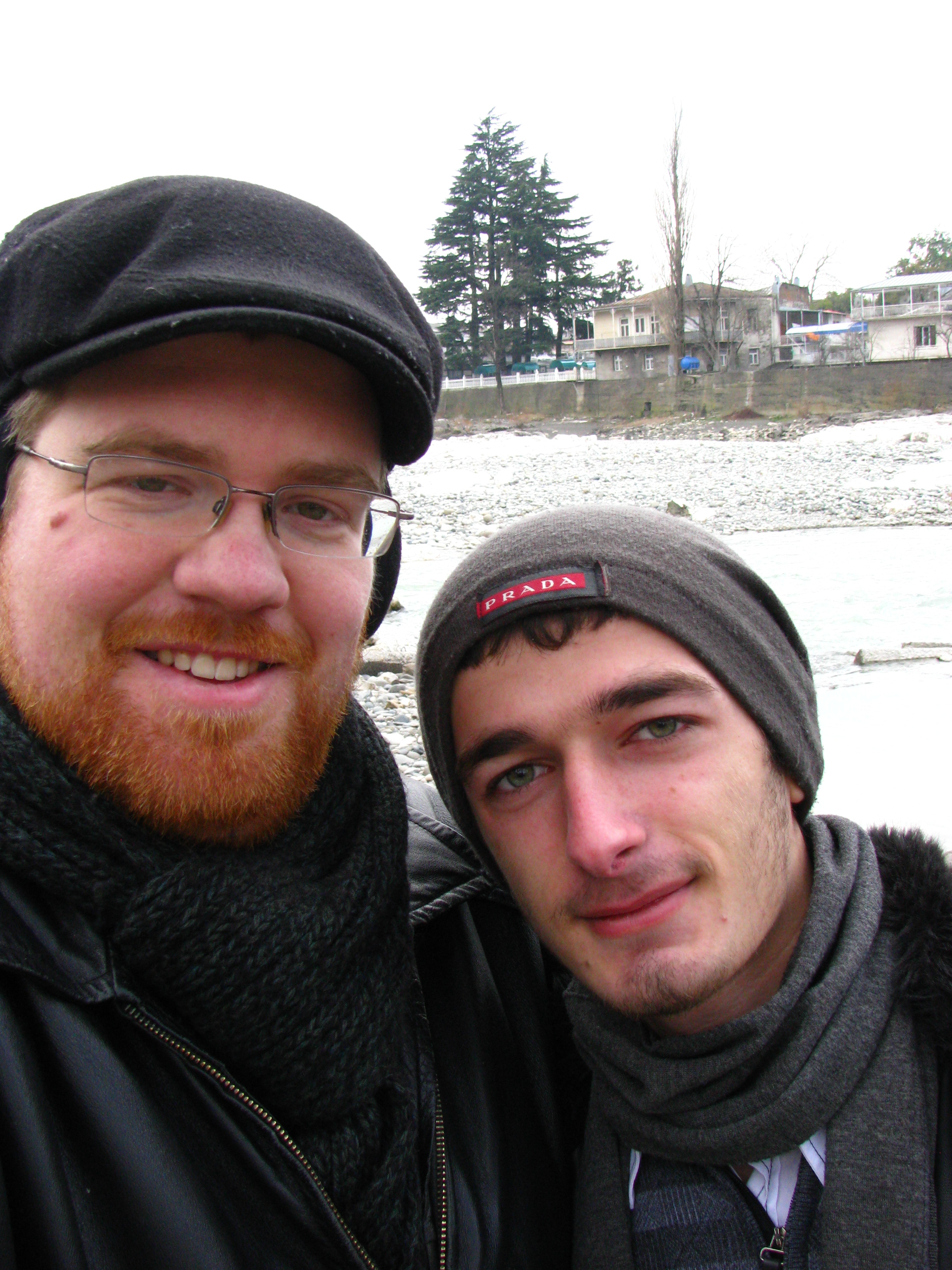
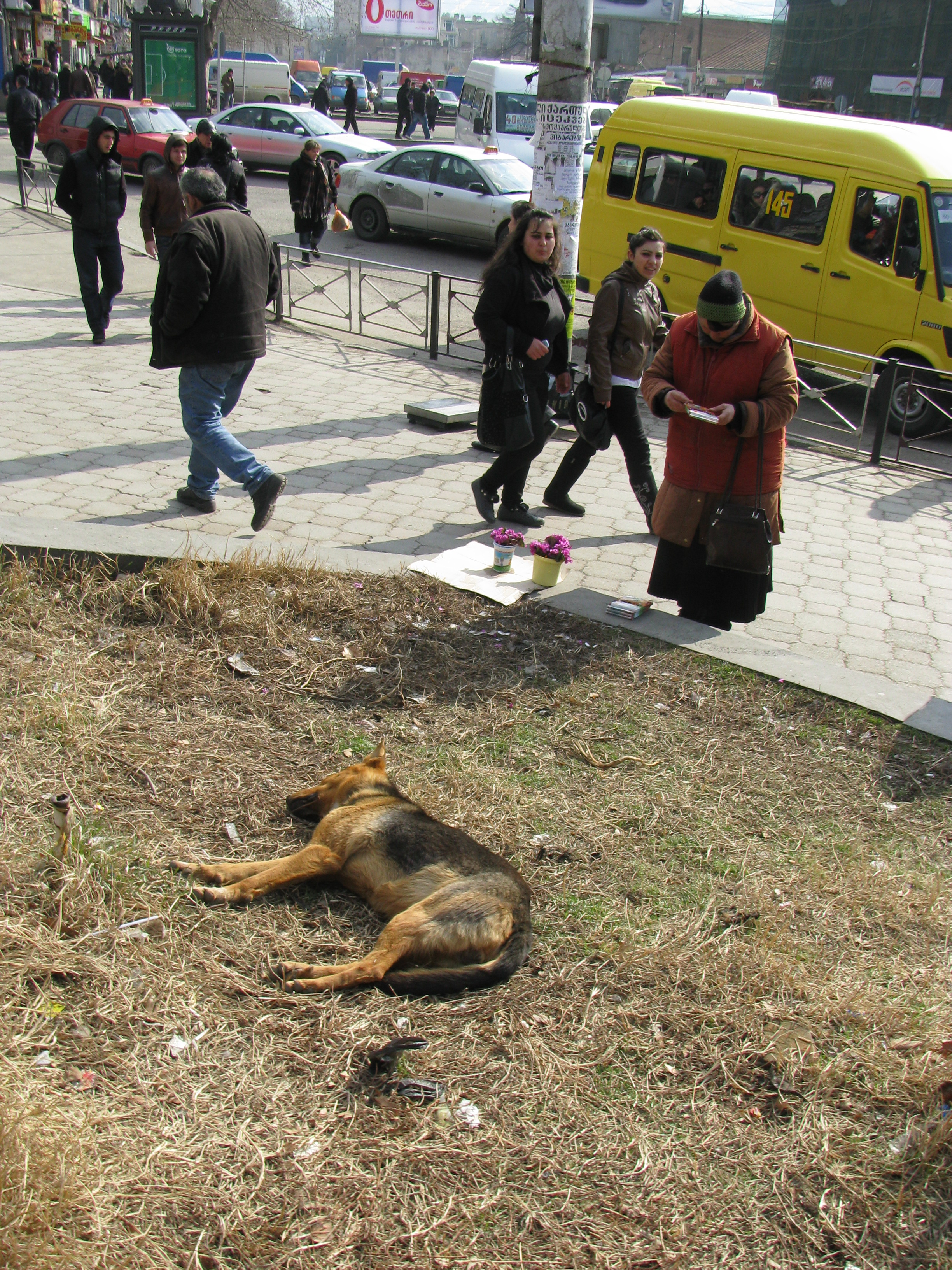
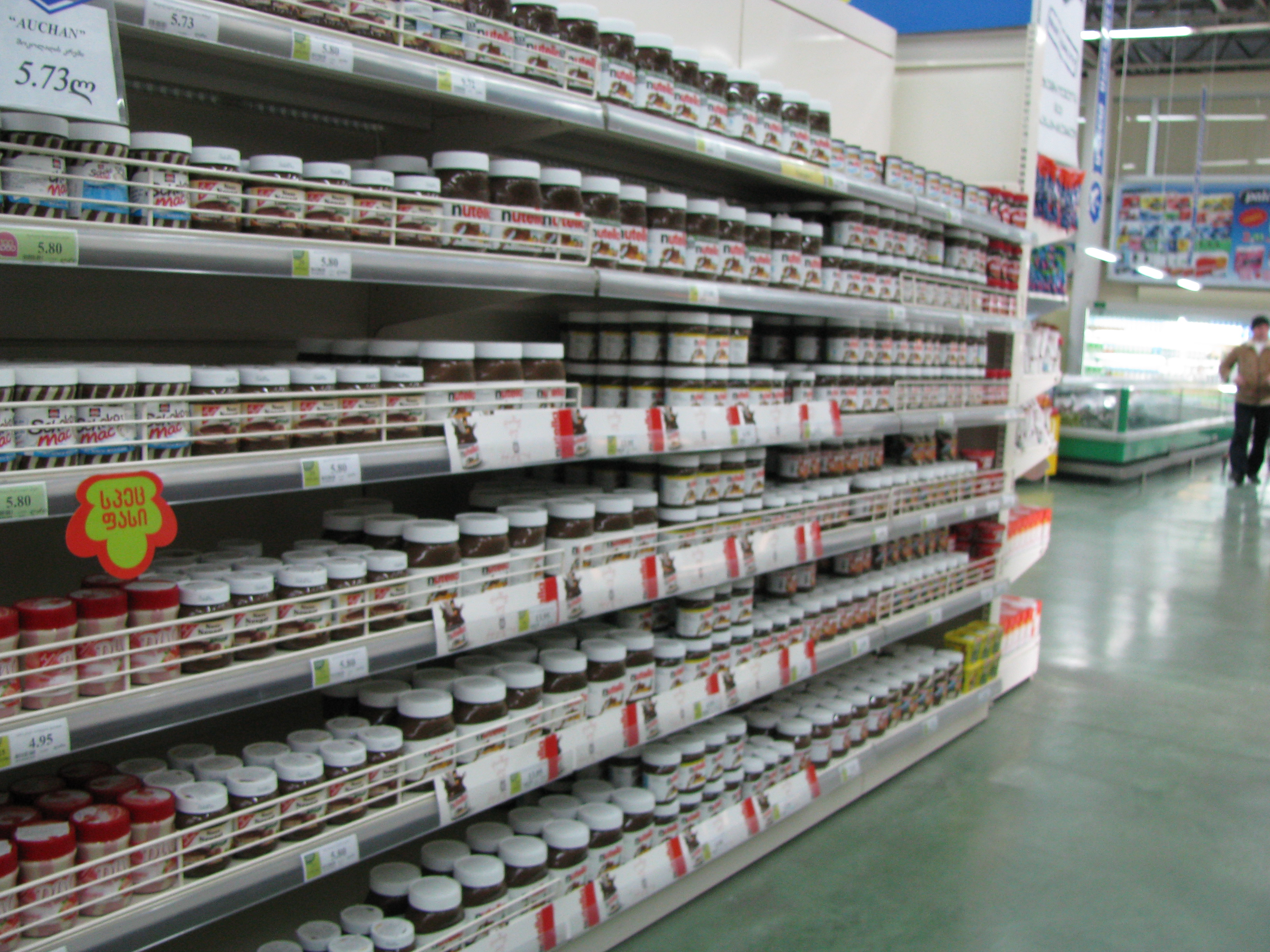
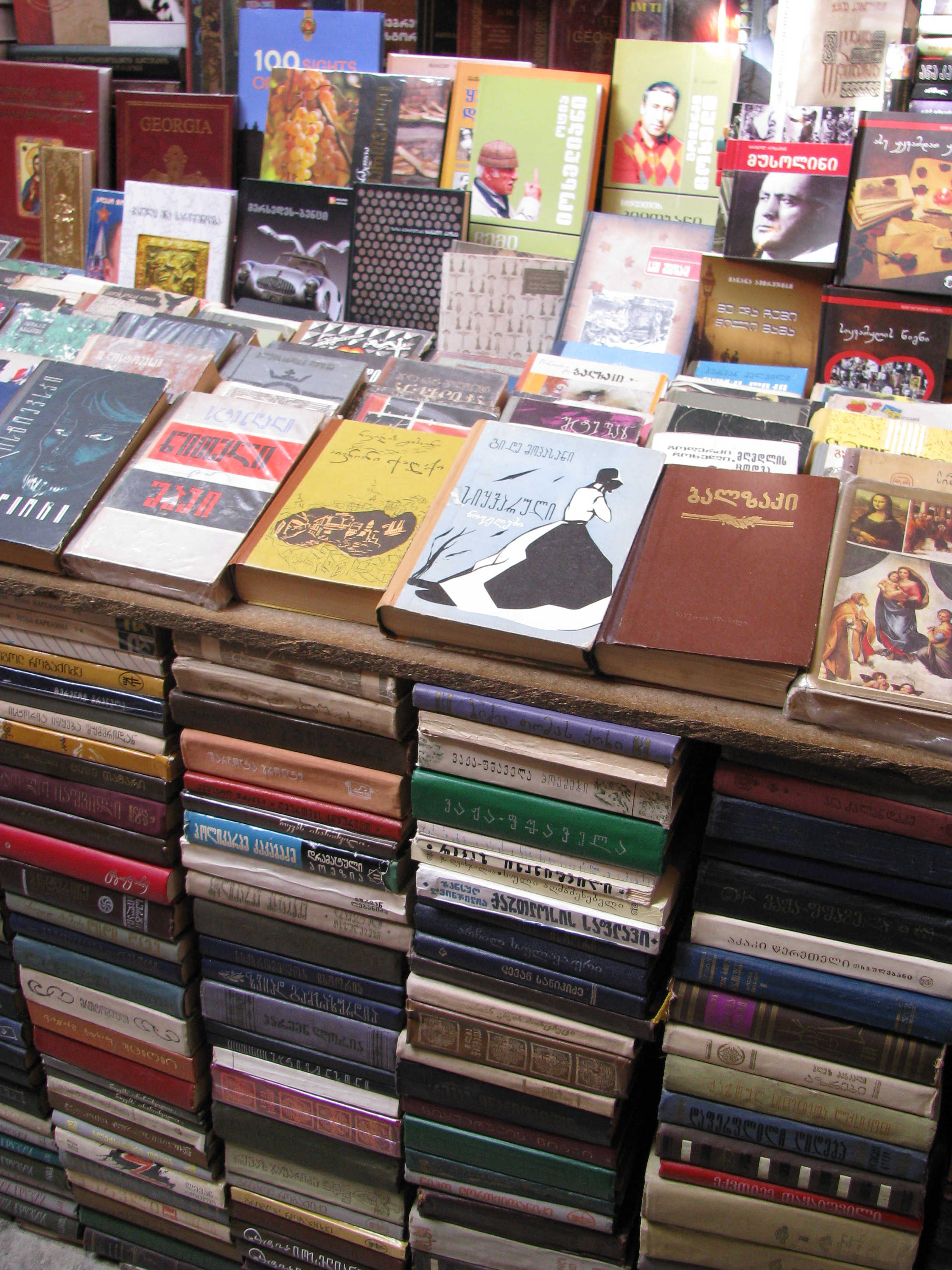
The old cathedral that overlooks Kutaisi. Built in 1003, destroyed sometime in the 18th century, it's being rebuilt now.My host brother Gura and me, overlooking the Rioni river.Didube bus station in north Tbilisi.A sleeping dog at the bazaar near the Tbilisi stadium. There are a lot of stray dogs here.Just one of the many Nutella stands at the Goodwill supermarket in Tbilisi (no relation to the American thrift store). Apparently, Georgians are crazy for chocolaty goodness.Some books at a booth in the bazaar. Most are in Georgian or Russian.
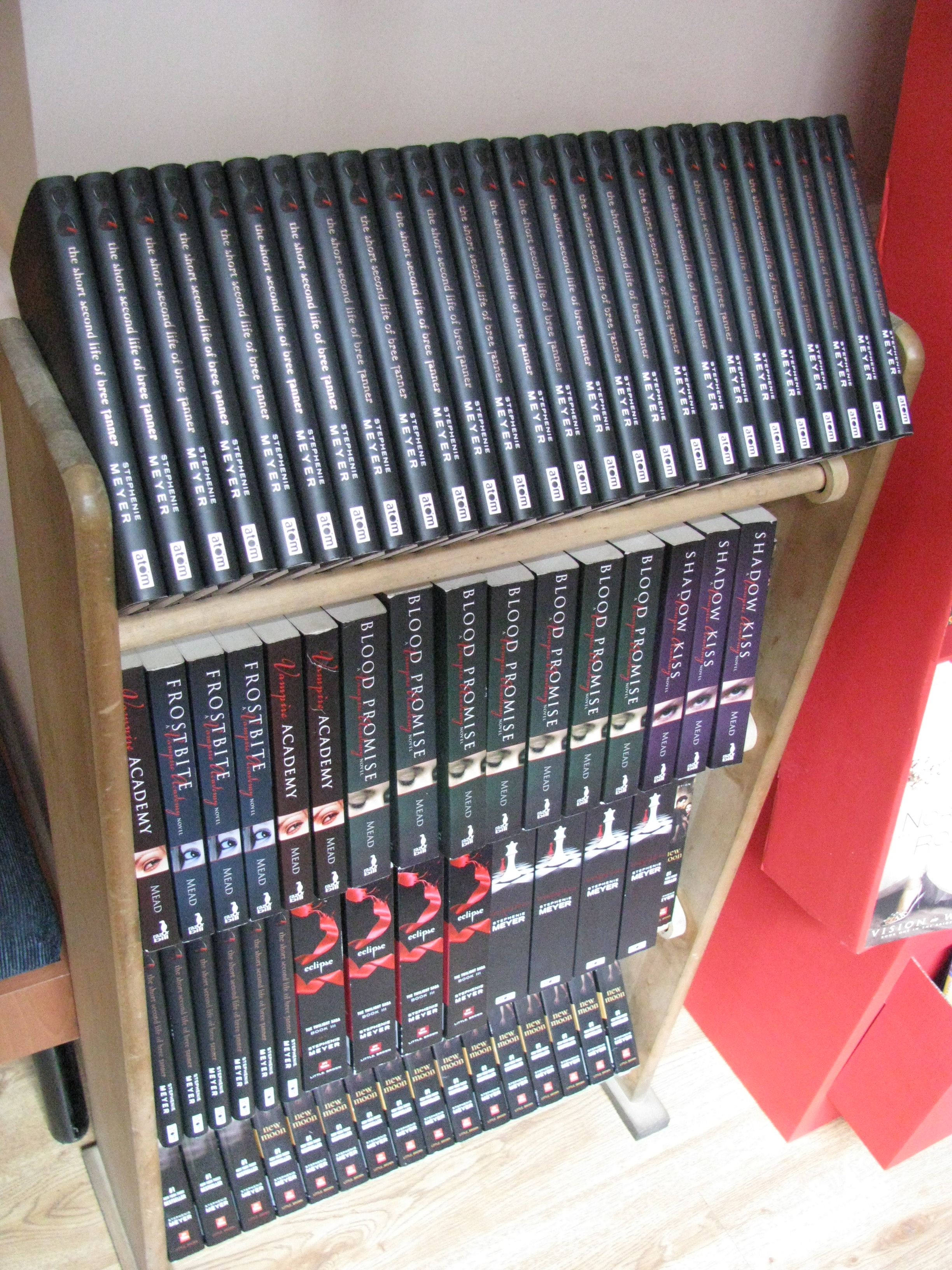
And the last one, just to show how ubiquitous Stephanie Meyer has become:
A shelf full of Stephanie Meyer's books literally on the other side of the world from her...this, my friends, is what success looks like.
So that’s what’s going on here in the land of the Kartulis. I haven’t been writing a whole lot, obviously, but once things settle into something of a routine, it shouldn’t be too hard to get back into things. Georgians have a way of managing time that, as a strongly perceiving ENTP, I actually find quite appealing. But more on that later; I should probably get to bed.
That’s Georgian for “good morning, Georgia.” It’s 7:20 am in Tbilisi right now, and I figure it’s time for an update before starting another day of TLG orientation.
So Georgia is a pretty interesting place so far. We haven’t seen too much of it, because we’ve been in the hotel most of the time doing various cultural and language training sessions, but last night we got out and hiked to the top of the fortress in Tbilisi which was very fun (unfortunately, I didn’t bring a camera–next time!). I’ve just about mastered the alphabet, though I can’t really read it well yet, and I know a few basic phrases that together with gestures and pantomimes will help me to get around. Very few people speak English; that’s what we’re here as part of the TLG program to change.
There are 33 other teachers in my group, and they’re all pretty awesome. Most are from the US, though there are a handful from Australia and New Zealand, which is fun. Most of us are the same age and in the same life position: young, single, fresh out of college, fairly well educated, free of major life responsibilities and looking for an adventure. For that reason, I think we’ve been able to bond fairly quickly, which is encouraging. I don’t know how often I’ll see most of these people once I’ve been placed, but I’ve been making friends and getting along fairly well.
So far, the people running the TLG program seem really on the ball. This is only the program’s second year, but it’s a major initiative from the government and has really started to have an impact. It’s humbling, actually, to see how much the Georgians are investing in us; the program might not pay as well as JET or EPIK (TEFL programs in Japan and Korea), but for a developing country like Georgia, it’s quite a lot. The country has been through a lot of tremendous difficulties, but they are pushing forward for a brighter and more prosperous future and I hope that I can make a difference and be a part of that.
In case you’re wondering whether I feel safe, don’t worry; everything in Tbilisi is fine. Yes, there has been a lot of saber-rattling with Iran, but that hasn’t directly affected Georgia other than the attempted attack on the Israeli diplomats (which could have happened anywhere). If the Western powers do undertake a major military operation in the area, Russia could become antagonistic, but I think Obama has made it clear that the US is going to stick with sanctions, at least for the foreseeable future. Personally, I think a military strike is unlikely. Slightly more disconcerting are the Russian anti-terrorist operations in Chechnya/Dagestan, but that seems to be an internal Russian affair, so don’t worry: I’m safe.
As far as the local culture goes, I think there will be some challenges but I should be able to get along quite well. It seems that the people have a strong sense of community, emphasize people and relationships over rules and regulations, are honest and outgoing, very passionate, and very friendly toward Americans.
The biggest challenge will probably be the alcohol; Georgians are very proud of their wine, and men are expected to be heavy drinkers (REALLY heavy drinkers–like, even the Australians are nervous about it). Hopefully, I’ll be able to communicate that I don’t drink because it’s forbidden in my religion, and they’ll respect that.
In general, the orientation has been preparing us for the worst (Turkish toilets, difficulties with co-teachers, host parents trying to marry us off), so a lot of us are nervous, but we’re also very excited. This is definitely an adventure! And three or four months from now, I think most of us will look back and laugh at how nervous and scared we were.
Honestly, I’m not scared at all. If not for the study abroad trip to Jordan, I probably would be, but so far the experience has been quite similar (though I’m sure it will be quite different). I’ll just keep my eyes open, be a gracious guest, work hard, and experience as much as I can of this beautiful and wonderful country.
So, I’m in Georgia now, writing this blog post from the hotel in Tbilisi where we’re having our orientation! The flight from New York went well, all my stuff made it alright, and I’m having a blast making new friends and playing the role of clueless foreigner!
There’s about twenty to twenty five of us here, most from the US, but a few from Australia, Canada, and one girl from Egypt. I met a whole bunch of them in the airport at JFK, including my roommate, who is from Alaska. Most everyone has had some travel/expat experience, though most of us are fresh out of college. A couple of us know Russian, but that’s about it–no one really knows Georgian.
The people here seem friendly enough, at least the ones we’ve attempted to speak with. I knew it was going to be disorienting not being able to speak the language, but…wow. There’s nothing quite like being the clueless foreigner. All I really know is that the word for “hello” sounds a lot like “gom jabbar.” The only thing for it is to abandon all shame and do your best to get out there and communicate, which my Alaskan roommate is really great at. I think we’re going to get along quite well.
That’s about all I can say for now. I hear that Georgia is in the American news now, with Iran trying to attack the Israeli embassy–yeah, that’s just what my parents needed to hear. :/ Don’t worry about me, though; I’m doing fine, and I’ll be sure to keep my eyes open and stay out of danger.
I’d write more, but I don’t want to plug in my computer until I have a surge protector, and I’ll need to conserve my battery if I want to write at all later today. I haven’t been writing hardly at all in the last few days, but of course I’ve been busy getting adjusted to all the new changes. I’ll try to do about 500 words a day minimum, but I’m not going to be too strict on it–I’ve got a lot of other things going on, after all.