Category: Uncategorized
Why I deleted my Twitter (in 140 characters or less)

Life is better without it.
Everything else is just details.
#RIPTwitter
So for the last month, I’ve been blogging every day except Sundays. What do you guys think? I haven’t seen much of an uptick in views or comments, but I haven’t seen much of a decline either.
Also, what do you think of the stuff I’ve been blogging about? It’s all stuff that’s been on my mind lately, but not all of it is writing or book related. Should I tone it down a bit and focus more on books, or do you guys enjoy reading about that stuff too?
One thing I definitely need to do is engage with other bloggers. There’s a lot of blogs I follow, but I almost never comment on them (probably like many of you!) That’s something I could definitely do more of, and probably should.
I dunno. What do you guys think?
Why I quit Facebook (Blast from the Past: July 2014)
This post is an excerpt from the original, but I think it gets to the point much better. Three years on and I don’t regret the decision at all.
I joined Facebook in 2006 when I was 21. I was just getting ready to head out to college, and at that point only college kids were on the site. It was a cool new thing and seemed like a great way to make and keep in touch with friends. Since I was moving away from home and starting a new phase of life, that was important to me.
My first year, I searched out and friended all of the people in my freshman ward at BYU and posted tons of pictures and other updates. It made me feel like I was very close to them! But the next year, I moved and made a new group of friends, and stayed in touch with only one of them. All those other friends just gradually drifted off into other things.
I posted a few more pictures, but mostly just profile pictures because anything else didn’t seem like it was worth the work. Facebook added groups, and I joined a bunch of silly ones just for laughs, but not any serious ones. Friends kept inviting me out to events, and my default answer was “maybe” because it didn’t make me look like as much of a jerk when I just didn’t want to go.
Then I got into a huge political debate with an old friend from high school, and it got insanely ugly. It was weird, because we always seemed to get along so well in person, but online we were just slugging it out at each other. It was very strange. I tried to get him to agree to disagree, but by this point his friends were posting to his wall and goading him on, so he refused. Then he attacked my religion, and the only way I could end the debate was to block him. I haven’t seen or talked with him since.
Facebook changed a lot over the next few years. The biggest change was probably the newsfeed, which replaced the wall. At first, I thought it was a great idea, because I could get all the updates on my friends in one place. Then the feed got swamped with updates from all the friends I’d added over the years. Most of them were people I’d drifted away from–people I’d seen a lot for a semester or two, but hadn’t bothered to keep the friendship up after we’d moved on.
Facebook became a fire-hose, and it started to eat up a disturbing amount of my time. I stayed away from all the obvious distractions, like Farmville and those other games, but it wasn’t enough. The information was just too dense, and though it gave me the illusion that I was staying close to my friends, in reality my interactions weren’t that meaningful.
Facebook developed algorithms to filter the newsfeed, but all that really did was make me use the site more. It didn’t help me to keep in touch with the people who mattered the most to me, since those weren’t the people who were posting the most. Instead, it resurrected a bunch of friendships that had long since faded in the real world and turned them into these weird zombified online relationships where we shared stupid memes, argued politics, and discussed random articles–all without ever seeing each other in person.
By the time I went overseas to teach English, Facebook had become a huge timesuck, and I wanted to break free of it. The first semester, I lived in a large town where I had constant internet access. The center of social life for us expats was a Facebook group called “Georgian Wanderers.” It felt good in some ways to be part of a community where people actually spoke English, but there was a lot of drama and ugliness in that group too. In my second semester, I lived in a tiny village where internet access was spotty, and I didn’t miss much while I was out there.
In fact, living without regular internet access was exactly what I needed. It gave me the chance to step back from my life and see how it had become cluttered. Before going back to the States, I decided to clean things up so as to keep myself from falling into the same rut. A major part of that online decluttering was to go through my 700+ friends list and delete all the people I didn’t want to stay in face-to-face contact with.
I cannot tell you how refreshing that was. At first, it felt like cutting off an arm or something, since I’d been “friends” with these people for so long and how was I going to keep in touch with them? But then, I realized that I didn’t really want to keep in touch with most of them, and besides, dropping them from my friends list wasn’t like disowning them in real life. We could still get in touch with each other in real life and strike up those friendships again.
My newsfeed was decluttered and those zombie friendships had (mostly) been neutralized, but even after all that, it didn’t seem like enough. I just wasn’t getting what I wanted out of Facebook. Every once and a while, I’d have a genuine exchange with someone, but most of the time it was just memes and random articles. I found myself slipping back into useless distractions and frustrating political debates, punctuated only occasionally by major life events from people I cared about.
Over the next year (2013), I found myself using Facebook less and less. Then the Snowden revelations came out, and Facebook seemed creepier and creepier. I’d learned from Douglas Rushkoff that Facebook’s business depended on milking its users for data, and the fact that the government was so intent on the mass collection of data profoundly disturbed me. From then, I suppose it was only a matter of time before Facebook crossed a line where I wasn’t willing to go.
Here’s the thing about Facebook: when you’re using it, it doesn’t feel like a network or a service. It feels like it’s an integral component of your closest friendships. Phrases like “Facebook official” and “pics or it didn’t happen” evince this. We become so entrenched in Facebook that permanently quitting it feels like betraying our friends.
But Facebook’s business doesn’t depend on strengthening our friendships, it depends on monetizing them–on collecting and extracting data to sell to the highest bidder. And since there’s nothing that most of us wouldn’t do for our friends, we grin and bear whatever terms Facebook feels like offering us. We tolerate the most egregious violations of our privacy because we want to keep our friendships, even as the quality of our interactions gets worse and worse.
Not only does this give Facebook incredible license to take liberty with our personal data, it gives them the power to shape and mold our interactions with each other. Just after I deleted my Facebook account, news came out that sociologists had engaged in a massive experiment to see if they could manipulate the mood of its users. The experiment confirmed that yes, Facebook most certainly can manipulate the emotional state of its users. Does this also mean that they can manipulate friendships? That over time, they can make you draw closer to some people and further from others? I’d be willing to bet that they can.
Instead of merely reflecting our relationships, giving an online dimension to friendships that exist in real life, Facebook is increasingly manipulating and constructing them. This in turn makes us more dependent on Facebook as a medium of social exchange. And the tighter we latch on to the network, the more they milk us for everything they can get.
The fundamental problem with Facebook is a misalignment of incentives. In order to make money, Facebook either has to get really creepy about the data it collects and what it does about it, or it has to control what we see on the site in order to create an artificial scarcity. Because it’s a publicly traded company now, it has to do both, because Wall Street is pressuring them to make more money.
When I was a user of Facebook, I felt like I was constantly being used. But now that I’ve quit, it feels much better. I haven’t noticed any sort of deterioration in my friendships, and I’m keeping in touch with my more distant friends just fine. Because that’s the thing about a truly close friendship: it doesn’t matter how much time goes by or how much distance comes between you–when you finally meet up again, it’s like you were never apart at all.
I don’t need Facebook to help me maintain my friendships, and I certainly don’t need it to help me make new ones. It’s one way to keep in touch, sure, but at this point, the benefits just aren’t worth the costs. And so, after eight years of being on Facebook, I deleted my profile and left for good. I doubt I’ll regret it.
The thousand year view
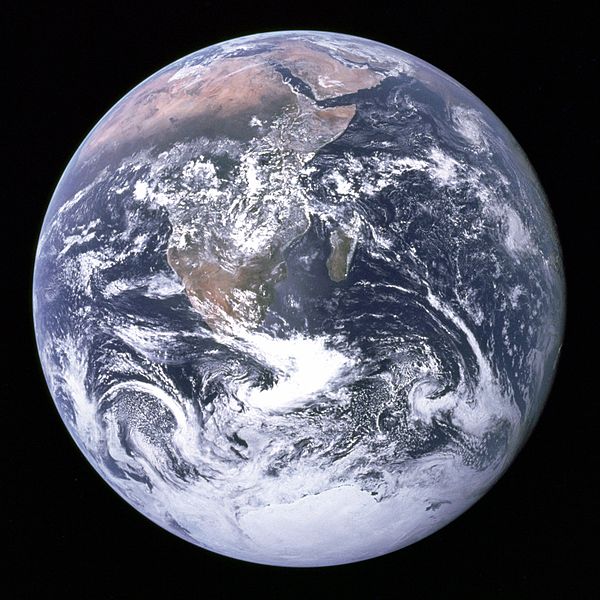 How will your life impact the world in a thousand years?
It’s an easy question to dismiss. After all, how can one person possibly shape the course of history? Even if we accept the impact of certain great men, how can we have the hubris to think that we might one day join them?
But the truth is that our lives have more impact than we realize. Each one of us is literally a product of our ancestors. Their decisions, for good or for evil, have put us where we are today. We also have a hand in shaping the people we come into contact with. That impact can be felt through multiple degrees of separation—and how many degrees does it take to encompass the world?
In the year 1017, Europe was rising out of the ashes of the Viking age. Kievan Rus was ascendant in the east, vying with the Romans who dominated the religion and commerce of Europe (we know them today as the Byzantines). However, tensions were rising between Constantinople and the bishopric of Rome, where one of the last vestiges of the Roman state in the West would soon break communion and form the Catholic Church. Meanwhile, an apocalyptic Muslim death cult known as the Fatimids had swept from North Africa all the way to Baghdad, the cultural and scientific capital of the world. From the harsh steppe wilderness of central asia, the Seljuk Turks were building an empire that would save Baghdad from destruction, while in China, the Song dynasty had invented the first paper currency.
In short, it was a completely different world. How different will things look a thousand years from now?
By the year 3017, we will probably have established an independent colony on Mars. Other parts of the solar system will probably also be colonized, and we may have even begun our expansion to the stars. After all, faster than light starship drives are about as fantastic to us as cars, airplanes, and space stations would be for medieval serfs.
It is highly unlikely that the United States—or any other country, for that matter—will exist with its current borders. In fact, it’s highly unlikely that the majority of countries extant today will even exist at all. China is probably an exception, but let’s not forget that China is a civilization pretending to be a country.
Pessimists will say that there’s a good chance humanity won’t exist at all. They point to things like climate change, pandemics, and global war as challenges we may not overcome. But in the last millennium, we faced all those challenges and rose above them (little ice age, Mongol hordes, black plague). Same with the millennium before (extreme weather and crop failures of 535-536, Muslim conquests, plague of Justinian).
So how will your life impact the world a thousand years from now? What sort of impact do you want your life to have? How have the things you’ve done today brought you closer to leaving that legacy?
I’ve thought about this a lot over the past few weeks. I want to impact the world through my books, but it’s unlikely that most of my books will still exist. My family and descendants will, though. I want to leave them with the best foundation I can. Here’s how I plan to do it:
Step One: Master the Basics of Provident Living
Provident living is more than just learning how to do your laundry and keep up with the maintenance of your car. It’s learning how to live sustainably, with a degree of self-reliance that can see you and the ones you love through hard times. It’s all the stuff I’ve been writing about in the Self-Sufficient Writer blog series.
I’ve made a lot of progress in this area, but there’s still a lot of progress left to make. Here are the next few steps I want to take in this area:
- Establish a rotating 90-day food storage for dry goods.
- Establish a herb garden.
- Expand food storage to canned goods.
- Buy a chest freezer and expand to meats and dairy.
- Plant a garden and expand to fresh fruits and vegetables.
- Learn how to can.
- Learn how to hunt.
- Begin keeping livestock (chickens, goats, etc).
A lot of these steps are going to have to wait until I have my own land, which brings us to:
Step Two: Live Debt-Free and Own the Place Where You Live
When you live on someone else’s land and owe them a portion of your labor, that’s a form of serfdom. In both historic and modern times, this has been the norm for the vast majority of people.
It shouldn’t be.
When my ancestors came from Europe to the United States, one of the first things they did was buy land. There was a reason for this. In the old country, they were serfs. They paid the corvée. They were not free.
They knew that unless they lived on land that they owned, in a home that was theirs, their children would not be free either.
We’ve enjoyed a century of prosperity in the United States. It’s led us to believe that home loans and mortgage payments are normal. They aren’t. When your home is the collateral for a loan you’ve taken from the bank, and you spend most of your adult life paying it back to the tune of 250%, that is a modern form of serfdom.
Until you own it outright, your house is a liability, not an asset. And in some places, true ownership is impossible. After all, if the government has the power to seize your house for non-payment of taxes, did you really ever “own” it to begin with?
It’s a similar thing with debt. All debt is a form of bondage. “Leverage” is when someone else has control over you or something that belongs to you. Unless you can get out from under it, you will never truly be free.
If most of your life is spent in serfdom and bondage, the thousand-year impact of your life will be muted.
The Habsburg dynasty started with a small castle on the top of a hill. From that starting point, the family went on to shape the development of Europe into the modern world. The castle was so important in that effort that the family took their name from it.
I know how to live debt-free. I’ve been doing it for several years. But I do not currently live in a place that I own. That is my overriding goal: to own the place where I live within ten years.
The government isn’t making it easy. Neither are the central banks. A decade of 0% interest rates has ravaged the middle class. As a direct consequence, home ownership rates are dropping to historic lows. 70% of Millennials have less than $1,000 saved for a down payment on a house, while at the same time, the helicopter money from the Fed has inflated a new housing bubble larger than the one that burst in ’08. In California, Google employees with six-figure incomes are living out of RVs because they can’t afford to buy a house.
It’s brutal. These are the same economic pressures that led to the rise of medieval serfdom in Europe. But there are also opportunities, for those who know how to take advantage of them. Which leads to:
Step Three: Build Multi-Generational Wealth
Poor people buy luxuries. Middle class people buy necessities. Rich people buy investments. If I want to leave something behind for my children and descendants, I need to master the skills of investing and managing wealth.
This goes back to the thousand-year view. The biggest impact I’m probably going to make on the world is going to be through my children and descendants. Raising them will be the most important investment I can ever make. I want to give them a life of opportunity, so that they, like me, can make a thousand-year impact on the world.
This is what my ancestors did for me. My Mormon ancestors crossed the plains in the Willie handcart company so that their descendants could grow up in Zion. My first-generation immigrant Czech ancestors invested in Texas farmland that still pays a small dividend to their descendants (greatly increased now because of oil royalties). There are many other countless others who made great sacrifices so that I could enjoy a life of privilege and opportunity. I’m sure that’s not unique to me.
We seem to have forgotten, here in the United States, how important it is to make sure that our children enjoy better lives than we have. To some generations much is given, while of others much is required. I fear that we are transitioning from the former to the latter. Nations are born stoic and die epicurean, surrounded by mountains of debt.
This is why it is so important to build wealth: not for your own personal consumption, but for the security of your children and descendants.
The most important investment you can make is in your education. If I’m going to develop these skills, that’s what I need to do: invest in my own financial education.
I also need to learn by experience, so I’m taking $100 of my book earnings each month and investing them. I’ll probably experience a couple of big losses, but that’s called paying tuition. The knowledge I gain from doing this will hopefully help to accomplish this goal: to build wealth that will bless the lives of my children and descendants for generations to come.
A lot of things fall into perspective when you take the thousand-year view. When you focus on the challenges of the present, it’s easy to become pessimistic, but when you take a clear-eyed look at the future—not just the immediate future, but the long-term future as well—you cannot help but take an optimistic view.
How will your life impact the world in a thousand years?
This guy hits the nail on the head
Financialization is what happens when the people-in-charge “create” colossal sums of “money” out of nothing — by issuing loans, a.k.a. debt — and then cream off stupendous profits from the asset bubbles, interest rate arbitrages, and other opportunities for swindling that the artificial wealth presents. It was a kind of magic trick that produced monuments of concentrated personal wealth for a few and left the rest of the population drowning in obligations from a stolen future. The future is now upon us.
…
Quite a bit of that wealth was extracted from asset-stripping the rest of America where financialization was absent, kind of a national distress sale of the fly-over places and the people in them. That dynamic, of course, produced the phenomenon of President Donald Trump, the distilled essence of all the economic distress “out there” and the rage it entailed. The people of Ohio, Indiana, and Wisconsin were left holding a big bag of nothing and they certainly noticed what had been done to them, though they had no idea what to do about it, except maybe try to escape the moment-by-moment pain of their ruined lives with powerful drugs.
And then, a champion presented himself, and promised to bring back the dimly remembered wonder years of post-war well-being — even though the world had changed utterly — and the poor suckers fell for it. Not to mention the fact that his opponent — the avaricious Hillary, with her hundreds of millions in ill-gotten wealth — was a very avatar of the financialization that had turned their lives to shit. And then the woman called them “a basket of deplorables” for noticing what had happened to them.
…
The accumulated monstrous debts of persons, corporations, and sovereign societies, will be suddenly, shockingly, absolutely, and self-evidently unpayable, and the securities represented by them will be sucked into the kind of vortices of time/space depicted in movies about mummies and astronauts. And all of a sudden the avatars of that wealth will see their lives turn to shit just like moiling, Budweiser-gulping, oxycontin-addled deplorables in the flat, boring, parking lot wastelands of our ruined drive-in Utopia saw their lives rendered into a brown-and-yellow slurry draining clockwise down the toilet of history.
I especially got a kick out of that last part.
Seriously, though, this guy hits the nail squarely on the head. We’re headed toward a massive economic reset, which is going to transform the world as we know it. I was in high school when the 9/11 terrorist attacks happened, and the Great Recession had a much bigger impact on my life. When the Greater Recession hits, it’s going to be a lot worse.
That said, I disagree that the only thing we can do is to sit back and watch the world burn. Every problem is also an opportunity. The bigger the disaster, the more opportunities that open up after it.
Without a doubt, though, now is the time to prepare.
What has Facebook turned into?
A few years ago, I deleted my Facebook account. There were many reasons for this, which I detailed at the time. Basically, I had major issues with their privacy policy and completely lost trust with the company. I got out because I no longer wanted to be their product.
Unfortunately, the network effect that makes social media sites so much “better” as their user base grows also makes it that much harder to stay away from them once they get huge. I got a new Facebook account back in 2015 to stay in touch with a local group of friends who planned all their social events that way, and dabbled with the idea of coming back. In the end, I decided not to and deleted that account when it was no longer useful, right before the elections really started to heat up. Perfect timing.
Last week, I bit the bullet and went back onto Facebook, because again there’s a local group of friends who plan everything exclusively on Facebook, and I found myself missing out on things because I was out of the loop. This time, though, I’m friending absolutely no one and keeping my usage of the site to a minimum. If I were moving back to Utah tomorrow, I’d delete my account before I packed my stuff.
I’ve noticed some interesting things since getting back on Facebook.
First, the site is a mess. It’s like a weird cross between Goodreads and MySpace. I know there’s a lot of people who love Goodreads, but sorry, that site is almost impossible to navigate. Way too much clutter, with the option you’re looking for hidden in some tiny link that doesn’t actually look like a link. Unless you’re a frequent user, you constantly feel like you’re lost. That’s Facebook now. It’s very unfriendly for new users, which I know is like me and ten people living in Yurts in Mongolia, but still. In terms of user-friendliness, it’s going the way of MySpace.
Second, Facebook has become really slutty. Again, first impressions here. It’s really interesting when Facebook has nothing to base their algos off of. I assume from what I’m seeing that the recommendations default to its power users, which at a cursory glance are mostly chicks and dude bros. Also, some of the group recommendations I’m seeing are insanely over the top in terms of sheer raunchiness. Since when did Facebook turn into Potterville?
Third… why are there multiracial emojis now?
Diversity is not a virtue in and of itself. It has to be paired with common values. Diversity without any common values is a state of war.
But Joe, what’s the harm in an emoji that reflects your skin tone? Two things. First, social media divides us far more than it unites us. It walls us off into tribes, helping us build our own custom echo chambers full of people who only agree with us. It’s an incubator for much of the divisiveness in society right now. Second, there is a very real effort in the country today to divide us all by race.
In society at large, we have very little in common anymore. If we can’t even agree on facts, how can we agree on values? A nation without common values is only a major crisis away from a civil war.
So call me paranoid, but these multiracial emojis are, in my humble opinion, a sign of a very disturbing trend. Either Facebook is simply giving the market what it wants, in which case society is much closer to the edge of the cliff than I’d realized, or Facebook has an agenda. Best case scenario, Facebook is simply responding to a small but vocal minority of their power users, and the rest of us don’t care. Not great, but not the end of the world (yet).
Fourth, and perhaps most disturbingly, people seem to be so plugged into Facebook that when they meet in real life, the conversation often defaults to whatever someone posted that they all saw. This is especially true of people ten years younger than me. I know it’s anecdotal, so I shouldn’t extrapolate it into a general trend. What I can say is that after moving to a new place and making a new group of friends, I’m seeing this a lot more than I used to.
The thing that makes this disturbing is that the people who do this tend to be a lot less open or curious about those outside their immediate social group. They also tend to crave validation so much that they go along to get along. When every social media interaction is subject to a gladatorial-style thumbs up vote from everyone you know, is it any wonder that no one wants to step out into the arena unless they know that someone has their back?
In short, Facebook is becoming more toxic. What’s the antidote? Probably to read more books. That’s what Jeff VanderMeer suggests in his book BookLife, and I tend to agree. One of the best ways to unplug from the Internet is to curl up with a good book.
Thoughts?
Selected daily thoughts, February 2017
February 3rd
Every new chapter in life begins with something that removes you from a comfort zone.
February 4th
A successful procrastinator is a failure at everything else.
February 5th
Those who cannot manage their time are often the most impatient.
February 8th
The most powerful story in the world is the one we tell ourselves.
February 21st
It’s very difficult to trade up for better problems. Normally, we trade sideways. This is why it’s so important to choose to be happy, regardless of circumstances.
Februar 22nd
The best way to build a relationship is to serve the other person.
February 23rd
Every generation reinvents the world.
Out now! The Open Source Time Machine single and bundle!
Nothing Found
Nothing Found
3am thoughts, or why everyone says to be an accountant (Blast from the Past: October 2013)
A lot of my blog posts this week had to do with money, wealth, and politics, so when I was searching for an old post to bring back, this one made me stop and reflect for a while.
My opinions and perspective have changed a bit since I wrote it, but the fundamental message is still one that I agree with. I’ve trimmed out some of the parts where I think I was wrong, and left the stuff that still resonates. Hopefully it resonates with you as well. Either way, feel free to let me know.
I’ve been reading in bed on my smart phone recently, which is probably a bad idea because it makes it harder to go asleep. At the same time, it tends to get my mind rolling, and at 3am my thoughts tend to go some really interesting places. Sharing those thoughts is probably going to get me into trouble, but hey, you might find them interesting, so why not?
When I was eight years old, I knew I was going to be a writer. There was never any question about that. I spent all my free time making up stories. However, I knew I never wanted writing to be my job, because 1) everyone hates their jobs, and 2) everyone knows that writers can’t make a decent living. Even at eight years old, I had bought into some of society’s most pervasive myths about jobs, careers, and how to make money.
Americans are generally horrible with money. We struggle to keep budgets and put all sorts of things on credit, and pay more than twice what our houses are worth by signing mortgages we barely even read. Because we’re so horrible with money, we tend to see it as a magical force, something that can solve all our problems and make us happy. Rich people are like wizards or sorcerers, so far above the rest of us that we can hardly fathom their ways.
Nowhere is this stupidity more apparent than in the fact that most of us spend our lives working for some sort of hourly or salaried wage. Wages and salaries are basically the same, in that they convert time into money. That’s why we all measure income in terms of dollars per hour, or salary per year. But for anyone who understands how money works, that is stupid, stupid, stupid, stupid. Money comes and goes, but time? Time is one of the most finite and precious resources known to man.
All of us are going to die someday. Most people are scared shitless by that fact, so we try to ignore it or put off thinking about it until we have to. But not all of us get the opportunity to put our affairs in order before we die. And even if we do all live to be centenarians, our time on this Earth is still finite. It’s non-renewable, too—you can’t go back and relive that day or that hour or that minute once it’s passed.
Converting time into money is basically trading gold for lead, or wine for water. Yet that’s exactly what we do, because money is this strange, magical force that so few of us understand.
Questions like “where do you work?” “what is your job?” and “what do you make?” are much more common than “what do you do for a living?” That’s because most of us have bought into this idea that money comes from working for someone else. While we’re on the clock, the company owns us and anything we produce. That’s the pact we make in exchange for this magical substance we call money.
It wasn’t until college that I started to become disabused of my childhood notions about writing for a living. First, I came to realize that lots of people love their work—that just because you do something as a job doesn’t mean that you’ll come to hate it. But it wasn’t until I graduated unemployed in the middle of a recession that I was disabused of the notion that writers can’t make a living.
People say that about every career—that is, every career except accounting. That’s because accountants are the ones who count the magical money. They’re the ones who know where it comes from. Their jobs are the ones that the people with the magical money will always need.
But there are other ways to make money—thousands of ways. Millions, even. It’s not about time it’s about producing something that people want and need. But when you’re working for yourself, that’s hard. You have to own up to your work—the failures as well as the successes.
When you work for a corporation, it’s easy to shift the blame. It’s a rare case where one person is solely responsible for bringing down the whole collective enterprise. But when you work for yourself, you can’t blame anyone else when things go wrong. You’ve got to take the risk.
That’s why everyone says that you can’t make a living as a writer. They say the same thing about any career where you strike out on your own.
In the end, though, it’s all just silly. Money isn’t a vague magical force—it comes from the value you create. It comes from producing something that people are willing to pay you for. And you don’t need to sell your time at $11 an hour or $44,000 a year to do that. You just need hard work, a great idea, and the ability to learn from your mistakes.
So can you make a living pursuing your dreams? The answer to that question depends entirely on you.