Few things are more awesome than a lightning storm, but a lightning storm in slow motion is certainly one of those things!
Category: Uncategorized
Extra Sci-Fi S3E4: The Return of the King
Okay, I think the folks at Extra Credits got it wrong with this one in a really big way.
Gollum didn’t redeem himself. That’s the entire point. Redemption is an important and very Christian theme of Lord of the Rings, but so is the problem of evil. Several comments on the video point this out:
I disagree about Gollum. He gave into the temptation of the Ring. I think more he is there for how God can turn evil into a good.
MJBull515
Gollum is more a Judas figure. Judas was not redeemed for betraying Jesus, but his evil actions did allow for the salvation of Man through Christ’s sacrifice.
Isacc Avila
“A traitor may betray himself and do good he does not intend.” Judas betraying Jesus was the catalyst that led to salvation. Gollum’s final act of greed was the catalyst that led to the destruction of the Ring.
Jet Tanyag
The thing that really gets to me, though, and the part where I think the folks at Extra Credits really do a disservice to these books, is how they argue, very subtly, that Gollum shouldn’t be held responsible for his own actions, that it wasn’t really his fault that he was addicted to the ring—that he “couldn’t escape his own sin.” (4:50)
No. Just, no.
The entire point of redemption is that we CAN escape from our sins. We see that with Theoden, we see that with the Dead Men of Dunharrow, and we see that in all the other examples of redemption that were not discussed in this video, like Boromir. In fact, Boromir is a far better example of “redemption through a single, all-important act.”
But it goes much deeper than that. In order to be meaningful, sacrifice must be intentional. It’s not just the act that matters, but the intention behind the act.
With that in mind, consider Gollum’s intentions when he bit off Frodo’s finger. The only way you can argue that his intentions weren’t evil is that the Smeagol half of his split-personality overcame the Gollum half, and flung him into the lava. But the support for that reading is ambigous at best. And if that isn’t true, and Gollum simply fell into the lava by accident, then it wasn’t a sacrifice on his part, and therefore there was no redemption.
To say that Gollum made an “accidental” sacrifice is nonsense. And to say that he redeemed himself through that sacrifice is not only a faulty argument—it completely undermines the themes of redemption and sacrifice throughout the entire book.
Gollum was never redeemed. Through him, Middle Earth was saved, but he was never personally redeemed, and that’s the point:
I’ve heard a different interpretation where Gollum’s sacrifice wasn’t an act of redemption, and was never meant to be. In the end, it was the ring’s own power that caused it to be destroyed; not Frodo, not Gollum, it was an accidental suicide. As far as I understand it, the message wasn’t “good triumphs over evil”, instead it was “evil is more powerful than good, but all it can do is destroy; in the end it will always destroy itself”.
EvilBarrels
What Falls from the Sky by Esther Emery
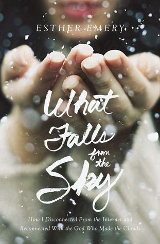
This kind of book isn’t my usual fare, but I discovered this author through some YouTube videos on homesteading, and when I read in the description about how she went for a year without the internet, I thought I’d give it a try. I was not disappointed.
Esther Emery has had an interesting life. With one foot in the California theater scene, another foot in the evangelical Christian scene, and… a third, foot, I guess? …in Idaho and the intermountain west, she’s got a very interesting perspective. Her experiences give her a lot of interesting insights, too. When she decided to go for a year without the internet, her life and marriage were falling apart. Going offline turned that all around.
It really surprised me how much she opens up. The writing did feel a bit pretentious at first, but that’s more a function of style than of sincerity. This books is very honest, sometimes brutally. In a world where so many people keep carefully crafted social media accounts, signal their own virtue to their peers, or choose to spend most of their time in echo chambers that serve to reinforce their views, a book like this one really stands out.
Because quitting the internet wasn’t just a stunt for Esther, thought it might have started out that way. It was a genuinely transformative event. As someone who could not function without the internet (mostly just because that’s how I make my living), I found her story to be both fascinating and refreshing. The insights that Esther shares from her experience are quite powerful.
So yeah. Good book. Not science fiction at all, but I enjoyed it. Maybe you will, too.
Extra Sci-Fi S3E3: The Two Towers
This episode of Extra Sci-Fi got me to thinking about a speech that Orson Scott Card gave when he visited BYU back in 2007. He said a bunch of interesting things that have stuck with me over the years, including (to paraphrase) “conservatism is the new counterculture.” He was probably ten to fifteen years before his time on that one. But the thing that struck me the hardest was this:
Fiction is the culture talking to itself.
This goes along with what I talked about in my commentary on the last Extra Sci-Fi episode: that every generation reinvents the world. How do they reinvent it? Through story. And because there’s a necessary give-and-take as part of the process, the bestselling fiction that a culture produces is a reflection of that culture’s values, the issues of the day, and the zeitgeist as it changes and evolves over time.
We can see this in the themes discussed in this video. While Tolkien denied that Lord of the Rings was allegorical in any way, I agree with the folks at Extra Credits that the world wars and the rise of fascism almost certainly influenced his depiction of good and evil. It’s probably also true that the conflict between industry and nature influenced the book too. This isn’t because Tolkien set out to tell a story about these things; rather, because Tolkien himself was a product of the culture of his day, that culture shines through in his works.
This makes me wonder about the stories that don’t become bestsellers. Are there lots of amazing, well-written stories out there that don’t succeed simply because they’re out of step with the ongoing cultural conversation? Kind of like Orson Scott Card’s argument, back in 2007, that “conservatism is the new counterculture.” He made that argument a decade before we reached peak social justice, and got pushed more or less into cultural irrelevance because of it.
Card might not be the best example, because of his role as a culture warrior as well as his fiction writing career. With his Ornery American column, he was basically a shitposter before shitposting was a thing. But I wonder: what are the stories that aren’t getting traction only because they don’t really speak to the culture?
Or is it even possible to write a story that doesn’t speak to your own culture? Since you are a product of the culture that you live in, does that mean that your stories will be a product of that culture too? That certainly seems to be the case with Tolkien. Hindsight is 2020, though, and it’s really tricky to account for unknown unknowns.
I don’t know. I guess the big takeaway is that if you want to be a sucessful writer, you should do everything you can to immerse yourself in your own culture, not only because that’s the best way to improve your storytelling instincts, but because all of the most successful stories contribute something meaningful to the culture’s ongoing conversation with itself.
Pros and Cons: Print Books vs. Ebooks vs. Audiobooks
One of the long-term things I want to do is build a home library. Last weekend, I started cataloging my books and putting together plans for how to do that. I’m sure I’ll be posting more about that in the future, but the big question at the start of it was this:
What are the advantages and disadvantages of each book format?
So I spent some time thinking about it, as well as browsing the internet to get other people’s thoughts and perspectives. There are three major formats for books now: print, ebook, and audio. Here, as best as I can tell, are the major pros and cons with each:
Print Books
Pros:
- Ownership. If it’s physically in your possession, then you are the undisputed owner of that book.
- No screens, batteries, or power requirements. Does not require a device to use.
- Easy to share with others (though there is a risk that they won’t return it! See ownership above).
- High visibility. Because of this, print books can be symbols of status or social reputation. They also are much harder to ignore once you put them in a TBR pile.
Cons:
- Space intensive. You have to find a place for them.
- Heavy, especially when boxed in large numbers.
- Prone to damage, such as water damage, parasites, etc.
- Requires shelving to properly store and display.
Ebooks
Pros:
- Portability. Fits onto your everyday carry (EDC) device, such as a phone or tablet, as well as a dedicated ereader.
- Requires very little storage space, both physically (on a device) and digitally (small file sizes).
- Cheap, at least for indie published books.
- Can read more easily at night, depending on the device.
- Privacy. It’s easier to hide an ebook from people than it is to hide a print book, or even an audiobook.
Cons:
- Ownership is ambiguous at best. Do you own your ebook files outright, or do you own a license to use the files? Can Amazon (or whatever site you bought the ebooks from) remove the books from your device at their discretion? It’s been done before!
- Requires a screen or device to use.
- Difficult (though not impossible) to share. There is a kindle lending library, but I’ve never used it, and in the handful of instances where I’ve tried, I eventually gave up trying to figure it out. Copying and sideloading is possible, but tricky. Much easier to pull a print book off the shelf and hand it to somebody.
Audiobooks
Pros:
- Can listen while doing other things, especially driving or mindless chores.
- Can also fit into the little gaps in your schedule, turning time that would otherwise be wasted into reading time.
- Listening is a more passive exercise than reading. This can be a con as well as a pro.
- Fits easily onto a phone or other EDC device, giving it many of the same portability advantages of ebooks.
Cons:
- Takes longer to read. You can speed up the narration, but it’s not as easy or efficient as skimming a book.
- More expensive than the other formats. An exception might be for rare or out-of-print books that aren’t available in digital.
- Larger files, which take up more storage space. You can easily keep a large library of ebooks on one device, but you’d need a server or a dedicated hard drive to do the same with a large library of audiobooks.
- Ownership is ambiguous. See above.
What are your thoughts? Let me know!
New goal: bog every day (except Sundays)
For a long time, I’ve struggled to figure out exactly how this blog fits into everything that I do. And while, in the past couple of years, I think I’ve figured out a better way to integrate it with my other creative efforts, I still occasionally go through periods of time where this blog gets neglected, followed by periods where I struggle to come up with relevant content. Not only does this mean that the blog isn’t running as well as it should be, but it also takes energy away from my writing.
After thinking things through, I’ve decided to try out a new approach: blog every day (except Sundays) for the forseeable future. The last time I did this was probably the A to Z blogging challenge several years ago, and that turned out really well. Why not try it again?
But Joe, isn’t that going to suck up more time and energy from what you’re already doing?
Not necessarily. Writing is a muscle that gets stronger every time you exercise it, and blogging every day is one way to keep that muscle toned. Also, when something you do becomes a habit, it takes much less effort to keep up on it. 100% is easier than 99%.
But Joe, this is 2019. Blogging is dead.
I’m not entirely convinced of that, but even if it’s true, I don’t plan to shutter this blog anytime soon. Better to go all the way than to do things halfway, especially if there are benefits other than increasing my unique visitors and engagement stats. Besides, it’s not like this blog is monetized (beyond my own book pages and affiliate links, of course).
So yeah, that’s the plan. We’ll see how it turns out. I don’t expect the content to change much in the near future, but it may, especially as I figure out what needs this blog best fills. If you have any thoughts or comments, feel free to share them! I always appreciate hearing from you.
All titles 50% off on Smashwords for Read an Ebook Week!

From now until Saturday, March 9th, all of my books are 50% off on Smashwords for the annual Read an Ebook Week sale! Simply head over to my Smashwords author page, select the books you want, and apply the coupon code at checkout!
Minkenry
Nothing to do with science fiction, but I find this channel absolutely fascinating. This is one of their better videos. Looking forward to seeing what Sherni can do once she’s grown up!
Larry Correia on Sensitivity Readers
Larry Correia just came out with another highly entertaining rant, this time on sensitivity readers. In case you don’t know, “sensitivity readers” are people that publishers hire to go through an unpublished manuscript to make sure that there’s nothing that could offend any marginalized groups. Larry sums it up quite well:
A Sensitivity Reader is usually some expert on Intersectional Feminism or Cismale Gendernormative Fascism or other made up goofiness who a publisher brings in to look for anything “problematic” in a manuscript. And since basically everything is problematic to somebody they won’t be happy until they suck all the joy out of the universe. It is basically a new con-job racket some worthless scumbags have come up with to extort money from gullible writers, because there aren’t a lot of good ways to make a living with a Gender Studies Degree.
It only gets better from there. And I have to say, I completely agree with him, not only from a political angle (in fact, politics has almost nothing to do with it) but from an artistic angle as well.
You can’t tell a good story without taking the risk of offending somebody. That’s because being offended is always a choice. Always. My favorite Brigham Young quote, which has gotten me banned from multiple forums, is this:

A good story stimulates the mind and excites the emotions. Anytime that happens, people will inevitably be offended. It doesn’t matter the reason. Humans are weird.
Here’s another way of looking at it: in order to create truly great art, you have to pour a significant part of yourself into it. That’s scary, because it makes you vulnerable.
The perpetually outraged crowd loves this, because it’s a weakness that they can exploit. They don’t care about your art. They only care about power. If you give them that power, they will suck all the greatness out of your art and leave you bleeding and broken on the floor.
That doesn’t mean you should always necessarily go out of your way to offend people, of course. But relying on sensitivity readers is a bad, bad idea. Why?
Because fuck your sensitivity.
Seriously, that’s my favorite part of Larry’s rant. If your skin isn’t thick enough to tell these moral busybodies to fuck off—or to simply ignore them, which is probably the better choice—they’re going to walk all over you.
Which gets to the last part of his post:
To further illustrate how Sensitivity Readers stifle creativity and suck all the fun out of books, at a recent writing convention I attended there was a panel on Intersectional Feminism or something like that. I didn’t attend it (I’m not a glutton for punishment) but several of my friends went because they were curious to see how much of a train wreck it would be.
The panel was a bunch of feminists and the whole thing turned into a big competition of who could be more offended, and who could speak for more “marginalized” people. At one point a certain author (who is an upper class white lady) had to establish her street cred, so she actually called her professional Sensitivity Reader and put her on speaker phone.
Seriously, this shit is like the victim Olympics. It has fuck all to do with creating books that readers will actually enjoy.
I went to a party that night where a bunch of people who’d attended that clusterfuck of a panel were talking about it. Apparently the only panels at this event which were more dreary was the one about the evils of capitalism (I shit you not), and the one about writing comedy which degenerated into authors who’d drank the social justice Kool Aid telling everybody what not to write because it might be “offensive”.
I’m pretty sure I was at that convention. I didn’t attend the panel, but I did run into an aspiring professional creator who told me “I just found the solution to my problem! Sensitivity readers!”
Even at the time, I wanted to put my arm around this guy and tell him to have confidence in himself and in his art. I still feel that way. We talked a bit about the outrage crowd, and about the difference between trusted alpha readers who have your best interests at heart, and sensitivity readers who may or may not. But I felt really horrible about it, because I could tell that this guy was getting pushed and pulled and tossed back and forth in all the wrong ways.
If sensitivity readers provide any value at all, it’s basically as overpriced alpha readers. But even there, the value proposition is dubious because the feedback is so toxic. Larry is right: these people create nothing. They can only destroy.
I’m a creator, not a destroyer. Because fuck your sensitivity.
Why I deleted my Facebook account (again)
Please watch this video in its entirety (before YouTube takes it down). Whatever you think of James O’Keefe, this is serious stuff that he’s exposing, and it affects all of us.
The first time I deleted my Facebook, it was out of privacy concerns. I came back because there were social groups, such as my local church congregation, that organized all of their activities on Facebook and by being off the platform, I was cutting myself out of the loop. So I got back on, rationalizing that I could be careful about what I shared and it wouldn’t be an issue.
The second time I deleted my Facebook, it was because of the negative effect it was having on my life. I was disturbed about the way that social media was programming people, and I could feel it beginning to happen to me. It was around this time that I deleted my Twitter as well.
I came back because I worried that I was becoming too much of an “internet hermit.” There were also some social groups that it was more convenient to interact with over Facebook, but much less so than before. Mainly, I knew that there were people who wanted to reach out to me, and cutting out Facebook entirely seemed a little too extreme.
This time, however, it isn’t just about privacy issues, or even about social programming and the negative effects of social media in our lives. It’s about power, and conscience.
Facebook, Google, Amazon, and other big tech Silicon Valley companies have a massive political and cultural influence on our lives, and I don’t like what they’re doing with it. They’ve become too powerful, and now they’re abusing that power to shape our lives and our communities in ways that I don’t agree with. But the truth is, the only reason they have any power at all is because of us. We give them their power, and we can take it away.
I’m getting off of Facebook permanently this time because I don’t want to give that company any more power than they already have. I’m also deleting my Twitter. If I do come back to social media, it’s going to be through alternative platforms like Minds and Gab.
The next big step is to de-Google my life, and I’m not sure how I’m going to accomplish that. However, with the direction things are going, I believe it’s more important now than ever to do so. As for Amazon, it’s going to be much more difficult since such a large chunk of my income comes from them. What I will probably have to do is limit my dependence on these companies without cutting either of them out of my life completely.