My friend Logan picked out this book for me when we were over at Pioneer Book, the used bookstore in downtown Provo. He told me that this book is considered to be one of the best first contact stories in Science Fiction. Once I started reading it, I could see why–and by the end, I really was sad to say goodbye to this fictitious universe and the characters within it…
Category: Uncategorized
This is just Amazing
I have this feed in my blog aggregator for this awesome site that puts up astronomy pictures every day. Yesterday’s picture was just freaking amazing:
Dragonsflight by Anne McCaffrey
Dragonsflight is the first book in the Dragonriders of Pern series. Think fire breathing, teleporting, telepathic dragons who, with their human riders, fight off swarms of devastating alien worms falling through space from another planet, and you’ve pretty much summed up the basic premise of the story…
Mistborn by Brandon Sanderson
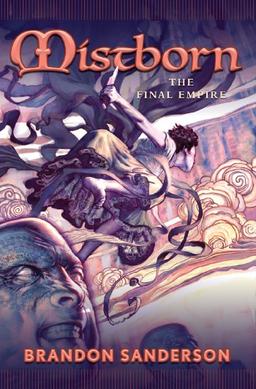 Brandon Sanderson teaches English 318 at BYU, and I’ve heard very good things about that class, both from members of Quark and from members of the English faculty. He’s also a relatively new Fantasy writer, with a handful of novels in print, so when I heard that the Quark reading group book for November was Mistborn, I decided to give Sanderson a try. I was not disappointed: Mistborn was one of the best books I read all year.
Mistborn is set in Luthadel, the capitol city of a despicable evil empire called The Final Empire. It’s called the Final Empire because the emperor, the Lord Ruler, is a god who cannot be killed. The serfs, known as skaa, are used, abused, raped, and killed at the pleasure of the nobles. Ash falls from the gloomy sky like snow and mists of dark magic cover the landscape at night. Only the powerful magic users known as Mistborn can travel safely through the mists, and use this to their advantage in the plots of intrigue between the noble houses vying for wealth and power. The nobles, in turn, are kept in line by the Imperial obligators and the powerful, mysterious inquisitors, who are the elite guards of the Lord Ruler.
The hero of the story, a young girl named Vin, starts out as the lowliest of the low–a lone skaa who barely survives from day to day as the member of a thieving crew. She has an ability, however, to acquire and use luck, which makes her something of an asset to the crew. Just as she’s about to help the crew make their biggest scam yet, she is discovered by a band of skaa rebels–but also by the inquisitors.
A skaa mistborn named Kelsier takes her off the streets and introduces her to something she’s never had before–friends. He has a number of friends, all of them masters of different allomantic powers. Kelsier teaches Vin that her ability to acquire and use luck is actually allomantic power–and that of all the allomancers, she is one of the most powerful. Like Kelsier, she is a mistborn: one of the few who have access to all the allomantic powers. Together, they hatch a bold plan–to overthrow the final empire and steal the Lord Ruler’s prized supply of atium, the rarest and most powerful metal.
As a part of their plans, they have her pose as a daughter of one of the lower houses of the nobility. When she isn’t roaming across the city as a mistborn, she goes to the balls and spies on all the great houses. She begins to realize that there is more to life than survival, and finds that this new life is changing her. But she struggles with such concepts as trust and friendship, and sometimes is in doubt about her very identity. And as she comes to see that there are good people as well as evil people among the nobility, she starts to question Kelsier’s plan–and develops feelings for one of the young men of the great houses.
Meanwhile, the inquisitors find out about the plan. They start tracking Kelsier and Vin, and start foiling key elements of their plan. Vin painfully learns that the mysterious power of the inquisitors is greater than even her powers as a misborn–and the Lord Ruler is greater than all of them. As they learn more and more about the truth behind the Lord Ruler, the pressure becomes greater and greater, until there is no way out except to do the impossible–slay a god.
As you can tell, it’s a long book–nearly 600 pages. But those pages went by very fast, because the story is really good. The two strongest things about the story, in my opinion, are the way that Sanderson describes the magic system and the way he develops Vin’s character. These two things together made Mistborn better than most fantasy books I’ve read.
Sanderson believes that the rules of any magic system should be clearly explained, kind of like they are in an RPG. The result is a set of magical powers that you can easily imagine yourself using. Many times as I read this book I imagined what it would be like if I had allomantic powers myself, and that made the magic system very exciting. It also made the fight scenes really intense and engaging, because I could follow what was going on and knew what was at stake.
But my favorite part of the story was Vin, the main character. Most of the story is about her transformation and personal struggles, from a poor child of the street to a person who has friends and loved ones–and learns how to fight for something bigger than herself, the essence of what makes a true hero (or heroine, in this case). Almost everything that happens in the story happens through her eyes, and Sanderson does a marvelous job integrating her unique point of view into the greater whole of the story.
Because of this, I came to love and appreciate Vin like someone I knew personally–because I did know her personally. And her struggle was uplifting. It was something I cared deeply about–more than the fighting and the magic and the plot to overthrow the Final Empire (although those were really cool too).
Sanderson himself describes this book as a heist story, but I think that it’s something completely different. And I’m glad that when what started as a heist story started turning into something different, Sanderson had the good sense to go where the story took him and give us Mistborn. It is a heist story, in a sense–but it is much more than that. It is a story of political upheaval, of an amazing universe with a fascinating magical system and really cool battles–and the story of one character’s growth from a mere survivor to someone who has something to live and fight for. And that was what made this story really good.
What kind of an accent do you have?
Well, this online quiz pegged me pretty good.
What American accent do you have? (Best version so far)Northern You have a Northern accent. That could either be the Chicago / Detroit / Cleveland / Buffalo accent (easily recognizable) or the Western New England accent that news networks go for.  |
| Click Here to Take This Quiz Brought to you by YouThink.com quizzes and personality tests. |
Thank goodness the Utah accent isn’t rubbing off on me!
The Neverending Story by Michael Ende
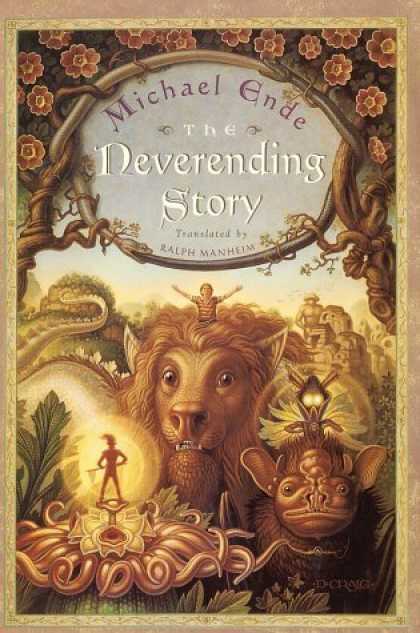 I have to admit, I read this book from a very biased point of view. Without a doubt, The Neverending Story is the best children’s book ever written, and quite possibly the best book I’ve ever read. It’s been my favorite since 4th grade, and reading it again now didn’t change that. Few books have made me cry as much or think as deeply as this one.
It tells the story of a fat, mediocre boy named Bastian Balthazar Bux. He gets beat up and made fun of at school, he doesn’t do well in his classes, and he doesn’t feel good about himself at all. Ever since his mother died, his father has been depressed and focused all his attentions on his work as a dentist, and hasn’t really spent much time with Bastian. But of all the depressing things in Bastian’s life, he has one thing going for him: he loves to read and to tell stories. He spends most of his time by himself making up stories and imagining different worlds.
One day, as he is running away from the school bullies, he stumbles into a used bookstore and finds a book called THE NEVERENDING STORY. As soon as he sees it, he feels this overwhelming desire to read it–after all, the worst part of reading a story is the ending, when you have to say goodbye to all the characters and places in the story that you’ve come to love. But since Bastian is afraid of the grumpy bookstore owner, he decides to run off with it. Feeling like a fugitive, he locks himself in the attic of his school and sits down to read the book.
The book is about a wonderful place called Fantastica, full of all sorts of magical creatures and fantastic places. But there is a problem–Fantastica is in danger. These patches of nothingness are popping up all over the country and are slowly growing larger. Everything that falls into them ceases to exist, and everything that gets close to them has the color sucked out of it. At the same time, the Childlike Empress–the benevolent ruler of Fantastica who is the source of everyone’s life and power–is dying. Something needs to be done to save the Empress, and she chooses a young man named Atreyu from a distant tribe of hunters to go on the quest to find the cure for her.
As Bastian reads of Atreyu’s quest, he realizes the the book he is reading is not an ordinary book, and that Fantastica is not just an imaginary world. The human world and Fantastica are intimately connected and mutually dependent on each other for their welfare, and as Fantastica suffers and dies, the human world suffers and dies as well. What’s more, Bastian comes to the frightening realization that from the moment he picked up the book, his fate became tied with the fate of the people in Fantastica, and he himself became a character within it. They need him to save the Empress by giving her a new name, and he cannot run away from that, because his story has become part of the story of the book.
After he enters Fantastica and saves the Empress by giving her a new name, the story becomes especially interesting. The Childlike Empress gives Bastian AURYN, the magical amulet containing the image of a white snake and a black snake biting each others’ tails and forming a holy circle, she tells him that Fantastica will be rebuilt by his wishes, all of which will come true when he wears the amulet. However, he doesn’t know it, but for every wish he makes, he loses one of his memories of his previous life. If he loses all his memories before finding a way back home, he will be stranded in Fantastica with no knowledge of who he is or what is his purpose, with no way of ever going back. However, wishes cannot be easily controlled, and many wishes are completely subconscious. The only thing that can save him is finding out what is truly important to him in the real world–but as he explores deeper and deeper in the wonderful world of Fantastica, it becomes harder for him to even remember that he had a life outside of Fantastica. Ultimately, it is his friends and loved ones in both worlds who save him–and who he himself saves by returning.
The Neverending Story is, in many ways, a beautiful metaphor for stories and fiction itself. The text itself is short and very easy to read, but the meaning behind the text is incredibly deep and far reaching. Bastian’s journey is, in some ways, like the journey that writers of fiction take. The things that tie the two worlds are the things that make fiction important to us as human beings, and Bastian’s ultimate discovery at the end of the book is the most important thing that fiction can give us. It is truly a neverending story in that it shows us, through metaphors, what every good story gives us.
This was why I loved the story so much as a kid–that it was a metaphor for my own experiences reading books. And the metaphor rings true, then as well as now. Even though I’m no longer a child, I cried as I read this book. I don’t even know exactly why. Perhaps I wouldn’t have gotten so emotional if I hadn’t read this book as a child, but the meaning was still clearly there. And, in a surreal and beautiful way, it was powerful. There are definitely images from this story that will stay with me throughout my life.
The Neverending Story has definitely been one of the most influential books in my life. At a very young age, it fed the desire within me to become a writer by showing me the importance of stories and creative writing. And it also encouraged me by showing me what a good story looks and feels like. A good story is a powerful vehicle for truth, both consciously and subconsciously, through metaphor. And by that standard, The Neverending Story is one of the truest books that I know. I would recommend it to any child, young or old, growing or grown.
Memoirs of a Snowflake
I was walking around outside in the snow today, and I had this great idea for a really short story! So, when I got a chance, I sat down and wrote it. It’s really short–983 words–but I kind of like it. It’s the story of a life of a snowflake. I shared the idea with a couple of my friends, and one of them also decided to pick it up and do something with it. I’ll link to her blog once hers is up.
So, without further ado, enjoy!
UPDATE: Here is the link to my friend’s take on this same theme. She took it in a completely different direction, and it’s pretty interesting!
ok, so maybe I will do a couple of short stories
I’ve been working these past couple of days on a short story idea that’s kind of popped into my head. Not that I’ve given up on The Lost Colony–not at all! I just thought I’d break out and do something different. That, and write something that might be easier to finish and send out. And so far it’s been fun!
The Forever War by Joe Haldeman — part two
One thing about this book that really stood out to me was how character driven it was. Correct me if I’m wrong, but Science Fiction thirty years ago was much less character driven than it is today. The lens of the main character was very thick in this story, and a lot of the time it reflected back on Mandella himself and his own thoughts and impressions of the things that happened to him. It was much less a story about space battles and society than on the immediate human impact of war. And unlike a lot of space adventure, it didn’t glorify it AT ALL. Neither did it censor or tone down the horror of it. You got to see the horror of it all–and sometimes the most horrifying thing was that Mandella could be so desensitized to the carnage and immorality.
The Forever War by Joe Haldeman — part one
I’m not going to lie, I really didn’t like this book when I first started it. In fact, after I got about 100 pages into it, I got disgusted and stopped reading it. But there were some things that just kept coming back into my mind, like the fascinating relativistic space battles and the basic premise: leaving the earth of the present for the earth of the future, only to find that the future isn’t all it’s cracked up to be and you can’t go home. After six months, these things bothered me so much that I decided to pick it up again and finish it, and I am VERY glad that I did!