What Does It Mean to be “Published”? (Blast from the Past: September 2011)

Here’s another blast from the past, when “self-published” was still a dirty word and indie books were just starting to take off. I’d self-published my first story only six months previously, and was still experiencing the massive paradigm shift of going indie.

Still, there’s a lot of stuff here that’s still relevant. The petty wars between trad-published and indie-published are pretty much over (thank goodness), but the question of what it means to be “published” is still quite relevant. And my answer to that question has not changed.

Hope you find this one interesting. Thanks for reading!


One interesting thing about making the shift from traditional to indie publishing is that it changes your perspective on what it means to be “published,” and not in ways that you might expect.

Before I made the shift, I felt as if I were at the base of a giant mountain, where climbing to the top meant getting published and that was all I could see. Sure, I knew there was more to it than getting that first book deal, but I figured I’d learn all about that at some point later—and besides, there’d be people along the way to help me.

Once I started self-publishing, though, my paradigm changed completely. Instead of focusing all my efforts on trying to land that lucky break, I started thinking in ways that were much more concrete and practical, like “how can I build my readership?” “how should I price my books?” “what should I include in my back-matter?” etc.

All of a sudden, it was as if I were on top of that first mountain, with a whole range of even taller mountains to climb. And while that’s a very daunting place to be, it’s also quite encouraging, because I can see what lies in front of me and figure out what path I want to take.

One of the side effects of all this is that “getting published” is no longer a big deal to me. Whenever I see aspiring writers obsess over getting an agent or a book deal, as if that’s the single greatest thing that could ever happen to them and all their hopes and dreams hang on the balance, I have to stop and scratch my head.

Don’t get me wrong; it’s still a big deal to get picked up by a major publisher, and kudos to everyone who is. But that is not and shouldn’t be the end of your publishing journey. It’s only the beginning.

For this reason, I really don’t like the words “published” or “author” anymore. People throw those terms around as if it makes you part of a select elite, one of those godlike beings who lives up in the clouds and periodically descends from On High to grant blessings to all the poor unpublished wastrel folk on the surface. That’s complete and utter BS, and I never ever ever want to buy into it, not for an instant.

The problem is, so many people still do. They still think that there’s some kind of a divide between them and Big Name Authors, like peasants in the face of royalty. They labor endlessly over their manuscripts, terrified that one misplaced comma will forever their chances of fulfilling their hopes and dreams. And whenever anyone tries to tell them that there’s a better way, that it doesn’t have to be like this, they cling to the old paradigm like victims of domestic abuse—or worse, like religious zealots with dreams of martyrdom.

It used to be that self-published writers were the ones who constantly obsessed about being “published,” but now, I think it’s the exact opposite. Sure, there are crazies in both camps, but it seems that the balance of aspiring professionals—the ones who actually treat writing like a business—are turning to self-publishing.

The point is, I don’t like to think of myself as an “author,” or as “self-published.” I like to think of myself as just a “writer.”

Gunslinger to the Stars — excerpt 3

“Uh, hi,” I said, taking the seat next to her.

“You!” she said. Her eyes fixated on me like a targeting lock, and I could tell I was about to get burned.

“Hey, it wasn’t my fault,” I tried to explain. “In fact, I—”

“More than a thousand men, women, and children are slaves thanks to you. You should be ashamed of yourself.”

“It looks like you made out all right, though.”

Her glare only got hotter. “Do you have any idea what it’s like to be sold on an auction block? To stand there like a piece of chattel while hundreds of aliens bid on you? It was the most degrading and humiliating experience of my life.”

“If I had been there, I would have bought you myself.”

I meant that if I’d caught up to her in time, I would have spared her the humiliation by buying her off before the auction. But I’ve never been smooth around women, human or otherwise.

“That came out wrong,” I said quickly. “What I meant was—”

“You pig,” she said, her eyes blazing with rage. “You bottom-sucking, piss-drinking, retrograde cretin!”

I took a deep breath and sighed. “Let’s start over, okay? I’m sorry, Jane—really, I am.”

Her glare cooled, but not by much. She folded her arms and narrowed her eyes.

“And what about the other Setarni? The families that were broken up? The children who will probably be slaves for the rest of their lives?”

“I’m sorry, but that wasn’t my fault. The captain sold them out before I could do anything to stop him.”

“Please don’t tell me he’s here with you.”

“He isn’t,” I said quickly. “We got into an altercation with the Zan, and I handed him over before bugging out.”

Jane smirked. “Betrayal for betrayal. I suppose that’s justice.”

“Can I buy you a drink?”


Gunslinger to the Stars

Gunslinger to the Stars

$15.99eBook: free sale!Audiobook: $2.99 sale!

Sam Kletchka here, freelance gunslinger and interstellar privateer. This, my friends, is how I went from being stranded in the armpit of the galaxy to becoming the luckiest human being in the universe.

More info →

Gunslinger to the Stars — excerpt 2

Realizing that I was stranded, I did the only sensible thing and headed to the nearest bar for a drink.

The fifth planet of Gorinal Prime is the only one in the system that’s habitable, if you’re willing to stretch the definition of the word. G-Prime V is essentially a giant desert, with oceans of sand instead of water. Fortunately, the spaceport is on the planet’s north pole, where the weather is cool enough there to have clouds, rain, and even a couple salty seas. With nowhere else to go, I decided to try what was left of my rapidly deteriorating luck.

Every spaceport in the galaxy has a seedy cantina somewhere nearby. At G-Prime V, that’s a place the locals call the Oasis. Finding humans in the Orion Arm isn’t too hard; xenologists, merchants, vagabonds, and men of fortune like myself are all pretty common in that corner of the galaxy. But the Gorinal Cluster is in the Scutum-Crux Arm, on the far side of the galactic core. Out there, humans are as rare as ice on a neutron star.

So you can imagine my shock when I saw a twenty-something blonde at the bar—one who was definitely not happy to see me.


Gunslinger to the Stars

Gunslinger to the Stars

$15.99eBook: free sale!Audiobook: $2.99 sale!

Sam Kletchka here, freelance gunslinger and interstellar privateer. This, my friends, is how I went from being stranded in the armpit of the galaxy to becoming the luckiest human being in the universe.

More info →

Gunslinger to the Stars — excerpt 1

The Gorinal Star Cluster is, in every meaningful sense, the armpit of the galaxy. And it was just my luck to get stranded there when shit hit the fan.

I didn’t know that at the time, of course. My ship, the Star Runner, was in pretty bad shape (Don’t ask.), and except for the fuel in my tank, I was broke. Desperate as I was for work—any kind of work—the lawless Gorinal Cluster was the only real option for a gunslinger like me.

The name’s Sam, by the way. Sam Kletchka, of New Texas. I spent a year at Earthfleet Academy before dropping out on my twenty-first birthday to seek my fortune among the stars.

Back in those days, Earthfleet was mostly just twentieth-century submarines and aircraft carriers, hastily repurposed and barely spaceworthy. Only three decades had passed since first contact with the galactics and we were still in a mad scramble to put as many colonies on the starmap as possible. With all of our resources tied up in the Gliese colonies, there was no boldly going for the class of ’39.

Fortunately, we didn’t have to seek out new life and new civilizations: they came to us. So, after dropping out of the Earthfleet Academy, I signed onto a Hyadean star freighter and never looked back.


Gunslinger to the Stars

Gunslinger to the Stars

$15.99eBook: free sale!Audiobook: $2.99 sale!

Sam Kletchka here, freelance gunslinger and interstellar privateer. This, my friends, is how I went from being stranded in the armpit of the galaxy to becoming the luckiest human being in the universe.

More info →

The Gulf Between the Generations (Blast from the Past: February 2012)

Here’s a post I originally wrote in 2012. Given how most political commentary tends to lose relevance over time, it’s remarkable when something from the past is even more relevant now than when it was written.

Not that this post is overly political: more just a series of observations, including some red flags that, at the time, were still on the distant horizon. In recent months, those flags have drawn much closer.

Such a crazy world we live in. Stay safe, and thanks for reading.


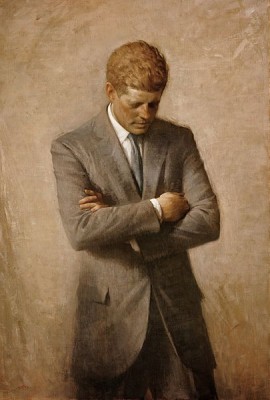
I just watched a fascinating interview with a 1960s White House intern who claimed to have an eighteen month affair with President John F. Kennedy. But the most interesting thing wasn’t the affair itself, but the way the President’s staff, the “fourth branch” of government (AKA the media), and the entire general public of 1960s America seemed more intent on keeping the secret than on facing the truth about JFK’s many affairs.
It seems that my parents’ generation had so much trust in their government that nobody would even raise the question—that to raise doubts about the integrity of the man who held the highest office in this country would itself be unconscionable. Rather than face the facts, the American public seemed unwilling to do anything that would shatter the gilded image of the man who led the free world. And that, quite frankly, is a mindset that I simply cannot understand.

In contrast, my own generation has very little trust in our government. We’ve been raised in an age of ambiguity, where the enemy doesn’t wear a uniform or pledge allegiance to a flag, but live quietly among us, until they strap a bomb to their bodies or turn a commercial airplane into a weapon of terror. Or at least, that’s the excuse our government gives us for an increasingly invasive security regime that infringes on our basic liberties, enables the military to hold us in detention indefinitely, and sends our soldiers overseas to fight increasingly senseless wars to “liberate” the people of oil-rich nations who don’t even want us there. As if that weren’t enough, the economic crash has taught us that all that stuff our parents taught us about equality and opportunity is really just a pack of lies—that the rich get bailouts while the rest of us foot the bill, and all that stuff about changing the world and being whatever you want to be… yeah. Lies, all of it.

My Dad had an interesting rebuttal to all this, though. He said that it wasn’t his generation that put the president on a pedestal—it was his generation that tore the pedestal down. During the 60s and 70s, the Vietnam era and the rise of the hippy movement, his generation fought back and made it acceptable for us to question the president, or to criticize the government, or to do all the things that we take for granted today. In fact, he said that we’re the ones who are backsliding into complacency, with our deafening echo chambers, our social media inanities, our reactive attachment to corporate brands and advertising, and our almost religious sense of entitlement.

I’m not totally convinced he’s right, but I do think there’s a fundamental gulf between these three generations. Our grandparents’ was the silent generation, where people were expected to keep to their own business and not rock the boat. Our parents’ generation was one of top-down media, where ABC, NBC, and CBS ruled the airwaves and told us all what to think, buy, and believe. Ours is a much more peer-to-peer generation, but I worry that we’re turning into a collection of mindless herds who are turning the culture wars into a messy riot where we abandon civil dialog and rational thinking for a much more destructive mob mentality that isn’t really building anything, but tearing it all down.

Sometimes, it gets so frustrating that it makes me yearn for the days of the frontier, when you could leave it all behind and reinvent yourself somewhere out in the west. That’s probably why I’m so drawn to science fiction, where space is the final frontier. There really are times when I wish I could go to the stars and escape to it all. Writing about that is the next best thing.

Maybe that’s why I feel so compelled to write Star Wanderers. It’s not all rosy, of course—space can be a cold, dark, and lonely place—but so can this world, when you’re lost and you don’t really know what you’re doing with your life.

I don’t know if I recognize anywhere as my own country anymore. Like Van Gogh, all I can say is the sight of the stars makes me dream.

Rethinking free

I recently read an interesting blog post on Dean Wesley Smith’s blog, about how, how not, and whether to make your books free. The conclusion he comes to is this:

Free is short time, limited supply, and never on the major bookstore shelves.

In other words, no permafree, no free pulsing, and no publishing free online content on sites like InstaFreebie unless it’s for a limited time.

Three or four years ago, I probably would have pushed back pretty hard against this advice. There are still points of it that I disagree with, such as the idea that giving anything away for free devalues all your other work. Perhaps that’s true for physical product, but for digital content I think there’s a solid argument to be made that the rules have changed.

That said, a lot has happened in the last three or four years. Permafree worked really great until about the middle of 2014, at which point I noticed that it was a lot harder to generate any kind of interest in my free books. I switched to a free pulsing strategy in 2015, which was a lot more effective at giving away free books, but that didn’t always translate into more sales.

In fact, there’s a passage from Dean’s blog that sums it up real well:

A customer walks through your door and you have a wall of twenty pies in glass cases, all the smaller short story pies in a case in the center, and some specials near the cash register.

And there on your wall are three pies that say, “Free.”

And a bunch of short stories that are “Free.”

The customer can take an entire pie for free or buy one. As a customer, what would you do? Duh. You take the free pie and leave.

And pretty soon your customers start to change. The only people who come through the door are people who only want the free stuff. They would never buy something under any circumstances, but you are giving your pies away for free, so they take one.

Pretty soon there would be lines out the door to get your free pies and you would make nothing. The free takers would crowd out and devalue the pies you are trying to sell.

Now, I don’t entirely agree with Dean here. My 90-day sales chart on Amazon shows a predictable uptick in sales every time I set a book free and send out an email to my list. Most of my subscribers signed up through InstaFreebie, which means they’re probably not quite fans yet (and probably signed up for a bunch of authors’ lists).

But my long-term data tends to agree with Dean. Back in 2012 and 2013, there was a very clear correlation between free downloads and royalties / paid sales. Then, in 2014, that correlation started to become fuzzy. Over the next several months, it got progressively fuzzier (even though I was giving away more books), until today there’s really no correlation at all.

Obviously, YMMV and I can only speak for my own books. But there have been a lot of major shifts in the ebook market over the last five years. Kindle Unlimited has had a huge impact on the effectiveness of permafree, or any kind of free book strategy for that matter.

Point is, it may be personally useful to rethink my free strategy. I’m not going to stop doing the free book thing altogether, since I do think there’s still value to it (if for no other reason than that little sales bump, plus the handful of “thank you!” responses I get from my email subscribers each month). But instead of free pulsing two books each month, usually including a first-in-series novel, it may be better to do a 99¢ novel and a free short story.

The two biggest mistakes I’ve made so far in my writing career have been 1. underpricing my books, and 2. unpublishing books that were still selling. (I still can’t believe how stupid I was) Holding onto a free books strategy that isn’t working could easily become a close third. I’m not going to throw the bus into reverse while it’s barrelling down the highway at 70 mph, but some experimentation and a course correction may be in order.

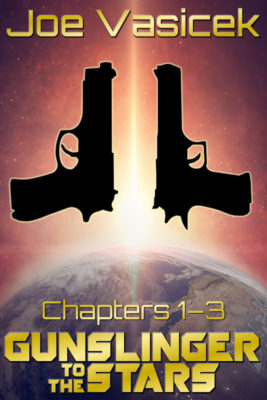
First three chapters of Gunslinger to the Stars on InstaFreebie!

It is exactly one month before Gunslinger to the Stars goes live, but if you want to read the first three chapters, they are available right now on InstaFreebie.

If you’re unfamiliar with InstaFreebie, it’s a site where you can download free books by sharing your name and email with the author. Basically, you sign up for the author’s newsletter, and you get a copy of their book. You can browse by genre or author, too.

In addition to this giveaway, I’ll start posting short 300 word excerpts on my blog starting in about a week. I’m also going to publish a prequel short story in the next few days. And of course, you can pre-order Gunslinger to the Stars right now by following one of the links below!

New day job, new routine

So I just got a part-time day job with Monsanto, here in the Des Moines area. My brother-in-law works as a scientist there, so he was able to connect me with the right people. It’s basically a warehouse job, handling all the shipping and receiving as well as the inventory. The hours are perfect, the job is interesting, and the people are really awesome, so I think things are going to work out really well.

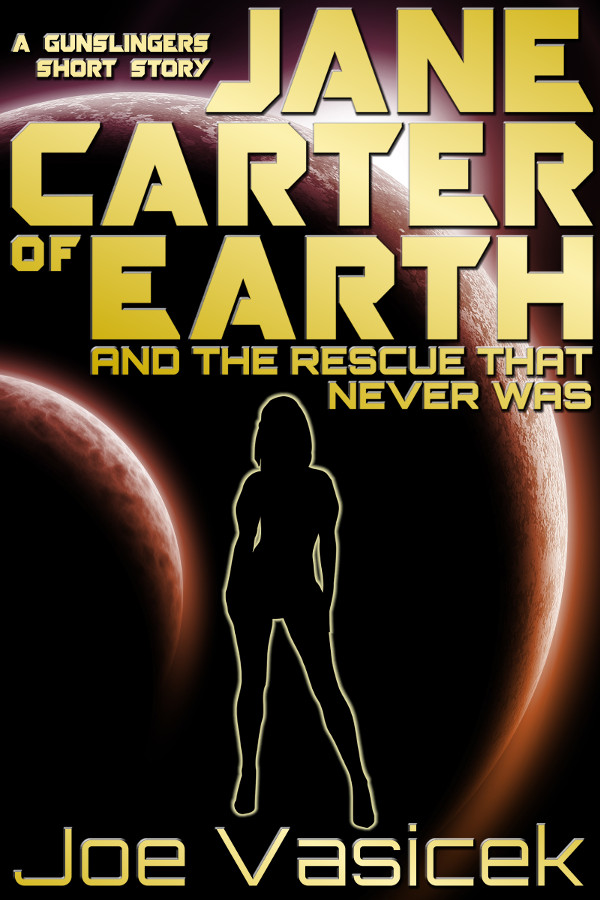
Of course, that means adjusting to a new daily routine, which is why I neglected this blog all last week. Writing takes priority, so I’ve been focused on that first. I’m currently working on a short story prequel to Gunslinger to the Stars, which should be done later today and up for you guys to read before the end of the month.

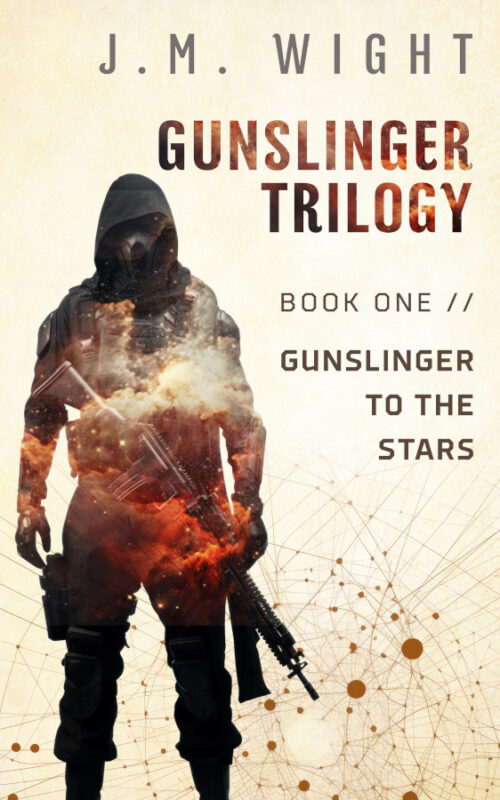
I’m really, really excited about Gunslinger to the Stars. I think it’s my best sci-fi adventure novel yet. It’s coming out right around the same time as Guardians of the Galaxy 2, which also looks really awesome. Think Guardians of the Galaxy meets Monster Hunter International, with a heaping dose of Firefly mixed in for good measure. That’s Gunslinger to the Stars.

Gunslinger to the Stars

Gunslinger to the Stars

$15.99eBook: free sale!Audiobook: $2.99 sale!

Sam Kletchka here, freelance gunslinger and interstellar privateer. This, my friends, is how I went from being stranded in the armpit of the galaxy to becoming the luckiest human being in the universe.

More info →

Lots and lots of stuff going on, but it looks like things are finally settling into a new routine. I should have a lot more for you guys in the future.

Have a fantastic weekend, and thanks for reading!