2020-01-10 Newsletter Author’s Note

This author’s note originally appeared in the January 10th edition of my email newsletter. To sign up for my newsletter, click here.

So right after we got home from the holidays, Mrs. Vasicek had her ultrasound, and we found out that we’re having a baby girl! We are super excited! She looks really healthy so far, so hopefully everything goes well and we get to welcome her into the world this spring.

Right now, we’re in baby name mode, and I have to say it’s a bit different from picking character names. You would think I would have some experience in this area, being a fiction writer and all, but no. My number one name choice is Æthelflæd, but Mrs. Vasicek has soundly vetoed it, which is a shame because it’s such a good namesake: lady of Mercia, daughter of Alfred the Great, and a formidable woman in her own right (yes, I’ve been binge listening to the British History Podcast).

In all seriousness, though, it is really awesome that we’re having a baby girl. I grew up with three sisters, and I’ve often thought that I’d be able to do well raising a daughter. Now we’ll find out!

We’ll probably give our baby a name from our extended family, though that doesn’t actually narrow things down very much. On the Czech side, I’m rather partial to Ludmilla (Lilly), but sadly Mrs. Vasicek has vetoed that one as well. Neither of us are keen on our grandparents’ names, so we’ll probably go back a little further, or save one of those for a middle name.

One thing we probably won’t do is resort to the Utah Baby Name Generator, though it is a real hoot. Tim Urban also has a really fun blog post on baby names up on his blog, Wait But Why. I’m sure if we’re indecisive for long enough, people will start to come out of the woodwork and tell us all sorts of crazy things about names and naming.

What are some girl names that you really like? We’re very much open to suggestions. Who knows? Even if we don’t end up using them, they might show up in my next book.

I suspect that Mrs. Vasicek will be on the fence right up until the month the baby is born, at which point she’ll make a firm choice and won’t be swayed from it. So until then, I guess I just need to maintain a firm grip on the Overton window, though it may have already slipped out of my control.

Æthelflæd…

2019-12-19 Newsletter Author’s Note

This author’s note originally appeared in the December 19th edition of my author newsletter. To subscribe to my newsletter, click here.

I’ve been thinking a lot about self-reliance recently. I just finished reading One Second After by William R. Forstchen, and while it’s a good book—perhaps even an important book—I have to say that is not the sort of thing that is fun to read when you’re newly married and expecting your first child. It really makes you think about the things you take for granted, and just how fragile our world really is.

If you know the basic premise of the book, you’re probably nodding along sagely right now. If not, then you probably haven’t read much prepper fiction yet. One Second After is actually a pretty good book to start with, if you’re interested in the genre. In the next couple of weeks, I’ll write a proper review.

I don’t consider myself a “prepper” in the common sense of the word. I don’t have a stockpile of guns or ammo, I don’t really go for all the “tacti-cool” stuff that’s popular in prepper circles, and I don’t obsess over SHTF scenarios. That said, I’m not ignorant of the many ways our society could (or is) falling apart, and I do have contingency plans if/when that happens.

Probably the best prepper blog/resource that I’ve found is Listening To Katrina, which was written by a guy who lived through Hurricane Katrina and the aftermath. Lots of really fascinating stuff there, and he does a fantastic job of boiling his experience down into lessons for the rest of us. I discovered this blog just as I was starting to get more interested in self-reliance and emergency preparedness, and it did a lot to develop my thoughts on the subject.

Another big influence on me were the Forgotten Skills books by Caleb Warnock. A lot of really fascinating stuff there. He hits on things from the self-reliance angle more than the prepper angle, which is how I like to come at it too. It’s not about having two years of freeze-dried food in your basement that you never eat or use, it’s about living in such a way that you can provide for your own needs whether or not a disaster strikes, and produce more than you consume.

About a year ago, I took what I’d learned from these and other resources and mapped out something that I call my Path to Self-Sufficiency:

  1. Learn how to store and use oats, beans, and wheat.
  2. Learn how to make bread and maintain a sourdough culture.
  3. Start an herb garden and learn how to garden.
  4. Develop a storage system for canned and dry goods.
  5. Learn how to make kraut and fermented vegetables.
  6. Learn how to make yogurt and cheese.
  7. Keep a garden for greens, tomatoes, peas, and peppers.
  8. Learn how to can and pickle.
  9. Finalize the garden plan (including compost).
  10. Build a rainwater reclamation system.
  11. Develop a source of off-grid power.
  12. Build a wood-fired oven and learn how to make bread with it.
  13. Learn how to hunt and process game meat.
  14. Develop a plan for livestock.
  15. Secure a source for eggs and milk.
  16. Learn how to make clothing and work with textiles.
  17. Build a shop and learn how to work with wood and metals.
  18. Build a foundry and learn how to cast metals.
  19. Build a greywater reclamation system.
  20. Secure a source for homespun textiles.
  21. Acquire productive land and improve it.
  22. Build an off-grid cabin.

The items are listed in rough order, though I’ve jumped around a little bit since making the list. For example, Mrs. Vasicek and I have solar panels on our house (11), and we’re looking seriously into keeping bees (14). But it’s a pretty good reference point for answering the question “okay, what’s next?” Currently, I’m working on step 6, and when spring comes around I’ll dive into steps 7, 8, and 9.

A lot of this hearkens back to a blog series that I started several years ago, called “the self-sufficient writer.” At the time, I was exploring ways that I could incorporate what I was learning into my writing career and lifestyle. The goal, I suppose, was to show how it’s possible not only to make a living as a writer, but to achieve a healthy degree of self-reliance at the same time.

Would you be interested in reading that blog series if I brought it back? I’ve learned a few things since then, and would have to start it over from the beginning, but it’s an interesting subject that I enjoy exploring. And now that I’ve finally got some land to work with, there’s so much more to do.

The Path to Self-Sufficiency is very much a work in progress, and I doubt I’ll get to everything on it. A lot depends on Mrs. Vasicek and what she wants to do. With a child on the way, other projects will no doubt take priority, but with everything going on in the world, this is not a ball I think we can afford to drop. If you have any suggestions or stories of your own, I’d love to hear from you.

2019-12-05 Newsletter Author’s Note

This author’s note originally appeared in the December 5th edition of my author newsletter. To subscribe to my newsletter, click here.

We had a very eventful Thanksgiving this year. My whole side of the family was in town for a baptism and a funeral, and we had Thanksgiving dinner with Mrs. Vasicek’s family, as well as pie night, which is a tradition my in-laws have. So lots and lots of family, which was stressful in some ways but also a lot of fun.

Mrs. Vasicek and I took advantage of this to make a family announcement, which I can now share with you: we’re having a baby! The due date for little junior is in May, and we don’t yet know if it’s a boy or a girl, but we will definitely find out next month.

I don’t think it’s really hit either of us yet. Of course, it’s something we talked about while we were dating, and since both of us are in our thirties we decided it would be best not to wait. Our lives are sure to change in a major way once little junior comes along, but for now, it’s still business as usual.

It has made me think a little bit about a blog post I wrote some nine and a half years ago, right after I graduated from college. The post was a response to a New York Times article about “emerging adulthood,” or the idea that we should count the time between adolescence and full adulthood as a separate stage of life.

The article points out that there are five traditional milestones that mark the transition to adulthood:

  • Completing school
  • Leaving home
  • Achieving financial independence
  • Getting married
  • Having a child

In our parents’ and grandparents’ generations, people commonly achieved all of these milestones sometime in their early twenties. However (the NYT article argues), because that isn’t as easy in today’s modern world, and because the human brain isn’t fully developed until about age 25, we shouldn’t put too much pressure on young people to achieve these milestones until their late twenties or early thirties.

As a 25 year-old at the time I read the article, I was much more interested in how I measured up with the milestones than the argument for putting off adulthood itself. Now, at age 35, I’m finally about to hit the last one.

I never consciously tried to put off the responsibilities of adulthood. If I’d found Mrs. Vasicek in my mid-twenties, I wouldn’t have made her wait another ten years. And yet, it seems that many of my peers are putting off adulthood as long as they can—in some cases, indefinitely. There’s a reason why “adulting” is a word now, and why pajama-boy is a meme.

And yet… if I’d met Mrs. Vasicek ten years ago, I don’t think it would have worked out. And if somehow it did, I probably would have put my writing career on the back burner, or abandoned it entirely. Many of my friends who got married a year or two out of college did exactly that. Those who are still pursuing their creative careers are generally either single, married without children, or stay-at-home moms (which seems even more difficult than juggling writing with a day job, but hey).

I suppose I benefited from this idea of “emerging adulthood,” since through my mid-thirties I basically was one. But I didn’t choose it because it was the easy path. It would have been a lot easier to give up on writing—but ironically, I don’t think Mrs. Vasicek would have been attracted to me if I’d done that, and there’s a very good chance I’d still be a single basement-dweller.

So what does this mean about this idea of “emerging adulthood”? Is it something that we should recognize? Yes, but not as an excuse to put off the responsibilities and milestones of adulthood. It isn’t worth putting off your life—or your future family—just because you’re afraid to take that next step, whatever it may be.

2019-11-14 Newsletter Author’s Note

This author’s note originally appeared in the November 14th edition of my author newsletter. To subscribe to my newsletter, click here.

So the latest controversy in SF&F fandom is the stripping of John Campbell’s name from the Campbell Award. The latest issue of Locus magazine has an op-ed from Cory Doctorow defending that decision, and it was so deserving of a fisking that I went ahead and fisked it myself. You can find it on my blog.

That said, I do think there were some good things in Doctorow’s piece. The message in the second half of the article, that people are neither wholly good nor wholly evil, and that we should learn from our misdeeds and set them right, is a message that I think we really need to hear, especially in today’s cancel culture that defines everyone by the worst thing they’ve ever said or done.

However, the good parts of the article are completely contradicted by the bad parts, where Doctorow argues that Campbell’s entire legacy is tainted and therefore needs to be cancelled. He also (surprise surprise) brings up the Sad Puppies and calls us all “white nationalists,” “Nazis,” and “the misogynist/white supremacist wing of SF.”

It’s not that I want to defend Campbell’s sexism and racism. I’m sure he had many odious views. I could even be convinced that it’s appropriate to retire the Campbell Award and replace it with something else, similar to moving offensive Confederate statues out of the public square and into museums instead.

The problem is that Campbell’s detractors are just as odious in their worldviews as he was, if not more so. When accusing someone of being “male” and “white” is enough to get them cancelled, how can that be anything but sexist and racist?

Which brings me to the ugly parts of the article: the naked hypocrisy. Doctorow stops just short of calling for the digital equivalent of a book burning, but he left me with the impression that he’d be the first to light the match. I don’t think that’s a misread either, because of this line:

Campbell’s impact on our field will never be truly extinquished (alas), but

Yep. And all the moderates, conservatives, libertarians, and old-school liberals in the field are part of the “misogynist/white supremacist wing of SF” too. Who’s the fascist again?

That’s about as far into politics as I care to go. I know you probably aren’t into science fiction for the politics, but if you want to read a more detailed fisking of this ridiculous article, you can find it on my blog. In the meantime, I’ll be back to more important things, like writing.

2019-11-07 Newsletter Author’s Note

This author’s note originally appeared in the November 7th edition of my author newsletter. To subscribe to my newsletter, click here.

One of the things I’ve come to really love about married life is reading in bed with Mrs. Vasicek. Right now, I’m finishing House of Assassins by Larry Correia, and she’s reading the Westmark Trilogy by Lloyd Alexander. She just finished the mystery novel A Better Man (making a few jokes about the title), and I just finished Genghis Khan and the Making of the Modern World, which has revived my perennial fascination with the Mongols.

It’s great to share a book with someone you love, but it’s also great to share the same space as the person you love while totally immersed in a book. Those are two different things. I’m also rediscovering how refreshing it is to end a long day by unwinding with a good book for an hour or two.

Reading stands apart from other leisure activities. Whenever I spend too much time on YouTube, or playing computer games, or doing something else involving the internet and a screen, I always come away feeling drained. Not so with reading. In fact, it’s the exact opposite.

Reading a good book always leaves me feeling replenished, like I’ve just come back from an exciting adventure, or come to the end of a perfect day. The books that stick with me always seem to have changed me in some way, even if it’s so subtle that I can’t tell how.

Unlike watching TV or YouTube, reading takes work. It isn’t laborious, but the act of reading requires just enough effort that when I’m tired or worn out, screens and the internet usually win out. But when I make the conscious decision to turn away from those things and open up a book instead, I never regret it. The same can’t be said when I come to the end of a YouTube binge.

It’s never too late to start a new habit or set a new resolution, but there’s something about getting married that makes it easier. So in an effort to read more (and finally get to all the books that I’ve accumulated over the last few years), I’m setting a goal to read two books a week. That’s 100 books over the course of a year, with a bit of allowance for unforeseen interruptions.

A hundred books sounds like a lot, but as a writer, it’s probably on the low end of what I should be reading anyway. Hopefully the quality of my writing improves as I do it. If I get into the habit now, then it shouldn’t be too difficult to make and keep that resolution for 2020.

What are some of the ways that you enjoy reading? With a spouse? With a pet? Alone? In a warm and quiet place? With a beverage of something tasty? Or maybe in a crowded place, with lots of opportunities for people watching?

I suppose there are just as many ways to read as there are ways to write, which is to say that there’s one for every reader. May you be fortunate enough to spend lots of time with yours!

2019-10-24 Newsletter Author’s Note

This author’s note originally appeared in the October 24th edition of my author newsletter. To subscribe to my newsletter, click here.

There’s this guy I follow on YouTube named Tom Luongo who has a very interesting take on Star Wars: The Last Jedi. According to him, it’s one of the best Star Wars films ever made. I recently got into an online conversation with him about it, so I thought it would be interesting to bring up some of that in this newsletter.

Tom is a radical anarcho-capitalist libertarian who lives on a farm in Florida that he and his wife built. I listen to his political commentary mainly for the contrast. He’s a natural contrarian who tends to fall into the trap of wishcasting, which has really blackpilled him in the last few years. I disagree with him almost all of the time, but he’s got a fascinating take on things, and I think his central thesis is basically correct.

You really should read or listen to Tom’s take on The Last Jedi. His argument goes something like this: the Skywalker-Solo family was always bound to come to a tragic end because the original series never resolved any of their underlying flaws, so in order for anything good to come of the family’s fall, everything built up by the previous generation first needs to come crashing down. Unfortunately, The Last Jedi falls in the midpoint of that arc, when the characters hit their lowest point, which is why so many fans were disappointed with it—just like so many fans of A New Hope were disappointed by The Empire Strikes Back the first time they watched it.

If nothing else, his argument has convinced me to watch The Rise of Skywalker, which I wasn’t planning to do. In fact, after The Last Jedi, I had pretty much checked out of the Star Wars fandom forever.

I discovered Star Wars when I was seven years old and saw A New Hope for the first time. Completely blew me away. My parents made me wait a year and a half to watch Empire Strikes Back, and for the last couple of months I was counting down the days. When I first saw Empire, I was lukewarm on it, but I really liked the Battle of Hoth and Luke’s duel with Vader (strangely, I don’t remember being surprised to learn that Vader was Luke’s father). In later rewatchings, it grew to be not only my favorite Star Wars movie, but my favorite movie of all time. I also loved Return of the Jedi, and felt that it really sticked the landing for the trilogy.

I read all the Star Wars books from the library that I could get my hands on. Timothy Zahn, Kevin J. Anderson—but it was Roger Allen McBride’s Corellia Trilogy that really opened my eyes to a different kind of science fiction. Instead of all the flashy lasers and adventurous antics, he used the limitations of physics to depict a universe far more vast and far more ancient than my young, boyish mind had ever dared imagine. I began to branch out to other works of science fiction, and over the next few years I discovered Card, Le Guin, Asimov, Clarke, Heinlein, Herbert, Burroughs, and all the other greats.

When Phantom Menace came out, it was a huge disappointment. Midichloriens? Jar Jar Binx… ugh. Darth Maul was pretty okay, but the rest of the movie was garbage. But I held out hope that Clone Wars would be better… and it wasn’t. Too much CGI, too little story. The romance was icky, the plot was too slow, and the fight scene with Yoda was a farcical caricature. I was disgusted, but I still saw Revenge of the Sith in theaters, because surely they had to get Vader right… and once again, they failed. Massive disappointment. It was like Lukas had taken a massive dump on my childhood, and was trying to sell it back to me as merchandise.

I cooled off to Star Wars for the next few years. It was never a religion to me. I dabbled a bit with the video games and expanded universe novels, but at this point in my life, I was more of a casual fan. I turned to other works of science fiction and fantasy, and began to pursue my own writing more seriously.

Ever since 4th grade, I always knew I would be a writer. All through high school I had some novel project or another I was working on, but it wasn’t until college that I finished any of them. In 2008, I took Brandon Sanderson’s writing class at BYU and finished my first novel. Incidentally, my wife was in the same class, though it would be another ten years before we met each other.

When The Force Awakens came out, my expectations were low. I didn’t want to get shafted like I had by the prequels. It was probably because of those low expectations that I enjoyed it. Han Solo’s character was utterly ruined, and the plot was little more than a rip-off of A New Hope, but hey, at least it didn’t totally suck! Then Rogue One came out, and it was excellent. On par with the original trilogy. Star Wars was back.

And then, The Last Jedi… green alien breastmilk… Leia Poppins… Admiral Gender Studies… Space Vegas…

Ironically, I think I would have hated it less if Rogue One hadn’t been so good. By the time TLJ came out, I felt like I was on a rollercoaster that was giving me a really bad case of whiplash, and I just wanted it to end. The low points felt so low because the high points were so high, and with TLJ it felt like it was all crashing down again.

At that point, I noped out. No more Star Wars. I was out. The fact that so much of my childhood—and not only that, but my chosen career—was so tied up in the franchise only made it that much more painful.

And then I heard Tom Luongo’s take on The Last Jedi, which has made me rethink some things. I’m not entirely convinced that it’s a great film, but perhaps it’s not as flawed as I thought it was. It really does come down to The Rise of Skywalker. Will it bring the roller-coaster ride to a satisfying conclusion, or will it fling us off the rails the way the prequels did? (“nooooooooooooo!”) I guess we’ll find out in December.

A Much Deserved Fisking

In the November issue of Locus magazine, Cory Doctorow wrote an op-ed piece defending Jeannette Ng and the decision to strip Campbell’s name from the Campbell Award. At least, that’s how it started out, but it quickly devolved into a hatchet piece against everyone in science fiction whose politics lie somewhere to the right of Stalin.

Ever since Sad Puppies III, I’ve more or less gotten used to the gaslighting, hypocrisy, and projection that has become de rigeur in the traditional publishing side of the field. But somehow, Doctorow’s hit piece manages to hit a new high water mark for leftist insanity.

Since my own politics lie somewhere between Boadicea and Genghis Khan, I thought it would be fun to give the piece a good old-fashioned fisking. I can’t pretend to be as good at it as Larry Correia (and I sincerely hope he fisks it himself), but damn, if anything ever was written to be fisked, it was this ridiculous piece.

Doctorow writes:

At the Hugo Awards ceremony at this summer’s Dublin Worldcon, Jeannette Ng was presented with the John W. Campbell Award for Best New Writer. Ng gave an outstanding and brave acceptance speech

Translation: Ng reinforced the dominant far-left narrative in the science fiction field, telling the gatekeepers exactly what they wanted to hear and earning widespread praise for it.

True bravery is Jordan Peterson deleting his $35,000/month Patreon in protest of their hate speech policies, or Kanye West coming out as a devout Christian, producing a worship album, and announcing that he will no longer perform any of his old songs.

in which she called Campbell – the award’s namesake and one of the field’s most influential editors – a “fascist” and expressed solidarity with the Hong Kong pro-democracy protesters.

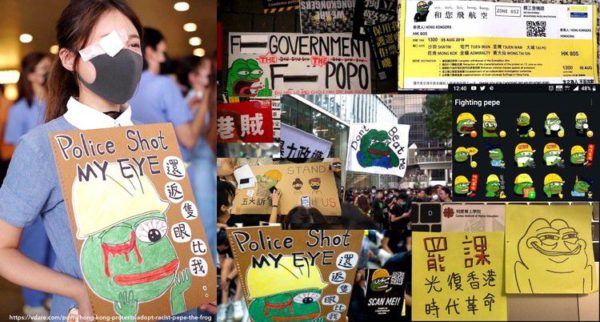
You know who else shows solidarity with the Hong Kong protests? That’s right—everyone’s favorite deplorable frog!

Now that’s a dank meme.

I’m curious: does this make Ng a white supremacist for showing solidarity with people who use such a rascist hate symbol? Does it make Cory Doctorow a dog whistler to the far right for appealing to these obviously racist deplorables?

Of course not, but that’s the level of insanity we’ve fallen to.

I am a past recipient of the John W. Campbell Award for Best New Writer (2000) as well as a recipient of the John W. Campbell Memorial Award (2009). I believe I’m the only person to have won both of the Campbells,

All red flags to deplorable readers like me,

which, I think, gives me unique license to comment on Ng’s remarks, which have been met with a mixed reception from the field.

I think she was right – and seemly – to make her re­marks. There’s plenty of evidence that Campbell’s views were odious and deplorable.

There’s that word: “deplorable.” Whenever someone uses it unironically, it’s a sure sign that they hate you. It’s also a sign that they don’t actually have a good argument.

It wasn’t just the story he had Heinlein expand into his terrible, racist, authoritarian, eugenics-inflected yellow peril novel Sixth Column.

I haven’t heard of that one. Thanks for the recommendation, Cory! I’ve already ordered it.

Nor was it Campbell’s decision to lean hard on Tom Godwin to kill the girl in “Cold Equations” in order to turn his story into a parable about the foolishness of women and the role of men in guiding them to accept the cold, hard facts of life.

Okay, I call bullshit. “Cold Equations” wasn’t about the “foolishness of women,” it was about how when our inner humanity comes into conflict with the hard realities of the universe, the hard realities always win.

Switch the genders—a female pilot and a teenage boy stowaway—and the story still works. Switch the endings—have the pilot decide to keep the stowaway, dooming himself and the sick colonists—and it does not.

In fact, it makes the girl even more of a hapless, weak feminine stereotype. Stepping into the airlock voluntarily is an act of bravery. In some ways, she’s stronger than the pilot—and that’s kind of the point.

The thing that makes “Cold Equations” such a great story is that it functions as something of a mirror. It’s the same thing with Heinlein: those who see him as a fascist are more likely to be authoritarians, while those who see him as a libertarian are more likely to be libertarians themselves. After all, fascism is “citizenship guarantees service,” not “service guarantees citizenship.”

It’s also that Campbell used his op-ed space in Astound­ing to cheer the murders of the Kent State 4. He attributed the Watts uprising to Black people’s latent desire to return to slavery.

Was John Campbell a saint? No, and I don’t think anyone’s claiming that. In the words of Ben Shapiro, two things can be true at once: John Campbell had some racist, sexist views, and stripping his name from the award is wrong. (Also, that Doctorow is full of shit.)

The Campbell award isn’t/wasn’t named after him because he was a perfect, flawless human being. It was named after him because of his contributions to the field. If we’re going to purge his name from the award, are we also going to purge all of the classic golden-age books and stories that he edited, too? Are we going to have the digital equivalent of a book burning? Because that strikes me as a rather fascist thing to do.

These were not artefacts of a less-englightened [sic] era. By the standards of his day, Campbell was a font of terrible ideas, from his early support of fringe religion and psychic phenomena to his views on women and racialized people.

What are the standards of our own day? In what ways are we less-enlightened? Are future generations likely to accuse Doctorow of being a “font of terrible ideas,” just like he accuses Campbell here?

Do unborn black lives matter? If Trump is truly a fascist, why does the left want him to take all our guns? Is it okay to be white? Is Islam right about women? Is transgender therapy for prepubescent children just another form of conversion therapy? Are traps gay?

When you free your mind to explore new ideas, a lot of them are bound to be terrible. It’s simply Sturgeon’s law. So is Doctorow criticizing Campbell for having an open mind, or for not conforming to Doctorow’s values and beliefs?

Who’s supposed to be the fascist again?

So when Ng held Campbell “responsible for setting a tone of science fiction that still haunts the genre to this day.

I’m pretty sure that taking hormone blockers and getting your balls cut off makes you a hell of a lot more sterile than anything else. Lesbians, gays, transgenders, queers—all of these tend to be sterile as a general rule. Most babies are still made the old-fashioned way.

Male.

Isn’t her word choice kind of sexist here? I mean, she could have used the word “patriarchal,” but she didn’t. She. Deliberately. Used. The. Word. “Male.”

White.

Is she saying that it isn’t okay to be white?

Exalting in the ambitions of imperialists and colonisers,

Come on, Ng. Let’s not be racist. There were plenty of imperialists and colonizers who weren’t white Europeans. After all, how can we forget Imperial Japan and the Rape of Nanking? Now that was an ambitious massacre. The Turks also ran a pretty brutal empire, as did the Zulus and the Aztecs. You can’t tell me that cutting out the beating hearts of more than 80,000 prisoners to rededicate your temple isn’t ambitious.

settlers and industrialists,”

Find me one place that was not built by “settlers.” Find me one human being on this planet who has not benefitted from “industrialists.” Who do you think makes the vaccines and antibiotics? Who do you think makes machines that harvest your food?

Just for a single day, I would like to see all of these anti-capitalist types live without any of the benefits that capitalism and modern industry provide.

she was factually correct.

And yet, so completely full of shit.

In the words of Andrew Klavan, you can’t be this stupid without a college education.

Not just factually correct: she was also correct to be saying this now.

Because it’s [current year]!

Science fiction (like many other institutions) is having a reckoning with its past and its present. We’re trying to figure out what to do about the long reach that the terrible ideas of flawed people (mostly men) had on our fields.

The best way to fight a terrible idea is to allow it out in the open while fostering freedom of speech. In the words of Andrew Breitbart, sunlight is the best disinfectant.

The reckoning that Doctorow is calling for is something that’s already built into the field. Science fiction is constantly evolving and revisiting its past. Good science fiction not only builds on the stuff that came before, it critiques it while taking the ideas in a new direction.

We don’t need to tear down the legacy of the giants in the field who came before us; we simply need to build up our own legacies for the generations that come after us. But that’s not what Ng and the social justice warriors want to do.

It isn’t a coincidence that the traditionally published side of the field is rapidly losing market share as the SF establishment seeks to purge everything that could possibly offend their progressive sensibilities. The people doing the purging can’t compete on the open market because their toxic ideologies don’t resonate with the buying public, so they’re forced to resort to the digital equivalent of burning books and tearing down statues. Meanwhile, indie publishing is eating their lunch.

Get woke, go broke.

We’re trying to reconcile the legacies of flawed people whose good deeds and good art live alongside their cruel, damaging treatment of women. These men were not aberrations: they were following an example set from the very top and running through the industry and through fandom,

Future generations will struggle to reconcile our good deeds and our good art with our cruel and inhuman treatment of the unborn.

None of this is new. All of us are flawed; every generation is tainted with blood and sins that are reprehensible to those that follow. Realizing all this, you would think a little introspection is in order. But the people today who are so eager to throw stones are completely lacking in self-introspection that they can’t—or rather, won’t—see their own blood and sins.

to the great detriment of many of the people who came to science fiction for safety and sanctuary and community.

Is science fiction a “safe space,” or is it the genre of ideas? It can’t be both at the same time. Ideas are inherently dangerous.

It’s not a coincidence that one of the first organized manifestations of white nationalism as a cultural phenomenon within fandom was in the form of a hijacking of the Hugo nominations process.

Bullshit. If you think that the Sad Puppies were white nationalists, you’re either stupid or willfully ignorant (a distinction without a difference).

Larry Corriea’s flagship fantasy series, the Saga of the Forgotten Warrior, is set in an Indian-inspired fantasy world populated entirely by brown people. Brad Torgerson has been happily married to a woman of color for decades. Sarah Hoyt is both latina and an immigrant.

If this article was written three years ago, you would have just called them all racists, but you can’t do that now because “racist” has lost its edge. You’ve cried wolf far too many times, and no one pays attention to those accusations anymore. That’s why you use words like “fascist,” “white nationalist,” and “white supremacist” to describe your enemies—not because you actually believe it, but because those accusations haven’t yet lost their edge.

While fandom came together to firmly repudiate its white nationalist wing, those people weren’t (all) entry­ists who showed up to stir up trouble in someone else’s community. The call (to hijack the Hugo Award) was coming from inside the house: these guys had been around forever, and we’d let them get away with it, in the name of “tolerance” even as these guys were chasing women, queer people, and racialized people out of the field.

Translation: we’re done with paying lip service to “tolerance” and “open-mindedness.” From now on, if you don’t look like us, act like us, or think like us, we’re going to do everything we can to destroy you.

I’m telling you, these people hate us. That’s why they call us “deplorables.” That’s why they paint us as racists and fascists, even when we’re nothing of the sort. They don’t want to listen to us. They don’t want to give us a fair hearing. They want to destroy us.

Stripping Campbell’s name from the Campbell Award is just another example of this toxic cancel culture. It isn’t about reckoning or reconciliation. It’s a naked power grab.

Those same Nazis went on to join Gamergate, then became prominent voices on Reddit’s /r/The_Donald, which was the vanguard of white national­ist, authoritarian support for the Trump campaign.

See, this is why I can’t trust you, Cory. Gamergate had legitimate grievances with Anita Sarkeesian, Zoe Quinn, and Gawker. Trump supporters had legitimate reasons to want to stop Hillary Clinton from becoming president. Yet you casually dismiss all these people as deplorables, racists, and fascists without even listening to them.

That’s intelluctually dishonest, Cory. It’s also a form of gaslighting.

The connections between the tales we tell about ourselves and our past and futures have a real, direct outcome on the future we arrive at. White supremacist folklore, including the ecofascist doctrine that says we can only avert climate change by murdering all the brown people, comes straight out of SF folklore, where it’s completely standard for every disaster to be swiftly followed by an underclass mob descending on their social betters to eat and/or rape them (never mind the actual way that disasters go down).

I don’t think Cory Doctorow has any idea what actually happens when society collapses. When the thin veneer of civilization gets stripped away, people will eat each other. We’ve seen this just recently in Venezuela, Syria, and Mexico. Here in the US, we can see the seeds of our own collapse in Chicago, Portland, San Francisco, Baltimore, and Detroit (all very blue and progressive cities, by the way).

Also, I don’t think Cory Doctorow has any idea what he’s talking about when he says “white supremacist folklore.” What is that even supposed to mean? Just a couple of paragraphs ago, he called all the Sad Puppies “white nationalists,” and that obviously isn’t true. By “white supremacist folklore,” does he mean all the science fiction that doesn’t fit his radical progressive political ideology? Once again, he’s painting with an overly broad brush.

Also, notice how he uses “white supremacist” instead of “racist.” He can’t use “racist” because that word has been overused. Give it a couple of years, and “white supremacist” will lose its edge as well.

When Ng picked up the mic and told the truth about Campbell’s legacy, she wasn’t downplaying his importance: she was acknowledging it. Campbell’s odious ideas matter because he was important, a giant in the field who left an enduring mark on it. No one questions that. What we want to talk about today is what Campbell’s contribution was, and what it means.

Whenever the people on the progressive left claim that they want to have a “conversation” about something, what they really mean is “shut up and let me tell you how I’m right and you’re wrong.” There is no way to have an honest dialogue with these people, because they will not listen to us “deplorables.” Cory Doctorow has already demonstrated this with his blanket accusations against all the supporters of Gamergate, the Sad Puppies, and President Trump.

These people don’t want to talk about “what Campbell’s contribution was, and what it means.” They want to purge him from the field. Metaphorically, they want to burn his books and tear down his statues.

Look, I’m not trying to defend all of Campbell’s views here. I’m all for having an honest discussion about his bad ideas and how they’ve influenced the field. But I don’t believe I can have that discussion with people who clearly hate me, and will do whatever it takes to cancel and destroy me.

After Ng’s speech, John Scalzi published a post where he pointed out that many of the people who were angry at Ng “knew Campbell personally,” or “idolize and respect the writers Campbell took under his wing… Many if not most of these folks know about his flaws, but even so it’s hard to see someone with no allegiance to him, either personally or professionally, point them out both forcefully and unapologetically. They see Campbell and his legacy ab­stractly, and also as an obstacle to be overcome. That’s deeply uncomfortable.”

Scalzi’s right, too: the people who counted Campbell as a friend are au­thentically sad to confront the full meaning of his legacy. I feel for them.

Do you really, though?

It’s hard to reconcile the mensch who was there for you and treated his dog with kindness and doted on his kids with the guy who alienated and hurt people with his cruel dogma.

Did you catch the sneaky rhetorical trick that Doctorow uses here? He assumes that we’ve already accepted his argument that Campbell’s views were odious enough to have his name stripped from the award. Now he’s using an appeal to emotion to smooth it over.

Gaslighting of the highest order.

Here’s the thing: neither one of those facets of Campbell cancels the other one out. Just as it’s not true that any amount of good deeds done for some people can repair the harms he visited on others, it’s also true that none of those harms can­cel out the kindnesses he did for the people he was kind to.

Or cancel all of his contributions to the field?

If Doctorow actually believes all this, why does he support Ng, who argues that everything Campbell did should be cancelled out by his most odious views? If anything, this is an argument against stripping Campbell’s name from the award.

Life is not a ledger. Your sins can’t be paid off through good deeds. Your good deeds are not cancelled by your sins. Your sins and your good deeds live alongside one another. They coexist in superposition.

Yes, and you should never underestimate the capacity of the human mind to believe two mutually exclusive ideas at the same time, especially when his name is Cory Doctorow.

You (and I) can (and should) atone for our misdeeds.

Not in today’s cancel culture, where everything you’ve accomplished can be erased by the one bad thing you tweeted or posted to Facebook ten years ago. There’s also no forgiveness or repentance, when you will be forever remembered for the worst thing you said or did.

We can (and should) apologize for them to the people we’ve wronged.

No. Giving a public apology is the absolute worst thing you can do in today’s cancel culture, because your enemies will smell blood in the water and come in for the kill.

Never apologize to a mob.

We should do those things, not because they will erase our misdeeds, but because the only thing worse than being really wrong is not learning to be better.

Oh, this is rich.

You first, Cory. Have you taken a good, hard look in the mirror? Have you really, truly asked yourself “what if I’m wrong?”

I don’t see eye to eye with Vox Day about everything, but he was right about this: you social justice types always lie, you always double down, and you always project your own worst faults onto your enemies. That’s why you’re so blind to your own hypocrisy, even when it’s staring you in the face.

I completely and totally agree that we should all strive to admit when we’re wrong and learn to be better for it, but you’re not in a position to tell me that, Cory. Not after painting all us “deplorables” with such a broad brush.

People are flawed vessels. The circumstances around us – our social norms and institutions – can be structured to bring out our worst natures or our best. We can invite Isaac Asimov to our cons to deliver a lecture on “The Power of Posterior Pinching” in which he would literally advise men on how to grope the women in attendance, or we can create and enforce a Code of Conduct that would bounce anyone, up to and including the con chair and the guest of honor, who tried a stunt like that.

Honest question: was the sexual revolution a mistake?

Asimov, Heinlein, Farmer, and all the other science fiction writers who explored questions of sexuality back the 60s and 70s were speaking to a culture that had abandoned traditional morality for a new, “free love” ethic. In other words, having thrown out all the rules, they now felt free to explore their newly “liberated” sexuality.

Was Asimov wrong in his attempt to rewrite our sexual norms? Personally, I believe it was, but I come from a religious tradition that still practices total abstinence before marriage and total fidelity within. Even then, it still depends on context. Groping a random stranger at a science fiction convention is obviously wrong, but playfully pinching my wife when the two of us are alone? Not so much.

I find it really fascinating that the woke-scolds of the left have become far more puritanical and prudish than the religious right ever was. Within the bonds of marriage, most of us religious types are actually very sex positive—after all, where do you think all those babies come from?

And Ng calls us “sterile.” Heh.

We, collectively, through our norms and institutions, create the circum­stances that favor sociopathy or generosity. Sweeping bad conduct under the rug isn’t just cruel to the people who were victimized by that conduct: it’s also a disservice to the flawed vessels who are struggling with their own contradictions and base urges.

Fair enough, but there’s nothing generous about today’s cancel culture, which is frankly pathological in the way it defines everyone by their worst flaws and basest urges.

Creating an environment where it’s normal to do things that – in 10 or 20 years – will result in your expulsion from your community is not a kindness to anyone.

But how can we know what will and will not be acceptable in 10 to 20 years?

Twenty years ago, it wasn’t considered hate speech to say that there are only two genders. Ten years ago, “micro-aggressions,” “safe spaces,” and “white privilege” were not a thing. In fact, we’d just elected our first black president, bringing an end to our racially divisive past. /sarc

In the next 10 to 20 years, will we adopt all the theories and ideologies of the radical left? Or will the pendulum swing back in favor of more conservative morals and standards? We don’t know yet, because the future has not been written, and frankly, it’s not our place to write it. Every generation reinvents the world.

There are terrible men out there today whose path to being terrible got started when they watched Isaac Asimov grope women without their consent and figured that the chuckling approval of all their peers meant that whatever doubts they might have had were probably misplaced. Those men don’t get a pass because they learned from a bad example set by their community and its leaders – but they might have been diverted from their path to terribleness if they’d had better examples.

Certainly. I’m just not convinced that these virtue signalling, social justice warrior types are the examples that we should hold up.

They might not have scarred and hurt countless women on their way from the larval stage of shittiness to full-blown shitlord, and they themselves might have been spared their eventual fate, of being disliked and excluded from a community they joined in search of comradeship and mutual aid. The friends of those shitty dudes might not have to wrestle with their role in enabling the harm those shitty dudes wrought.

I’m confused. Does Doctorow believe that women are strong and independant, or does he believe that they’re tender, fragile creatures that need to be protected from socially inept, “larval” shitlords? I mean, I can see how they need to be protected from predators, since all of us—women and men—are vulnerable to various degrees… but you’d think that a strong, independent woman would be able to hold her own against a socially incompetent geek who is simply a “flawed vessel.”

Since her acceptance speech, Ng has been subjected to a triple-ration of abuse and vitriol,

Join the club.

much of it with sexist and racist overtones.

You keep using those words. I do not think they mean what you think they mean.

But Ng’s bravery hasn’t just sparked a conversation, it’s also made a change. In the weeks after Ng’s speech, both Dell Magazines (sponsors of the Campbell Award) and the James Gunn Center at the University of Kansas at Lawrence (who award the other Campbell Award at an event called “The Campbell Conference”) have dropped John W. Campbell from the names of their awards and events. They did so for the very best of reasons.

No, they did it because they were bullied into it by the woke-scolds.

As a winner of both Campbell Awards, I’m delighted by these changes. Campbell’s impact on our field will never be truly extinguished (alas),

Yes, because what you really want is to tear down all the statues and burn all the books. Who’s the fascist again?

but we don’t need to celebrate it.

Back when the misogynist/white supremacist wing of SF started to publicly organize to purge the field of the wrong kind of fan and the wrong kind of writer, they were talking about people like Ng.

Bullshit.

The entire point of the Sad Puppies (which Doctorow intentionally and dishonestly mischaracterizes as “the misogynist/white supremacist wing of SF”) was to bring more attention to a diversity of conservative and libertarian writers, many of whom are also women and people of color. We were the ones who were excluded, not the ones doing the excluding. In fact, we invented the words “wrongfan” and “wrongfun” to describe the unfair way that we were treated by the mainstream establishment.

Please stop trying to gaslight us, Mr. Doctorow. Please stop projecting your own faults onto us, and recognize your own hypocrisy which is laced throughout this article. I don’t expect a public apology, since I wouldn’t offer one myself, but do wish for once that you would just listen to the people on the other side of these issues. Just. Listen.

I think that this is ample evidence that she is in exactly the right place, at the right time, saying the right thing.

Meanwhile, traditional publishing and the SF establishment will continue to implode, and indies will continue to eat your lunch.

If all you want is to be king of the ashes, you can have it. The rest of us are off to build the new world.
2019-10-17 Newsletter Author’s Note

This author’s note originally appeared in the October 17th edition of my author newsletter. To subscribe to my newsletter, click here.

I had a major realization about my creative process while writing “Sex, Life, and Love under the Algorithms.” My original goal was to take a short break from The Stars of Redemption in order to work through a creative block. Instead, I came away with a plan that could revolutionize the way I write everything.

The major realization was that my natural writing length is between 10k and 30k words. When I try to write short stories, they tend to balloon very quickly into something longer. But when I try to write novels, I always run into a creative block somewhere in the middle, usually around the 30k-40k word mark.

This doesn’t mean that I can’t write novels; just that I have to find ways to work through this problem. I remember asking Brandon Sanderson a question about this ten years ago while taking his writing class:

Me: So I have this problem, where every time I try to write a novel, I always get stuck in the middle and have to put it aside for a few months before I can finish it.

Brandon: But you finish it, right?

Me: Uh, yeah. But—

Brandon: Then what’s the problem? So long as you end up with a finished novel, your creative process is still working. It might not work the same as someone else’s, but it works.

Ever since then, that’s basically been my process. I work on a novel until I hit a creative block, then lay it aside and pick up another half-finished novel and work on it until I either finish it or hit another creative block, at which point I lay it aside to work on something else.

But in 2017, I decided that wasn’t good enough. I wasn’t producing novels fast enough to keep up the rigorous release schedule that I needed in order to stay relevant in the indie publishing world. So over the course of the next two years, I developed an outlining method to write faster, cleaner, and more efficiently.

I’ve written three or four novels using this new method, and in spite of all my best efforts, I always find myself getting stuck somewhere in the middle—in other words, after surpassing my natural writing length. At the same time, I still haven’t managed to write more than 2-3 novels per year.

It’s very difficult to keep writing on something that won’t be finished for months when your sales are starting to flag and you know you need a new release to boost everything again. Some people thrive on that sort of pressure, but not me.

That’s why “Sex, Life, and Love under the Algorithms” was so refreshing to write. From start to finish, it only took a month to write (and the only reason it took that long was because I was taking it easy). No creative blocks. No long breaks. What’s more, I now have a story to submit to the major markets, or self-publish, or do whatever else I can think of to earn money and reach new readers.

This made me wonder: what if I could write all of my novels this way?

In the golden age of science fiction, there was this thing called the “stitched novel.” Most SF writers specialized in short stories, but found it much more difficult to write novels. The solution they found to this problem was to stitch together several short stories that took place in the same world, and turn that into a novel. Asimov’s Foundation books were written this way, for example.

What if, instead of stitching together a novel after the fact, I used my novel outlines to come up with short stories or novelettes that I could later assemble into a finished novel? Each story would be a complete story in itself, and I might only reuse half of it in the novel, or rewrite it from a different character’s point of view.

Not only would I avoid hitting creative blocks, but I’d also be able to get paid during the novel-writing process itself, and also have more frequent new releases. I would also have more material to submit to the major magazines and other traditional short story markets, potentially getting my name out that way.

To keep my readers from paying for the same story twice, whenever I self-published one of these stories, I would make it free for the first couple of weeks. I would also retire most of these stories after the novel itself came out, though I might use one or two of them to help promote it.

There are a couple of novels I still need to finish using the old method. The Stars of Redemption is one of them, and I should probably also finish the Twelfth Sword Trilogy before doing anything too experimental. But I have some new story ideas that could really work out well with this assembled novel technique. Also, I think it’s time to retire the Star Wanderers novellas and combine them into a single novel, which could serve as a proof-of-concept.

I have no idea if this plan will work or not, but I figure it’s worth a try. If breaking things down to my natural writing length enables me to write more novels in the long run, that would be fantastic. And if the quality of my novels goes up because the short stories help to flesh out things like character and setting, so much the better.

2019-10-10 Newsletter Author’s Note

This author’s note originally appeared in the October 10th edition of my author newsletter. To subscribe to my newsletter, click here.

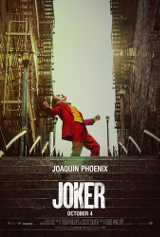
I saw Joker yesterday. Don’t worry, I won’t give away any spoilers. It was every bit as incredible as I expected it to be, and yet in some key ways, not what I was expecting at all.

First, the basics. This movie is dark. Very, very dark. I believe this is the darkest, most terrifying iteration of the Joker ever made. Part of that is because it is so realistic. There are no magical superpowers, no aliens or infinity stones or any of that stuff. This story could have already happened in our world. It could yet happen.

That said, it is clear that the people who made it have deep respect and appreciation for the franchise. It isn’t like The Last Jedi, where the filmakers explicitly tried to subvert all of the things the fans love about Star Wars. In many ways, Joker is a homage to all of the iterations of Batman that have come before it. This could just as well be the origin story of Cesar Romero’s Joker as Heath Ledger’s.

Joaquin Phoenix is incredible. I didn’t think it was possible to do a better Joker than Heath Ledger, but Phoenix has done it. He really draws you into the Joker’s head, and his transformation from a broken misfit to a sociopathic supervillian is believable, compelling, and utterly terrifying. He earned every moment of the eight-minute standing ovation this movie received on its debut.

There is a dramatic arc to violence that very few movies, TV shows, or even books show in its entirety. When a character swings an axe at someone’s head, the scene usually cuts. You know what happened. But in Joker, you see everything. It’s a lot like Blade Runner in that respect. The bodycount is not that high, but the violence really hits you, and stays with you.

If you aren’t in touch with your dark side, this movie will profoundly disturb you. It will also screw with your mind. If you struggle with PTSD, this is probably one to avoid, unfortunately. Even if you think you like dark movies, this one may be too much for you. But if you do enjoy it, you will probably want to see it again, and again. There are so many layers to this movie that a single viewing is not enough to fully take it all in.

Without question, Joker is a major cultural landmark. It is, above all else, a brutally clear and damning indictment of all of us. In a world convinced that guns cause violence, Joker focuses on mental health and the cracks in our healthcare system. In a world obsessed with priviledge and inequality, Joker is about our pathological lack of empathy and compassion.

Part of the controversy surrounding this movie is the gulf between the critics who hate this movie, and the general audience, which loves it. After watching it, I think the critics can be divided into three camps.

First, there are the social elites who are so out of touch with the reality that the rest of us live in that Joker is anathema to their lived experience. It’s not that they hate it, so much as that they’re confused and bewildered by it. They are also bewildered by Brexit and the election of Donald Trump.

Second, there are the wokescolds who hate Joker because they recognize it as an indictment of themselves. They deride it as an “incel movie” because they know that their woke politics are partly responsible for creating a culture where “incels” are a thing, and that drives these people to violence.

I actually think that this isn’t the case for most of the critics. Sargon of Akkad recently put out a video on this, and while I agree with him that the wokescold critics see Joker as a mirror, I don’t think they see themselves as the people who drive the Joker into psychopathic madness. Instead, I think that the vast majority of the wokescold critics see themselves in the Joker.

In Milo Yiannopoulos’s interview with Jordan Peterson, he made the very salient point that the angriest, most radical people on the far left are, in their personal lives, broken and in pain. Often, they are victims of abuse. Personally, I would expand that to include many on the alt-right as well, but the point still stands.

The wokescolds want to see themselves as heroes working to overcome systems of oppression and inequality. They see themselves as builders, but Joker shows them that all they really want is to burn it all down. That’s why I believe this movie has provoked such a virulent backlash from the wokescolds: because it is a mirror that shows them as they really are, and they are terrified of what they see in it.

Without love, it is impossible for our culture and society to heal. That, I believe, is Joker’s ultimate message. The reason that Arthur becomes the Joker is because no one ever showed him any compassion, empathy, or love. He laughed through the pain until the pain made him laugh, and became the villain that Gotham deserved.

How often do we really listen to each other? How often do we reach outside of ourselves and genuinely connect? A recent study shows that the average American hasn’t made a single new friend in the last five years. Is that you? Is that your neighbor? The family across the street, or the guy who lives down the hall?

It doesn’t take much to reach out. Sometimes, all it takes is a smile—but isn’t that the joke? Somewhere, I hear maniacal laughter…

2019-10-03 Newsletter Author’s Note

This author’s note originally appeared in the October 3rd edition of my author newsletter. To subscribe to my newsletter, click here.

When Mrs. Vasicek and I got married, we decided that there would be no smart devices or screens in our house beyond the master bedroom. Our reasoning had mostly to do with personal health and avoiding bad habits, though there was also some concern about data collection and privacy.

One of the things I really like about this rule is that it keeps me from becoming too attached to my smart phone. Most of us are never be more than an arm’s reach away from our phones, and over time we come to feel almost like they’re a physical part of us. But every night, Mrs. Vasicek and I leave our phones to get ready for bed, and we don’t pick them up again until after we’re fully awake.

I have to admit that I had withdrawals at first, but now I feel much better. My phone is just another tool now; it no longer feels like an extension of myself.

Another thing I really like about this rule is how it sets apart a large section of the house that is free from digital distractions. The bedroom is now a really great place to read. Our one exception to the no screens rule is my Kindle Paperwhite, which uses e-ink anyway so it’s not as bad as an LED screen. It’s also seven-and-a-half years old, so web browsing isn’t really practical.

The other thing I really like is how it sets my mind at ease to know that there’s at least one part of the house where there aren’t any digital recording devices surveilling and collecting data on us. (Please don’t tell me that the Paperwhite is recording me too!)

In the last few years, it seems that Big Tech has been increasingly intrusive in our lives. Over the summer, it seemed like every week there’d be a new story about a Silicon Valley whistleblower, or an undercover investigation, or even a senior Google executive coming out on the record about censorship, bias, and control.

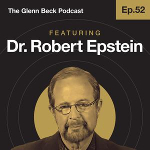
A couple of weeks ago, Glenn Beck did a fascinating interview with Robert Epstein, a researcher who found compelling evidence that Google has both the capability and the motivation to sway major national elections. (Epstein voted for Clinton in 2016, so the interview wasn’t partisan.) It reminded me of a presentation that Chamath Palihapitiya (senior executive at Facebook from 2007 to 2011) gave at Stanford in 2017, where he talked about social media addiction and explained why he doesn’t use social media nor allow his children to do so.

It’s becoming increasingly difficult to navigate our modern, complex world in a way that doesn’t surrender most of our agency to Big Tech and Silicon Valley. It’s also becoming increasingly ambiguous how much of that agency is an illusion, with companies like Facebook and Google influencing us in ways we aren’t consciously aware of.

As an indie author who depends on Amazon for a large part of my income, I’m very much aware of these issues. It’s part of the reason why I’m working so hard to build and maintain this newsletter, so that I don’t have to depend on Big Tech for my book marketing. It’s impossible to be a career author these days without a plan for navigating this world.

Where are we headed? Science fiction gives us a chilling answer. Right now, it appears that China and the East are going the way of 1984, while the United States and the West are going the way of Brave New World.

But those books were written almost a hundred years ago, and technologies have been developed that Orwell and Huxley couldn’t have even dreamed of. It’s time for a new generation of writers to pick up the torch that they handed off to us.

That’s a big reason why I’m writing “Sex, Life, and Love under the Algorithms.” As for where to go next, I honestly don’t know. So much happening in the world today screams out for new science fiction just to make sense of it all, so when I’m not writing fantasy I’ll probably delve more into that.

Whatever else happens, we’re all in this rabbit hole together.