Where do you keep your books?

Now that we’ve moved back into our old house, unpacking all of our stuff and finding places for it, I just have to wonder… where in the heck do bookish normal people keep all of their books?

My in-laws have a dedicated library in their house, and while we were house-sitting for them, they were gracious enough to clear out several shelves for us so that we could put all of our books (more or less) within easy reach. But our house is a fairly small single family home, with a main floor and a basement. It’s about 2,300 square feet, with four bedrooms and three bathrooms—which is plenty of room for our small family—but there isn’t much space for bookshelves.

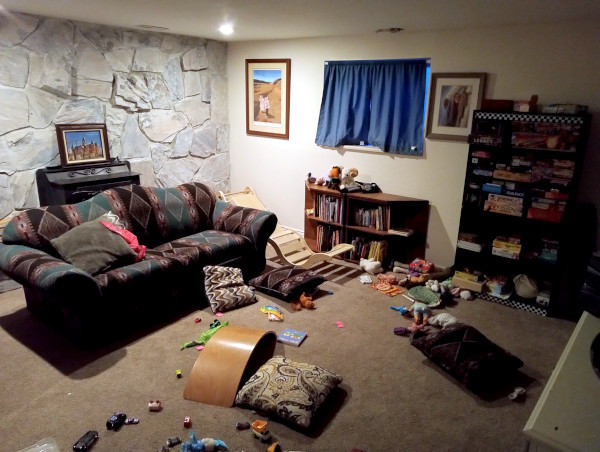
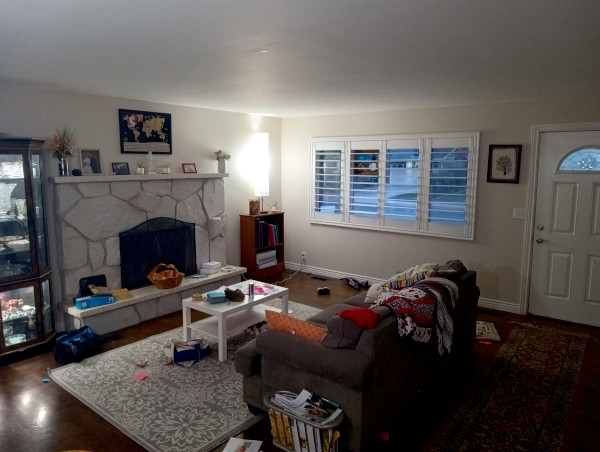
This is our main family room (please excuse the mess—small children and all). It has a little bit of shelf space by the stairs, which we could use for maybe a few dozen books, but we have a lot more than that. Boxes and boxes more. Behind the camera is the kitchen/dining area, so there isn’t much space for books there. And everything else on this floor is already taken, with bedrooms for the kids and a master suite for my wife and me—and my wife doesn’t want to cram all our books in our bedroom. With another small child on the way, I can’t blame her.

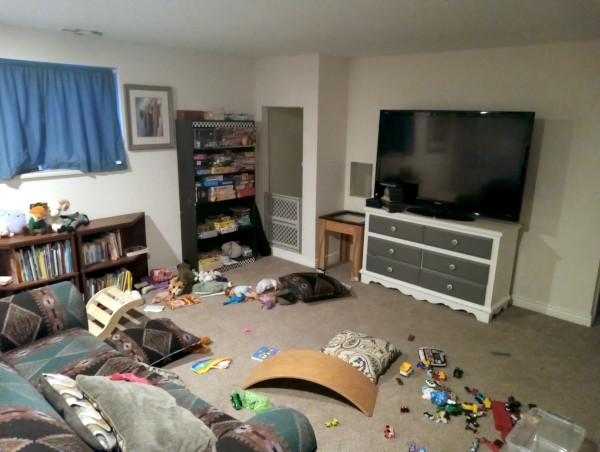
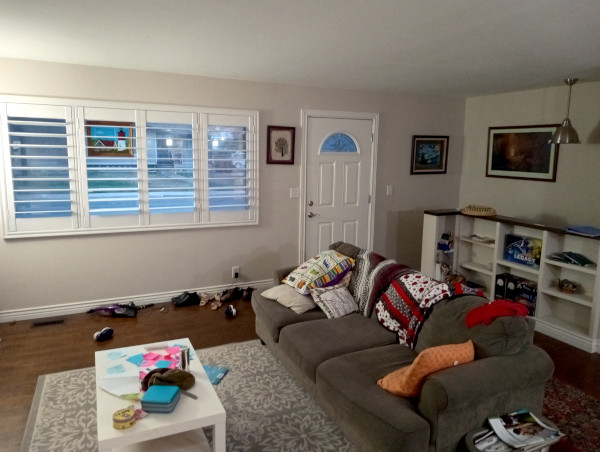
This is the downstairs main room. Again, please excuse the mess—we’re currently using this area as the kids’ play room. The bookshelves either have games or kids’ books, so those are taken. Behind the camera is a kitchenette area that we’re currently using to hold our food storage (and we have a lot of it, so that’s probably not going to change). Besides the main room here, there are two bedrooms, one of which is currently for storage, and the other is an office for my wife and me. Again, there’s not much space for shelves in either of those… and besides, we’d rather have our books out where people can see them (or at least where our kids can easily browse them).

What I suppose we could do is get rid of the massive TV (my wife won it from her work during a holiday raffle, and we don’t use it much, so it wouldn’t be a big deal to downsize) and move the dresser into another room, so that we could use that whole wall for shelves. That might fit all of our books, if the shelves stretched from floor to ceiling. It would be a big project, since we would have to use all of that space—and would probably also have to move the light switch—but it could be done.

Another idea I’ve had is to install shelves in the family room up above the main window. We could probably wrap it around most of the room, even into the dining room area if we had to. Have any of you done something like that? I’m a little bit worried it would make the room feel cramped, but it is a place where we could put a shelf.

Other than that, I’m kind of at a loss. I could try to get rid of most of my books, but I have no idea how successful that would be, since I tend to acquire new ones as quickly as I lose the old ones. It’s a blessing… and a curse. I’m sure that most of you can relate.

In any case, what do you do with all of your books? Where do you keep them? What would you do if you lived in our house?

Interesting take on romantasy

TL:DW; It’s all just porn, and this is why we can’t have nice things.

This YouTuber has some very strong opinions. I don’t agree with all of her videos, but her arguments are always solid, so it’s always interesting to hear what she has to say.

On this issue, though, I agree with her almost completely. Almost all romantasy is porn, and its meteoric rise is a plague on fantasy books and literature.

Fantasy from A to Z: U is for Unicorns

If you were expecting a post on unicorns or other mythical beasts, I hate to disappoint you again, but that’s not what this is going to be. Instead, I want to write a bit about that most mythical of all human creatures: the full-time fiction writer.

Okay, perhaps we’re not that mythical. After all, Brandon Sanderson estimates that of all his students over the years, perhaps as many as 10% of the ones who set out to become full-time writers actually make that dream into a reality. I sometimes wonder: would Brandon count me as one of those 10%? Should he? The answer to that is… complicated. 

One of the first questions I get whenever I tell people that I’m a writer is “oh, wow—how is that working out for you?” Which is really a roundabout way of asking how much money I make, and whether I’ve been able to turn it into a full-time career. I am not (yet) a major bestselling author, and the closest thing I’ve had to a breakout thus far has been my (now unpublished) Star Wanderers novella series, which managed (mostly by accident) to hit the algorithms correctly back when a permafree first-in-series with lots of direct sequels was the best path to success. Then the publishing landscape changed, the algorithms shifted to favor pay-to-play advertising, and my books got left behind.

I will admit that if it weren’t for my wife’s income, I wouldn’t be able to pursue writing full-time. As a family, we’re following a path very similar to my Scandinavian ancestors, where the wife tends the farm while the husband goes off a-viking. In other words, my wife has the stable, traditional career that provides our family with some degree of security, while I have the more risky career that has the potential to catapult us into transformative levels of wealth and prosperity. We’re doing just fine, but it does sometimes feel like my Viking ship has yet to land ashore.

Because here’s the thing: something like 90% of the money in book publishing (after the booksellers and publishers and other middlemen take their often-exorbitant cuts) goes to less than 1% of the writers who actually make any money (and something like 30% of kindle books never sell a single copy). 

For every Brandon Sanderson, there are thousands—perhaps hundreds of thousands—of published authors who write on nights and weekends while holding down a day job to pay the bills. My writing contributes enough to the family budget to justify pursuing it, but if I were still single, I would need at least a part-time job.

Indie publishing has created a lot of opportunity for authors to make a career out of their writing, and there are many successful indies who are making a decent living at it. At the same time, indie publishing has also massively exploded the number of books that are published, so the proportion of full-time to still-aspiring authors is probably about the same (and may have actually tilted the other way). 

In recent years, it has very much turned into a zero-sum pay-to-play game, especially with advertising. From what I can tell, most authors lose money on advertising, and most of those who are making money are spending upwards of $10,000 each month to make $11,000. The elite few who learn how to successfully game the algorithms to blow up their books often put their writing on the backburner to launch their own companies or provide publishing services, leveraging their expertise to make a lot more than they otherwise would.

The algorithms are changing books in some very strange ways. If J.R.R. Tolkien or Roger Zelazny or Robert E. Howard were writing today, would they be able to make it in today’s publishing environment? 

Howard’s Conan stories would either have to be a lot sexier, or else would have to include the sort of tables and character stats you find in LitRPG. His covers would also be a lot more anime, and show a ridiculous amount of cleavage (which he actually might not have had a problem with, judging from some of the old Weird Tales covers). 

Zelazny’s Chronicles of Amber would all be far too short to make it in Kindle Unlimited—to make it in that game, you have to have super long books that max out on page reads, in order to maximize advertising ROI so that you can outbid your competitors. And if you aren’t winning the pay-to-play advertising game, your KU books will sink like rocks. Also, Zelazny took way too much time between books. Gotta work on that rapid release strategy, Roger.

As for Tolkien… hoo boy, there’s an author who did everything wrong. Decades and decades spent polishing his magnum opus, with a short prequel novel that falls squarely in the children’s category (totally different genre) as the only other fantasy book published in his lifetime. I suppose he could have serialized Lord of the Rings, except nothing really happened in episode 1: A Long-Expected Party. Certainly not anything that would adequately foreshadow all the dark and epic battles to come. Perhaps if he followed a first-in-series permafree strategy, and just gave away Fellowship of the Ring for free… and then made The Hobbit his reader magnet for signing up for his email list… maybe that could have worked? After all, there’s always BookBub…

I jest, of course. Each of these authors’ books became classics, not because of their marketing strategy, but because they hit the cultural zeitgeist in exactly the right way. But is it possible for an author to do that today without also getting a boost from the algorithms? Or do the algorithms have more power to shape our culture than anything else? Those are disturbing questions, and I honestly do not know the answer.

And then there’s the question of AI, which is massively disrupting all of the creative fields. In the interest of full disclosure, I am actually quite sanguine about generative AI, and have already been working to incorporate it into my creative process. I’m not a fan of AI slop, but I don’t feel particularly threatened by it. I decided a long time ago that if AI ever became good enough to write an entertaining book, it still would never be able to write a Joe Vasicek book. That’s insulated me from most of the doom porn out there.

Right now, there is a HUGE fight happening between authors like me who are embracing AI, and authors who treat it all as anathema, and have vowed to never use any sort of AI in any of their books (except Grammarly, of course, because… reasons. And Microsoft Word. And…) Frankly, it reminds me of the big debate between indie and traditionally published authors, back before self-publishing had lost its stigma. The biggest difference is that the level of online outrage has been ramped up to 11, mostly as a result of the social media algorithms (which weren’t as robust or as powerful back in the early 2010s). I suspect that we will ultimately settle on a “hybrid” approach, much like we did with publishing, but the sheer level of vitriol has made me wonder about that. 

On the reader end of things, though, it seems like most readers don’t really care if a book was written with or without AI assistance, so long as it’s actually a good book. Which means that there is a real opportunity for authors who 1) know how to tell great stories, 2) have already found and honed their voice, and 3) know how to strike the right balance between the AI and the human elements. 

Which describes my own position almost perfectly. Over the last fifteen years, I’ve read, written, and published enough books that I have a pretty good handle on what makes a great story. I’ve also honed my voice well enough that I can write in it quite comfortably. And as for the balance between AI and human writing, I’ve been working hard on that since ChatGPT burst onto the scene in 2022. Half a dozen books and about a million words later, I’ve learned quite a lot about how to best strike that balance.

Will AI replace authors entirely, making this particular unicorn extinct? I don’t think so. But AI may radically change our concept of what “books,” or “writers,” or “writing” really are. A long time ago, I realized that even if AI became good enough to write a decent book, it would never be able to write a Joe Vasicek book. Only I can do that. Whether or not that’s worth something is up to the readers to decide.
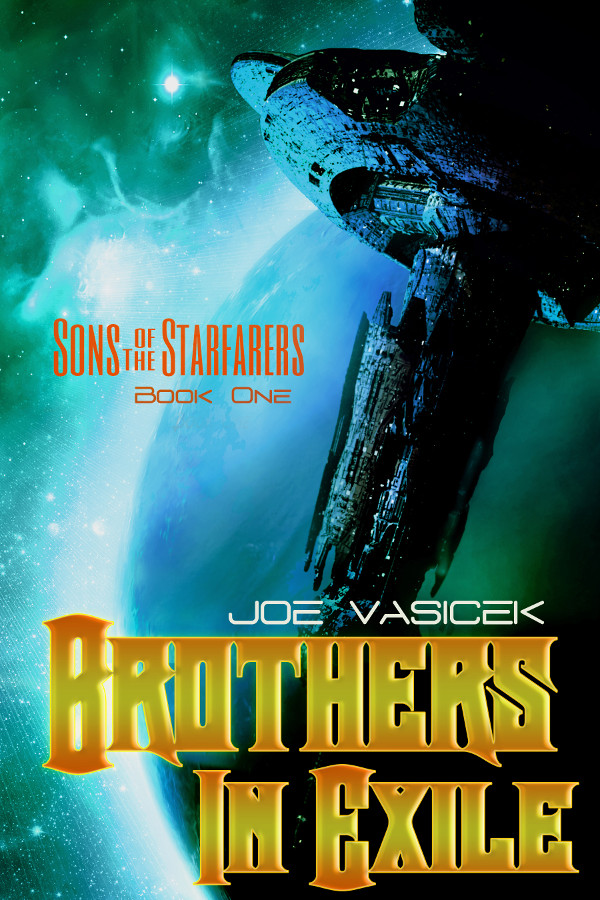
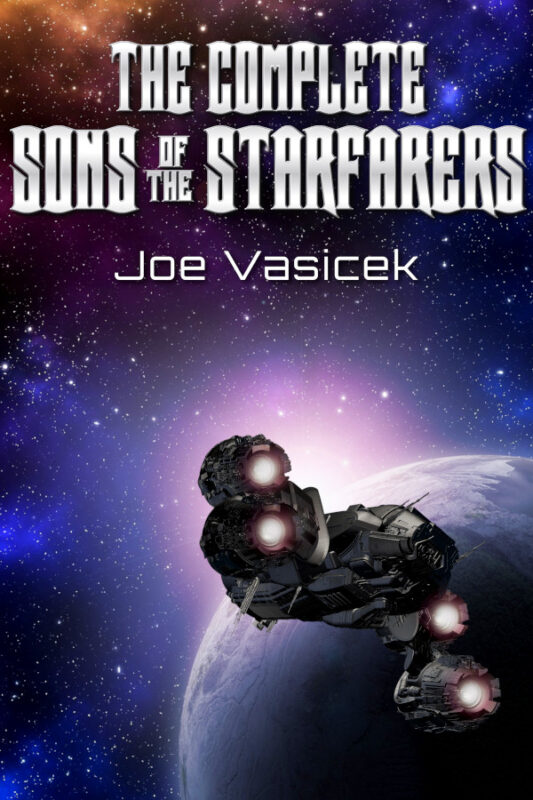
Free Book: Brothers in Exile

This book has been permafree for a while now, but I’m currently running a promotion on it, so it’s worth posting it here. If you like science fiction and you haven’t read many of my books yet, this is a great place to start!

Brothers in Exile

Brothers in Exile

Two brothers, one starship. A girl frozen in cryostasis. A galaxy on the verge of war.

Isaac and Aaron are nothing if not survivors. Their homeworld lost and their people scattered, all they have left is each other. Then, in the Far Outworlds, they find a dead colony with a beautiful young woman frozen in cryostasis. She is also a survivor—and she needs their help.

Order Now!
About the Book
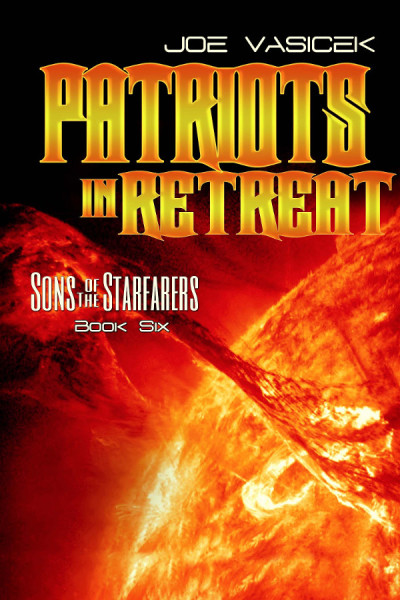
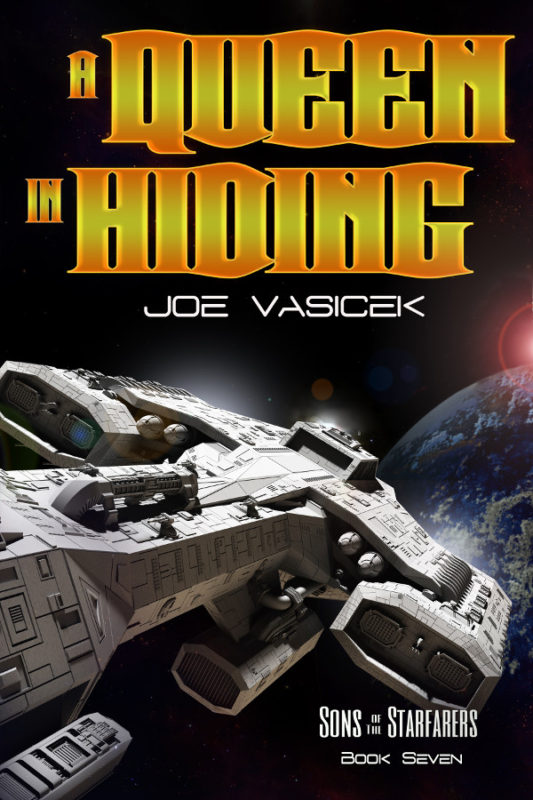
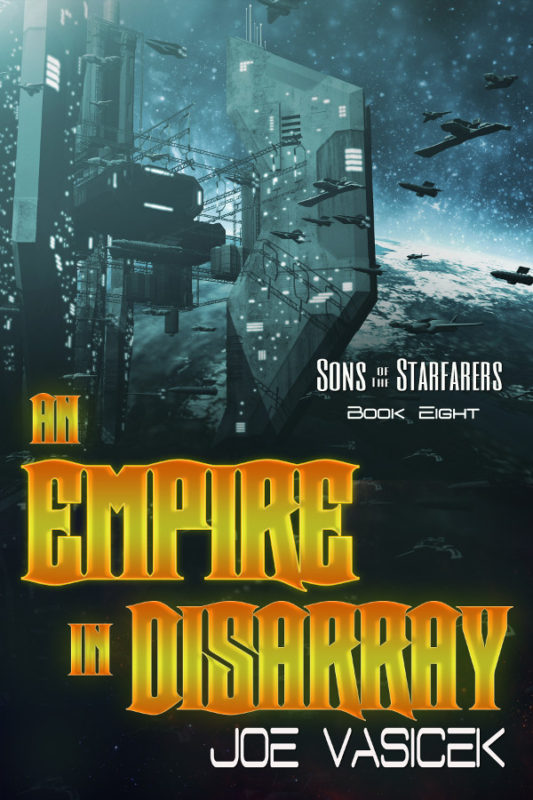
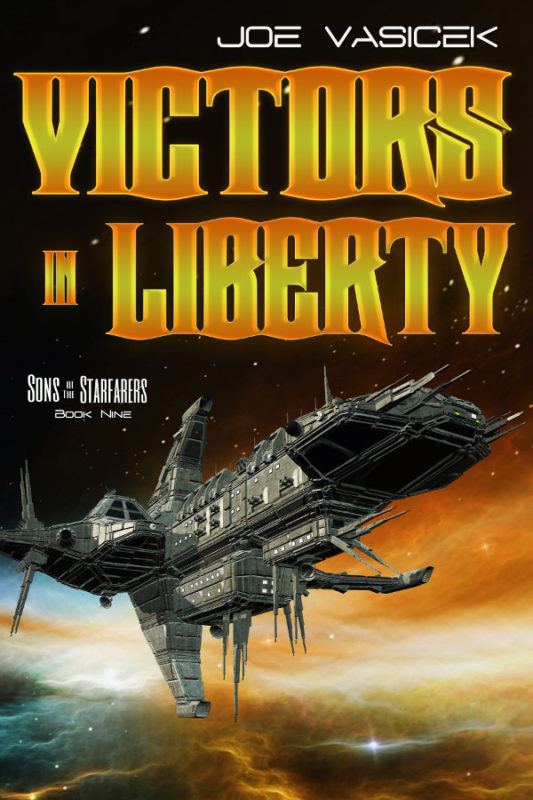
Deep in the Far Outworlds, a derelict space station holds the bones of a long-dead people—and a beautiful young woman locked in cryofreeze. When the star-wandering brothers Isaac and Aaron Deltana find the sleeping girl, they soon realize that they are her only hope for rescue. If they don’t take her, then slavers certainly will. With no way to revive her, they set a course for the New Pleiades in hopes of finding someone who can help. But a storm is brewing over that region of space. After a series of brutal civil wars, the Gaian Empire has turned its sights outward. A frontier war is on the verge of breaking out, and the brothers are about to be caught in the middle of it. They both harbor a secret, though. Somewhere else in the Outworlds is another derelict station—one that they used to call home. That secret will either bind them together or draw them apart in SONS OF THE STARFARERS BOOK I: BROTHERS IN EXILE
Details
Author: Joe Vasicek
Series: Sons of the Starfarers, Book 1
Genres: Action & Adventure, Military, Science Fiction, Space Exploration, Space Opera
Tag: 2014 Release
Publication Year: May 2014
Length: short novel
eBook Price: free!
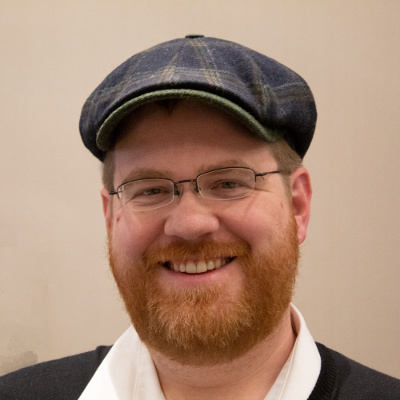
Joe Vasicek

Joe Vasicek fell in love with science fiction and fantasy when he read The Neverending Story as a child. He is the author of more than twenty books, including Genesis Earth, Gunslinger to the Stars, The Sword Keeper, and the Sons of the Starfarers series. As a young man, he studied Arabic at Brigham Young University and traveled across the Middle East and the Caucasus Mountains. He lives in Utah with his wife and two apple trees.

Preview
Some of the links in the page above are "affiliate links." This means if you click on the link and purchase the item, I will receive an affiliate commission. You will not receive any additional charge. As an Amazon Associate I earn from qualifying purchases.

Still moving

We’ve moved everything back over to our Orem house, but now we’re in the middle of settling in and unpacking. The kids are still getting used to things, though they’re doing surprisingly well sleeping in the same room. Our oldest daughter has had a couple of melt-downs (she has always been the emotional one), but I think she likes the new home, even if she isn’t quite used to it yet. As for our two year-old son, he’s been doing quite well, especially when we can get him to take a nap.

The yard needs sooo much work. Our sprinklers broke down, so we never watered anything this year. The lawn is quite literally dead. Of course, this presents us with an opportunity to reshape it, which we plan to do. Lots more garden space, a couple of fruit trees, some tree guilds and permaculture—we definitely have plans. But it will start with a heavy watering, once the weather cools down a little, and then a spread of some nitrogen-fixing clover. That should lay a good foundation for all the other things we want to do.

Hopefully things settle into something of a routine this next few weeks. Once they do, I think I’ll get back into writing. But since we’ve moved enough that I’ve got my home computer up and running, I should be able to blog more frequently and keep up with publishing/marketing tasks. My wife also finished the rough draft of her dissertation, so she’s making good progress on that.

So that’s what we’ve been up to. Not much more to say other than that it’s good to be home.

Fantasy from A to Z: T is for Tolkien

J.R.R. Tolkien is to fantasy literature what George Washington is to the United States of America. In a very real and a very deep sense, he is the father of modern fantasy. His accomplishments are truly remarkable, and though it may have become fashionable in recent years to downplay his contributions to the genre, we all owe him an incalculable debt.

Lots of knowledgeable people have written about how Tolkien has shaped modern fantasy, so I’ll focus instead on my own personal experience with his books. I first read The Hobbit when I was in middle/high school, around the time I made my first novel writing attempt. I’d already read a lot of Margaret Weis and Tracy Hickman, as well as some middle grade dragon fantasy, but mostly I was into science fiction. However, since the book I was writing was fantasy, I figured I should read some of the classics to understand what I was getting into.

I never finished writing that novel. My reach exceeded my grasp at the time, and I gave up in frustration, lamenting how inadequate my writing skills were at the time. But I don’t think it was too much of a problem that I was comparing my own amateur writing with Tolkien’s. Indeed, it was Tolkien that helped me to climb out of that writing funk, which lasted a little longer than a year. After finishing The Hobbit, I moved on to The Lord of the Rings, and was immediately drawn into the story. It took me the better part of a year to finish it, but I was enthralled from the first page to the last, and spent hours studying the maps (the edition I read had some extra-large fold out copies) and imagining what Middle Earth must be like.

My favorite character in The Lord of the Rings was Faramir. In the movies, he briefly gives into the temptation of the ring, but that isn’t true of the books. Indeed, one of the things that defines his character is that when Frodo and Sam fall into his custody, he has every opportunity to seize the ring from them, but has the wisdom and strength of character to let the ringbearer go. As the oldest child in my family, my father drilled it into me that I needed to set a good example for my younger sisters, so I really resonated with Faramir’s strength of character (even though Faramir is technically the younger brother, growing up in the shadow of Boromir and always feeling like he had to measure up—and that is one aspect of his character that the movies showed very well). Also, I really enjoyed the love story between Faramir and Eowyn. The moment at the end, where they’re holding hands as they watch the fall of Mordor when the ring is destroyed, is one that I really love.

But my favorite part of the book by far is the ride of the Rohirrim. Such an epic moment! The forces of Mordor have all descended upon Minas Tirith, the white city, and are poised to utterly destroy it. The first ring of walls has fallen (if I remember correctly, that’s both in the movie and the book), and Denethor has lit his pyre, totally giving up to despair, and the ringwraiths have descended on their monstrous mounts… and then, the horns of Rohan sound, and the cavalry arrives, contrary to all of the work of the adversary to ensure that Rohan would not come. This is one scene from the books that the movies absolutely do justice to. I love that scene so much, reading it and watching it. So epic!

While I was reading The Lord of the Rings for the first time, it was announced that they were going to turn the whole trilogy into a series of movies. The first movie, The Fellowship of the Ring, came out a few months after I finished reading the books, and I absolutely loved it! From the opening moment of the film to the credits at the end, it was clear that Peter Jackson had a deep and abiding love for the original source material, and it shone through really well. Of course, he made some changes, such as giving Arwen a more prominent place in the story and dramatizing the last alliance of men and elves to set up the backstory, but I think all of those changes made the story translate much better into film. And the visual spectacle and sheer attention to detail in the films was absolutely stunning. The original Lord of the Rings movie trilogy is an absolute masterpiece, one that I doubt Hollywood is even capable of replicating today.

While waiting for the second movie to come out, I read The Lord of the Rings again, and found it just as good on a reread as a first read. That’s something that can be really hard to pull off, and a mark of a really good book. Some people have read The Lord of the Rings forty or more times, and while I haven’t read it quite that much, I am currently on my third reading, and will probably read it a fourth time with my daughter when she is old enough to appreciate it—which probably won’t be that long, because she is literally reading everything she can get her hands on, whether it’s on her reading level or not.

In any case, after rereading The Lord of the Rings, I decided to tackle The Silmarillion, which is a lot more dense and difficult than any of the other books. In fact, The Silmarillion reads kind of like Middle Earth’s equivalent of the Bible. But I loved it. In fact, it quickly became my favorite of Tolkien’s books. The depth that it gave to everything else I’d read was truly amazing. I also really loved the mystical elements, and the subtle Christian symbolism and cosmology. 

For the next year or so, I was really into Tolkien. I got a copy of the Tolkien bestiary and pored over it constantly, and also read a bunch of the extra histories and atlases that Tolkien scholars have written. I also read the Lost Tales, though I didn’t think it was as good as The Silmarillion (really, it was just an expanded and slightly more disjointed version of that book). I watched the old animated movie version of Lord of the Rings, and found it to be hilariously bad (though I did appreciate how Peter Jackson cribbed the part where the Ringwraiths attack the sleeping hobbits in Bree). I also followed all of the updates on the movie’s official website (this was before fan wikis were a thing).

I left on my mission before the last movie came out, so I never saw it in theaters. That was a major sacrifice. But I remember when it came out, because the soundtrack circulated all over the mission (as missionaries, there were strict rules on the music we could listen to, but soundtracks fell into a gray area). The last song, “Into the West,” by Annie Lennox, is perhaps the most perfect musical encapsulation of all of Tolkien’s work. Such a great song! It was in my head for months afterward—and indeed, it lived rent-free in my wife’s head for the next two decades. One of the first things I did upon coming home from my mission was watch The Return of the King, extended version, along with the extended versions of all of the other movies.

I never really got into any of the Tolkien-esque fantasy clones, such as Terry Brook’s Shannara series or the other epic fantasy books that were basically cheap knock-offs of Tolkien. There’s a really solid argument to be made that where Tolkien created the modern fantasy genre, his publishers ruined it by pushing all of their writers to follow a rigid formula based on Tolkien’s work. I don’t necessarily agree with that argument, but I think it makes some good points. Thus, for several decades, epic fantasy was either extremely derivative of Tolkien (such as Terry Brooks), or was deliberately trying to subvert Tolkien (such as Donaldson, or G.R.R. Martin, or Brandon Sanderson’s Mistborn Era I). It hasn’t been until the last decade or so that fantasy has begun to climb out of Tolkien’s shadow.

And yet, even though I can appreciate the need to get out from Tolkien’s shadow, I still prefer to read fantasy that stands upon his shoulders. Without a doubt, he is the greatest giant in the field, even several decades after his passing. David Gemmell may be my favorite fantasy writer, but I don’t think I’ve ever become as immersed in a fantasy world as I have when I was at the height of my love for Tolkien. Even his non-Middle Earth books were delightful, such as Farmer Giles of Ham and Sir Gawain and the Green Knight. I haven’t read his translation of Beowulf yet, but I did read the epic Arthurian poem that he started and never finished—and boy, do I wish he’d finished it! I’m a real sucker for some good Saxon-style kennings and alliteration.

So that has been my own personal experience with Tolkien. Without a doubt, he’s been a major influence on my own work—so much, in fact, that his influence is probably invisible to me. It’s almost like the water we swim in, and I think that’s great. There’s plenty of room for originality, of course, but we all stand on the shoulders of giants—and Tolkien’s shoulders are the highest and the broadest shoulders in the genre. His work and his imagination have truly blessed this world.

Moving this week

We’re moving this week, so the posts are going to be a bit sparse. I’m not going on hiatus, but I probably won’t post much else for the next week.

We moved from Orem to Provo (the next town over) when my in-laws left for their mission. They were going to be gone for 18 months, and they didn’t want to deal with the hassle of renting out their house, so they let us house-sit for them while we rented out our house.

That was back in 2022. They moved back in 2023, but offered to let us stay while my wife was getting her PhD (though the real reason was probably to spend more time with the grandkids). The arrangement worked out really well for us, but my wife is finishing up her dissertation and starting a new job, so it’s time to move back to our old house.

If all goes well, we should be living in the new house by the end of this week. It will probably take at least another week to move all of our stuff over, and maybe the rest of the month to get settled down, but the big stuff is all going in the next couple of days.

I’ll still try to write a little whenever I can, but the move is going to take priority. And since the writing takes priority over the blog, the blogging will be a bit sporadic for a while. I did my best to schedule some posts over the road trip to Canada, but I wasn’t able to write and schedule them all through the move. But if you leave a comment, I’ll still see it though, and do my best to respond.