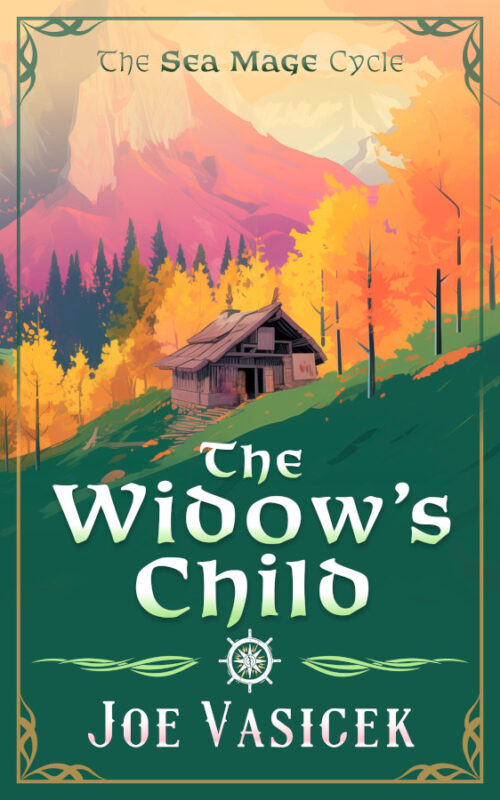
Fantasy stories often explore the idea of protecting hope in a dark world. In The Widow’s Child, that struggle becomes intensely personal. The story follows Elara, a widowed mother raising her daughter Seraph in secrecy, knowing the child’s unusual gifts could draw the attention of dangerous powers. When the wider world begins to close in, Elara must decide how far she is willing to go to keep her daughter safe—even if it means sacrificing the fragile life they have built together.
Where the Idea Came From
Many fantasy stories revolve around prophecy, destiny, and the rise of powerful heroes. But I was interested in the quieter question behind those stories: What does it feel like to be the parent of a child caught in something larger than herself? The idea for The Widow’s Child grew out of that tension—between epic destiny and the ordinary, human instinct to protect a child. I wanted to explore what happens when a mother’s love collides with prophecy, power, and the dangerous ambitions of those who would use a gifted child for their own ends.
How A Mother’s Love Shapes the Story
From the beginning of the novel, Elara’s choices are driven by one priority: keeping her daughter Seraph safe. She lives in isolation, hides their past, and carefully controls the small world Seraph grows up in. What might look like caution or secrecy to an outsider is, in truth, a form of devotion. Elara knows that the world beyond their quiet refuge is dangerous—and that Seraph’s unusual gifts make her especially vulnerable.
That love becomes the engine of the story’s major decisions. When strangers appear, when the past threatens to catch up with them, and when darker forces begin to move against Seraph, Elara repeatedly faces impossible choices. Again and again she chooses the same path: protect her daughter, whatever the cost. Her love is not passive or sentimental. It is fierce, protective, and sometimes painfully sacrificial.
This also shapes the emotional core of the book. While prophecy and magic swirl around Seraph’s future, Elara never sees her first as “the chosen one.” She sees a child who deserves safety, warmth, and a chance to grow up. That tension—between destiny and motherhood—runs through every major conflict in the story.
What A Mother’s Love Says About Us
Stories about heroes often focus on strength, power, or destiny. But the deeper truth behind many heroic journeys is love—the love that makes sacrifice meaningful and courage possible. A parent’s love is one of the clearest examples of this. It asks people to endure hardship, take risks, and face fear for the sake of someone else’s future.
In that sense, The Widow’s Child reflects something universal. Across cultures and histories, the willingness of parents to protect their children has shaped countless acts of courage. The novel asks what happens when that same instinct enters a world of prophecy, magic, and danger—and whether love might ultimately be stronger than the darkness gathering around it.
Why This Theme Matters to Me
Before I became a parent, I could imagine heroic sacrifices in the abstract. Afterward, those sacrifices became personal. Suddenly the idea of protecting a child—even at terrible cost—felt real in a way it never had before. The Widow’s Child grew out of that realization. Beneath the magic and adventure, it’s a story about the fierce, stubborn love that parents feel for their children—and the hope that such love might still matter in a dangerous world.
Where to Get the Book











Related Posts and Pages
Explore the series index for The Sea Mage Cycle.
Return to the book page for The Widow’s Child
