
My short story “The Janus Anomaly” is now published online by Kasma Magazine! If you haven’t already read it, be sure to check it out—and if you have, check out the awesome art that they did for it! Really cool stuff.
My short story “The Janus Anomaly” is now published online by Kasma Magazine! If you haven’t already read it, be sure to check it out—and if you have, check out the awesome art that they did for it! Really cool stuff.
Hey there, guys! Just a quick note that Gallery of Curiosities has podcasted my short story, The Gettysburg Paradox. Check it out!

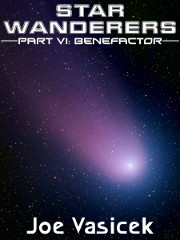 That’s right! My latest book, Star Wanderers: Benefactor (Part VI) is now available on Amazon, Smashwords, and Kobo! It’s $2.99, but for the next couple of days until the end of June, you can get it for $1.49 from Smashwords with the summer promotion code.
This one took a long time to write, especially for a novella, but I’m very satisfied with the result. It shows the events of Fidelity from Jakob’s point of view, really diving into his character and exploring his background as a star wanderer who settled down and now struggles to take care of his family. There are overtones of an impending conflict between the Outworlders and the Gaian Empire, which I plan to make a major part of the overworld story arc, and some new characters introduced as well.
Here’s the teaser:
IN A COLD AND LONELY UNIVERSE, A SIMPLE ACT OF GRACE CAN RESONATE ACROSS WORLDS.
An outworlder is nothing if not fiercely independent, and Jakob is no exception. But ever since he brought his family of starbound refugees to Alpha Oriana, he’s felt increasingly powerless. With the recent Imperial takeover and rumors of job cuts at the dockyards, it’s only a matter of time before they’re forced to move on—again.
When a young man and woman with an unusual story show up from his wife’s homeworld, he takes them in, if for no other reason than that they remind him of a time when he was young and still in love. Ever since he sent his sons away, his marriage has been a nightmare—but all he wanted was to give them a chance at a better life out among the stars. Whether or not that was a mistake, his wife has never forgiven him for it.
In the face of so many challenges, it’s not clear how long the family can hold together, but Jakob will sacrifice everything before he asks for help—even if the only way out lies through an open airlock.
Star Wanderers: Benefactor (Part VI) should be up on Barnes & Noble shortly, as well as Drivethru Fiction and All Romance eBooks. In a couple of weeks, it should be out on iTunes, Sony, and Diesel as well. If you want to add it to your Goodreads library, you can find it here.
Thanks guys! I’m heading out on a short backpacking trip this weekend, but I’ll be back in a couple of days with more updates. Later!
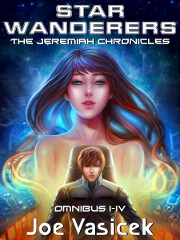 Hey guys, exciting news! I just published Star Wanderers: The Jeremiah Chronicles! It’s an omnibus that contains Parts I-IV of the series. You can find it now on Amazon, Barnes & Noble, Kobo, and Smashwords, as well as Omnilit, All Romance eBooks, and Drivethru Fiction. It should be up on Sony, iTunes, and other eretailers in a week or two.
This omnibus edition doesn’t actually contain any new content, except for the author’s note which I’ll post a little later on the blog. But if you’re just getting started with the Star Wanderers series, this is a slightly less expensive way to get the first four installments than buying them all individually. Plus, the cover art is pretty kewl–at least, I think so. 🙂
If you’ve read the series up through Homeworld, I would really appreciate it if you’d take the time to post a review on the omnibus. There’s no expectation to do so, of course, but it really does help things out a lot. Also, if you’re a Goodreads user, you can add the omnibus to your library here.
That’s just about it for now. At some point, I’d like to put out a print version, but I’m not sure whether to do the full omnibus or to do a sort of back-to-back edition, where it’s two novellas with the one printed upside down and on the other side. What the heck–maybe I’ll do both. But I still have to format the print version of Stars of Blood and Glory, so it might take a while before I get around to that.
In the meantime, I’d better get back to writing Part VII: Reproach. This publishing stuff is all good fun, but the important thing is to keep writing.
See you around, and thanks for reading!
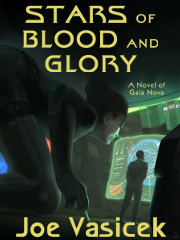
Hey guys! My latest novel, Stars of Blood and Glory, is now up on Amazon, Barnes & Noble, and Smashwords! Kobo, iTunes, Sony, and Diesel editions should be up shortly. I’ll start typesetting the print version in the next few days, and it should be out through CreateSpace sometime next month.
Stars of Blood and Glory takes place fifteen years after the events of Bringing Stella Home, and includes many characters from that story (such as Danica, Roman, and the other mercenaries) as well as some characters from Desert Stars (especially Rina). From the book description:
The only hope for the last free stars now lies on the path of blood and glory.
The princess of Shinihon could not have picked a worse time to run away. The largest Hameji battle fleet ever gathered threatens to overrun the last of the free stars. To make matters worse, a rogue assassin from an unknown faction has killed the high admiral of the Federation. Without clear leadership, the war may be lost before she can be found.
But Danica Nova and her band of Tajji mercenaries are no strangers to lost causes. They’ve fought the Hameji before, and they’ll fight them again—not for honor, or for glory, but simply for the pay. War has been their way of life ever since the diaspora from the homeworld.
Master Sergeant Roman Krikoryan is one of the few remaining mercenaries still old enough to remember the homeworld. But he’s an old cyborg, and his humanity is fading. Death is a mercy he doesn’t expect to find on this mission.
They aren’t the only ones after the princess, however. Hungry for glory and eager to make a name for himself, Sholpan’s son Abaqa seeks to make the girl his slave. Though only a boy, he’ll stop at nothing to prove himself to his Hameji brethren.
With the Federation in disarray, the bloody end of the war may come too soon for some of them. But one thing is certain—not all of them will live to see it.
If you’re on Goodreads and would like to add the book to your to-read list, you can find it here. I’m not entirely sure if I listed it properly, but at least it’s up now.
Also, if you’re a blogger and want to have me on for an interview or guest post, feel free to shoot me an email! I’m not doing a blog tour or anything fancy for this release, but I love blogging and would be happy to give you some content and link back to your site.
That’s just about it for now. I’ll get the Trope Tuesday post up a little later this afternoon. In the meantime, back to writing!
Sorry, no Trope Tuesday this week. This day ended up being a lot more packed than I thought it was going to be. Not too productive from a writing point of view, but Stars of Blood and Glory is coming along and should be out on schedule.
I do have a couple of quick announcements, though.
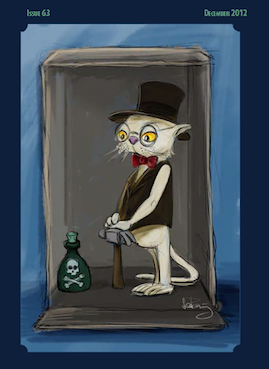
First, issue 63 of Leading Edge is now out, and I’ve got a publication in it! For this issue, they ran a first novel chapter contest, and Stars of Blood and Glory was one of the stories that placed. If you want to pick up a copy, you can do so here. Print copies are $7.95, PDF copies are $3.00.

Second, the schedule for this year’s LTUE symposium is out, and I’m on one of the panels! It’s Friday morning at 9:00, and the theme is “Raising the Language Barrier.”
This will be my first convention panel EVER. I’m kind of nervous about it, but I do have some authority on the subject after living overseas for a year, so it should be a good experience. The other panelists include Dene Low, one of my English professors from back in college. That should be interesting. 🙂
That’s just about it for now. Back to writing!
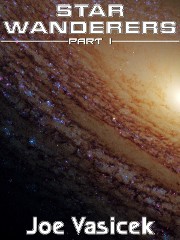 That’s right–the first part of my novel Star Wanderers is now available on Kindle and Smashwords for $2.99! Barnes & Noble, iTunes, and Kobo editions should be coming out shortly (though I’m waiting for Kobo to launch their direct publishing platform, which may take a while).
This is the first part of a four part novel, but really it’s more of a series of short novellas since each part has its own distinct story arc with a beginning, middle, and end. This one is about 15,000 words (or 40-60 pages), and takes place in the Gaia Nova universe about a thousand years before the events of Bringing Stella Home. It’s about a boy and a girl who don’t speak the same language but find themselves alone on a starship together. Here’s the description:
HE WANDERS THE STARS IN SEARCH OF A HOME. INSTEAD, HE GOT A GIRL WITHOUT ONE.
When Jeremiah arrived at Megiddo Station, all he wanted was to make some trades and resupply his starship. He never thought he’d come away with a wife.
Before he knows it, he’s back on his ship, alone with his accidental bride. Since neither of them speak the same language, he has no way to tell her that there’s been a terrible mistake. And because of the deadly famine ravaging her home, there’s no going back. She’s entirely at his mercy, and that terrifies him more than anything.
Jeremiah isn’t ready to take responsibility for anyone. He’s a star wanderer, roaming the Outworld frontier in search of his fortune. Someday he’ll settle down, but for now, he just wants to drop the girl off at the next port and move on.
As he soon finds out, though, she has other plans.
Also, I’m happy to report that I finished the full-length version of Star Wanderers over the weekend, making it my seventh written novel! Here are the stats:
words: 68,367
chapters: 20
ms pages: 317
start date: 1 September 2011
end date: 1 July 2012
And some other stats, just for fun:
kilometers traveled: ~32,000
languages encountered: English, Georgian, Russian, Mingrelian, Hebrew, Arabic, Turkish, Farsi, Polish, Slovakian, German, Armenian, Spanish, French, and Australian
other books started before finishing: 4
other books finished before finishing: 2
other books published before finishing: 2
Part II is pretty close to publication, but Parts III and IV still need a bit of work. Since the rough draft is finished, though, it shouldn’t take too long to get everything else ready. If all goes well, I’ll publish Part II in August or September, and the other parts in two month intervals.
This novel was a lot of fun to write, in spite of how difficult it sometimes was. I always knew it was a story worth telling, and that gave me both the motivation to finish it and the courage to send it out into the world. I think you guys are really going to like it, especially if you’ve enjoyed my other sci fi romance stuff. As I said on Twitter back in 2011, girl + starship = WIN!
So yeah, check it out! And be sure to keep an eye out for Part II, which should be coming out in just a month or two!
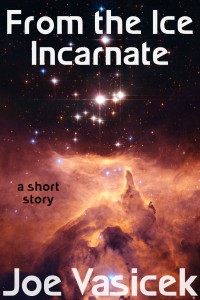 My third indie published short story, “From the Ice Incarnate,” is now available for $.99 on Amazon. You can read it on the Kindle, of course, but if you don’t have one then Amazon has free plugins for just about every device imaginable.
If you haven’t read any of my other stories yet, I would recommend starting with this one. It won first place in the 2009 Mayhew Short Story contest at BYU, and is probably one of the better pieces of my writing. It’s also taken from a scene in my novel Genesis Earth, which is currently a quarter finalist for the 2011 Amazon Breakthrough Novel Award.
I’ve also reformatted both of my other stories, “Memoirs of a Snowflake” and “Decision LZ1527,” improving the covers and making them look more professional overall. I also redid the cover for “Decision LZ1527,” changing the font and enlarging the image to make it look crisper.
I’ve already blogged pretty extensively about the epublishing process in the last post, but I’ll say something about it here. Putting stuff up on Amazon is not that hard, but making it look professional can be a little tricky. In the future, I think I’m going to use the process outlined below:
Step One: Write the book in Open Office. Save manuscript as an open document text.
Step Two: Using Open Office, set the font to Times New Roman size 12, bold titles and chapter headings, replace underlining with italics, spacing to 1.5 lines, add in special characters for scene breaks (if needed), etc. Save as an html file.
Step Three: Using The Gimp, create a cover image and export as a 600×900 jpeg.
Step Four: Using a WYSIWYG html editor, adjust formatting as needed, add anchor tags for the table of contents (if needed), etc. Save as html.
Step Five: Using an ebook creator program such as Mobipocket, combine finalized html file with cover image and all other interior content. Edit metadata, create table of contents (if needed), etc. Export as .prc or epub.
That’s basically the process I used for “From the Ice Incarnate,” except I uploaded the .doc file straight to Amazon and then downloaded their html conversion of it. Kind of an ad hoc way of doing things, but hey it worked.
This will probably be my last short story for a while. My reason for putting them out was mostly to learn on them, and I have learned a TON.
My next epublishing project will probably be a full length book, either one of my novels, or an ebook combining my blogs and journals from the summer of 2008, when I went on the BYU Jordan study abroad. I want to figure out how to do a table of contents and add interior images, and that seems like the best project to learn it on. Plus, I’ve always wanted to turn that material into a book.
That probably won’t come out for a while, though. In the meantime, feel free to check out my other stories! I hope you enjoy them; I appreciate everyone who reads my work, and do my best to write stories that are worth reading. And if you feel so inclined, post a review or blog about it. Every little bit helps!
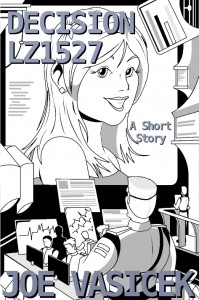 My second indie published short story, “Decision LZ1527,” is now available for $.99 from Amazon. This is the same story that was published in the December 2009 issue of Leading Edge. I’ve also included a short author’s note at the end, explaining the writing process from idea to publication.
As with “Memoirs of a Snowflake,” the epublishing process wasn’t that complicated. The story was short enough that I didn’t feel a need for a table of contents, and Amazon reformatted the uploaded .doc file without any problems.
The biggest difference with this one was that I contacted the artist from the December issue and bought the rights to use the art. It cost a bit, but not much more than what Leading Edge paid for the story, so overall I haven’t taken much of a loss.
 I wrote “Decision LZ1527” back in 2006, when I was a sophomore in college trying to navigate the bizarre dating world of BYU. It’s about a boy trying to find the courage to ask out his secret crush, as told from the point of view of the little men inside his head, piloting him like some kind of spaceship.
So yeah, I hope you check it out and enjoy it! If you don’t have a Kindle, Amazon has a number of free apps that will allow you to read it on just about any platform (including your computer). And if you haven’t already picked up “Memoirs of a Snowflake,” you can get it for $.99 too.
I’ll do an update in a week or two about my indie publishing venture, but so far it’s been pretty fun! Hopefully, by putting out these stories, I’ll be able to share them with more people than would have read them otherwise. So thanks, and I hope you enjoy!
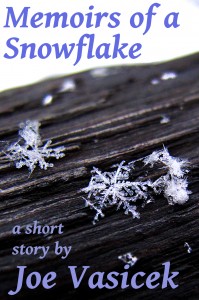
I just released my first short story on the Kindle. “Memoirs of a Snowflake,” a whimsical short story about the life and times of a December snowflake, is available for $.99 on Amazon.
The publishing process was actually a lot easier than I thought it would be. Because this is a short story, I didn’t have to worry about formatting for a table of contents or other stuff. All I did was upload the .doc file, and Amazon automatically did the formatting.
Bryan and I did try to upload it as an html file, which failed miserably for reasons we don’t understand. Also, Amazon automatically generated the free sample for it, which is something I’d like to figure out how to control in the future.
So as far as practice goes, this story perhaps wasn’t the best one to learn on. However, it’s good to see how the publishing process works–and really, it’s not that hard. The hardest part was reading all the terms and conditions, which took maybe an hour. Everything else was just uploading files, filling in fields, and checking off boxes.
The cover art was fun. To make it, I took this image from Wikimedia Commons (where practically everything is in the public domain), photoshopped it with The Gimp (“gimped” it?), and added the lettering. Voila! I don’t know if it’s my best work, but for a short story, I think it’s decent.
$.99 is the lowest that Amazon will allow me to price it. For every sale, I make about $.35, and Amazon starts transferring money to my account after I earn $10. You can download it to your Kindle device, or you can read it on your computer with Amazon’s Kindle for PC program (where you can also read a two paragraph free sample, heh).
So far, I’ve made two sales and gotten one review–a pretty good one, too! I posted the story on Facebook and Chuck has blogged about it, but that hasn’t translated into sales yet. But after reading this, you all are going to go out and buy it, aren’t you? AREN’T YOU?? Hehe, just kidding.
Next week, I’ll probably release “Decision LZ1527,” after I figure out the cover art. It’s a little more complicated, because I wanted to buy the art that was in the magazine in which it was originally published. But I’ve got that squared away, now just tweaking it. And I’ll probably add an author’s note at the end, too.
This is exciting stuff! I’m interested to see how the stories take off. For those of my writer friends who are thinking of doing something like this for their own stuff, I’ll be sure to let you know how they do!
