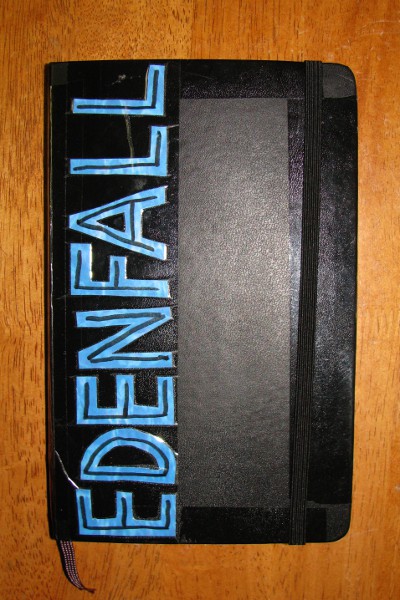
I’m trying something a little different with Edenfall: I’m writing the first draft entirely in longhand.

I first got the idea a couple of years ago, when I was camping in Moab.  The beautiful landscape of southern Utah made me realize that I wanted to write Edenfall while experiencing that sort of connection with nature, and pen and paper seemed to be the best format in which to do that.  This year, when I decided that I’d definitely write it, I ordered the notebook on the left and fitted it out for the project.

With every novel I write, I like to challenge myself in some new way.  In Genesis Earth, I tried out a first person POV with an unreliable narrator.  In Bringing Stella Home, I tried to write a believable female viewpoint character.  I also like to experiment with my writing process, trying out different outlining techniques and writing schedules.  Sometimes, these experiments fail spectacularly, but they also teach me a lot and keep me sharp.

The goal with this experiment is to see how divorcing myself from my computer (with all its myriad distractions) and getting out in nature changes my writing.  I live a short bike ride from the Provo River Trail, and weather permitting, that’s where I’ll probably spend most of my writing time in the next few days. Besides, I want to see how much of a difference the format makes.

Books existed long before word processors, so I have no doubt that writing a novel longhand is entirely possible.  How much of an adjustment it will be remains to be seen.  My handwriting is messy, and I can’t write as fast as I can type, but that hardly matters since rough drafts are slow going for me anyways.

In any case, it’s going to be interesting to see how it turns out.  It’s been a little slow so far, but that’s mostly because I haven’t settled into a routine yet.  By the end of this week, I hope to be fully immersed in the world of this story.

In other news, I sent off the manuscript for Sholpan to my editor, and he just got finished with his first pass, so I’m hoping to get the edits back in a couple weeks and have it epublished by mid-September.  More on that as things develop.

Also, an old friend from Brandon’s 318 class posted a favorable review of Bringing Stella Home up on Amazon.  He was one of my first readers back when the story had a lot of problems, so I’m glad he enjoyed the final version.  Thanks Stephen!  And yes, I’ve got a lot more novels forthcoming in the Gaia Nova universe, including a direct sequel to Bringing Stella Home.  Will the McCoy family save the universe from the Hameji?  Well…you’ll see. :)

Finally, I plan on participating in the Out of This World blog tour being organized by the SFR Brigade, which means you’ll be seeing some guest posters in the near future.  That’ll probably wrap up the Genesis Earth blog tour too, since it’s been winding down for the last month or so.  If I agreed to write a guest post for your blog and haven’t done so yet, let me know and I’ll do my best to get that out to you.  Sorry to be a bit of a flake these past few weeks; I’ll try to organize my next tour a little better.

And that just about does it for now.  I’ll be sure to keep you posted on how things go with Edenfall.  Until then, take care, and thanks for reading!
I just listened to this awesome presentation by Ira Glass, host of This American Life, on the art of storytelling and narrative, and I wanted to share it because it’s that good. 

If you haven’t ever heard of This American Life before, do yourself a favor and check it out.  You may or may not love it, but it’s one of the best produced radio shows out there, with fascinating stories from all walks of life that will completely blow you away.  My favorite is probably the one about the department of the LAPD that exists entirely to identify the next of kin of people who live and die alone–and how many people in this world have essentially no connections with the people around them.  It was an incredibly sad and incredibly moving story.

Anyhow, Ira makes some very good points about how stories work, and how we as humans are wired to see the world around us in terms of story.  It’s not enough to simply convey facts–you have to hook your audience by making them feel emotionally involved, and creating suspense by giving them the sense that the events in your story are leading up to something.

He finishes the lecture by recounting the basic frame story of the Thousand and One Arabian Nights: how Scheherazade saves the kingdom from the sultan’s madness through the power of story.  It’s a wonderful tale, one that has a lot of bearing on why we write and why fiction matters.

That’s one of the reasons why I decided to name this blog “One Thousand and One Parsecs”; it implies a combination of the magic of the Arabian Nights with the science fiction elements that I love so much. Like Scheherazade, I hope to tell stories that have the power to transform individuals and ultimately change the world for better.

That’s enough from me. Here’s Ira Glass:

Haven–a land where no one knows who they are, where they’re from, or how they got there.  A place where everyone has a different recurring dream every night, which gradually grows in intensity until it drives them to madness.  A place where everyone has only a short amount of time to find Paradise, before they perish.

When Sam first comes to Haven, he thinks he’s found an idyllic utopia.  However, as he slowly uncovers the gruesome secrets of the place, he realizes he’s in a race against time to make Atonement and escape.

But how can he do that, when he can’t even remember who he is?  And how can he save the girl he loves, when she has only days before her dreams drive her into madness?

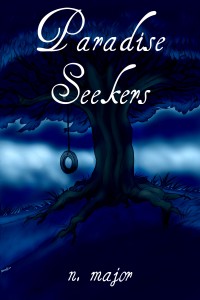
A few weeks ago, I said I’d start reviewing indie books on this blog.  This is my first one.  As a disclaimer, Nathan Major is a fellow Utah writer and a friend of mine, and I received a copy of the book for free, with the agreement that I would review it.

I genuinely enjoyed this book.  It’s a very compelling story, with a mysterious dystopian world and an intriguing premise.  Nathan is very good at building suspense and keeping the reader hooked, and the ending fully lived up to its potential.

As far as editing goes, I noticed only minimal spelling and grammatical errors.  However, the copy I read had some major formatting issues, such as wacky indents and an auto-generated table of contents that missed a few chapters.  Nathan assures me he’s fixed those issues, but I can’t vouch for the most recent copy.

As for the story, while I enjoyed it, it did feel as if it had been published too early.  More than once, I wanted to scream at the characters for doing something stupid, and the romance was occasionally over-the-top sappy.  The level of melodrama was on par with most anime, which is great if you can stand it.  Still, the story kept me hooked, and while I occasionally had to put the story down just to cool off, I always came back to it, right up to the very satisfying end.

If you like dystopian YA, I think you’ll like this book.  It reminded me a little of The Giver, with the urgency and sense of danger of a thriller.  Like I said, it also had a bit of an anime flair to it, so if you’re a fan of anime and manga, the issues I had with it probably won’t be as bad for you.

Overall, I rate Paradise Seekers at 3.5 stars.  If the formatting issues were fixed, I would rate it at 4.  Nathan has a natural talent at good storytelling, and I expect we’ll see many good things from him in the future.

Paradise Seekers is available for .99c from Amazon and free on Smashwords.

Today, a longtime writing friend told me that she wants nothing to do with me, which made me very sad.  I hope she will reconsider, and if she does, I’d gladly welcome her back as my friend.  However, because it’s come to my attention that some of my other friends feel that I come across as a jerk whenever I talk about indie publishing, I feel that I should take the time to clarify a few things.

First, I wish all of my writing friends success, whether they choose to epublish or whether they choose to go the traditional route.  This is not a zero sub game and I have never believed that it is.  Whether or not my own career tanks, if my friends find success in their endeavors, I will gladly tip my hat to them.

Second, I wish no harm on anyone who is involved in any way in the publishing or bookselling industries.  I have less sympathy for multinational corporations and media conglomerates, but I recognize that they employ large numbers of people, and I don’t wish any harm on them either.

Third, I do not believe that writers who choose to forgo indie publishing are somehow inferior to or less intelligent than writers who do.  I do believe that everyone should at least try it out to see if it’s right for them, but I recognize that indie publishing is not right for everyone, and that writers should carefully evaluate their skill levels, personal proclivities, and career goals before making that step.

This is my goal: to make a living telling the stories that I love.  Those stories fall firmly in the realm of science fiction: grand, sprawling space operas, thrilling sf adventures, poignant and moving tales of alien worlds and cultures, etc.

In my research of the publishing industry, I’ve discovered that it’s become extremely difficult over the past couple of decades to build a career writing science fiction.  For whatever reason, publishers aren’t as interested in pushing this genre or serving its readers as they have been in the past.  Contract terms have gotten worse, and it’s become increasingly difficult to break in, much less make a living.

That’s why the changes in publishing and the ebook revolution have made me so excited.  Writers have more options now than ever before, and I believe that I can better achieve my goal through indie publishing than through more traditional paths.

Now, a little bit you should know about myself: I believe in complete and total honesty.  If I see a problem or something that seems to be wrong, I tend to be very upfront and direct about it (and appreciate it when others are the same with me).

This philosophy has its advantages, but one of its disadvantages is that I tend to be a little tactless.  If I come across as arrogant, I want you to know that I’m sorry.  That’s certainly not my intent, and I’ll try to do a better job of making that clear.

At the same time, I’d like to point out that what you perceive as arrogance may just be my own excitement.  All writers are emotionally involved in their work, and because we’re approaching these issues from fundamentally different worldviews, it’s very easy for mutual misunderstandings to arise.

In the future, I’ll try to be more tactful, but I can’t control how others perceive me.  I have no doubt that those who are emotionally invested in resisting change will continue to find fault with those who embraces it.  Ultimately, I can only be answerable to myself, those who depend on me for support, and my readers.

So on that note, I’d like to finish by saying that after reviewing your comments and giving the issue some thought, I’ve decided to go ahead with Edenfall as my next major project.  More on that later, but for now, I’d just like to thank you all for your feedback and support.  I’m excited to get started!

In spite of the title of this post, I’ll try not to get too emo.  Not sure how well I’ll succeed, but at least I’ll try.

Worldcon was great, but it put me into something of a writing slump and I’m not sure where to go next.  I was planning on writing the as-yet untitled New Rigel novel, but I want to get Desert Stars published before Christmas, and that would involve doing another major draft before sending it off for edits.

The trouble is, it typically takes me at least two months to do a rough draft.  I can probably finish Desert Stars in about a month, but I’d still want to start that project somewhere around the end of September.  Since I don’t expect for my first readers to get back to me until then, that leaves me with a single month to fill.

To further complicate matters, the place I’ve been temping at for the last two months wants to hire me full time.  In some ways, that’s awesome; work is work, after all, and even though I won’t exactly be saving the world, it’s not a bad job either.  On the other hand, 40 hours of warehouse labor per week is going to make it very difficult to do everything I want with my writing career.

Now, don’t get me wrong–I’m not complaining.  This seems to be the dilemma that every aspiring writer faces at one point or another, and most of my friends have understandably chosen the stable paycheck over the ever-elusive lucky break.  But with where I’m at–young and single, without any debt or obligations to pay off–and my long term career goals, I worry that I’ll end up settling if I take that path.  Besides, I’ve gotten used to “starving” over the last year and a half, and it’s actually not that bad.

What would REALLY be awesome is if they would hire me part time, and I think I might be able to negotiate that.  In the meantime, I’ve got to figure out what I’m going to write in September.  Here are my options:

Untitled (New Rigel)

This is the project I was most excited about before Worldcon, but now…well, I’m still excited, but post-convention ennui is not a pretty thing.  Basically, it’s a full-length novel set within the Gaia Nova universe, and an indirect sequel to Bringing Stella Home

I’ve already written the prologue and I like where it’s going, but I’d have to really bust my butt to get it done before October.  Then again, I usually drop the first draft somewhere in the middle, so allowing for that, it might still be good to go ahead.  However, it’s generally a bad idea to plan on screwing things up.

Edenfall

This is the sequel to Genesis Earth, and the second book in a planned trilogy.  Since it’s YA, I could probably pull it off in a month–YA is generally shorter than adult fiction, and Genesis Earth took me about a month to pound out once I knew what I was doing.  I’ve already got the story outlined and ready to go, so no problems there.

The big reason to do this project is that the first book is starting to have some success, and that’s naturally going to drive reader interest in the sequel.  I’ve already gotten some scattered emails and comments about it, asking when it’s going to come out.  Also, since there’s less pressure on me right now, bumping it up the queue might be a good idea.  There’s a reason some people are afraid of success.

Desert Stars Companion Novella

Now here’s an interesting idea: I could spend the next month working on a companion novel to Desert Stars, much like I spent the last month working on Sholpan.  The advantages to this plan are obvious: not only would I have another full-length novel ready before Christmas, but a $.99 novella to go with it–that is, if all goes well.

This is a project I haven’t given much thought to, but it wouldn’t be too hard to come up with something.  It would also get me excited for the revision of Desert Stars in October.  The main disadvantage is that I don’t know how well this “companion novella” concept will work out in the market–if Sholpan tanks, I might have to scrap it altogether.  But as Dean told me at Worldcon, you can’t let thoughts of the commerciality of a project get in the way of the creative process.

That’s what’s on my plate right now.  Preferably, I want to choose something I can finish within a month, while juggling work and the publication process for Sholpan.  Oh, and I also want to throw in a blog tour for Bringing Stella Home–more on that later.

So, to open it up to my super-awesome hardcore fans (all three or four of you), what do you think?  Of these projects, what do you most want to see?

Alright, I should just write this up and finish my convention report before life sweeps me away completely.

Saturday was the main day of the con.  To be honest, I forgot all the panels I went to, except this really awesome one by a guy at NASA on near Earth objects (NEOs).  Holyfreakingcow there are thousands of these objects AND WE ARE SENDING MISSIONS TO THEM!!!  So cool!

I went to a kaffeklatsch with Nancy Kress, which turned out to be quite an interesting experience.  She’s an extremely gracious person, much like Tracy Hickman, and gave some excellent career advice: 1) no matter the obstacles or difficulties, always find a way to keep writing, and 2) always be true to the story.

Had dinner with some other Utah writers, and I wish I could say it was pleasant, but for some reason it got very antagonistic.  I know it takes two to tango, but I honestly don’t know what I did to make it that way.  Perhaps stress levels were running high, or people misread my tone, but the conversation at our table completely fell apart at least twice.  It was very wierd.

Part of it might have to do with the fact that I’ve become something of a trailblazer for indie publishing within the SLC / Utah Valley writing community.  Which brings me to another side note: everyone talks about how militant and polarizing self publishers are, when in my experience it’s the advocates of traditional publishing who tend to adopt an us vs. them attitude.  To be sure, there are plenty of desperate to be published writers who take the indie path just to “stick it to the man,” but those people tend to fade away once they realize it isn’t a silver bullet.

Anyway, the Hugo Awards in the evening were great!  Robert Silverberg presented the award for Best Novella, and for fifteen minutes he was my favorite person in the world.  So hilarious!  I’ve tried to find a video, but there doesn’t seem to be one up yet.  Utah writers were nominated in six categories, and even though none of them won, the competition was pretty dang good, so I don’t feel so bad about losing.

All in all, it was a great convention!  I had a lot of fun, even if I did feel a little exhausted by the end of it.  I’m not sure if I’ll be attending future worldcons in my current capacity as a beginning writer, but I most likely will buy supporting memberships in order to vote in the Hugos (and download the voting packet).  It’s a good community, and I’m glad to be a part of it.

Wow, it feels like the second day of Worldcon was forever ago.  Usually, Friday is the first real day of a convention, but since Thursday was the first full day of Worldcon, that wasn’t the case.

I don’t remember a whole lot from it, but there were a few really awesome panels.

In the morning, I went to a social networking panel with Tee Morris and Cory Doctorow, among others.  Awesome, fast paced discussion–pure gold, every second of it.  The main takeaway I got was to try out everything, but only stick with the things I actually enjoy.  There are lots and lots of ways to use social networking tools, and if something is compelling but not enjoyable, it’s not much better than a life-killing addiction.  Also, Facebook is the equivalent of high fructose corn syrup.

In the afternoon, I went to a panel on romantic elements in science fiction, with Louis Master Bujold on it, among others.  She made perhaps the most interesting point I heard all weekend: that in romance, women typically write about love and life, whereas men typically write about love and death.  SO TRUE.  It happens all the time in my own work, to the point where you can set your watch by it.

After a long and tiring day, I took off a couple hours before the parties just to decompress (and also blog about Thursday, as you may have noticed).  Got caught up on David Gaughran‘s blog, which as usual had some interesting analysis about the latest news in the ebook revolution.  And then…well, let’s just say I got into a little bit of a discussion with a senior editor at Tor about ebooks and whether it’s a good idea now to self publish.  His parting shot: “You’re not going to win this argument!” To which I wanted to respond: “I don’t care about winning it with you; I care about winning it with the readers.”

Seriously, when it came to ebooks and epublishing, almost every editor, agent, and author at the convention either had deer in the headlights syndrome or was in outright denial.  It’s gotten to a point where they can’t ignore it, but literally everyone who brought up the subject on a panel either dismissed all successful indie writers as outliers, or brought up the flood-of-crap argument that so many people have already debunked.  I don’t think the publishers are quite as stupid as the record labels in the late 90s…but seriously, they aren’t much better.

Not that I was purposefully trying to be antagonistic.  I only brought up the subject with that particular editor because I knew I didn’t have a chance with him.  For the most part, all I did at the con was listen and observe.  But man–there’s a lot of willful ignorance out there.  And after a while, that made me a little disillusioned with the whole convention…but more on that later.

Suffice it to say, Friday was a long and eventful day that went by so quickly I’ve forgotten almost everything else that happened.

Wow, the last couple days have been packed with awesome con-stuff, but I’ve got a short break so I thought I’d blog about it.

Thursday was great, attended a few panels but mostly just wandered around meeting people.  I’m a little surprised with how many people read this blog.  Got Brandon to sign my Kindle, and he was really supportive about my decision to epublish.  I seem to be one of the only Utah writers going full-steam with indie publishing, but a handful of others are considering it, though for now they’re in the minority (which surprises me).

Anyhow, Thursday had a couple of really notable panels.  The first was on faith and science fiction, and had both Eric James Stone and Moshe Feder on it, among others.  Excellent discussion, though a couple of the commenters tried to derail it.

I found it surprising that the panelists didn’t have a good answer to my question: how do you reconcile far future sf with millenialist religions?  That’s exactly what I’m trying to do with my Gaia Nova universe–create a far future epic that isn’t incompatible with the major western religions (Islam, Christianity, Judaism, etc).  From the after-panel discussion, I got a strong recommendation to read C.S. Lewis’s space trilogy, so I’ll definitely be checking that out soon.

The other notable Thursday panel I attended was on ebook art, and featured John Picacio and Lou Anders, among others.  John feels pretty strongly that indie writers are seriously devaluing cover illustration, and within the first ten minutes someone in the audience literally told him to f___ off!  Wow, talk about tension–but even though it almost fell apart, the panel turned out to be very enlightening.

Let me just take a moment to say that I’m very impressed with what Lou Anders is doing over at Pyr.  While the rest of the publishing world seems to have their heads in the sand when it comes to the ebook revolution, Lou is one of the few who sees it more as an opportunity than a threat.  I’m not currently looking for a publisher, mostly because I’m waiting to see how things shake out, but I would be very surprised if Pyr is one of the publishers that goes under.

The parties in the evening were pretty good–as always, the Tor party was literally packed.  Brandon saw a group of us clustering together, so he broke us up and sent us off to talk with editors and agents.  He tried to point me out to an agent, but…you know, I’m not really looking for one right now.  Brandon keeps telling me not to believe DWS when it comes to agents, and while I’m certainly not fundamentally opposed to them, I feel that I can better build my career by going in other directions.  At some point in the future, maybe, but for now…not so much.

Speaking of Dean, I spent the whole evening hunting for him, then gave up around midnight only to find out the next day that he showed up at the SFWA suite fifteen minutes after I left (nooo!). And now that it’s 9pm in Reno and the parties are just getting started, I think I’ll cut this blog post here and recap Friday sometime later.

See you around!