Rotating Titles
This is a rotating selection of free books and stories from my catalog. I keep each one free for approximately three months. New titles appear here approximately each month.
Queen of the Falconstar
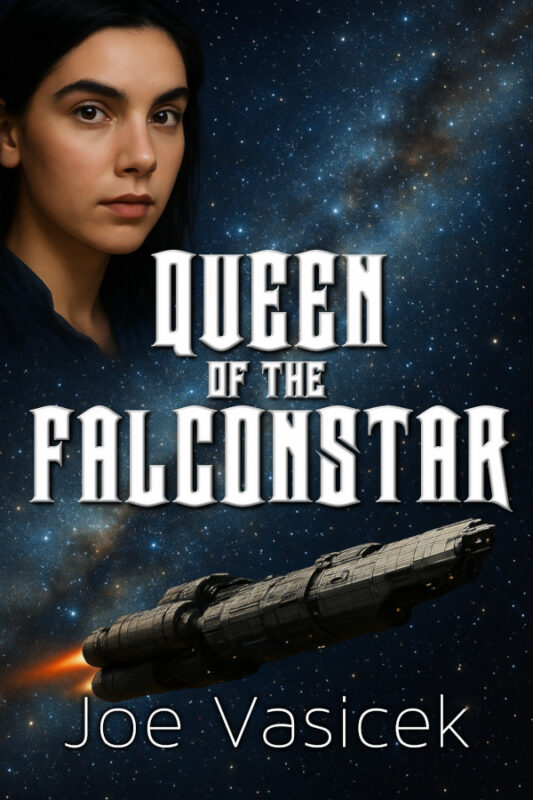
She volunteered to be a captive. Now she must become a queen.
Zlata has always dreamed of escaping the stifling monotony of Graznav Station, but not like this. When space nomads raid her home, she volunteers as their captive to save her friend Sonya from a worse fate. Brought aboard the Falconstar as a slave to the enigmatic Lord Khasan Valdamar, Zlata quickly realizes that her only path to survival lies in the treacherous world of intra-clan power politics. Using her cunning and ruthless pragmatism, she must navigate betrayal, conspiracy, and deadly power games to rise from slave to queen—all while her friend is slated to be sold as a slave.









What Hard Times Hath Wrought: A Novelette
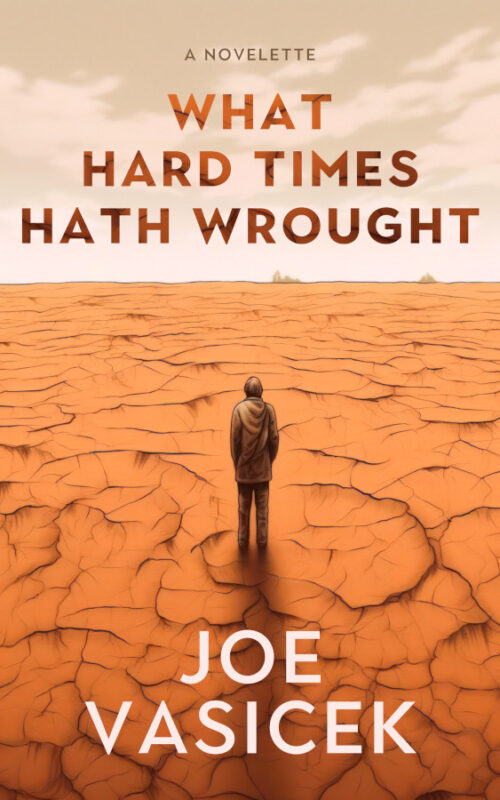
The world that ended with a whimper is about to be reborn with a bang.
In a near-future United States on the brink of total collapse, Mia Thompson leads her teenage nephew and grief-stricken step-daughter on a treacherous journey westward across a depopulated Midwest. Siphoning gas from ambandoned cars and hunting for game along the way, Mia is forced to confront the harsh reality: that she doesn’t have the strength to ensure their broken family will survive.
And then, they encounter the bandits.
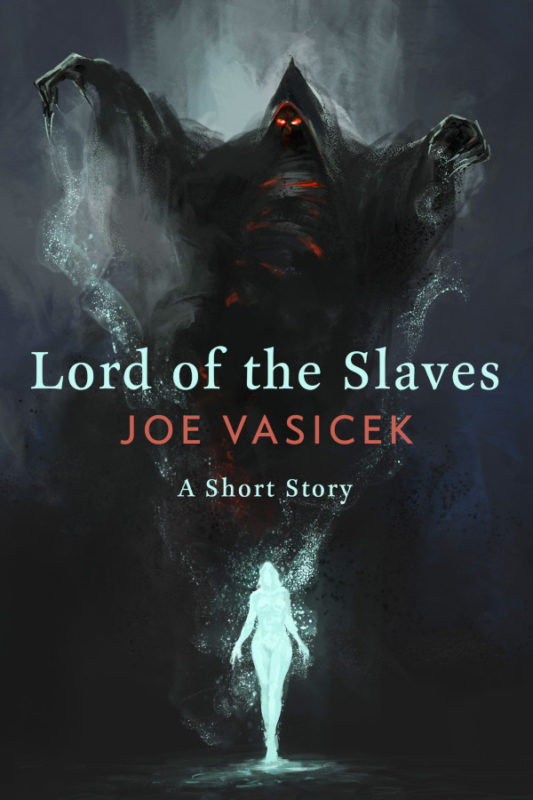
A Hill on Which to Die: A Fantasy Novelette
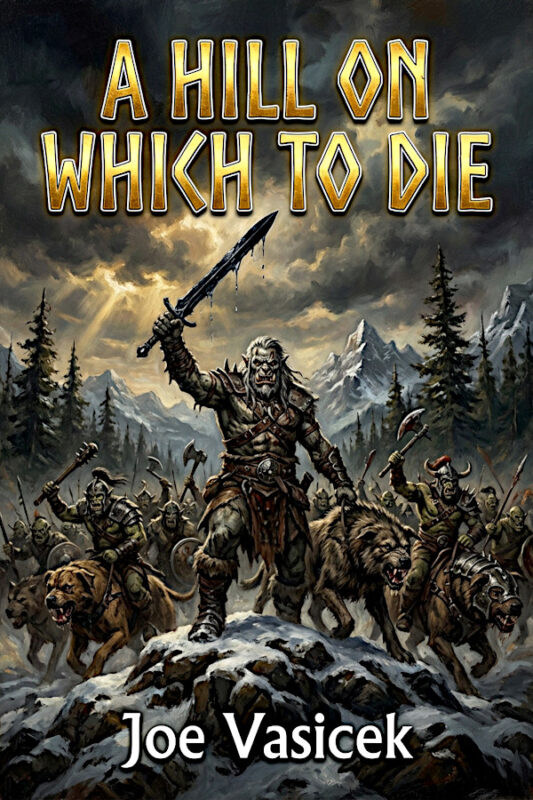
Is this the hill on which you want to die?
An aging orc war chief must decide which battles to fight and which to walk away from as he leads his clan on a desperate exodus to freedom, knowing that every choice could be his last.
Is this the hill on which you want to die?
Garak-Nur should be dead by now. At thirty-five years old, the grizzled orc war chief has outlived most of his kind. His tusks are worn, his knee aches from old wounds, and younger warriors eye his position with hungry ambition.
When a silver-tongued messenger arrives offering glory in service to the Witch-King of the North, Garak knows the promises are nothing more than gilded chains. Rather than watch his clan march into slavery, Garak makes an impossible choice. In the dead of night, he leads his most loyal warriors away from everything they’ve ever known, venturing into the wilderness to carve out a new home.
But the exodus is only the beginning. Finding shelter in abandoned dwarven ruins built above a dragon’s lair, the newly formed Black Pine Clan must fight to survive the coming winter, rival orc bands, and the simmering resentments within their own ranks. As challenges to his leadership mount and his own harems turn against him, Garak faces battle after battle, both with sword and with words. Each conflict forces him to ask the same crucial question: Is this the hill on which I want to die?
In a world where strength is everything and weakness means death, one aging warrior must choose which battles are worth fighting and which are better left for another day.
Quantum Worlds: A Short Story
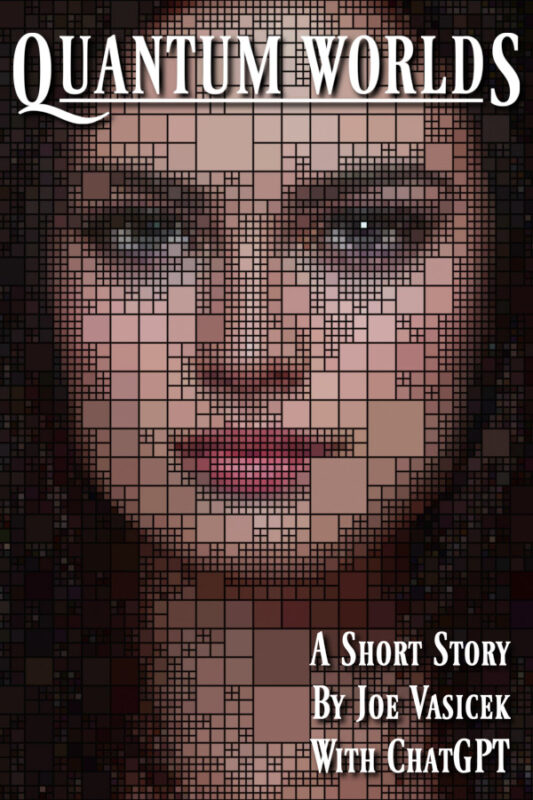
The slush pile is killing him. The solution might kill his career.
Robert Chang is drowning in a sea of AI-generated slush and watching his beloved science fiction magazine circle the drain. Desperate to save Quantum Worlds, he makes a controversial decision: use artificial intelligence not to replace writers, but to discover hidden gems.
But when SFWA threatens to destroy his reputation, Robert must choose between playing it safe and pioneering a new frontier in publishing. And as his daughter pushes the boundaries even further, the Chang family finds themselves at the center of a revolution that could transform the genre forever.
The slush pile is killing him. The solution might kill his career.
Robert Chang is drowning in a sea of AI-generated slush and watching his beloved science fiction magazine circle the drain. Desperate to save Quantum Worlds, he makes a controversial decision: use artificial intelligence not to replace writers, but to discover hidden gems.
But when SFWA threatens to destroy his reputation, Robert must choose between playing it safe and pioneering a new frontier in publishing. And as his daughter pushes the boundaries even further, the Chang family finds themselves at the center of a revolution that could transform the genre forever.
The Curse of the Lifewalker: A Short Story
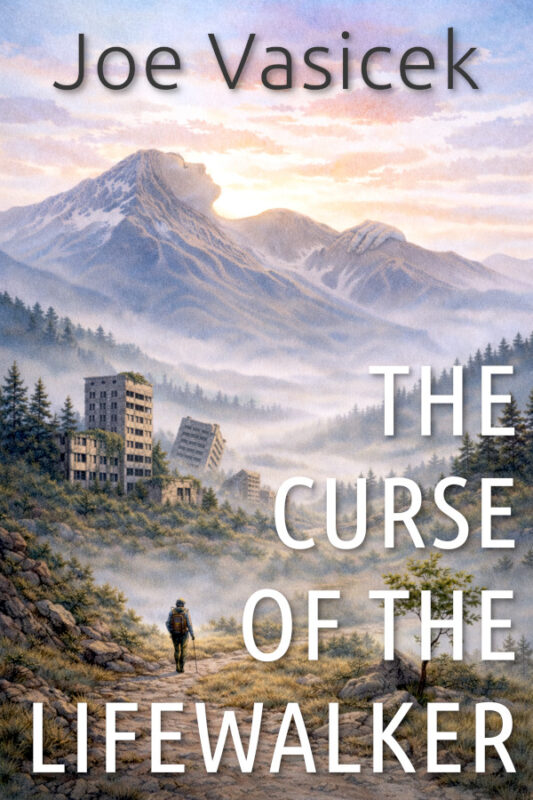
In a post-pandemic world where life ends at twenty-five, one man's immunity becomes his greatest curse.
Most people in Isaac Jameson's world don't live long enough to see their children grow. The Blight, a mysterious plague that has ravaged humanity, claims nearly everyone before their twenty-sixth birthday. In the mountain valleys of what was once the state of Utah, communities struggle to preserve fragments of the old world's knowledge while racing against their own mortality.
Isaac should have died like everyone else. Instead, he becomes the Lifewalker, a man condemned to watch every person he loves age and die while he remains untouched by time.
From author Joe Vasicek comes a deeply moving story that explores what it means to be human in a world where life is fleeting and death is certain. THE CURSE OF THE LIFEWALKER is a contemplative journey through a beautifully imagined post-apocalyptic landscape, where ancient ruins whisper of lost wonders and love becomes both salvation and tragedy.
This story was originally published in the Sci Phi Journal in June 2016.
In a post-pandemic world where life ends at twenty-five, one man’s immunity becomes his greatest curse.
Most people in Isaac Jameson’s world don’t live long enough to see their children grow. The Blight, a mysterious plague that has ravaged humanity, claims nearly everyone before their twenty-sixth birthday. In the mountain valleys of what was once the state of Utah, communities struggle to preserve fragments of the old world’s knowledge while racing against their own mortality.
Isaac should have died like everyone else. Instead, he becomes the Lifewalker, a man condemned to watch every person he loves age and die while he remains untouched by time.
From author Joe Vasicek comes a deeply moving story that explores what it means to be human in a world where life is fleeting and death is certain. THE CURSE OF THE LIFEWALKER is a contemplative journey through a beautifully imagined post-apocalyptic landscape, where ancient ruins whisper of lost wonders and love becomes both salvation and tragedy.
This story was originally published in the Sci Phi Journal in June 2016.
Calling Scam Likely: A Short Story
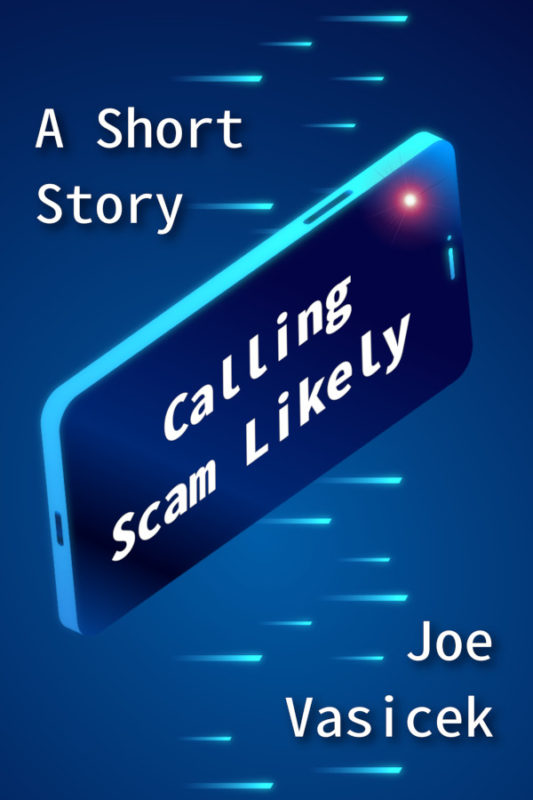
An auto warranty scam he was sure to never forget!
He was a telephone scam artist, the kind of lowlife scum who preys on the gullible, robs from the elderly, and annoys the rest of us with endless calls about our expiring auto warranties. But then, he scam called the wrong person: someone who knew everything about him. Someone who knew where he lived. Someone who seemed to be always watching, even when he sure he was alone…
Permafree Titles
These books and stories are permanently free.
Brothers in Exile
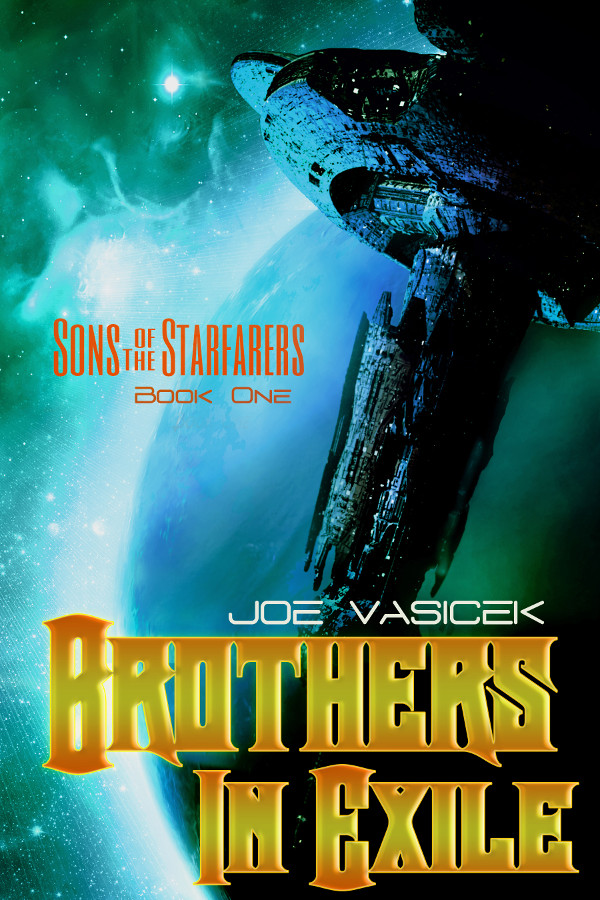
Two brothers, one starship. A girl frozen in cryostasis. A galaxy on the verge of war.
Isaac and Aaron are nothing if not survivors. Their homeworld lost and their people scattered, all they have left is each other. Then, in the Far Outworlds, they find a dead colony with a beautiful young woman frozen in cryostasis. She is also a survivor—and she needs their help.
Deep in the Far Outworlds, a derelict space station holds the bones of a long-dead people—and a beautiful young woman locked in cryofreeze. When the star-wandering brothers Isaac and Aaron Deltana find the sleeping girl, they soon realize that they are her only hope for rescue. If they don’t take her, then slavers certainly will.
With no way to revive her, they set a course for the New Pleiades in hopes of finding someone who can help. But a storm is brewing over that region of space. After a series of brutal civil wars, the Gaian Empire has turned its sights outward. A frontier war is on the verge of breaking out, and the brothers are about to be caught in the middle of it.
They both harbor a secret, though. Somewhere else in the Outworlds is another derelict station—one that they used to call home. That secret will either bind them together or draw them apart in
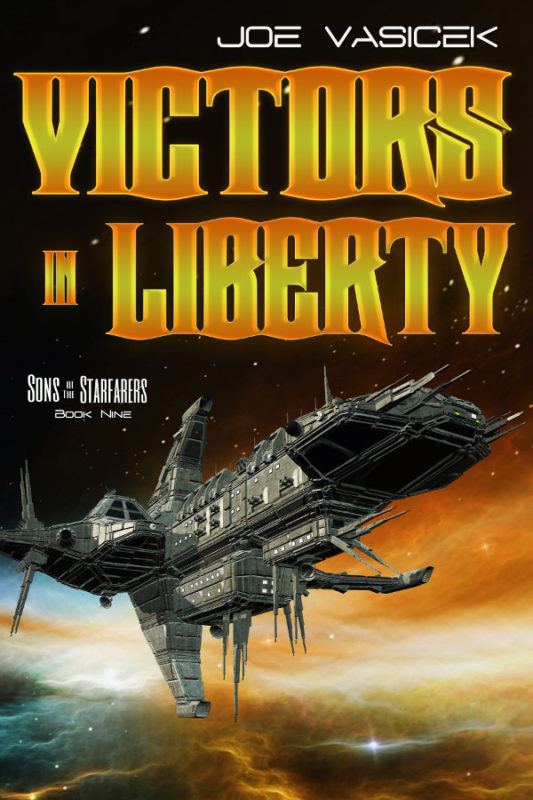
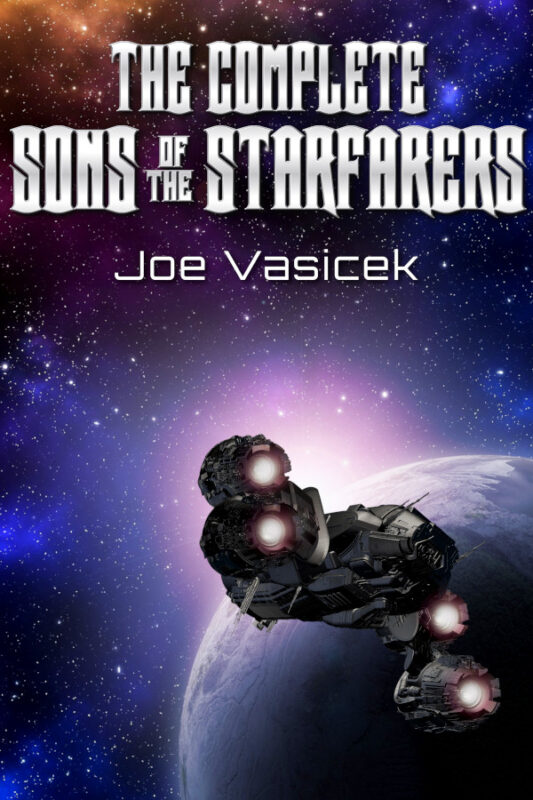
SONS OF THE STARFARERS
BOOK I: BROTHERS IN EXILE

Outworlder
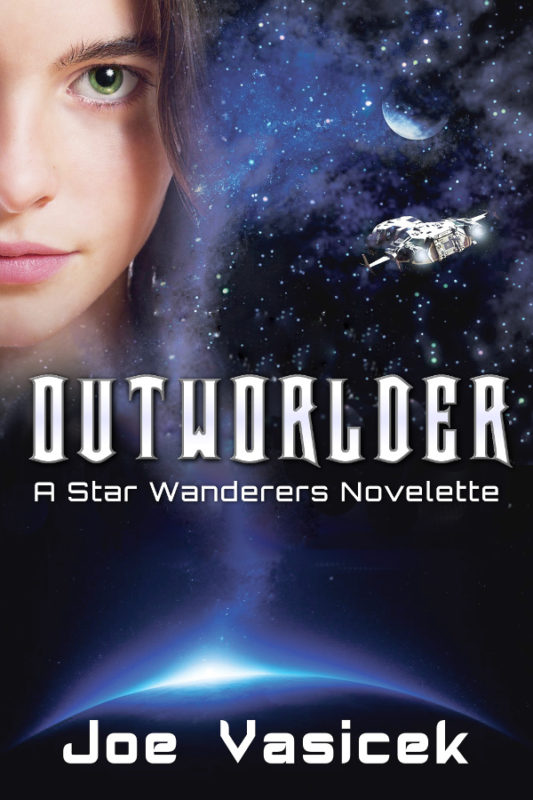
He wanders the stars in search of a home. Instead, he got a girl without one.
When Jeremiah set out for the stars, he never expected to receive an accidental bride. Since neither of them speak the same language, he has no way to tell her that there's been a terrible mistake. But the more time they spend together, the less of a mistake it seems.
He wanders the stars in search of a home. Instead, he got a girl without one.
When Jeremiah arrived at Megiddo Station, all he wanted was to make some trades and resupply his starship. He never thought he’d come away with a wife.
Before he knows it, he’s back on his ship, alone with his accidental bride. Since neither of them speak the same language, he has no way to tell her that there’s been a terrible mistake. And because of the deadly famine ravaging her home, there’s no going back. She’s entirely at his mercy, and that terrifies him more than anything.
Jeremiah isn’t ready to take responsibility for anyone. He’s a star wanderer, roaming the Outworld frontier in search of his fortune. Someday he’ll settle down, but for now, he just wants to drop the girl off at the next port and move on.
As he soon finds out though, she has other plans.
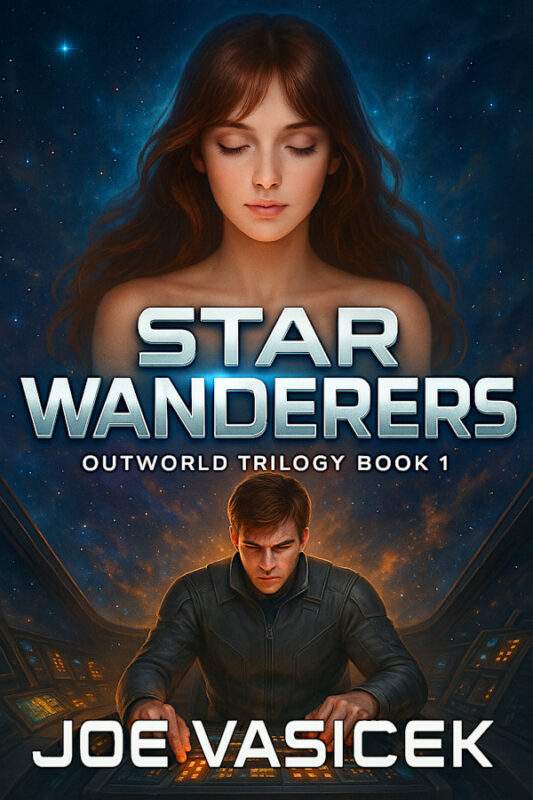
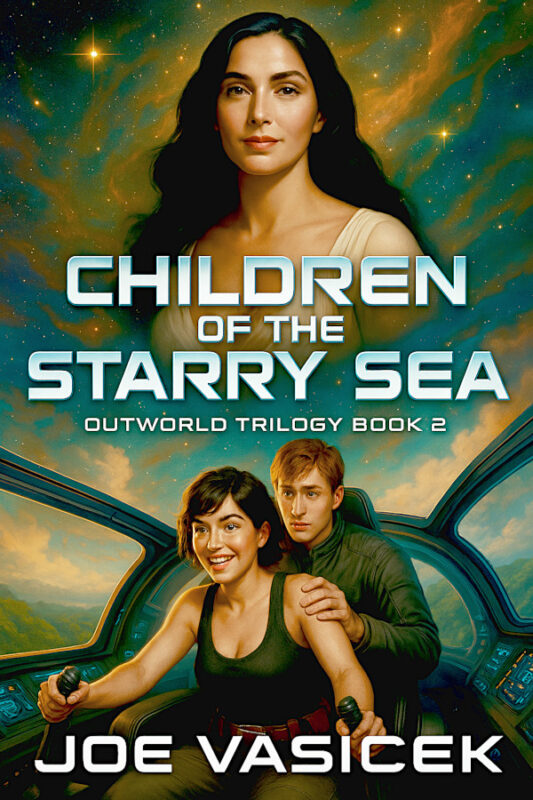
The Paradox of Choice: A Short Story
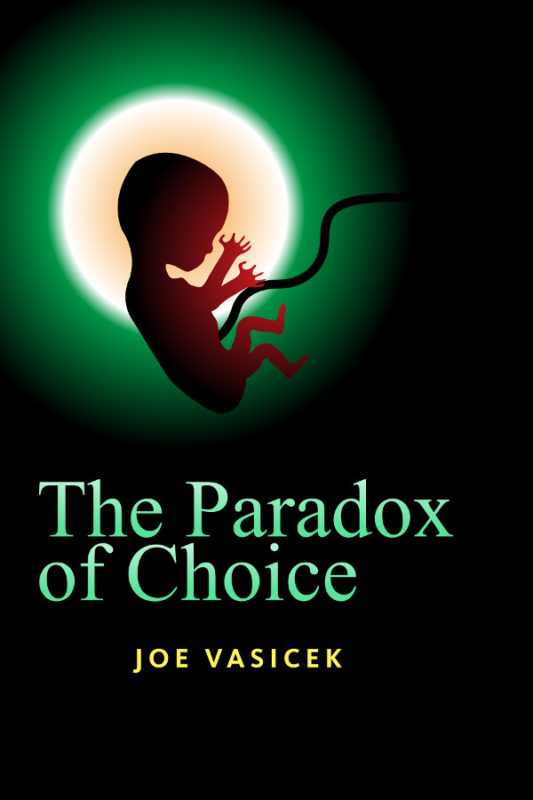
A chilling glimpse of an all-too possible future.
“In cases where there may be severe deformities… I can tell you exactly what would happen. The infant would be delivered. The infant would be kept comfortable. The infant would be resuscitated if that’s what the mother and the family desired, and then a discussion would ensue between the physicians and the mother.”
Enough small talk, Ruth. You didn’t come here to chat.
Is it really that obvious?
I’m afraid so. Who’s the father?
I don’t know, Jezebel. I can picture his face, but I can’t remember his name. I don’t even have his number. It was just one night—this was never supposed to happen.
Mmm hmm.
I’ve made a horrible mistake.
Don’t say that about yourself, dear. You’re a very strong woman. I’m sure we can find a way to fix this.
You are?
Absolutely. This is the current year, after all. Women have rights.
I know, but I think it may be too late. This is something I have to live with now.
Don’t be ridiculous, Ruth. It’s your choice.
Yes, but my baby is already three weeks old. I mean, look at him. He has my eyes.
You can’t seriously think of that as your baby.
Why not? He’s mine, isn’t he? I’ve already given birth to him.
Yes, you have. But the Supreme Court ruled that personhood does not extend to infants until they possess the ability to comprehend language. Until then, that thing is no different from a dog, or a cat.
But Jezebel, this is my child!
Not until its brain develops well enough that it can speak. Until then, there’s no legal difference between terminating him or putting down a dog.
How can you say that? Look at him, Jezebel! Look at how expressive his face is—how his eyes follow you—how he smiles.
Ruth, please. Don’t let your emotions cloud your judgment. Do you know how much other women have sacrificed to give you this choice?
No, but—
You are an empowered, modern woman. This is your choice. Don’t be ashamed of that. Be proud. Celebrate it.
But what if I don’t want to go through with it?
Come on, Ruth. Be reasonable. Are you really in a position to raise a child?
No, but I—
Then the most merciful thing you can do is terminate it, while you still can.
What?!
It’s true, and you know it. If you decided to keep it, you’d most likely find yourself trapped in the cycle of poverty, a single mother for the rest of your life. And is that any way to raise a family? Trust me, Ruth. Better to let it go.
But how is that worse than killing him?
The statistics don’t lie. A life trapped in poverty is not worth living.
How do you know that?
Are you seriously going to fight with me on this? You’ve led a privileged life, Ruth. We both have. It’s cruel and barbaric to bring a human life into the world under lesser circumstances than you’ve enjoyed.
But I already have.
No, you haven’t. Not according to the law.
But—but what if the law is wrong?
Ruth, dear. Please. You’re changing the subject. We aren’t talking about the law, we’re talking about you. About your life. About your freedom. About your choice.
I don’t know, Jezebel. It’s just… it doesn’t feel right to kill my child.
There you go again, calling it a “child.” Do we need to go over this again? It’s not a real child until it can speak.
But some babies can learn to make signs when they’re only a few months old. They can make gestures for food, for play, or for when they’re tired or hurt. Doesn’t that count?
Don’t get caught up in the minutiae of it, Ruth. The truth is, this is your choice, and anyone who tells you otherwise is just trying to shame you into silence. Don’t be ashamed. Don’t let them silence you.
I don’t know.
What do you mean, “I don’t know”? Do you doubt the science of brain development? Do you think you know better than the Supreme Court of the United States?
Okay, okay. I’m sorry.
Then what is holding you back?
Look at him, Jezebel. Isn’t he the cutest thing you’ve ever seen?
I know you feel attached to it, Ruth. And I know how hard this must be for you to hear. But I promise you, there is nothing wrong with letting it go.
Are you sure?
Yes. In fact, it would be a mercy.
But Jezebel—I can’t.
What do you mean?
I can’t put down my baby. It doesn’t seem right. Even if it is a mistake, it’s my mistake.
Then why should you have to carry it with you for the rest of your life? Why do you refuse to let it go? There’s still time for you to make this right. Be brave, Ruth.
How is it “brave” to kill my child?
We’ve been over this, Ruth. It’s not a “child.” Not yet.
Child or not, it’s still my own flesh and blood. I carried it to term and gave birth to it. I gave it life.
Yes, but it’s not a real person.
How can you say that? It laughs, it cries. It has feelings. If I don’t put it down, it will one day grow up to be a man. To be my son. His children will be my grandchildren. And who knows but what he’ll accomplish more in his life than I will in mine?
There you go, letting your emotions get the best of you again.
But where’s the line, Jezebel? When does he become a real human person? I’ve already brought him into this world.
Yes, you have. But until the law says he’s a person, he’s not one.
Is that what it all comes down to, then? The law?
I didn’t come here to argue with you about the law, but if that’s what it takes to convince you, then so be it. Yes, it all comes down to the law. If the law says you’re a person, you’re a person. If it doesn’t, then you’re not. Why make this more complicated than it needs to be?
Because… what if the law is wrong?
It isn’t wrong. This is your right. Your choice.
But isn’t murder a choice, too?
No, Ruth. Murder is a crime. It breaks the law.
But is that the only thing that makes it wrong?
Why should it matter?
Because putting down this child—I mean, terminating this life—it feels a lot like murder.
It’s not, Ruth. The law says so.
But what if the law said that I’m not a person? What if it said that you were within your rights to kill me? That would be murder now—would it still be murder then?
Ruth, I—
And who makes the law, anyway? How do we know that they’re right? I mean, yes, I know that without law, we can’t have a functioning society, but what if our laws are bad? What if following the law is wrong?
Don’t be ridiculous. Following the law isn’t wrong, because it’s the law. And the law says that you have a choice.
But—
Enough arguing, Ruth. Are you going to make your choice, or not?
What if I choose not to?
Ruth, Ruth, Ruth. How many times must we go over this?
But you said it was a choice. That means that I have options. I don’t have to kill—I mean, terminate it. If I did, it wouldn’t be a choice, would it?
That’s not the point.
Yes, it is. And it feels like you’re trying to make the choice for me.
Only because it’s the right one.
Why?
Because it’s empowering.
Then why does it feel like you’re trying to force it on me?
Don’t argue with me, Ruth. This is for your own good. One day, when you’re a happy, successful woman, you’ll look back on this conversation we had and thank me. Oh look, it’s beginning to snow.
It’s too warm outside to be snow.
My mistake. At least it’s good for the plants. Now, do you need me to come with you to the crematorium? I’m here to help you, Ruth. Every step of the way.
I don’t know. I just—
You just what?
Never mind.
On January 22, 2019, New York enacted the Reproductive Health Act, which legalized abortion up to the moment of birth and repealed criminal charges for harming unborn children. A few weeks later, the Repeal Act was proposed in Virginia, which would have similarly repealed abortion restrictions in the state. In discussing this bill, Governor Ralph Northam said the following:
“In cases where there may be severe deformities… I can tell you exactly what would happen. The infant would be delivered. The infant would be kept comfortable. The infant would be resuscitated if that’s what the mother and the family desired, and then a discussion would ensue between the physicians and the mother.” (Julie, Cary, Ralph Northam, Ask the Governor with Va. Gov. Ralph Northam, WTOP-FM, 30 January 2019)
Governor Northam’s hypothetical case bears a striking resemblance to the 1939 case of baby Knauer, one of the first victims of child euthanasia in Nazi Germany. Baby Knauer was born with many severe deformities, including blindness, imbecility, and missing limbs. Hitler himself authorized the killing of the child. (Staatsarchiv Nürnberg, United States of America v. Karl Brandt et al., zitiert nach Ulf Schmidt: “Outbreak of War and Euthanasia. Results of Recent Research into the ‘Knauer Child’ in 1939.”) After baby Knauer, the Nazi eugenics program rapidly expanded to include forced euthanasia of the mentally ill and handicapped, and ultimately evolved into what we now know as the Holocaust.
In today’s political discourse, we have a tendency to use the Nazis as a proxy for the ultimate evil. Nazis don’t just exist on the spectrum of good and evil; Nazis are the scale. However, a compelling argument can be made that abortion in the United States exceeds the evil of the Nazis.
First, consider the numbers. Six million Jews were exterminated in the Nazi Holocaust, plus several hundred thousand Romani, Homosexuals, Jehovah’s Witnesses, and disabled. However, since Roe v. Wade, more than sixty million babies have been aborted in the United States alone. (Number of Abortions – Abortion Counters. http://numberofabortions.com/ accessed 9 March 2019) The number of babies aborted in the United States is an order of magnitude larger than the Holocaust.
Second, consider the historical context. In the 1920s and 30s, Germany was a shattered nation laboring under the burden of war reparations, hyperinflation, and starvation. In contrast, we are living in an unparalleled era of prosperity. The Germans turned to the Nazis out of fear and a sense of national crisis; we “shout” our abortions out of the apathy and selfishness of our own decadence.
Third, consider the victims. The German Jews were a distinct people with their own unique culture and religion. It wasn’t very difficult for the Nazis to “otherize” them, because they were already a peculiar people. In contrast, we are slaughtering our own flesh and blood, the fruit of our loins—our children.
The United States was founded on the principle of three unalienable rights: life, liberty, and the pursuit of happiness. And yet, when we look back at our own history, we find it difficult to comprehend how our fore-bearers could believe these things and still own slaves. I believe that future generations will look back on us in much the same way, and question how a people who claim to believe in the unalienable right of life could assent to the wholesale slaughter of the unborn.
Any woman who has carried a child to term will tell you that the baby inside of her has their own tastes and personality; that they sleep at certain times and wake at certain times, and get angry, happy, upset, or calm while still inside the womb. The science of biology tells us that from the moment of conception, a fetus possesses its own unique DNA, which determines hair color, eye color, sex, genetics, personality—everything that makes us human, short of actual lived experience. The point of viability is constantly being pushed back by developments in lifesaving technology, making it a poor moral standard. Is a child aborted at twelve weeks today any less of a human being than a child born in future decades, when we will have the technology to save that baby outside of the womb?
I don’t want to judge anyone who has had an abortion. I don’t know the details of every case or what lies in every human heart, and I cannot say with certainty that every abortion is wrong. However, I can say with certainty that every abortion ends a human life. When I look at what my nation has done, and the blood on our hands of the most innocent and powerless among us, I feel to echo Thomas Jefferson’s words: “I tremble for my country when I reflect that God is just, that his justice cannot sleep forever.”
This story was very difficult for me, and I wasn’t originally going to write it. The idea for it came to me several years ago, but it wasn’t until April 2017 that I felt impressed that this was something I needed to write. Even then, I only wrote it halfway. But the events of 2019 convinced me that I needed to dust off this old manuscript and bring it to completion.
Because I want this story to have the furthest reach, I am publishing it under a Creative Commons Attribition 4.0 International license (CC BY 4.0). Feel free to download it, upload it, meme it, rewrite it, and even resell it for your own profit. All I ask is that you copy this license and provide a link to the original.
I’ll end with this quote from Defying Hitler by Sebastian Haffner:
“We watched the earlier events unfold. They occupied and excited us… but they did not confront us with ultimate decisions of conscience. Our innermost beings remained untouched. We gained experience, acquired convictions, but remained basically the same people. However, no one who has, willingly or reluctantly, been caught up in the machine of the Third Reich can honestly say that of himself.”
I believe that we are living in a similar time. The assault on the sanctity of life deeply affects us all, both individually and as a society. In writing and publishing this story, I hope to have done some small part.
Thank you for reading.

The Paradox of Choice by Joe Vasicek is licensed under a Creative Commons Attribution 4.0 International License.