4. The Democrats will nominate Harris for President.
By this point, the coronation of Kamala Harris should be official. Without winning a single primary vote in either 2020 or 2024, she has been elected selected to be the Democrat Party’s nominee… for the sake of “our democracy.” Some pigs are more equal than others, I guess.
This may be hard to remember, but at the time I made this prediction, it wasn’t at all clear that Harris would be the nominee. Three days had passed since Biden had (allegedly) issued his letter, announcing that he was withdrawing from the election—much to the surprise of his campaign staff. In a second letter, he had endorsed Kamala Harris as the nominee, but the Obamas had notably NOT endorsed her at this point, and the ultimate outcome of the DNC coup was still in doubt.
By now, of course, the party has locked ranks, with the propaganda wing mainstream media working 24/7 to manufacture consent and portray Kamala Harris as some sort of messianic figure. Which also means that it’s been over a month since Harris has given an actual press conference or answered any unscripted questions.
Just remember: whenever they say “our democracy,” they’re talking about THEIR democracy, not yours. As with pigs, some decmoracies are more equal than others.
There will not be a second assassination attempt against President Trump before the election. The original plan was to assassinate Trump before the Republican convention, in order to coronate Nikki Haley and guarantee that the proxy war with Russia would continue. With Vance now pegged as the heir apparent, removing Trump via assassination would be a much greater liability to those plans. This prediction expires November 5th, 2024 (remember, remember, the fifth of November!)
The FBI and DHS will continue to stonewall the investigation into the assassination attempt until something even more explosive dominates the news cycle. This will not prevent the alternative media and “citizen’s investigations” from continuing, but it will prevent them from reaching the normies. If they need to fabricate something to blow up the news cycle, they will do it. This prediction will expire August 31st, 2024.
Biden will be removed from office via the 25th amendment, and Harris will become the 47th President. At this point, I just don’t think that they can prevent this from happening. This may be the thing that gives them the cover they need to memory-hole the investigation. This prediction expires January 20th, 2025.
The Democrats will nominate Harris for President. I have no idea who she will pick for VP, but I don’t think it matters, because
Harris will lose badly and Trump will win the 2024 election in an electoral landslide. I think the Democrats have resigned themselves to a second Trump term, which is why they want to run Harris against him, since it’s the best way to get rid of her. At this point, they are playing for 2028, not 2024. Prediction 4 expires August 22nd, 2024. Prediction 5 expires November 5th, 2024.
Before Trump becomes president, NATO will become entangled in a direct war with Russia. This is the ultimate poison pill for the globalists/neocons. By getting us into a direct war, they will force Trump’s hand and make it impossible for him to negotiate any sort of peace with Putin. This prediction expires January 20th, 2025.
The war with Russia will not go nuclear, if only because Russia no longer has a functioning nuclear arsenal. However, it will be as scary as hell, because we will probably call their bluff. This prediction expires January 20th, 2025.
There will be a major shakedown of the administrative state in the first 100 days of Trump’s second term. Several national figures who were thought to be untouchable will be removed from power. This prediction expires April 30th, 2025.
In the first year of Trump’s second term in office, at least one of the following three things will happen:
A second global pandemic,
A domestic terrorist attack on the scale of 9/11, or
A major banking collapse and/or sovereign debt crisis that destroys the global economy. More poison pills that the deep state will try to use to sabotage Trump’s second term. I don’t know which one(s) they’re going to use, but I don’t think they’re going to stop with Russia. This prediction expires December 31st, 2025.
At some point in the next four years, the Federal Reserve will roll out a CBDC and will use a major crisis to force us to adopt it. I don’t know if they will succeed in this, but they certainly will try. I also don’t know how Trump will react to this, but if he makes Jamie Dimon his Treasury Secretary, I’m not very optimistic that he will stop it. This prediction expires January 20th, 2029.
As tempting as it is to run out the script for Ezra’s Eagle, which has proved surprisingly durable up to this point, I don’t believe it will actually play out the way Michael B. Rush has interpreted it. Even if it is a true prophecy, it may be that Ezra foresaw a possible future, not the future that will actually happen. There’s a reason why the book of 2nd Esdras is in the apocrypha.
Since each of these predictions has an expiration date, I will write another blog post at each of them to see how ridiculously wrong my predictions were. As a gentle reminder, I am a science fiction writer, which means that I tell lies for a living. Don’t hold my feet to the fire too much for any of these, as I’ll be shocked if I got more than 50% of them right.
Two days ago, our country was subjected to an ugly spectacle that forced us all, regardless of political persuasion, to confront the truth: that the alleged leader of the free world—the man in control of our nation’s nuclear codes, at a time when we are closer to nuclear war than any other time since the Cuban Missile Crisis—is unfit to lead the local HOA, let alone the most powerful nation on Earth. So what happens now?
We do not know who is actually leading our country, but we do know the people who are the next level down: the deep state and the cathedral. The deep state consists of the unelected bureaucrats who make up the administrative agencies, including what is commonly referred to as the intelligence community. The cathedral consists of the mainstream news media, commonly referred to as the fourth estate, the major studios in the entertainment industry, and the leading academics in our nation’s research and education systems.
What do we know about the deep state and the cathedral?
They have a complete disregard for the truth. We know this is true because these people have had unfettered access to Joe Biden since he took office, and they have done everything in their power to obfuscate, gaslight, and deceive us about his mental deterioration.
They hold the American people in contempt. Once again, we know this is true because of how they have done everything to obfuscate, gaslight, and deceive us.
They have no love for this country. We know this because of their efforts to rewrite our history along the lines of radical ideologues like Howard Zinn and Nikole Hannah-Jones.
They have seared their consciences with a hot iron. We know this because there has been absolutely no accountability or admission of fault for their numerous failures, including the pandemic response, the crippling lockdown policies, the so-called vaccine that is neither safe nor effective, the disastrous withdrawal from Afghanistan, the mishandling of Ukraine, the crisis on our southern border, etc etc ad nauseum.
The only thing they respect is raw power. We know this is true by their own admission.
Finally, we know that they believe that Trump represents an existential threat to their power.
In the immediate aftermath of the debate, it appears that these people are now turning on Biden, judging from the way they are calling for him to step down. But it is important to point out that the deep state and cathedral are not monolithic, and that the people who control these institutions are divided into multiple competing factions. The faction that revolves around Biden himself is likely to continue to resist these calls, as they have from the very beginning. In fact, they have shrewdly and cynically painted the other factions into a corner, leaving them with no good options.
To illustrate this, let’s list all of the possible scenarios in which Biden no longer faces Trump in the general election:
Scenario 1: Biden resigns.
Under this scenario, the VP, Kamala Harris, becomes the acting president, which also makes her the presumptive nominee. This would almost certainly lead to a Trump victory in the general election, since Kamala is even less popular than Biden—and perhaps even less competent, if that is possible. Seriously, the only reason she has a political career at all is because 1) she (literally) sucked her boss’s cock, and 2) she knows how to bully her subordinates. To see just how bad Kamala is, check out this satire piece from the Babylon Bee:
In any scenario where Kamala Harris becomes the nominee, Trump is likely to wipe the floor with her in the general election (assuming, of course, that we even have an election). Biden’s team knows this, which is probably why they made her VP in the first place: to deter their enemies from removing him from power.
Scenario 2: Biden serves out his term but announces that he is no longer running for re-election.
Because the primaries have already been held, this would turn the Democratic National Convention into a free for all, with no clear way to choose Biden’s successor. It would also be profoundly undemocratic, and likely demoralize the rank-and-file Democrat voters who buy into the cathedral’s narrative about “our sacred Democracy.” The hypocrisy at that point will simply be too much for them to ignore.
The only figure who likely has the power to unify the base is Michelle Obama, but the Obamas represent only one faction within the DNC, and it’s not at all clear that they’re in a position to win the game of thrones that will ensue under this scenario. Also, since the Biden faction has clung to power for so long, they are unlikely to give it up now.
Scenario 3: Congress invokes the 25th ammendment and removes Biden from power.
Under this scenario, Kamala Harris becomes the president elect and presumptive nominee, paving the way for a Trump victory in November.
Scenario 4: Biden dies.
This also leads to a disastrous Kamala Harris implosion.
Scenario 5: The deep state overthrows Biden in a coup, suspending the Constitution and cancelling the election.
Unfortunately, this is the scenario that seems most likely to me at this point in time. They already did everything they could to hamstring Trump’s presidency with the Russia collusion hoax and the special investigation, as well as the impeachment (in which Trump was literally impeached for Biden’s crimes). When we consider all the points we listed above, there is no reason to believe that these people won’t literally burn down the country to hold onto their positions of power.
The debate projected Biden’s weakness not only to a domestic audience, but to an international audience as well. Therefore, if our enemies (Russia, China, Iran, etc) calculate that a Trump re-election is likely, they are also likely to calculate that they have a limited window in which to take advantage of Biden’s weakness. This means that the odds of a major geopolitical crisis have increased dramatically, be it a terrorist attack against the US or our allies, a Chinese blockade of Taiwan, an escalation/expansion of the Russia-Ukraine War, or some sort of black swan event.
But every crisis is also an opportunity. And if our enemies move against us in a major way, this presents an opportunity for the deep state to sieze unprecedented power. In such a scenario, are they likely to exercise constraint and respect the lines set out by our Constitution? Remember, these are the same people who took advantage of the pandemic to sieze unprecedented (and also unconstitutional) powers. Why wouldn’t they do it again?
I really hope I’m wrong about this, and that the general election proceeds without any sort of deep state interference. But at this point, I think the most unlikely scenario is that the deep state / cathedral respect the election results and step down if Trump wins.
I started working on this post over the Christmas break, but then things got so busy that I never got around to writing anything more than the section headings. The year is still young, though, so I figured it was worth posting it anyway, even if only as a list of bullet points.
The courts will side against authors and publishers, in favor of OpenAI and generative artificial intelligence.
Amazon will use self-published content to create an LLM or other generative artificial intelligence.
We will not see an AI-assisted novel break out and become a bestseller this year…
…but we will see generative AI used to power a new book recommendation engine that will outperform everything currently out there.
Censorship and book banning will accelerate and become more flagrant.
The gap between bestsellers and midlisters will grow.
Book sales overall will decline, unless a new pandemic is declared.
A surprising number of authors will find success with their online stores, though we probably won’t hear about that.
The long, slow decline of Amazon’s prominence in the book industry will become a talking point.
By the end of the year, AI-assisted stories will garner public interest as more than just a novelty.
In January or February, Russia will launch a major new offensive in the Russo-Ukraine War, destroying much of the Western narrative surrounding that conflict. However, it will not be a decisive victory, and the war will not end this year.
China will launch a ground invasion of Taiwan, and will seriously miscalculate the US-allied response. This war will also continue into 2024.
A tactical nuclear weapon or dirty bomb will be used in combat, either escalating one of the ongoing conflicts or starting a new one. However, there will not be a major nuclear exchange between global powers this year.
A Washington DC politician or judge will be assassinated, most likely by a lone wolf radicalized on the internet.
Food and energy prices will continue to inflate. However, deflation will be a more serious problem for the elite managerial class.
The covid narrative is going to flip in a major way. The vaccines and the lockdowns will become anathema, and many prominent players in the pandemic (including Trump) will come under serious fire from both political sides.
Toward the end of the year, we will start to hear rumblings of another pandemic.
Deleting social media will become a major cultural trend.
President Russell M. Nelson will announce something huge in General Conference, on the order of the Come, Follow Me initiative in 2018.
In spite of all these global challenges, our family will continue to thrive and will end the year even better off than we now are, both spiritually and temporally.
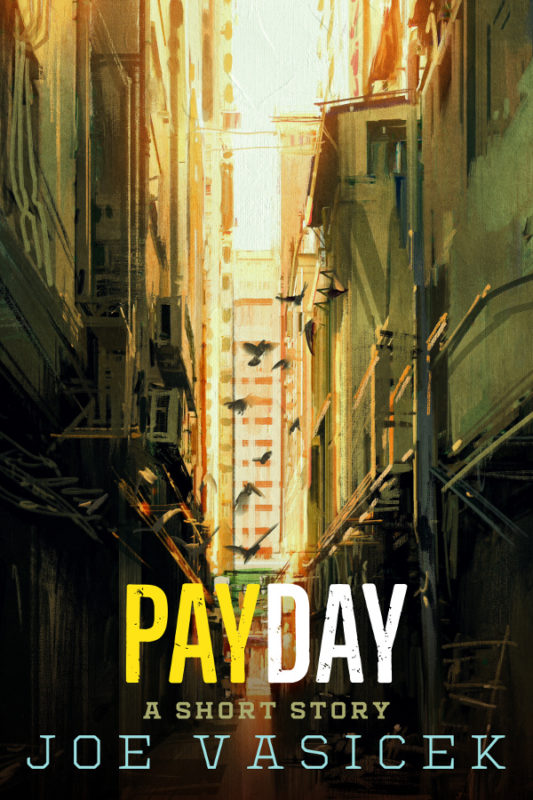
In the next few days, I’m going to unpublish my short story “Payday.” It will still be available in the collection In Times Such As These, but I think it’s about time that its run as a free short story single should come to a close.
(For those of you who may not be familiar with how I do things around here, I typically publish my short stories first as free singles, then bring them down when I have enough to bundle into a collection. I’m actually going to take down a bunch of my short story singles over the next couple of weeks as I get ready to publish the second batch of stories that will appear in my fourth collection, Beyond World’s End, sometime this spring.)
I originally wrote “Payday” back in 2017, in response to an anthology call sponsored by the Economic Security Project, an NGO whose stated goal is to bring about a universal basic income. My story (which obviously did not win the contest) showcases all of the dangers of a UBI, such as inflation, supply chain shortages, and the breakdown of local businesses and communities.
I self-published the story in March of 2020, just as the pandemic was getting started. At the time, I had no idea that my warnings and predictions would soon become so prescient. The stimulus checks and unemployment benefits weren’t exactly a UBI, but they were regarded by many as a stepping stone to enacting that policy, and what did they lead to? Inflation, supply chain shortages, and the breakdown of local businesses and communities.
In January 2021, I unpublished “Payday” so as to include it in the collection In Times Such As These the following month, but then the other shoe of the pandemic began to drop. The threat of rampant inflation, which the authorities claimed would be “transitory,” convinced me that this story was too timely to take down, so I put it back up as a free short story single, where it remains until today.
At this point, however, the story is less of a prescient look at a troubling possible future than an obvious, and perhaps too “on the nose” (I tend to get that criticism a lot) extrapolation of our present situation. For that reason, I don’t think it’s worthwhile to keep it up any longer. It had a very good run, garnering more than 5,000 downloads, which isn’t enough to have a significant impact on the national discussion, but is still greater than the circulation of most science fiction magazines and podcasts (including, most likely, the original anthology call).
“Payday” will still be available in my collection In Times Such As These, and I do still plan to keep it on submission to the traditional magazines as a reprint, but the free short story single will come down in the next couple of days. If you haven’t already picked up a copy, now is the time to do it.
It’s been a very long time since I posted on this blog. I wonder if anyone is still following it. About a year ago, I pivoted from the blog to my newsletter, and while that’s going well, this blog has been mostly neglected.
And it would have continued that way, if not for recent events. I’m talking, of course, about the peaceful protestsrace riotsMarxist insurrectiondomestic color revolution whatever the hell is happening in the United States right now. But the thing that really pushed me to action was Kris Rusch’s latest business post: Speaking Out.
Until that post, Kris was one of the people I admired most in the publishing industry. I’ve followed her business blog since 2010, and she was one of the most influential people in convincing me to take the plunge and self-publish. It’s been one of the best decisions of my life, not just from a career perspective, but from a personal perspective as well.
In her latest post, however, I feel that Kris went over the cliff with the rest of our fractured country. Here are the parts that got to me:
The letter [Jeff Bezos] posted on his Instagram page from some racist named “Dave” (last name redacted) told Bezos he would lose customers if he continued supporting Black Lives Matter. The letter is breathtaking in its racism…
…the people who bother me the most are the folks who, for economic or political reasons, can ignore the racism and hatred that spews daily from the White House…
I draw the line at hatred, racism, and bigotry in all its forms. I can’t respect a bigot. I don’t want to be near a racist…
If this post makes you feel the urge to write me a screed or tell me that I should tolerate the bigots for the sake of unity, please do me a favor and just leave.
What is a “racist”? What is a “bigot”? To the left-wing ideologues who control the cultural narrative right now, it’s anyone who dares to oppose their radical agenda. The mayor of Minneapolis is “racist” because he won’t abolish the police, in the midst of the most violent and destructive riots that city has ever seen. White people who refuse to literally kneel before people of color and denounce their white privilege in communist-style struggle sessions are now considered “bigots.” Anyone who dares to utter any sort of criticism or counter-argument to the narrative of Black Lives Matter is fired, canceled, humiliated, doxxed, and destroyed.
Does Kris not see this? When you are so ideologically possessed that a “bigot” is anyone who refuses to (literally) kowtow to your ideology, a tolerant and diverse society becomes impossible? When speech is violence and violence is speech, violence will be used to silence speech. Those who are kind to the cruel inevitably become cruel to the kind.
I tried to post a comment on her blog, explaining that some of these “bigots” who have unfollowed her or withdrawn their Patreon support aren’t doing it because they want to “silence” her, but because they feel she doesn’t recognize that they have legitimate reasons for disagreeing with her, and aren’t the bigots she thinks they are. Yes, Kris, it’s important to speak out, but it’s also important to listen.
What happened next was all too predictable. On a blog post about the importance of speaking up, Kris silenced me. The only comments that she has allowed are the ones that fawn over her and tell her she’s right. Typical.
I can endure a lot of bullshit, but two things I absolutely cannot abide: gaslighting and hypocrisy. So ultimately, it was this episode with Kris, a person I used to admire and respect, that spurred me into action.
This blog is going to become a lot more active in the coming weeks and months. The newsletter will still be my main vehicle for reaching out to readers and cultivating fans, but the blog will be a place to share my more controversial thoughts and opinions. That said, I intend to be very deliberate and conscientious about what I post here, and avoid shitposting, spewing outrage, or going off on political rants.
My working assumption is that the chaos engulfing our country will continue to escalate through the 20’s, and that things will get much, much worse before they get better. We may see an American holocaust. We may see American gulags. We are already experiencing the digital ghettoization of libertarian and conservative voices—or, more accurately, voices that refuse to conform to the cultural and ideological narrative of the progressive left.
That said, I am still optimistic about the future. I believe that after the chaos and violence plays itself out, we will return to the core values that make us Americans. The Republic will survive. Liberty will prevail. Enough of us will refuse to go over the cliff with everyone else that we will, when all of this is over, restore our country.
When that happens, the only people with any moral authority will be the ones who refused to bend the knee—the ones who had the courage to speak out at the risk of losing their careers, their livelihoods, and in some cases even their lives. People like Jordan Peterson, Tim Pool, Dave Rubin, Carl “Sargon of Akkad” Benjamin, and others who stand in the face of cancel culture to call out the lies—the gaslighting and hypocrisy—and serve the truth.
This is my mission statement for my writing career:
To serve the truth and empower my readers to be better people for reading my books.
I cannot remain silent and accomplish this mission. The forces that push us to bend the knee are the ones that compel us to speak out, because we must speak out if we refuse to go over the cliff with the rest of humanity.
I recognize that this is essentially the same argument that Kris was making. And on this point, I think she’s right. Where she goes off is in calling anyone a bigot who falls outside of her narrow echo chamber. I despise echo chambers and don’t intend to fall into any of them.
So I’m going to set some rules.
First, I’m going to assume that anyone who engages with this content is a reasonable person who has come in good faith, no matter their views. No matter how vociferously you disagree with me, I will always strive to see the best in you, and to be generous with the benefit of the doubt.
Second, I’m going to assume that most of my fans and readers are going to disagree, on some level, with the more controversial things that I post here. Some of them will agree and voice support, but others will roll their eyes and click away. I’m not going to fall into the trap of thinking that all good people see the world the way that I do, because that way lies madness.
Third, and most importantly, I’m going to bet that if I keep the first two assumptions on the forefront of my mind with everything that I post here, my readers and fans will stay with me even when I share an opinion with which they vociferously disagree. In today’s hyper-partisan atmosphere, that’s a very dangerous assumption to make, but I don’t think my readers are the kind of people who would jump off the cliff with the rest of humanity.
I think there’s still a majority in this country who see the insanity for what it is, but don’t know what to do about it. That’s the person I’m writing this blog for: the one who’s wondering if they’re the only sane one in a world gone mad. Until just a couple of years ago, that was who I was. But now, I believe that even with all the craziness right now, there are a lot more people like us than we realize.
So yeah, the blog is back, and it’s going to get spicy. I may lose a few readers because of it, though hopefully not too many as I keep to the three rules that I listed above.
And if you have any thoughts or reactions, I’m interested to hear from you! Like I said at the start of this post, I have no idea if anyone still follows this blog, but I guess we’ll find out soon enough. The newsletter will remain my main focus, but I’ll post to this blog as often as the spirit moves me, which may be sporadic but won’t be never. And I’ll try to keep it as timely and interesting as I can.
January is a time for making forecasts and predictions, and Mark Coker of Smashwords certainly did not disappoint. I have a lot of respect for Mark Coker, not only for being one of the pioneers of indie publishing, but for continuing to share his data and insights with us over the years.
That said, I have many much opinions.
Mark gets a lot of flak from authors for his anti-Amazon stance, which is nowhere crystalized quite so perfectly as his 2018 publishing industry predictions. Seriously, half the post is a massive litany against Amazon’s publishing practices that systematically recounts just about everything he sees wrong. It’s quite impressive.
Perhaps the most inflammatory thing he says is this:
Authors who now derive 100% of their sales from Amazon are no longer indie authors. They’re dependent authors. I suppose we have indie authors and de-authors now.
Here’s the thing, though: he isn’t wrong.
Back in 2010, when self-publishing was still considered by many to be the “kiss of death,” I read a post on a writing blog (I think it was Writer Beware) that said, basically: “if you’re taking the indie publishing route instead of traditional publishing, that makes you self-published. So call yourself a self-published author, because you are one.”
At first, I was really pissed off at that blogger. Couldn’t she see that there was a huge gulf between indie publishing and self-publishing? A year or two later, though, I had to concede that she had a point. I was bringing my own baggage to the table by insisting that indie publishing was separate and distinct from the dreaded “self-published” label. Today, I don’t give a damn whether or not a book is self-published, and I don’t think most readers do either.
It’s the same thing with Mark Coker’s “indie authors” and “de-authors.”
The truth is, if you depend on only one publisher or publishing platform for all of your writing income, then by definition you are dependent. It doesn’t make a difference whether that’s a traditional publisher or Amazon. If you want to be independent, then you have to cultivate multiple income streams from multiple sources. It’s that simple.
You’re still a self-published author, whether you do savvy ebooks and print-on-demand editions. or whether you did a 5,000 book print run with a vanity press that sits in your basement from now to eternity. You’re still a dependent author, whether you’re making a killing on Kindle Unlimited or whether you sold your copyright to a Big 5 publisher for a mess of pottage.
However, while I agree with Mark on that much, I disagree quite strongly on his conclusion that the government needs to break Amazon up. Oh, no. Hell no. It’s not different this time, Mark. The Luddites are still wrong.
The biggest publishing story of 2017 was that Amazon’s biggest enemy is… Amazon. Because it turns out that when you stop paying authors for single-book sales and instead pay them shares out of a massive fixed pot, it incentivizes scammers to find all sorts of interesting ways to game your system. And if your business model depends on automating as much of your website backend and customer service as possible, you can’t fix the scamming problem without pissing off indie (and not-so-indie) writers everywhere.
It’s going to take a while for all this to shake out, but I do believe that indie writers will come out on top—so long as Amazon’s competitors in the publishing world step up and actually compete.
Stop whining about Amazon, Mark, and bring your damn website out of the late 90s.
With that out of the way, here are Mark’s predictions, with my thoughts.
1. 2018 will be another challenging year for the book industry
Has there ever been a year in which this hasn’t been the case? Long before KDP, Smashwords, or any other epublishing platform was invented, all of the best books have been up on the internet for free. Movies, TV, video games—we’ve always competed with these things for reader attention, and always will. I don’t see anything that makes 2018 different in that regard.
In fact, I’m going to go out on a limb and predict that the book industry will stabilize and grow—not as measured by traditional metrics like Nielsen Bookscan, but in non-traditional metrics like the Author Earnings Report. Why? Because books are counter-cyclical, and we’re already overdue for the next recession. The stock market is melting up, the yield curve is flattening, inflation is already hitting real estate, healthcare, and education, and the geopolitical situation is a nest of potential black swans.
I don’t think 2018 will be the year when shit hits the fan—I expect that will happen in Trump’s second term, sometime around 2021 or 2022. If nothing else, the tax cuts have applied palliative care to our economy. But the debt will continue to grow, the deficits will get worse, and inflation is going to hit the average consumer in a massive way this year.
All of this bodes well for books.
2. The glut of high-quality low-cost ebooks will get worse
Please, Mark. The Tsunami of crap was never a problem to begin with. Like I said above, long before epublishing was a thing, the best books ever written in the history of the world were already available, for free, through sites like Project Gutenberg.
There’s still plenty of opportunity for new authors. The Childlike Empress still needs a new name. The Nothing is not going to swallow Fantastica. If you know how to swim, you can still swim just as well, whether the water’s ten or ten thousand feet deep.
3. Barnes & Noble is sick and will get sicker
I can see this happening. I haven’t been following Barnes & Noble too closely, but they failed pretty hard with the Nook and their corporate troubles haven’t been good for the bottom line. At this point, though, Barnes & Noble is dead wood that needs to burn in order for something else to come up in its place.
4. Kobo’s sales will falter
I don’t think they will. Kobo is much bigger in the international markets than Amazon, and the economic problems are worse overseas than they are here in the States (which means that conditions are better for books). I think Kobo will do just fine, though I’m not sure that Smashwords books on Kobo will do as well.
Kobo is still innovating, with things like Kobo Plus and the promotions tab on KWL. Mark Lefebvre had a good run, but I think it’s a good thing that they’ve got some new blood coming in. I predict that Kobo will do just fine.
5. Devaluation pressures will persist
Again, I completely disagree with Mark Coker on this one. Ebook prices for indie books have actually stabilized over the past few years, and with increasing inflation, I predict they will tend to rise in 2018, though not in a dramatic way.
Once you get below a certain price point, competing on price really doesn’t make much of a difference, and I think a lot of successful indies understand this. Also, books are not fungible. When I make time to read, I don’t want just any book—I want that book. So long as it costs me less than a good meal, price be damned.
There is, of course, an argument to be made that all else being equal, power readers are drawn to lower-priced books. It’s probably an exaggeration to say that these power readers are king makers, but it’s not too far from the truth. That said, the way to get around this is to run periodic sales and promotions, just like any other industry.
Come on, Mark. Just because your book is $5.99 doesn’t mean you can’t mark it down to free or 99¢ every once and a while.
6. Single-copy ebook sales will decline
On Smashwords, perhaps. I’m not convinced that they will generally.
For the entertainment value, it’s a hell of a lot cheaper to buy a book (especially an indie book) than it is to buy a video game or a movie. Because of that, books tend to be counter-cyclical. The real economy is not doing as well as the official numbers say: households are still under massive pressure, with debt at unprecedented levels and wages shrinking as adjusted for price inflation. I predict that this trend will continue in 2018.
I haven’t seen the data on this, but if I had to speculate, I would say that power readers tend toward subscription models for books, whereas casual readers tend toward single-copy book sales. I would also speculate that power readers are less responsive to economic shocks than casual readers—they’re going to read whether or not their pocketbook is getting squeezed. Again, I haven’t seen the data for this, but if I had to plant a flag, that is where I’d plant it.
Are single-copy sales cannibalized by book subscriptions? To an extent, yes, but I think we’ve already hit something of a floor. If the economic pressures on the middle class worsen and we see an influx of casual readers into the market, I think single-copy sales will start to bounce back. As I see it, there’s a lot more room on the upside than the downside.
7. Romance authors will feel the most pain from KU
Can’t speak to that, as I’m not a romance author. But based on Amazon’s missteps in 2017, I think KU will actually see a decline as authors continue to flee and scammers continue to dominate. Again, I don’t see much more room on the downside for things to fall.
8. Large traditional publishers will reduce commitment to romance
And large traditional publishers will continue to shove their heads up their backsides, so no one in the indie publishing world will care. Kris Rusch wrote a much more lengthy analysis where she says as much.
9. Email list fatigue
Totally disagree. The guys over at the Science Fiction and Fantasy Marketing Podcast discussed this recently, and the conclusion they came to is that authors who claim that email lists don’t work as well as they used to are doing it wrong.
That said, I could see a bit of a shakeout as readers who have signed up for every author’s list go through and cull their inboxes. And I could also see a stabilization and/or decline in sites like InstaFreebie that offer free books in exchange for signing up for an author’s list. But I don’t think this will translate into declining effectiveness of email lists generally.
In contrast, I predict that email lists will continue to be the most effective marketing tool for the vast majority of authors, myself included. My list has never been larger, and never been more effective at selling books.
10. Pressure will build to drop author royalties
I could see this happening. That said, the pessimists in the industry have been predicting this for years, and I don’t see why it would happen now. In fact, if it did happen now, it would create a great opportunity for competing publishing platforms.
Amazon may be the big dog in the publishing industry, but they don’t have their house in order. The KU scamming scandals of 2017 demonstrated this quite clearly. If Amazon were to cut author royalties, it would hurt KU authors the most, and really bite Amazon in the ass long-term.
It’s not a bad idea to have contingency plans in place, in case something like this happens. That said, I don’t think Amazon’s position is strong enough to pull it off.
11. Audiobooks will be a big story in 2018
This, I can see happening. From what I can tell, audiobooks are experiencing explosive growth, which will continue as more competitors like Findaway Voices find a place in the market, and more indie books come out of their exclusivity agreements with Audible. I really need to figure out how to put out audiobook versions of all my books.
12. Audible will face increased competition
This is already happening, and I believe it will continue. Perhaps we will see more pressure to raise author royalties for audiobooks than we will see pressure to lower author royalties for ebooks.
13. Readers will still pay for books worth reading
Yes, indeed. In other news, the sun will continue to rise in the east, people will continue to grow old, and teenagers will continue to believe that they are the very first ones to discover human sexuality.
14. New subscription services will be introduced
I’m very interested in this one. Mark is in a much better position to see these things coming than I am, and if he’s right, that would be very big news indeed.
Will it be a game changer? I don’t think so, but I half expect to be wrong. Right now, my books are on Scribd and Kobo Plus, and I haven’t seen much of an effect, but subscription services tend to shake up every industry where they take root, and ebooks aren’t an exception.
That said, I don’t think that any new book subscription services will dramatically change my own indie publishing business in 2018. I hope to be proven wrong.
15. Calls will grow in the US for antitrust action against Amazon
Fat chance, Mark. If anything, Walmart and Home Depot are going to eat Amazon’s lunch. The “Amazon effect” has been greatly exaggerated: truth is, the retail sector is just full of dead wood after a decade of easy credit, stock buybacks, and government bailouts.
Trump is going to defy expectations and win a second term. The Republicans may lose the House in 2018, but I don’t think they will. As for the Senate, almost all of the seats up for election are currently held by Democrats. The Russiagate narrative is coming apart, the Clinton Foundation is once again under investigation, tax cuts are coming, and #MeToo is causing the Left to eat their own. I think the Republicans are going to have a good year.
If calls for anti-trust action against Amazon grow, they will fall on increasingly deaf ears. Thank goodness.
16. Indies will reassert control over platform
More to the point, Twitter and Facebook will generally decline, while sites like Steemit and Weme will pick up the slack.
If indies do take control of their own platforms, it will be through things like blogs and email lists, which runs contrary to Mark’s prediction in #9. However, I half expect a shakeup in social media to lead to a mass migration of authors to some new site, once the first movers experience huge success.
I’m not sure of this one. It could go either way. Barring the rise of the next Facebook, I think Mark may be right. But I consider it just as likely that we see Facebook go the way of MySpace as something else takes over.
17. Indie authors will take a closer look at podcasting to reach new readers
Not a bad idea. I doubt it will take off generally, but a few authors will certainly find new opportunities here—especially authors who are also invested in producing their own audiobooks. Could shake things up a bit.
Overall, while I tend to disagree with Mark’s 2018 predictions, he raises some interesting points to consider. Here are some predictions of my own:
I will continue to write new books.
I will continue to publish new books.
A lot of new readers will discover my books.
My email list will more than double.
I will fall behind on this blog more than I should.