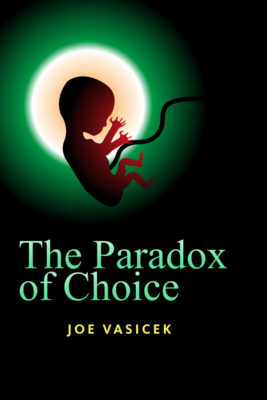
Larry Correia just came out with another highly entertaining rant, this time on sensitivity readers. In case you don’t know, “sensitivity readers” are people that publishers hire to go through an unpublished manuscript to make sure that there’s nothing that could offend any marginalized groups. Larry sums it up quite well:
A Sensitivity Reader is usually some expert on Intersectional Feminism or Cismale Gendernormative Fascism or other made up goofiness who a publisher brings in to look for anything “problematic” in a manuscript. And since basically everything is problematic to somebody they won’t be happy until they suck all the joy out of the universe. It is basically a new con-job racket some worthless scumbags have come up with to extort money from gullible writers, because there aren’t a lot of good ways to make a living with a Gender Studies Degree.
It only gets better from there. And I have to say, I completely agree with him, not only from a political angle (in fact, politics has almost nothing to do with it) but from an artistic angle as well.
You can’t tell a good story without taking the risk of offending somebody. That’s because being offended is always a choice.Always. My favorite Brigham Young quote, which has gotten me banned from multiple forums, is this:
A good story stimulates the mind and excites the emotions. Anytime that happens, people will inevitably be offended. It doesn’t matter the reason. Humans are weird.
Here’s another way of looking at it: in order to create truly great art, you have to pour a significant part of yourself into it. That’s scary, because it makes you vulnerable.
The perpetually outraged crowd loves this, because it’s a weakness that they can exploit. They don’t care about your art. They only care about power. If you give them that power, they will suck all the greatness out of your art and leave you bleeding and broken on the floor.
That doesn’t mean you should always necessarily go out of your way to offend people, of course. But relying on sensitivity readers is a bad, bad idea. Why?
Because fuck your sensitivity.
Seriously, that’s my favorite part of Larry’s rant. If your skin isn’t thick enough to tell these moral busybodies to fuck off—or to simply ignore them, which is probably the better choice—they’re going to walk all over you.
Which gets to the last part of his post:
To further illustrate how Sensitivity Readers stifle creativity and suck all the fun out of books, at a recent writing convention I attended there was a panel on Intersectional Feminism or something like that. I didn’t attend it (I’m not a glutton for punishment) but several of my friends went because they were curious to see how much of a train wreck it would be.
The panel was a bunch of feminists and the whole thing turned into a big competition of who could be more offended, and who could speak for more “marginalized” people. At one point a certain author (who is an upper class white lady) had to establish her street cred, so she actually called her professional Sensitivity Reader and put her on speaker phone.
Seriously, this shit is like the victim Olympics. It has fuck all to do with creating books that readers will actually enjoy.
I went to a party that night where a bunch of people who’d attended that clusterfuck of a panel were talking about it. Apparently the only panels at this event which were more dreary was the one about the evils of capitalism (I shit you not), and the one about writing comedy which degenerated into authors who’d drank the social justice Kool Aid telling everybody what not to write because it might be “offensive”.
I’m pretty sure I was at that convention. I didn’t attend the panel, but I did run into an aspiring professional creator who told me “I just found the solution to my problem! Sensitivity readers!”
Even at the time, I wanted to put my arm around this guy and tell him to have confidence in himself and in his art. I still feel that way. We talked a bit about the outrage crowd, and about the difference between trusted alpha readers who have your best interests at heart, and sensitivity readers who may or may not. But I felt really horrible about it, because I could tell that this guy was getting pushed and pulled and tossed back and forth in all the wrong ways.
If sensitivity readers provide any value at all, it’s basically as overpriced alpha readers. But even there, the value proposition is dubious because the feedback is so toxic. Larry is right: these people create nothing. They can only destroy.
I’m a creator, not a destroyer. Because fuck your sensitivity.
Please watch this video in its entirety (before YouTube takes it down). Whatever you think of James O’Keefe, this is serious stuff that he’s exposing, and it affects all of us.
The first time I deleted my Facebook, it was out of privacy concerns. I came back because there were social groups, such as my local church congregation, that organized all of their activities on Facebook and by being off the platform, I was cutting myself out of the loop. So I got back on, rationalizing that I could be careful about what I shared and it wouldn’t be an issue.
The second time I deleted my Facebook, it was because of the negative effect it was having on my life. I was disturbed about the way that social media was programming people, and I could feel it beginning to happen to me. It was around this time that I deleted my Twitter as well.
I came back because I worried that I was becoming too much of an “internet hermit.” There were also some social groups that it was more convenient to interact with over Facebook, but much less so than before. Mainly, I knew that there were people who wanted to reach out to me, and cutting out Facebook entirely seemed a little too extreme.
This time, however, it isn’t just about privacy issues, or even about social programming and the negative effects of social media in our lives. It’s about power, and conscience.
Facebook, Google, Amazon, and other big tech Silicon Valley companies have a massive political and cultural influence on our lives, and I don’t like what they’re doing with it. They’ve become too powerful, and now they’re abusing that power to shape our lives and our communities in ways that I don’t agree with. But the truth is, the only reason they have any power at all is because of us. We give them their power, and we can take it away.
I’m getting off of Facebook permanently this time because I don’t want to give that company any more power than they already have. I’m also deleting my Twitter. If I do come back to social media, it’s going to be through alternative platforms like Minds and Gab.
The next big step is to de-Google my life, and I’m not sure how I’m going to accomplish that. However, with the direction things are going, I believe it’s more important now than ever to do so. As for Amazon, it’s going to be much more difficult since such a large chunk of my income comes from them. What I will probably have to do is limit my dependence on these companies without cutting either of them out of my life completely.
The events in New York and Virginia of the past couple of weeks have been interesting, to say the least. The abortion debate has escalated dramatically, with talk of fourth-trimester abortions and keeping the infant “comfortable” while “a discussion would ensue between the physicians and the mother.”
Without getting too much into the politics of it, this discusion has put me in a very awkward position regarding one of my stories. It’s a very short piece, titled “The Paradox of Choice,” and it depicts two women having a conversation about whether or not to “abort” a baby who’s already been born. The narrative is entirely dialog, so it isn’t clear until the middle of the story that they’re talking about a living, breathing baby who happens to be sitting between them.
I wrote the story as a bit of a shock piece, to show that the line between infanticide and aborting an unborn child isn’t as clear as people think. When I wrote it, though, I thought that infanticide would still be considered abhorrent. I had no idea that the Overton window would shift as quickly as it has.
Hence the awkward position. Clearly, this story needs to be rewritten, but how? Expanded, perhaps? By adding more descriptions to actually show the baby? Or do I need to abandon the “shock piece” aspect and turn it into more of a reasoned discussion of evil?
I wasn’t originally going to write this piece, but a couple of years ago I felt a strong impression that I needed to. Even then, I only did about the minimum of what I needed to do to get it onto the page. This isn’t the sort of thing that I usually write. But now, I suppose I need to revisit it and put in the effort to make it properly shine.
Either way, it’s insane how quickly the debate is shifting.
I’m subscribed to six or seven short story podcasts, and I’ve noticed a trend on them recently. Before they start the story, they introduce the author by first listing all of the intersectional minority identities that the author qualifies for, like “queer,” “transgender,” “immigrant,” “disabled,” “person of color,” etc.
Whenever story starts off like this, I immediately delete it form my podcast.
I’m a busy guy. I’m subscribed to far too many podcasts to listen to every episode. There’s just not enough time. If I have a reason to skip it, I will.
When the first thing you tell me about the author of a story is where he/she/ze/your majesty falls on the intersectional victimhood stack, that tells me a couple of things. First, it tells me that the editors subscribe to this bullshit idea that victimhood makes you virtuous. It doesn’t.
Second, it tells me that the editors didn’t think that the story could stand on its own. Instead of giving a typical author bio, with a few incidental facts and a cute aside about the author’s wife/kids/pets/plans for world domination, the editors decided to lead with the author’s victimhood status. Because that’s why I should listen to the story. Because victimhood is virtuous, and if you don’t listen to this story after learning just how much of a victim the author is, that makes you a racist sexist transphobic Nazi fascist.
Fuck that.
I’m sure this post will generate outrage among some circles. There was a time when I would try to respond genuinely to such outrage, apologizing for causing offense and vowing to try better to understand, sympathize, and accept the experiences of…
Fuck that.
If it offends you that I automatically delete these sorts of podcasts, go fuck yourself. Seriously. Call yourself an autosexual and see where that put you on the intersectional victimhood stack. I don’t give a shit about your outrage. I couldn’t care less about how triggered you are right now. If that makes me a fascist, so be it. To paraphrase Syndrome from the Incredibles, when everyone’s a fascist, no one’s a fascist. (Which is very convenient for actual fascists.)
By the way, I’m not actually opposed to stories written by immigrants, or lesbians, or transgenders, or people of color. I’ve listened to quite a few good ones. “And Then There Were N – 1” from Escape Pod was really fun. So was “Octo-Heist in Progress” from Clarkesworld a couple of months back. Neither of which were introduced by describing just how many oppressed victimhood classes the author qualified for.
If there’s one thing we’ve learned from the Trump era, it’s that when people call you a racist sexist transphobic Nazi fascist, they really just want to bully you into silence. But all bullies are cowards at heart. If they want to silence you, it’s because they know that they’re wrong.
Can we please return to the time when everyone acknowledged that stories should stand or fall on their own merits, not on the merits of the author? Mur Lafferty did quite a few ISBW epidodes on this, and she’s hardly a right-wing type. By all means, let’s bring all the queers and wierdos along. Science fiction wouldn’t be the same without them. But let’s not use a double standard when it comes to their stories.
So the March for Life happened recently, and Ben Shapiro did a live show where he used a thought experiment about going back in a time machine to kill baby Hitler to make a pro-life argument. His argument was that you shouldn’t kill baby Hitler; instead, you should raise baby Hitler in a more loving home so that he doesn’t grow up to be Hitler. In other words, you shouldn’t kill baby Hitler because babies are always innocent, and killing babies is wrong. Fair enough.
But the left immediately went crazy over this argument, calling Shapiro a nazi for defending Hitler, or just making fun of him for coming up with such a ridiculous idea. Never mind that it’s a thought experiment. Never mind that it raises valid moral and ethical questions, which those on the far left refuses to address.
Everything you need to know about this controversy is basically summed up in the video above, where Sargon of Akkad does a point-by-point critique of The Young Turk’s cringeworthy reaction. At this point, Sargon’s video has more views than TYT’s original video, and YouTube is deleting downvotes on the original.
I think Sargon is right. I think that Ben really hit a sore spot on the left, because they’d all kill baby Hitler if given a chance, and they don’t want to admit it. Not only is it bad optics, but it also points out the lack of moral foundation or principles on the far left. After all, if they’d go so far as to kill a baby, simply because of what that baby might turn out to be, what else are they going to do?
For the left, Nazis aren’t merely on the extreme end of the scale of good and evil; they are the scale. This is what gets to me. Black Pigeon Speaks put out a video on YouTube that has since been taken down, because it is true, and because it gets to the heart of this issue. Civilizations always have founding myths, which accomplish three things:
they tell the civilization’s origin story,
they define, in cultural terms, the difference between good and evil, and
they describe what the civilization holds to be sacred.
For example, traditionally in the United States, our founding myth has to do with the founding fathers, the Constitution, and the Revolutionary War. Our civilization was founded by pilgrims and pioneers, who lived under British rule until the King became tyrannical and we rose up to declare our independence. In cultural terms, good and evil are set out clearly in the Declaration of Independence, the Constitution, and the Bill of Rights. The thing we hold most sacred is our liberty.
You can also see this reflected in our coinage:
E Pluribus Unum — “from one, many,” harkening back to the Revolutionary War and our civilization’s origin story.
In God We Trust — recognizing the Judeo-Christian values that informed our founding documents, including the Constitution and Bill of Rights.
Liberty — the thing that American civilization holds most sacred.
In the Black Pigeon Speaks video which has since been taken down, he argues that Western civilization adopted a new founding myth after World War II, and that this new founding myth is responsible for much of the cultural and moral decay we’ve experienced in subsequent decades. In this new myth:
our civilization was born out of the horror and devastation of the world wars,
Nazism became the definition of evil, and
the Holocaust became the most sacred aspect of our civilization.
The Nazis were clearly evil. I’m not disputing that, or the reality of the holocaust. Killing six million Jews, Roma, Jehovah’s Witnesses, political dissidents, and mentally and physically handicapped in gas chambers designed specifically as engines of mass genocide is incredibly heinous, on a scale that is difficult to comprehend. There is no downplaying or excusing that kind of horror.
But without defending the Nazis in the slightest, that doesn’t make them the most evil regime in history, or even the most evil regime of the 20th century. Stalin was just as genocidal, possibly even more so, and I would argue that he was worse than Hitler. Mao was arguably worse than both of them.
Hitler wasn’t just a monster: he was a man, like any of us. Jordan Peterson is right: we should never make the mistake of thinking that we’re morally superior to the Nazis, because if we were in similar circumstances, we’d probably make similar choices. That’s simply the reality. Hitler isn’t the boogeyman, and the Nazis are not the definition of evil. They fall on an extreme end of the scale of good and evil, but we should never mistake the Nazis for the scale.
Which brings us back full circle to the pro-life argument. How do we know that we aren’t more evil than the Nazis? The Nazis exterminated the Jews out of fear and hatred, but we’re killing our own babies in many cases out of nothing more than apathy. The Nazis at least believed that the Jews were behind the collapse of German civilization, and used that argument to justify their argument that Jews were non-people. What argument do we use to justify treating the unborn as non-people? Certainly not a scientific argument. And we’ve aborted ten times as many victims of the Holocaust, so it’s not like the Nazis were worse in terms of scale.
I genuinely believe that future generations will look back on us with the same horror and revulsion that we look back on the Nazis. And honestly, I can’t say they’ll be wrong.
So would you kill baby Hitler? It’s a valid question that raises some very important points. Not only would I not kill baby Hitler, but I wrote a short story about a time traveler who stopped Hitler not by killing him, but by altering the course of history in a very different way. If you haven’t already, you should check it out: “Killing Mister Wilson.”
Anyways, those are my thoughts on the subject. Also, TYT has hit a new low for cringe. I suppose that’s par for the course when your network is named after a genocidal regime.
As you may have heard, the congressional hearings for Supreme Court nominee Brett Kavanaugh have been thrown into chaos late in the eleventh hour by shocking allegations of sexual misconduct. The accuser is a certain professor Christine Blasey Ford from Palo Alto, California. According to her, when Kavanaugh was around seventeen (I say “around,” because she doesn’t actually remember the year), he forced himself on her and tried to rape her.
She doesn’t remember where it happened. She doesn’t remember what time of year it happened. She didn’t tell anyone about it, until after she was married and seeing a therapist, and the story she told her therapist is materially different than the story she’s telling now. Also, all of the people she claims were witnesses to this act have vehemently denied, as has the accused.
But that’s not why I’m writing this blog post. I’m writing it because I have a confession to make. I haven’t come out with this story yet, because frankly, I’ve been afraid. But now is the time to come out and say it.
Christine Blasey Ford raped me.
From 2003 to 2005, I served in the California San Jose Mission for the Church of Jesus Christ of Latter-day Saints. I spent time in Sunnyvale and Cupertino, just a few miles from Palo Alto, that added up to almost a full year. While knocking doors one day, we came across Mrs. Ford and one of her friends. She was just visiting from Palo Alto, but they agreed to take the missionary lessons together. We came back three or four times, and struck up something of a friendship. Then, I was transferred to my next area.
I can’t remember the name of the friend, or where the friend lived. It was somewhere in the area of Sunnyvale or Cupertino. I also don’t remember which year this happened, or what time of year. In the Bay Area, all the seasons kind of blend together.
It was definitely Christine Blasey Ford, though. I remember her quite well.
Fast forward to April 2006. I had just finished my first semester at BYU, and had arranged to take a road trip to the Bay Area with one of my freshman dorm-mates, in order to visit my mission. When we arrived in Concord, I rented a white Ford Taurus from a local Enterpise and drove down the 680 to good old San Jose.
There were so many people from my mission that I wanted to meet, and Mrs. Ford was one of them. I still had her number, so I gave her a call, and we arranged to meet at the In’N’Out in Mountain View, along El Camino Real.
At first, I was happy to see her. She’d listened so intently to the missionary lessons, and I wanted to know what had happened to her after I’d been transferred. I knew that she’d lost contact with the missionaries, but I felt certain that once we were back in touch, her interest in the gospel would quickly be renewed.
While we were eating our burgers, I left to use the bathroom. She must have slipped something in my drink, because my memory gets a little fuzzy after that.
When I came back to myself, I was sitting in the passenger side of my rental. The car was parked in the back of an empty parking lot somewhere in Sunnyvale (I forget exactly where). To my horror, I discovered that my pants were down by my ankles. My crotch was wet and sore.
On the dashboard, I found a note. It said: “Thanks for the blowjob, Elder! <3 <3 Christie.”
I was mortified. I was ashamed. I didn’t know what to do. I was no longer a missionary, so I didn’t have any of that support structure to fall back on. And because I was traveling alone, there was no one I could really tell.
I never saw or heard from Mrs. Ford again.
For the last twelve years, I’ve lived in shameful silence. It just didn’t seem that anything good would come from going public with this. But now, it’s a burden that I can carry no longer. I deserve to be heard. My story needs to be told.
But wait, you say. What’s your evidence that any of this actually happened? How do we know that any of this is true?
I admit, I have no witnesses or evidence to corroborate my story. If pressed to prove it beyond a reasonable doubt, I probably couldn’t do so.
But before you rightfully dismiss everything that I’ve just written about Christine Blasey Ford, consider the following:
First, my story has more specific, verifiable details than Mrs. Ford’s accusations of sexual misconduct against Justice Kavanaugh.
Second, I’m a fiction writer. I tell lies for a living.
It is rare that I see something that truly makes me outraged. As trendy as it is these days to raise your fist and shout at the world, that’s something I generally try to avoid. But recently, I saw something that I just cannot let fly without addressing it directly.
It’s this:
The Good
Extra Credits gets it right that modern politics (in particular, American politics) is a winner-take-all game for the independent vote. On that point, they’re spot on. Elections are indeed won on the marginal voters, exactly as they state.
Approaching political systems from a game design perspective is actually quite brilliant, and they do a good job of laying out the basic rules. Players start with a limited number of action points, and a (relatively) fixed number of victory points. The key to winning is to use your action points to grab the victory points that are in play—or to prevent your opponent from doing so.
My problem with this video isn’t with the concepts they lay out. It’s with the concepts they miss—and how those concepts completely overturn the examples that they give.
The Bad
First, they completely miss how the game board actually works. There isn’t a single game board on which both sides play. Rather, each side has their own game board, which may or may not accurately represent reality. Information shortfalls cause players to draw up an inaccurate gameboard, and thus waste action points by spending them poorly.
That’s exactly what’s wrong with the example at 7:51. President Trump didn’t win by “growing the previously tiny fear of refugees circle,” he won by recognizing that the Washington establishment was completely ignoring a large cohort of marginal voters. They didn’t even show up on the game boards. Over time, Democrats and Republicans became so far removed from their voting base that their politicking ceased to represent reality.
It all goes back to the Tea Party. Actually, it all goes back to Woodrow Wilson, with significant turning points at FDR, Social Security, Clinton, and NAFTA, but the Tea Party is a good place to start.
As our first black president, Obama was considered sacrosanct. He received a Nobel Peace Prize before he set foot in the White House, which is highly ironic considering how he went on to become the first US president to be at war every day of his presidency. But I digress. The point is, he was held above reproach. Anyone who criticized him was immediately branded as a racist. After all, how could you possibly attack our first black president??
As a side note, this is why the quip at 10:20 is so damned infuriating:
Luckily, elections aren’t the only battlefield in politics. The United States of America isn’t a “sit down and shut up, you lost” kind of democracy.
Obama’s response to the Great Recession was a massive increase in government spending, and an explosion of the national debt. When the Tea Party organized to protest this, they were painted by their political enemies as racists. This scored the Democrats a cheap victory, but it also distorted their game board. By deliberately mischaracterizing the opposition, they failed to account for them and began to suffer from information shortfall.
The establishment Republicans thought they could win by playing on a game board that matched the one the Democrats were using. Normally, this is a winning strategy. When the political landscape shifts, you don’t want to be stuck playing on yesterday’s board—you want to keep up with the times.
But the Democrats had deliberately distorted their board so that it no longer represented reality. In other words, they began to believe their own lies. The more the opposition pushed back, the more they doubled down, and the more distorted the boards became.
This is where political capital comes in, and it’s something that Extra Credits completely missed. Players don’t just have action points, they also have a certain amount of political capital that acts as a sort of multiplier for their action points. This capital is basically the good will and trust built up with the other side. It takes a long, long time to gain this capital, and once it’s spent, it’s gone.
Obama spent all his political capital in his first term, mostly on the Affordable Care Act. At that point, our politics became deadlocked. Combined with the fact that his game board no longer represented reality, Obama suddenly found himself in a position where he couldn’t get anything done.
The Republicans saw this, and decided to save their political capital instead of spending it. If only they could win a few more seats—if only they could win both the House and Senate—then they could defeat the Democrats. Until then, they’d just have to play along, building their capital until the time came to spend it.
In Obama’s second term, he doubled down on identity politics, playing the race card at Ferguson. This won him some quick victory points, but it also set race relactions in the United States back almost forty years and further distorted the playing board. He also played fast and loose with foreign policy, pandering to the Iranian Mullahs, the Cuban Communists, the Japanese Imperialists, etc. The reason President Trump was able to back out of the Iran deal so easily was because Obama completely bypassed the Senate, which is the only body with the constitutional power to ratify treaties with foreign governments.
All of this combined to create a perfect storm that President Trump rode to victory in 2016. There was a massive reserve of marginal voters who hadn’t had a voice for years, and were completely unaccounted for on the Washington establishment’s game board. By playing identity politics, the Democrats had completely ignored them, and now they were desperate for a champion. That champion was Donald Trump, who—unlike the establishment Democrats and Republicans—was playing on a game board that actually represented the political reality. Furthermore, he had a massive reserve of political capital to draw on—capital that the Republicans had been hoarding for years. The Democrats had already spent all of theirs, not only with Obama, but with the DNC’s primary rigging and betrayal of Bernie Sanders. Suddenly, a bunch of the “gimmie” points slipped out of their hands.
The Ugly
And here we come to the worst part about the Extra Credits video—the part that really gets under my skin. The view of American politics that they present is so distorted by their own ideological possession that it completely lacks all self-awareness. It’s precisely this ideological dogmatism that pushed Donald Trump to victory in 2016, and will most likely push him to victory again. As someone who voted for Obama in 2008, I’ve already decided to vote for Trump in 2020.
Consider the animation. All of the political symbols are blatantly pushing left-wing causes, from the rainbow flag and the neon pink hair to the guns and the female symbols. Why not throw in a Gadsden Flag, just to round things out a bit? Even the thumbnail shows a “person of color” (I really hate that term) in liberal blue scheming against two conservative reds.
If that was all it was, though, I’d roll my eyes and ignore it. But it goes much deeper. Much, much deeper.
Civil rights is the fight for equal treatment under the law and in daily life. Sometimes it’s a defensive battle to ensure that people keep the rights they have, and sometimes it’s a proactive battle, like fighting for people who do not currently enjoy equal status.
Those are two completely separate things. The first is a negative right, the second is a positive right—or in other words, the first is a right from government overreach, the second is a right to government intervention.
The civil rights movement of the 60s was all about tearing down Jim Crow laws on the state and federal levels. These laws enforced segregation and made black second-class citizens. It was not about forcing Christian bakers to bake cakes for gay weddings. Those are two totally separate and incompatible things.
The American Revolution gave us the Bill of Rights, which is essentially a list of things the government is not allowed to do. In contrast, the French Revolution gave us the Declaration of the Rights of Man, which is a list of things that the government is obligated to do. The American Revolution succeeded, while the French Revolution failed. The American Revolution gave us the most powerful and prosperous nation in the modern era, while the French Revolution gave us the guillotine, the Reign of Terror, and two centuries of catastrophic European wars.
But never mind all that. Let’s just throw out these two separate and incompatible things under the same issue banner, and paint everyone who disagrees as opposing “civil rights” entirely:
But what if you’re a conservative candidate? At first, you might look at this and think: “Yikes, barely any marginal votes and the Liberals have this circle on lock! Not even worth trying.” What if you were to spend a few action points here by, say, taking an opposing stance to a current civil rights movement, whether you do that directly by, say, supporting a bathroom bill or indirectly through dog whistle tactics? You might manage to shock the liberal majority of gimmies in that circle, who will then demand a liberal response.
What about the Overton window? The Left has been using it to gaslight conservatives and libertarians for years. Case in point, this video by Freedom Tunes:
If calling the Left on their bullshit is “dog whistle tactics,” then we aren’t even living in the same country anymore—and that’s what makes this so dangerous.
For a democracy to work, both sides need to be able to talk with each other in constructive way, where both sides genuinely hear each other. When that becomes impossible, we fall back to political tribalism, which grows like a cancer, tearing our society apart with political violence and, ultimately, civil war.
If you are so locked into your own worldview and beliefs—so entrenched in your own echo chamber—that you cannot acknowledge what the other side believes about themselves, then we’re done. The United States is over. Our republic has ceased to function. Democracy dies in darkness—not the darkness of bad journalism, but the darkness of ideological possession, which blinds us from seeing each other as we really are.
And this is why Extra Credits’ conclusion is so deeply, horribly wrong:
We are in this 24/7. Even outside the election cycle, a civil rights activist can always push whoever is in office to take action. Exactly how to go about this will probably require a few more episodes to cover.
No. That is NOT the solution. Doubling down will only make things worse—much worse. The only way out of this cycle is to genuinely listen to what the other side is saying, not to force everyone else to listen to you.
We’ve entered a very dark time in American politics, and not because President Trump is a Nazi. The fact that so many people can legitimately believe something so ridiculous is symptomatic of the underlying problem. If identity politics and political tribalism prevail, then the United States will break apart. Whether by secession, insurgency, or some other form of civil war, the American experiment will end, and we will revert back to the cycle of tyranny and chaos that has defined human history since the invention of the sword.
Guns, gold, and food storage. If ye are prepared, ye shall not fear.
Will Witt from PragerU recently went to New York and asked a bunch of random people this question. The result was this video, and holy heck. I’m not even a Republican, and I’m infuriated.
We have a word for people who don’t tolerate anyone who disagrees with them. It’s INTOLERANT.
We have a word for people who only make friends with people who think and believe exactly the way that they do. It’s CLOSED-MINDED.
We have a word for people who are so convinced that they’re morally superior to everyone else that they won’t even consider an opposing point of view. It’s BIGOTED.
This is why Trump is your president, you intolerant, closed-minded bigots. After eight years of putting up with your side’s hypocrisy, the rest of us got so sick of it that we voted for the one guy who tells it like he sees it.
Trump may be an asshole, but at least he isn’t a hypocrite about it. You, on the other hand…
To be fair, there’s no way to tell how many of the people Will Witt interviewed were as asinine as the people in the video. All we’ve got are a bunch of anecdotes, and the plural of anecdote is not data.
There are a lot of scandals happening in the indie publishing world right now. The latest one has to do with Amazon deleting KU reads from March: some authors have seen their page reads retroactively revised down as much as ninety percent.
The speculation is that this is connected with Amazon deactivating several customer accounts, allegedly on the basis of those customers accepting free or gifted items in exchange for reviews. It’s also supposedly connected with Amazon’s recent legal arbitration against book stuffing in KU, which scammers use to inflate their page reads. Until now, Amazon has done precious little to push back against endemic scamming in KU.
The best potential explanation for this that I’ve read comes from TexasGirl and PhoenixS over on KBoards. TexasGirl writes:
I think it goes like this:
— An author hires a bot reader to inflate their page reads.
— The bot account opens the book and page reads through it.
— The bot then spiders the sales page for other books like it, to strengthen the association with other books Amazon has placed either as 1: normal also-bots 2: sponsored products
— The bot opens the also bot or sponsored books and reads them too.
This creates synergy between the paid bot book and collaterally botted book. This means the other bot accounts will do the pathway as well, creating more page reads via bots by the bad accounts. It ALSO muddies the waters as to which books hired the bots and which were just secondary opens.
A good portion of those “bots” may well be incentivized readers. Once a real reader account has been identified as a recipient of incentives either for leaving reviews or for borrowing or for reading — or skimming through — a book, then all their reviews and borrows/reads become suspect. So anything they might borrow, even for their own, real personal pleasure (often within the same subgenre they’re getting incentivized for) would be dinged.
In other words, KU authors who use AMS ads are inadvertently shooting themselves in the foot, as the bots and click-farms use the sponsored links to find legitimate books to borrow (in order to mask their illicit activity). Also, when Amazon deactivated a bunch of customer accounts, they also removed a bunch of legitimate page reads, putting the screws on some of their KU authors.
I have many thoughts on this subject. Personally, I haven’t been affected at all, as none of my books are in Kindle Unlimited. I do feel for the authors who have been hit, though. It takes about two months for book royalties to show up in your bank account, so when you think you have $$$ coming only to have it arbitrarily disappear, it can create some heartburn-inducing cashflow problems. No one likes to be jerked around like that.
In my view, though, this is all just one car of a much larger train wreck.
The big tech companies that comprise the FAANGs all seem to suffer from the same hubris: that the fundamental laws of nature, economics, and human behavior can all be overcome by a sufficiently advanced algorithm. Combined with this is the equally arrogant hubris that they, by virtue of their power and success, have a responsibility to reshape the world in a progressive way, even if that’s not what their users want.
We can see the second part of this hubris in Zuckerberg’s recent testimony to congress. His admission that Facebook bears responsibility for the content on its platform has got to be giving his lawyers multiple aneurysms right now.
The first part is evident in the way Amazon structured Kindle Unlimited. The whole program is rife with perverse incentives, from the zero-sum payment structure of the KDP global fund to KENPC and the All-Star bonuses. Book stuffing, click-farming, and other KU scams are both predictable and forseeable. Instead of restructuring the program, though, or hiring a team to clean it up, Amazon has either denied that any problem exists, or created algorithms to play whack-a-mole with the scammers, often striking legitimate authors in the process.
The dirty little secret is that KU wasn’t created to benefit authors or readers, however, but to benefit Amazon by preventing a rival ebook subscription service from eating into their market share. Hence the exclusivity requirement for KU authors. By tying up the majority of the indie publishing community with exclusivity, Amazon denies the competition the content it needs to get off the ground. Never mind that KU isn’t that great for readers and is downright horrible for authors.
But why all the drama right now? Because this train wreck is headed for a massive cliff: an antitrust suit against Amazon. Between President Trump’s tweets about Jeff Bezos and the “Amazon Washington Post,” and the mainstream media’s neverending crusade against the president, the political winds are shifting in ways that must appear very foreboding in Seattle.
Amazon is cleaning house, and a lot of dolphins are getting netted as a result. One bad apple spoils the whole barrel, and the scammers have been squatting in Amazon’s house for years. But the real train wreck is just getting started, and when it goes over the cliff with the rest of this mixed metaphor, that’s when the fireworks will begin.
As an indie author, now is a good time to be as flexible as possible.