 Over the summer I worked part time at a local call center. At the time, it was just what I needed: a flexible job that helped me pay the bills while figuring out where I wanted to go next. That said, I learned very quickly that call center work is not the sort of thing I want to do for large portions of my life.
I’m glad to say I quit my job on good terms with the management, and was one of their more productive interviewers. I don’t harbor any hard feelings against the company I worked for or any of the particular employees.
However, I do want to reflect a bit on the nature of the work itself, which was less than awesome, as well as some of the things I learned about myself in the process. Since this has nothing to do with the company itself, I’m not going to mention it by name. Also keep in mind that the things I have to say are heavily influenced by my own opinions, so they may not apply to you.
That said, here are some of the things I learned from working in a call center:
1) In the long run, jerks only punish themselves.
I spoke with a lot of incredibly rude people in this job. I also spoke with a lot of people who were courteous and well-meaning. Without exception, the jerks seemed overstressed and miserable, while only the courteous people ever seemed genuinely happy and content with their lives.
I think the way we treat others says more about ourselves than anything else. People who are mean and nasty to each other are never truly happy.
2) A small amount of patience makes most things go faster and smoother.
I hated it when people told me “just put ten for everything.” As an interviewer, I couldn’t do that–I was required to ask every question verbatim. Those who were patient enough to let me do that got through the survey quickly and painlessly, while the impatient people who tried to rush things almost always got upset.
I think it’s safe to say that this has a general application as well. When we’re patient enough to let things happen the way they’re supposed to, things happen faster and more smoothly. When we try to rush things that shouldn’t be rushed, we screw up.
3) The ability to genuinely listen is a rare skill.
I can’t tell you how many times I asked a simple question on a survey, only to find the person on the other line answering something completely different. I didn’t expect anyone to drop everything and devote their full attention to me, but how much effort does it take to answer a simple question?
I’ve known for a long time that listening is a skill that requires work to cultivate, but apparently, it’s also one that few people have truly mastered. If you can’t understand a straightforward question well enough to give a yes or no answer, how can you understand something as complex as another person’s feelings?
4) Political campaigns are evil.
This is a little tongue in cheek, but I stand by it one hundred percent. Every survey we conducted for a political campaign asked questions that were clearly geared toward developing negative campaign ads and manipulating public perception. None of them asked how the government could best serve the people.
5) Having a flexible work schedule makes writing both easier and harder.
It makes it easier because you can plan your time around other things that are going on; it makes it harder because your days generally have less structure.
I think I hit a pretty good balance by working in the morning and writing in the afternoon, then going in to work again in the evenings if I needed the hours. Call centers are always looking for people to work in the evenings.
6) Reducing everything to numbers makes human interactions meaningless.
This was, by far, the thing I found most frustrating about my work. I talked with hundreds of people from all over the country and didn’t connect with hardly any of them on a personally significant level. It was all about checking off boxes, where each completed survey was just another number in the system.
This tended to be more true of the short surveys, less true of the longer ones. For that reason, I loved it when I got a survey that took twenty or thirty minutes to complete. It’s very hard to talk with someone for thirty minutes without making some kind of a connection with them, however fleeting.
7) If you have a love of learning, find a job that lets you use your mind.
To be perfectly honest, I never felt completely satisfied at my work. A robot with sufficiently advanced voice recognition software could probably have done my job as well as I could (at least for the ninety second surveys). Over time, I felt like my work was turning me into a robot.
That’s ultimately why I felt I had to get out. Maybe I have a problem with authority, but I can’t stand being just another cog in the corporate machine. There’s got to be a way to pay the bills and still live life meaningfully.
Image courtesy W. Lowe
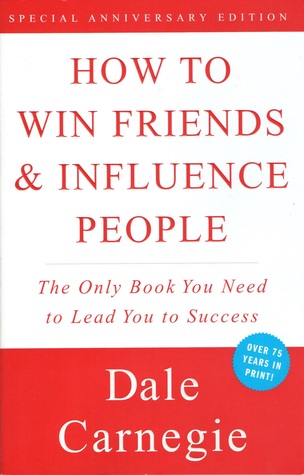 This is the book that invented the self-help genre, and for good reason. It was written more than 80 years ago and still stands as the definitive work on the subject. Unless you live in a cabin in the mountains where you never interact with other people, this book really is as important and life-changing as everyone says it is.
 So I have some crazy, unbelievable news to share: I got fired from my internship, under disputed circumstances. That’s right: fired from my unpaid internship four weeks before it was scheduled to end.