 So these past few days, I’ve been taking an unofficial break from writing. After I finished Mercenary Savior 3.0, I didn’t feel that the time was quite right to start my next project. Plus, I figured that after working so hard, I kind of deserved a break.
It’s been kind of weird, though. In some ways, it’s kind of relaxing not to be writing every day, but in other ways, it’s unsettling. I don’t feel like I’m recharging the well–I just feel like I’m being lazy. Writing is hard work, but it’s satisfying work, and I miss that sense of satisfaction.
I hope to get it back soon, though. I’ve got a rough outline and a ton of ideas for my next project, and I kind of know where I want to start. The trouble is, I still feel that something is missing, and I’m not sure what it is. Maybe the best way to overcome that is to blog about my ideas and see what happens.
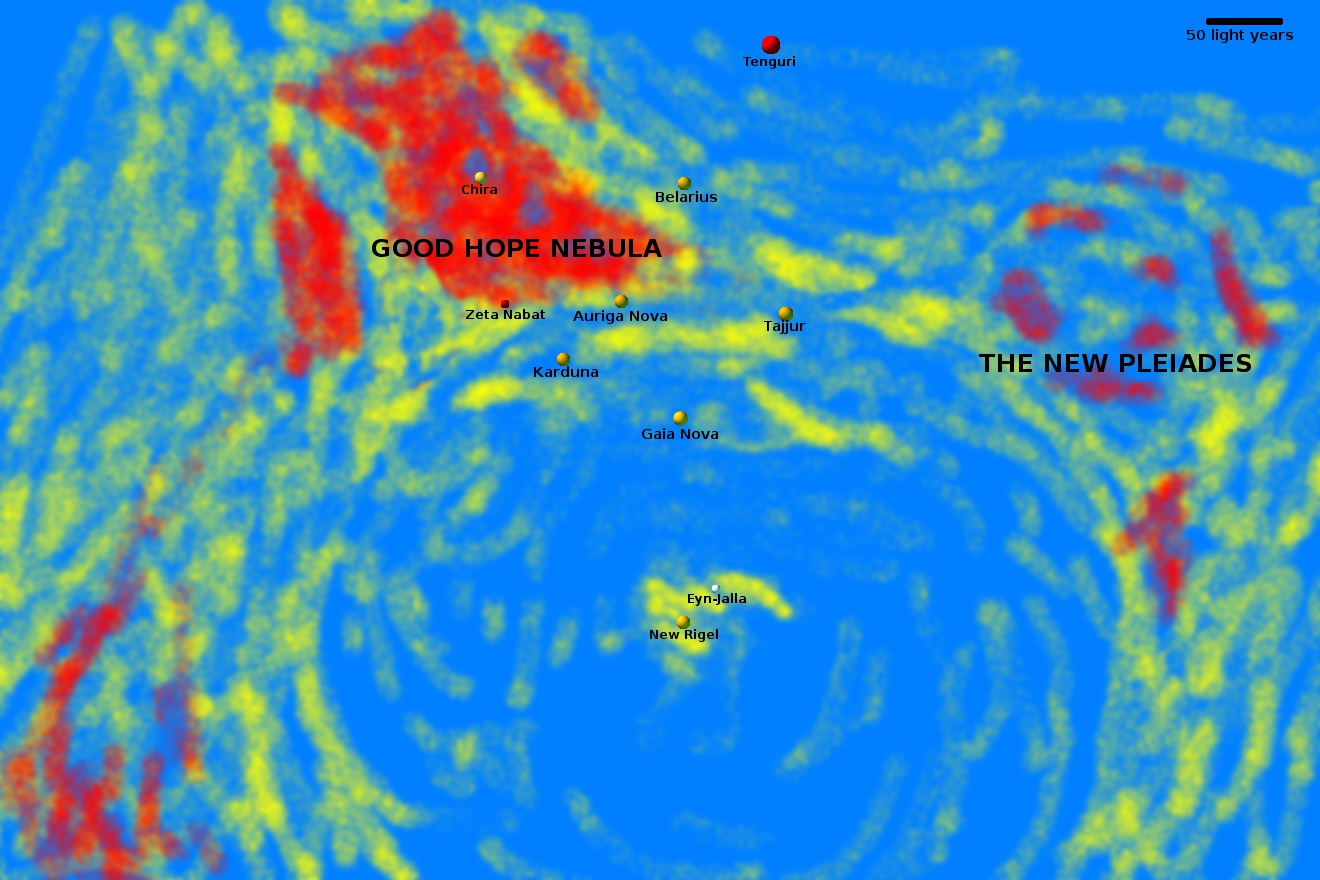
So for this next project, I want to recycle the story and characters from Hero in Exile, which I left unfinished back in winter of 2009 (right around the time when I finished Genesis Earth). It takes place on Gaia Nova, a planet that is half desert/wilderness, half densely settled urban arcologies. The main character is a boy named Jalil who became separated from his parents when their ship was destroyed in orbit; they threw him into an escape pod with his mother’s ID pendant, and he crashed into the desert. A local tribe of Bedouin-type nomads took him in and raised him, but he’s always wanted to get back to his biological family and find out who he really is.
Things get complicated, though, because the sheikh of the tribe has no sons, and therefore wants to marry Jalil off to one of his daughters in order to keep the tribal holdings in the family. He’s so desperate that he orders one of his daughters, Mira, to seduce Jalil by any means necessary. Since chastity and virginity are highly valued within the tribal society, Mira feels very uncomfortable about doing this. She has feelings for Jalil and would like to marry him, but not in that way. At the same time, however, she doesn’t want to disobey her father.
The story starts right around the time when Jalil sets out in quest to find his biological family and learn of his true origins. He decides that the best way to do this is to go on a pilgrimage to the Temple of a Thousand Suns, deep in the urban arcology side of the planet. The sheikh of the tribe sends Mira with him, under the pretense that she’s making the pilgrimage. The real reason she’s going, however, is to catch him in a moment of weakness and seduce him, thus forcing him through the stain on her honor to marry her and return to the tribe.
Jalil, however, is completely oblivious of all this. He is totally naive to the ways of the world, and believes very strongly in honor, virtue, and other high moral ideals. As he and Mira leave the desert and descend into the morally corrupt world of the arcologies, however, Jalil finds himself becoming more and more disillusioned. He and Mira become closer and closer physically, yet further apart in the ways that really matter because of the poison of deception and manipulation that has come into their relationship. Eventually, they both find themselves forced to make some defining decisions, just as everything they’ve known and believed is shattered and destroyed.
That’s the general idea, at least. I suppose you could call it a romance where the main obstacle to them getting together is the intense pressure on them to have sex. It’s probably been done before, but hopefully my sci fi take on the idea will make things interesting.
I still feel like I have a lot of prewriting work to do, though. I want to make Mira and Jalil both viewpoint characters, and to do that I need to have their backstories and motivations worked out very well. With Jalil, I think I’m ready to start, but I’m not so sure about Mira.
Anyways, that’s where things stand. Do you like the idea? Don’t like it? See something interesting that I haven’t seen? Let me know–please let me know.
Oh, and I need a new title. Hero in Exile is way too cheesy.