Yes, you saw that right: Trope Tuesday is back, at least for the next few weeks. I dropped out for a number of reasons, most of them having to do with my own interminable disorganization. I really love writing these posts, though, and you guys seem to love reading them, so I’ll do my best to keep the series alive. Here goes!
 Say the word “troll,” and you could mean one (or more) of a thousand different fantasy creatures. The things same goes with gods, demons, vampires, fairies, goblins, and to some extent, elves. But say the word “dwarf” and we all instantly know what you’re talking about. As tvtropes puts it:
You know them. Gruff, gold-loving, industrious, blunt-speaking, Scottish-accented, practical, Viking-helmed, booze-swilling, Elf-hating, ax-swinging, stout, long-bearded, stolid and unimaginative, boastful of their battle prowess and their vast echoing underground halls and mainly just the fact that they are Dwarves … An entire race of miners and blacksmiths, with names like Dwarfaxe Dwarfbeard and Grimli Stonesack, who are overly sensitive about any perceived slight, always spoiling for a fight, unable to speak two sentences in a row without calling someone “lad” or “lass,” and possessed of a love of gold and jewels that drives them to live in Underground Cities where they dig deep and greedily, (often with catastrophic results).
The defining characteristics of this fantasy race basically include:
- Short. Should be self-evident from the name of the race.
- Expert in smithing, forging, metalworking, and crafting priceless artifacts.
- Prefer to live underground, mining for ore and precious metals.
- Bearded to the extreme. Even their women often have facial hair.
- Fond of alcohol, and often rowdy or violent when drunk.
- Weapon of choice is a battle axe (or perhaps a war hammer).
In other words, Tolkien set the standard and everyone since has followed it with little, if any, variation. Tolkien himself got it from Norse mythology, which had a few key differences (for example, Norse dwarves would turn to stone if they were exposed to sunlight), but once Lord of the Rings hit the bookshelves, all dwarves would ever after be the same.
Why is this? Well, as fantasy races go, dwarves tend to be more like supporting characters than members of the main cast. Sure, there are plenty of series that focus on dwarves and dwarven culture, but the cultures that shape world history the most are usually human or elvish. Dwarves are often content to stay in their dwarven halls and do their own thing, far beneath the surface of the earth.
Brandon Sanderson has an interesting take on this question, which he explains in his famous essay “How Tolkien Ruined Fantasy” (which has since been renamed). Basically, he argues that the fantasy before Tolkien was all “low” fantasy, or fantasy that loosely uses our own world as a template. This sort of fantasy may have wizards, or magic, or monsters, but the setting itself looks a lot like something out of the pages of a history book. Tolkien was the first to really write “high” fantasy, where everything about the world is built from the ground up, and he did such a good job of it that we’ve all been copying him since. Rather than writing high fantasy in an original vein, most authors have switched out the real world for Tolkien’s and have been writing low fantasy in a Tolkienesque world (at least until the last decade or so).
It’s an interesting argument, but I’m not quite so sure how valid it is. The process that Sanderson describes basically happens in every genre: someone writes an extremely popular book, and for the next several decades (centuries, in the case of Treasure Island) everyone tries to go back to it in some way. And yet, how many different kinds of vampires are there? How many different kinds of cops, or detectives, or spies?
Perhaps Lord of the Rings had a much more overshadowing impact than Dracula or Frankenstein ever did, but consider some of the other fantasy races he basically invented. Ents never really took off anywhere outside of Tolkien, and trolls never universally became the big, dumb, evil, brutish creatures that they are in The Hobbit. Elves, which really were popularized in a huge way by Tolkien, have taken on a life of their own, differing fairly significantly from the immortal angel-analogues in Lord of the Rings and The Silmarillion. Orcs, too, are becoming more like “green klingons” in games like World of Warcraft, with an extensive honor system and intelligence on par with humans and elves.
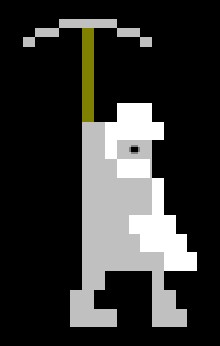
Is there something about the Tolkienesque dwarf that fulfills a deeper storytelling need, transforming the stereotype into an archetype? Or am I wrong, and dwarves just haven’t had the same makeover as elves and orcs? I don’t know. But I like dwarves, and I’m a political nerd, so I’ll leave you with a fascinating Marxist analysis of Dwarf Fortress, and an interesting picture of a female dwarf.
 So if you’ve been wondering why I seem to have gone missing from the world of the living lately, it’s because I recently started playing