What is your favorite fantasy race?
Races are to fantasy what aliens are to science fiction. This is especially true of traditional epic fantasy, which often features elves, dwarves, and other mythical beings living alongside humans. Every author has a slightly different take on each fantasy race, and many authors get creative and invent their own, but there are some common tropes and archetypes.
Almost all fantasy books include humans in some capacity, usually portrayed as somewhat more medieval than we currently are (to capture that yearning sense of nostalgia for a lost world or time that is a defining characteristic of the fantasy genre). They are almost always the default, meaning that if there are no other fantasy races, then the characters will all be humans.
Elves are typically forest people who live closer to nature than the humans, and as such they are usually more mystical and more magical. They are often immortal, and stand out visually by their pointy ears. There are, of course, many other takes on fantasy elves, ranging from Santa Claus’s primary labor force to the nasty little gremlins who like to steal babies, but most elves in modern fantasy are derivative of Tolkien’s elves, who are immortal, ethereal beings of glory more akin to angels than to humans.
My favorite take on the elves is probably from Tolkien himself. Perhaps I need to read a little more, but I haven’t yet encountered any other take on elves that seemed to do it better. Though I did appreciate Larry Correia’s trailer park elves from his Monster Hunter International series. That was hilarious.
Dwarves are much more industrious and mechanical than elves, and tend to live deep underground, where they mine for ore and treasure. They are short but stubborn and ferocious warriors, who tend to drink a lot and grow long beards (even the lady dwarves, in some accounts). Their preferred weapon is usually an axe.
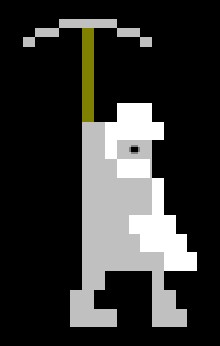
My personal favorite take on dwarves is the game Dwarf Fortress, which has so many ways in which your adorable little dwarf colony can die, including the “catpocalypse” where the cats adopt your dwarves as pets, then start to breed faster than your CPU’s cycles can keep up with them, so to keep your game from crashing you have to cull a few of them, resulting in their pet dwarves losing their minds and going berserk, causing other dwarves to lose their minds and go berserk, and the next thing you know everyone in your adorable little fortress is dead. Dwarf fortress is… a quirky game.
Most traditional fantasy books will also feature a race like the orcs, who are inherently and irredeemably evil. I’ve dedicated a whole other blog post to orcs, so I won’t recount it here, except to point out that in some iterations, they aren’t inherently evil so much as inherently savage. Basically, the orcs are the barbarians of the fantasy world, providing your aspiring Dark Lord with plenty of mooks and cannon fodder. Occasionally, you’ll get a story from the point of view of an orc, or more commonly a half-orc. Expect lots of graphic violence from these stories.
Hobbits or halflings are another common fantasy race, especially for fantasy that is derivative of Tolkien. As far as I can tell, this is a race that Tolkien made up on his own, and his books were so influential that the hobbits soon became a standard fantasy archetype in themselves. The original hobbits were basically little furry-footed British people who prefer to stay at home and eat lots of food rather than go on adventures. Perhaps this is why they became so archetypal: they’re the perfect kind of hero to refuse the call of adventure, a key step on the hero’s journey.
Those are the standard races. You’ve also got things like vampires and werewolves, the fey, and various other monsters like trolls, ogres, and dragons (though many of these are portrayed as beasts and not as people, even when they can talk). There are also various hybrids, such as half-elves and half-orcs, usually interbred with humans. Shapeshifters are also quite common, and can make for some very interesting story.
Why so many races? For many of the same reasons why science fiction has aliens. It gives us a chance to look at strange and foreign cultures without carrying any of the baggage that can come from using a real-world foreign culture. As with most aliens, most fantasy races aren’t truly any more foreign to us western readers than the Japanese. But it can go deeper than this, giving us a chance to play around with things like immortality or magic so that we can ask ourselves “how would we be different if we had that characteristic?” Because ultimately, no matter the race (with the possible exception of orcs), all of the characters who belong to these races are still people.
 So if you’ve been wondering why I seem to have gone missing from the world of the living lately, it’s because I recently started playing