Do we even exist?

I subscribe to just about every science fiction and fantasy podcast, both the pro-zines and the semipro-zines, and on Saturdays I listen to all of the episodes from the last week while making waffles or doing chores. Since there’s usually about a dozen stories to listen to, and I rarely have the time to get through them all, I’m not shy about skipping a story when it becomes too boring, or too graphic, or too preachy, or if the sound quality is too poor.

Today, while listening to episode #36A of Uncanny Magazine, one of the editors started it off with this:

Well, Lynn, summer’s nearly done… it went into a, um, sad chasm of hopelessness and pandemic. Yay! I hope everyone out there is doing okay and holding on best they can, um, you know, there’s, it seems to be pretty much daily bad news or troubling news, but, you know, we are still fighting back, you know, make sure that you are registered to vote and you can go vote if you can in America and hopefully some things will improve once we change this regime into actual reasonable humans, so…

At this point, I rolled my eyes and skipped the episode. It really is insufferable when these crunchy progressive types bring their politics into everything that they try to create.

But it got me thinking: I don’t always hate it when people bring their politics into their fiction. In fact, I listened to an episode of Clarkesworld soon after this one that had some very alarmist undertones about climate change, but I listened to the end and thought it was a very good story. And I don’t think the editor who went off about the election was trying to gaslight his audience, or being at all insincere. So what was it about the episode of Uncanny that really turned me off?

(It’s an especially relevant question, because I recognize completely that I have a tendency to be that guy. I don’t always try to inject my politics into everything, but it does tend to come on strongly when I do, which is one of the reason why I’ve turned this blog into a place to discuss politics: so that I can get it out in a place where the people who want to read it can find it, and keep it out of my other reader-facing activities, so that the people who don’t want to read this stuff don’t have to.)

After thinking about it some more, I realized that the thing that got to me was how the comment from this editor deliberately failed to acknowledge that people like me exist. Both of my parents are Democrats. I voted for Obama in 2008. By the end of his second term, I vowed never to vote for another Democrat again. In 2016, I voted third party because I didn’t think Trump was fit to be president. But since then, I’ve come to realize that I misjudged the man, and that his enemies in politics and the news media are so batshit fucking insane that they are going to burn this country to the ground unless Trump wins in a landslide in November (and even then, I’m not so sure they won’t burn it all down anyway).

I recognize that there are good and reasonable people who disagree with me, but here’s the thing… I recognize that there are good and reasonable people who disagree with me. Does this editor? Apparently not.

And here’s another thing: even if Trump is the second coming of Hitler, there were good and reasonable people in Weimar Germany who were deceived by the Nazi propaganda machine into believing that Hitler was their only hope. The people at the time who recognized this, like Bonhoeffer and Sebastian Haffner, didn’t just dismiss their fellow countrymen. On the contrary: they were not afraid to make a deep and honest inquiry to understand exactly how Hitler and the Nazis came to power. Have these crunchy progressive types made such a deep and honest inquiry? The vast majority have not.

But it’s not just people like me that these Trump-deranged people aren’t willing to acknowledge. They often fail to acknowledge reality itself. How often have you heard them say “mostly peaceful protests?” How often have you heard them claim that Antifa doesn’t exist? Or here’s a good one that I’ve recently started to hear: there is no such thing as cancel culture, and no one can point to a single person who has been successfully canceled. I suppose the book So You’ve Been Publicly Shamed is just a figment of my imagination—that, or Jon Ronson is a white supremacist. Probably both.

And that’s when I realized that it isn’t the politics that turns me off. It’s the gaslighting.

I’m actually just fine with listening to people whose politics differ from my own, so long as they acknowledge the good and reasonable people like me who disagree with them. That’s why I have no problem listening to Tim Pool, or Joe Rogan, or Eric Weinstein. I’m hungry for it, even, because I recognize that so many of my other news sources skew so far to the right.

The conventional wisdom says that you shouldn’t ever discuss politics if you want to have a writing career. But I don’t think that’s precise enough. Rather, I think that you should never do anything to alienate your audience. That may mean avoiding politics, if that’s not what they’ve come for, but science fiction is the genre of ideas, including political ideas. We never would have had 1984 or Animal Farm if George Orwell had kept to the conventional wisdom about not discussing politics.

I’m sure that there are readers out there who are so disgusted with my politics that they’ll never buy any of my books after discovering this blog. But are they my audience? Probably not. Then again, there are other readers who probably disagree very strongly with my politics—readers like me and Uncanny Magazine—who are still willing to read my books, so long as I don’t alienate them by pretending they don’t exist.

On the other hand, I’m sure I have other readers like me who are sick and tired of all the gaslighting from the left, and are hungry for stories that push back against the reality-denying political narratives that currently dominate the field. They may be able to tolerate fiction that doesn’t take a side either way, but what they’re really hungry for are stories that tell them “no, you’re not the crazy one.”

At the very least, we want stories that acknowledge that we exist.
Holy Amazon rankings Batman!

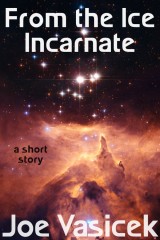
So about 24h hours ago, Amazon noticed that I was giving “From the Ice Incarnate” away on a number of other sites, and decided to drop the price down to free.  What happened next was INSANE.

Almost immediately, the downloads started pouring in.  Within a matter of hours, it cracked the #1,000 spot in the Kindle Store rankings, breaking into the top 100 for horror.  By noon today, it was at the #14 spot for Horror and #256 overall.

Holy crap!  That’s a jump of three orders of magnitude from where it was in the rankings before–more ebooks downloaded in just a matter of hours than I’ve sold across all platforms since April!  The really cool part is that it’s driving some interest in my other stuff.  Not a whole lot at this point, which is fine, but more than I was expecting, especially in my other short stories.

One thing I’m a little worried about, though, is that it seems to be selling with a different crowd than my target audience. “From the Ice Incarnate” definitely has some prominent horror elements, but it’s essentially a science fiction story.

I changed the category in KDP and republished the ebook, but I’m worried that the act of republishing will set the price back to $.99.  I like having it free; I’m hoping it will generate more interest in my novels, which is where I hope to make my bread and butter.  To jump off the free train right now, just as things are starting to take off…

…well, it wouldn’t be the end of the world.  Still, holy cow!  It’s a wild and crazy ride!

In other news, I recently did an interview over at my cousin Angela’s blog.  Angela is a mom, a writer, and an all-around awesome person, and she publishes a bunch of poetry on her blog, both her own and by others.  The interview covers why I feel drawn to science fiction, themes in Genesis Earth, and how studying political science influenced my writing.  Good stuff; check it out!

Why I am not afraid of the Noise

One of the biggest concerns for writers considering indie publishing is the fear of being drowned out by “the Noise”–all the obnoxious crap that will inevitably pile up because everyone thinks they can write a book.  After all, if anyone can self publish, anyone WILL self publish, including all the hordes of terrible, terrible writers.  In such an environment, how will anyone find you?

I’ve been thinking a lot about this, and reading a lot of author blogs to hear their take on this issue.  While I was afraid of the Noise at first, I’m not that worried about it anymore.  Here’s why:

1) The Noise has always existed.

The Noise is not a new problem.  Anyone with a printer and/or internet access can submit their stuff to agents and editors–and they do.  It’s called the “slushpile.”

Under the old system, good stories would never find their audience unless they got picked up by one of a handful of editors.  Problem is, this creates a huge bottleneck that only amplifies the Noise, making it even harder to get noticed.  Editors outsourced the slushpile to agents, but this only made it worse, like adding an extra level of bureaucracy to an already inefficient system.

The way I see it, if I’m going to have to fight the Noise one way or another, I would rather have direct access to my potential readership than be forced to submit to an overworked editor who doesn’t have time to give my work fair consideration.

2) Epublishing gives books more time to find their audience.

Traditional publishing works on the “produce” model, where new books have only a few months on bookstore shelves before they’re pulled to make room for something new.  In sf&f, it’s more like a couple years for paperbacks, but it’s still the same thing.

If your book doesn’t find its audience in those first few months–and therefore doesn’t sell very well–it’s considered a failure. With epublishing, though, there’s unlimited shelf space, and that means the book will ALWAYS be available.  It might not sell for the first few months, but that’s okay–it has as much time to find its audience as it needs.

I believe that given enough time, the good stuff always rises to the top of the heap.  I would rather follow the model that gives me that time, rather than gamble on the arbitrary timetable established by the traditional publishing establishment.

3) The revolution is social.

At LTUE this year, Tracy Hickman astutely pointed out that bookselling is no longer about creating artificial marketing hype so much as making a direct and personal connection with the reader.  With modern social networking platforms, writers can connect directly with their audience in a meaningful, peer to peer manner, expanding their readership naturally.

If we still had to rely on old, top-down marketing models, the Noise would certainly be a problem.  But with social networking, the audience is becoming much more interconnected, revolutionizing word of mouth and making it easier for writers and readers to connect than ever before.

4) Success comes at a much lower threshold.

For my purposes here, I’ll define “success” as making a full time living as a writer (>$20k/yr, though that will probably change when I’m married).

Under the old model, a $20k advance for a new writer like myself would be quite good, especially in my genre.  However, that money would get paid out over the course of several years, and I probably wouldn’t get a contract for another book until after the first book proved itself.

But the $20k is really just an advance against royalties, and the royalty rates run pretty low (<12% hardback, <8% paperback).  At those rates, I probably wouldn’t start to make a full time living until my devoted readership (those who buy my books in hardcover) numbered at least between 5,000 and 10,000.  And even then, my publisher might still drop me.

Under the current indie publishing model, though, the author gets a 70% cut.  That means that I could significantly undercut traditionally published books in price and still make more money per book. A $5 ebook earns as much at 70% as a $25 hardback at a 14% royalty rate, and will probably find its audience a lot faster because of the lower price.  With paperbacks, the difference is even more stark.

An audience of 5,000 is a drop in the bucket compared with the population of all readers.  The Noise might keep me from reaching everyone, but I don’t need to reach everyone to make a living–just a few thousand.

5) Transformational growth will greatly expand the market.

Right now, we seem to be on the verge of transformational growth in the publishing industry.  With epublishing, not only are avid readers buying more books, but more people are becoming avid readers.  This means that now, more than ever, publishing is NOT a zero sub game.

Sure, the Noise will get louder as more people self publish–but that Noise will also be spread out across a much larger market.  Even if my piece of the pie gets smaller, the pie itself is getting much, much larger, and that’s good news for everyone.

I have other reasons for not fearing the Noise, but these are the biggest ones.  Promotion is still a major question in my mind, but for now I’d rather get back to writing.  After all, that’s what I do–I’m a writer.

If it kills me

I will finish this novel if it kills me. At the rate things are going, it just might.

Things are kind of tough for me right now.  I desperately need a new job–the one I’ve got is slowly sucking away my soul without even paying enough to get by–and job rejections are way worse than rejections from publishers (I’ve been getting a lot of both, by the way.  Not that I’m looking for pity, but yeah.).

As if that weren’t bad enough, my current novel, Worlds Away from Home, is turning out to be a train wreck.  There are all sorts of problems with character motivations, improper foreshadowing and plot set up, etc etc.  That makes it REALLY hard to get motivated to write each day.  Yesterday, I wrote only 245 words (youch).  Today, I did about 2.2k, but that’s still way less than I need to be doing.

The thing that worries me the most is the thought that the audience for this particular story may be slim to nonexistent.  It’s solid space opera, but with a romantic element that challenges a lot of the mores of our modern, sex-saturated society, as well as many of the conventions of romance within science fiction.

The main female protagonist is something of a pushover–but she has to be, in order for her growth arc to have any umph.  The main male protagonist is an orphan on a quest to discover his own origins, kind of like a cross between Mogli and Pip.  His quest, combined with her parents’ manipulative attempts to get them physically intimate too soon, are the main things keeping them apart.

But in a genre where physical intimacy usually marks the romantic climax, how do you make it out to be the obstacle against that climax?  Will science fiction readers go for that, or will they hurl my book across the room because of it?

Well, if they hurled my current draft, I wouldn’t blame them one single bit.  So many plot holes and awkwardly written scenes–ugh.  I’ve got to seriously rethink so much about this story.  But a later draft?  I don’t know–maybe it would work.  It would probably need other hooks to keep them engaged, such as cool world building elements, but I think I could make those work.

Anyway, I suppose it’s nothing unusual.  For every book I’ve written, I’ve come to a point in the rough draft where I thought the story was completely unworkable and should be scrapped.  It’s a tortuous, masochistic process, but I suppose it’s normal.  That’s some comfort, at least.

My goal is to finish this abomination by August 15th, then move on to polish Mercenary Savior and make it really shine.

Another goal is to get a decently paying job (at least $8/hr at +25 hours per week) in order to afford to go to DragonCon in September.  Another goal is to reteach myself algebra and calculus through the math books my dad (who is a geometry teacher) is letting me borrow.  Another goal is to actually get a social life.  BLARG.

“Why people read”

Dave Farland puts out this great e-newsletter called “Dave’s Daily Kick-in-the-Pants.” For the kick today, he suggested the following exercise:

You probably have a good idea about what you want to write—horror, mainstream, fantasy, historical, romance, westerns, religious fiction, and whatnot. Sit down for ten minutes and on the left-hand side of your paper, list five things that you feel you most like in the fiction you read. On the right-hand side of your paper, list the biggest potential danger that you see in trying to create that effect.

Doing this exercise will help you understand who your potential audience is, and some of the challenges that you may face in reaching that audience.

This was my response:

Why I read:

1) To meet interesting characters and get lost with them in an exciting fantastic world.

2) To think deeper about fundamental truths I see in my own life.

3) To feel like I understand another person and connect with them.

4) To be reassured that true heroism is real, alive, and within the realm of possibility.

5) To experience beauty in the language and metaphor, the imagery and tension.

Potential dangers:

1) Trying to write about a world without a story–all info dumps, exposition, lacking interesting characters with whom the reader can journey and experience the world.  Story IS experience, and experience does not exist independent of the person doing the experiencing.

2) Waxing allegorical or didactic in the writing–trying to force the message instead of leaving it open for the reader to discover multiple layers of meaning.

3) Focusing so hard on the character that the plot lacks the structure and tension to keep the reader interesting.  Characters do not exist separate from plot or setting; they change and grow in reaction to both.

4) Creating a hero whose struggle is so far removed from the real world or our real life experience that the reader feels that this type of person could only exist within the pages of a book.  Or, trying so hard to follow the monomyth structure that the story falls flat (ie Star Wars I, II, III).

5) Thinking that poetic license frees you from basic rules of style and grammar.  Creating metaphors that are so unusual that they are merely non sequiturs.  Writing prose so thick and “literary” that it kicks the reader out of the book.