
A few interesting things

In between teaching English and putting in my daily word count (between 1k and 2k most recently), I’ve come across some interesting things worth sharing.  If you’re a fellow writer, I’m sure you’ll appreciate this stuff, but even if you’re just a reader, it’s worth checking out.

First, there’s an excellent article at The Nation on the rise of Amazon and how it took the publishing world by storm.  The author isn’t very pro-Amazon, but he paints a much more reasonable and far-seeing picture than anything I’ve seen from the Amazon-bashers.  If you’re interested in indie publishing at all, it’s a must-read.

The way I see it, Amazon has fundamentally changed the paradigm by cutting out the middle-man, facilitating a direct connection between readers and writers.  Everyone who sees them as some kind of harbinger of the apocalypse is so focused on their particular niche that they fail to see all the positive ways in which the system is being remade.

For example, ebooks never go out of print–never.  Isn’t that awesome?  And yet some people turn around and claim that Amazon is on some kind of crusade to destroy books and literature.  Wha??  Yes, they’re probably cannibalizing mass-market paperback sales, and perhaps even hardcover sales as well, but they’re also opening all sorts of new literary possibilities, the likes of which we haven’t seen since the days of Gutenberg.

Well, so much for that.  The next item is a lot less controversial: it’s a round-table discussion from Adventures in Sci-Fi Publishing in which several writers discuss productivity and various aspects of their writing process.  If you’re a writer, this is definitely worth checking out–it’s probably the most comprehensive discussion on the subject that I’ve heard in a while.

Some of my takeaways: the best way to unblock yourself and get the writing flowing again is to take a walk.  When I listened to the podcast, I was actually taking a walk for that very purpose–and it worked!  Also, if you have the time but the writing isn’t flowing, it’s better sometimes to do something else rather than force it.  If you do try to force it, chances are that you’ll just get a bunch of crap.  For some writers, that’s just part of priming the pump, but for me, I’ve got to take the time to fill the well.

Third, I just listened to a fascinating interview on the Sword & Laser podcast with Todd McAffrey.  I’d tell you what it’s about, but really, they went off on so many fantastic tangents, it’s really more interesting just for that.  The practicalities of space exploration, human-host bacteria and emergent AI, the secrets of the human brain and the potential for long term collective consciousness–reminds me of an uber-nerdy conversation I had at the con-suite for World Fantasy 2010.  Man, those were good times.

To be honest, I took issue with many of McAffrey’s comments.  When it comes to science and engineering, he’s extremely intelligent, but when it comes to bio-ethics, the sociological implications of his ideas, and a general awareness of the proverbial 99% of humanity that still lives on less than $10 USD per day, I think he’s a little too short-sighted.  But if you put us in a room together, the argument would be so fascinating it would definitely be worth listening to.

Finally, I just got the new cover art from Hideyoshi for Bringing Stella Home, and it is seriously kick-ass.  Check it out!
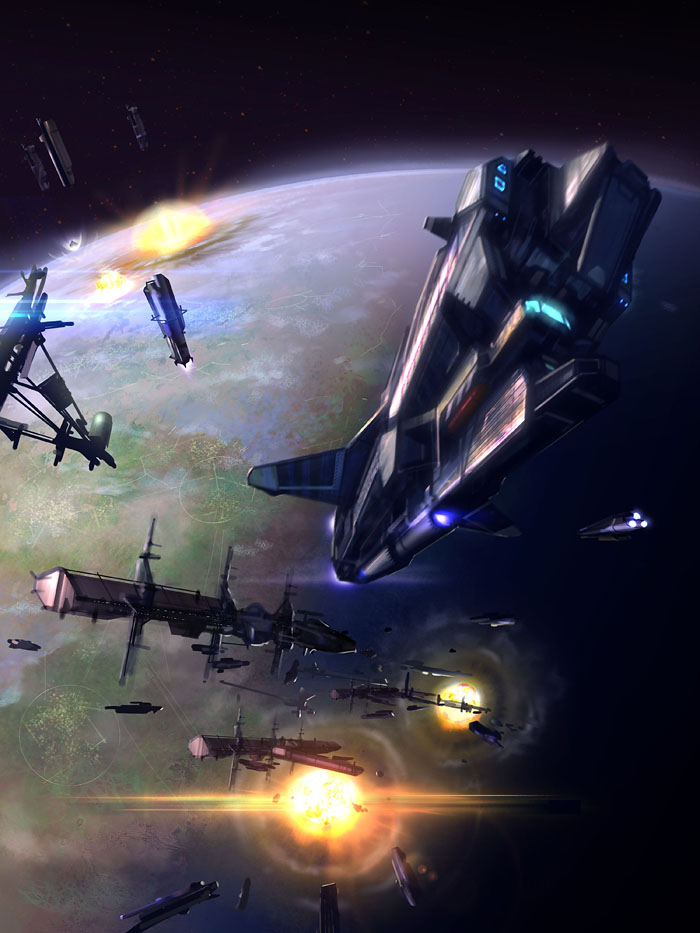
Now that is what I call Science Fiction!  Expect to see the updated ebook with the new cover in the next couple of weeks.
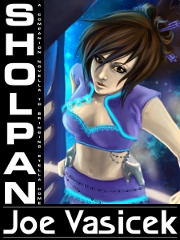
Sholpan is now available for free from Amazon!

My novella Sholpan just went free on the Amazon site!  Currently it’s at the #26 spot on the science fiction –> adventure bestseller list, and ranked #1,783 free in the kindle store overall.

If you’d like to check out some of my writing but haven’t gotten around to it yet, Sholpan is a good place to start.  It takes place in the same fictional universe as my novels Desert Stars and Bringing Stella Home, with several others in various stages of planning and completion.  It’s a companion novella for Bringing Stella Home, which means that it follows the first half of Stella’s storyline from the novel, with some extra scenes and backstory to flesh things out.

Of course, if you don’t like shopping at Amazon, you don’t have to be left out: Sholpan is also available as a free download from Barnes & Noble, Smashwords, Diesel, and Kobo.  All of my other ebooks are also available from those sites, so you can check them out there as well.

If you’ve already read Sholpan and enjoyed it, I would appreciate it immensely if you would take the time to rate it or post a review.  It only takes a moment, but it helps me out a ton.  And of course, I’m only looking for honest reviews, so I won’t be offended if you don’t give it five stars if you don’t feel it deserves it.

It isn’t free yet on Amazon’s other stores (UK, Germany, France etc), but I’ve contacted Amazon so hopefully that will soon change.  In the meantime, I hope you enjoy!

Why I won’t be signing up for KDP Select

In the last couple of weeks, there’s been a lot of discussion about Amazon’s new Lending Library program.  Just a few days ago, Amazon opened it up to indie writers with the KDP Select program.  By signing up, writers gain access to Amazon Prime members (US only), where readers can borrow the book for free and Amazon still reimburses the writer.

The catch?  Two, actually: writers agree to make their books exclusive to Amazon for 90 days, and payment for all KDP Select authors comes out of a monthly “fixed pot” of $500,000, where every writer gets a cut according to what percentage of the Lending Library downloads were for their books.

Reactions from the indie community have been mixed.  Within only a few hours, several thousand enthusiastic writers had signed up (the current number of participants is ~50k), but many others remain cautious and aloof.

The full range of reactions can be seen in the Kindle Boards thread.  Guido Henkel does a good job pointing out how the numbers don’t add up, while David Gaughran offers a compelling analysis that likewise dampers enthusiasm for the program.  On the Smashwords blog, Mark Coker pleads with writers to keep their options open, while at Writer Beware, A.C. Crispin points out some disturbing language in the terms & conditions that essentially amounts to a non-compete clause.

I’m sure that many others will weigh in on KDP Select in the coming days, and I look forward to reading their analysis, but I’ve already decided that I won’t be signing up with the program.  Even if no one else signs up, with 50k writer splitting a $50,000 pot, the average monthly paymentis only going to be $10.  Unless you’re one of the lucky bestsellers, you’ll probably make even less than that.

But the real reason I’m not signing up is because I don’t feel that it serves my readers.  If I put any of my titles through KDP Select, I’d be giving Amazon a 90 day exclusive, which means that my readers would be forced to either buy through Amazon or wait three months to buy my books.  I don’t feel that that’s fair to my readers, especially in territories where Amazon levies a $2 surcharge.

At this point in my career, my goal is to build up a dedicated fan base that looks forward to each new release.  To do that, I want to make my books available in as many places as possible.  Even if I’m not selling all that well right now at Barnes & Noble or the smaller retailers, it’s not worth it to cut those readers off and tell them to go to Amazon or wait.

However, the KDP Select program does foreshadow the next big phase of the ebook revolution, and that is the move to subscription services.  I expect that in the mid- to near-future, we’re going to see a lot of ebook lending models arise, kind of like Netflix for books.  The big question in my mind is how the writers are going to be compensated.

Like David, I have a lot of concerns with KDP Select’s “fixed pot” model.  Besides the lack of any guaranteed or minimum rate of compensation and the general opaqueness of the system, it fundamentally pits writers against each other in a zero-sum game, where one writer’s gain is another one’s loss.  To me, this represents a giant step backward.

When a reader finds something they like, they’re more likely to try out another book just like it.  This is how readers have historically found new writers, and it fosters a sense of community, where writers work together to reach out to new readers and expand the scope of the genre.  The “fixed pot” model disincentives all this and replaces it with a Machiavellian system that, at its worst, works against the natural advantages of the medium and undermines the genre community.

For all these reasons, I won’t be signing up for Amazon’s KDP Select.  The exclusivity hurts writers and readers, the numbers just don’t add up, and the “fixed pot” model represents a fundamental shift in bookselling that I cannot support.