I’m going to do something potentially dangerous and discuss pricing strategies in a rather candid way.  I may risk turning off some of my potential readers, especially the ones who don’t like shorter works, but I want to be as open and transparent as I can, since I figure it’s only fair, especially to someone who’s just getting started with my books.

First of all, let me just say that if I could, I would make all my books free and write for love instead of money.  The trouble, though, is that I have to eat, and at some point in the (hopefully) not too distant future I’m going to have to feed a wife and children as well.  If I made all my books free right now, I would have to spend all my time and energy doing something other than writing, and as a result there would be far fewer books for you to read.

In the last year, I’ve discovered that the best way to make money self-publishing is to write in series, preferably at a short enough length that you can release a new installment every other month.  A lot of other writers are discovering this, which is why there is such an explosion of series and serials.

I know a lot of readers don’t like this.  And when a writer takes a perfectly good novel and splits it arbitrarily into parts, each one without a solid arc or story structure to hold it together, I get a little bit ticked as well.  But the reality is that if you can tell a story in a series of short, self-contained novellas rather than a single novel, it will probably meet with better commercial success.

The price points for novellas are kind of tricky, though.  For anything priced below $2.99, Amazon takes 65%, whereas from $2.99 to $9.99, the self-publisher takes 70%.  To give that some perspective, you would have to sell 10x the number of copies at $.99 to earn as much on one sale of a book at $4.99, and 6x for a book at $2.99.

The trouble, of course, is that for a series where each installment is priced at $2.99, the readers may end up paying a lot more, depending on the lengths of the story arcs and the size of each installment.  Novellas are kind of in a gray area, where $.99 seems kind of cheap for that much story, but three or four installments at $2.99 really add up–especially with so many other ebooks priced at $5 or below.

Now, I’d like to believe that most readers judge the value of a story by its quality and not by its word count, or by how much they have to pay per word.  There are books like City of the Saints that I don’t mind buying in $2.99 increments at all.  At the same time, though, I think there’s something to be said about keeping prices fair.

This is all on my mind right now because I’m getting ready to release the first Star Wanderers omnibus and expand that series considerably over the next year.  It’s the series that sells best out of any of my books, and the one with the most potential to make it so that I can go full time.  Plus, I really love writing in this universe, and have a lot more stories in it to tell.

Right now, this is the pricing structure I’m following:

  1. Outworlder — free (15,000 words)
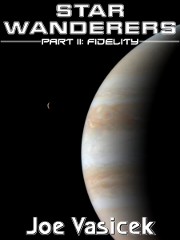
  2. Fidelity — $.99 (17,000 words)
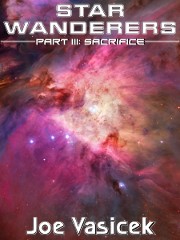
  3. Sacrifice — $2.99 (19,000 words)
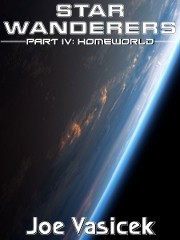
  4. Homeworld — $2.99 (20,000 words)
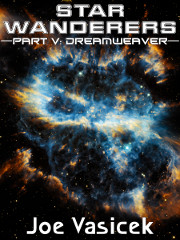
  5. Dreamweaver — $2.99 (19,000 words)

Parts I through IV make a complete story arc, though of course each individual novella is a self-contained story on its own.  With Part I at free and Part II at $.99, I figure readers have a good way to figure out if these are the kinds of stories that they’ll want to read.  But if I keep pricing the stories at $2.99, at some point this series is going to get really expensive.

So here’s what I plan to do to alleviate that:

1) Make new releases free to newsletter subscribers.

For every Star Wanderers story up to this point, I’ve made it free for the first two weeks on Smashwords and given that code out through my email newsletter.  I did that originally as an incentive to get people to sign up for my newsletter, but I think it’s a good series strategy as well.  This way, if someone discovers Star Wanderers now, they can buy all the previous installments at the higher $2.99 price point and look forward to receiving any future installments for free.

Some may question the business sense of giving away free books to readers who are willing to buy them, but the way I see it, the fans are the ones who are selling these books, not me.  I’m willing to put a free book in the hands of someone who already loves the series, and is more likely to write a glowing review or to share it with a friend.  And since sales of this series continue to grow, that strategy would seem to be paying off (or at the very least, it’s not biting me in the ass).

2) Try to put more story into each individual installment.

If $2.99 seems a lot for a short novella, then maybe I need to expand on them, with things like extra subplots and viewpoint characters.  Of course I don’t want the stories to feel like they’re padded, but if I can enrich the story in a way that really adds to it, then that’s certainly something that I should do.

For all of the Star Wanderers series so far, each novella is told from the point of view of just one character.  This sort of focus can be good, because it really gets me into the head of that character.  However, sometimes it’s also good to play things off of another character’s story, both to act as a foil and to provide contrast.

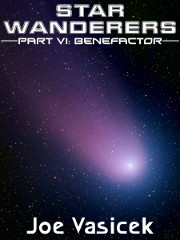
That’s what I’m doing with Reproach (Part VII) right now.  It’s not just from Mariya’s point of view, but Noemi’s as well, and that adds a lot to the tension as you see their competing motives and the way their views of the world really clash.  It’s delicious.  Benefactor (Part VI) is just from Jakob’s viewpoint, just because I wanted the story to really focus on his character, but most of the other stories kicking around in my head have room for at least another viewpoint character without taking away from the spirit of the series itself.

3) Price the omnibus editions less than the sum of their parts.

For someone who is just getting started with Star Wanderers, $2.99 might seem like a lot to pay to get caught up.  That’s only going to get more daunting as the series gets longer.  For that reason, I’m inclined to price the omnibus editions much lower–at least $4.95, which is the price of one of my novels.  At 70,000 words or so for Parts I-IV, that seems only fair.

I am a bit worried that sales of the individual novellas will drop off once I release the omnibus, but I figure if I’m constantly releasing new ones, those should cover the slack.  Since Dreamweaver (Part V) is already out, and Benefactor (Part VI) will be out in another month or so, new readers who come in through the omnibus will have more than enough to keep them coming back.

The other benefit of doing it this way is that it reduces the chance that readers will drop out midway through the story arc.  It seems that a few of them are doing that, or at least taking a while to get from Part II to Part III to Part IV, etc.  By having them all in one omnibus and encouraging readers to buy that instead of the individual parts, hopefully they’ll have more of a chance to get hooked, making it all the more likely that they’ll keep coming back.

So that’s my plan, at least for now.  When The Jeremiah Chronicles comes out next week, I’ll price it on parity with my other novels, even though that’s somewhat less than all the individual parts.  I’ll make all new Star Wanderers novellas free for my newsletter subscribers, and do what I can to enrich them with extra viewpoints and subplots (without just padding them, of course).  This way, I hope my readers won’t feel like I’m ripping them off, and I’ll still have a good shot of making a decent living at this.

With the way things have been going, I’m actually really excited.  The slow build approach is working, and if it keeps up then I think I may be making enough to go full-time by this time next year.  I’ll be sure to keep you posted as things come along.

In the meantime, if you have any thoughts or comments, please don’t hesitate to share.  I’m still thinking this issue through, and there’s a lot I have left to learn.  In fact, I feel like I’m only just starting to figure it out, so any other perspectives on this topic would be much appreciated!

pioneer_book_scifiHas space opera passed its zenith?

Sometimes, it certainly looks that way.  All the major stuff seems to be reprints of past series and reboots of decades-old franchises.  Star Trek, Star Wars, Stargate, Battlestar Galactica, Ender’s Game, Dune, Babylon 5–all the big names seem to have had their start at least a generation ago.  At any science fiction convention, you’re likely to see more gray-haired men than kids in their teens and twenties.  And if you go to a publishing conference, new adult, urban fantasy, and paranormal romance are ascendant.

I’ve noticed that people are using the term “science fiction” increasingly to describe stories that don’t have anything to do with space.  Dystopian, post-apocalyptic, steampunk, even time travel–all of these subgenres are certainly part of the fold, but they’re very different from the stories about starships and alien worlds.  And then you have all the markets for short fiction that have been forced out of business–and even a few larger publishers, like Night Shade Books which is now selling off all its assets (read: authors) to avoid bankruptcy.

I remember going to World Fantasy 2010 in Columbus, Ohio, and feeling dismayed at the complete lack of science fiction.  World Fantasy is (or was, at least) the premier professional conference for speculative fiction literature, but all of the attention was going to urban fantasy and steampunk.  On the freebie table where publishers often dumped ARCs and review copies of their books, the only space opera stuff I really saw were a couple of titles by Glen Cook and one other guy–and I watched that table hawkishly for the full three days of the conference.

Sometimes, it seems as if it would be so much better if I had grown up in the 80s.  That’s when science fiction really had its heyday.  But all through the 90s, the genre seems to have been on the decline, much like NASA and the US space program.

So is space-centered science fiction on the way out?  Have we passed the glory days, and it’s now just a long decline until it becomes an obscure niche, beloved by some, but enigmatic to others?

In spite of everything I said above, I actually don’t think so.  In fact, I think we’re on the cusp of a science fiction renaissance, and that sci-fi geeks like myself will look back twenty years from now and wish that they were born in our era.  Here’s why:

1) Scientific discoveries are transforming the way we see the universe.

The day I posted P is for Planets, NASA’s Kepler mission announced the discovery of three Earth-like worlds orbiting in the habitable zones of their stars.  The existence of alien Earths is not conjecture–it’s a confirmed fact.  As our ability to study these worlds improves, it’s only a matter of time, IMO, before we find a world that has life.

We’ve discovered the Higgs-Boson.  We’re unraveling the fundamental building blocks of the universe.  We’ve built telescopes to look back to the dawn of time itself, and we’re learning more about the cosmology of the universe every year.  Perhaps even more remarkably, we understand now how little it is that we actually know–that the entirety of the observable universe is only about 5% of it, and even that’s optimistic.

All of this will take time to trickle down to the popular consciousness, but with all the new discoveries that are happening, I think that’s already in the process of happening.  In particular, I think the recent discoveries in the realm of exoplanets and astrobiology are going to shake things up in a major way in the next five or ten years.

2) The privatization of space travel is paving the way for a rapid expansion into space.

The US space program has been plagued with funding problems since at least the end of the Cold War space race.  Since the space shuttle program was retired just last year, the only way for our astronauts to get into space is through the Russian Soyuz spacecraft at Baikonur.  If NASA had to put a man on the moon, they do not currently have the knowledge or technology necessary to do it.

In the private sector, though, it’s been a very different story.  SpaceX has had a number of successful launches recently, most notably sending the first unmanned resupply capsule up to the International Space Station.  And just a couple days ago, Virgin Galactic had the first successful test flight of its rocket-powered spacecraft.

It’s sad to see the space shuttle go, but there are a lot of reasons why the program was flawed and inefficient to begin with.  By handing things off to the private sector and turning space exploration into a viable business venture, we can hopefully overcome those inefficiencies and eventually make space accessible to the general public.

And then you have the organizations like Mars One that are looking even further ahead to the colonization of Mars.  There’s a groundswell of excitement for Martian colonization that is starting to get some real money behind it.  Will it go anywhere?  It’s hard to say right now, but even if it suffers another decade or two of setbacks, it’s getting public attention, especially from the younger generation.

3) Video games are bringing a fresh new look and feel to the genre.

Not all of the big sci-fi series hail from 70s and 80s.  Halo started up as recently as 2001, and it’s a multi-billion dollar franchise with games, books–even Legos.  In fact, there are lots of sci-fi video game franchises right now, many of them right on par with other classic space opera.  Just look at Starcraft, for example, or Mass Effect, or Eve Online and Sins of a Solar Empire.  The number of sci-fi games has been exploding.

In fact, this explosion has been happening for some time.  While literary science fiction may have suffered something of a decline back in the 90s, that was the heyday of games like Master of Orion and Sid Meier’s Alpha Centauri.  Flight simulators like Flight Commander and X-wing proliferated like crazy, while even some of the classic RPGs like Final Fantasy borrowed heavily from science fiction tropes.  And those are just a few of the games that I can list off the top of my head!

Whether or not literary sf is on the decline, a whole new generation has been introduced to the genre through the medium of video gaming.  This is not just a small niche audience playing this stuff, either–in the US at least, Halo is as mainstream as Monopoly or Settlers of Catan.  In fact, you could say that science fiction is more mainstream now than it ever has been, and a lot of that is due to sci-fi video games.

4) The e-publishing golden age is giving us thousands of new voices.

But what about the world of literary sf?  Are we in a decline?  Do people just not read science fiction anymore?  How bright is the future for science fiction literature?

Actually, this is the area where I’m the most optimistic of all.

The publishing industry is changing at the speed of light, much in the same way that the music industry changed about a decade ago.  Just as the MP3 revolution allowed all sorts of eclectic yet entrepreneurial artists to thrive without the oversight of record labels, the epublishing revolution is opening all sorts of doors for the enterprising author.  And while the changes are driving publishers (such as NSB) out of business, they are enabling authors who only sell in the mid-list range to make a respectable living.

At Worldcon 2011, Ginger Buchanan (senior editor at Tor) asserted that there has never been a runaway science fiction bestseller.  In the eyes of New York publishing, that may be true–but New York has a notorious record for missing the catch in pursuit of one big fish.  Because of epublishing, whole new genres like New Adult that publishers thought would never sell are now going mainstream.

And even the niches that stay niches are becoming quite lucrative for the authors who can build a decent following.  When author cuts out the middlemen and develops a direct relationship with the readership, it only takes a thousand true fans or so become a financial success.  As Kris Rusch pointed out so aptly, those numbers may bring only scorn from New York, but for the writers who actually produce the content, that’s a vein of pure gold.

I can’t tell you how many success stories I’ve heard from fellow sci-fi writers over on the Kindle Boards, who started just for the grocery money and ended up quitting their day jobs.  But as Hugh Howey pointed out, the runaway bestsellers are not the true story of the epublishing revolution–it’s the little guys who only sell a few hundred copies a month but are earning enough to support themselves writing what they love.

Indeed, we’re already starting to see an explosion of new science fiction, thanks largely to the ease of electronic self-publishing.  I’ve only read a few of them so far, but Nathan Lowell stands out among them, as well as my good friend Kindal Debenham.  These guys and so many others are bringing a fresh new voice to space opera, revitalizing the genre in ways that simply weren’t economical back in the days of Big Publishing.

So even if space opera as a literary genre isn’t quite large enough to go mainstream, it is large enough to support a wide range of new voices under the emerging business models.  And as the epublishing revolution continues to mature, I think we’re going to see a new golden age comparable to the era of the pulp adventure stories.

I’ve been publishing my own work since 2011, and I can attest that there’s never been a better time to be a writer.  I’m not quite making enough to go full-time yet, but at the rate things are going, it will only be a  year or two before I realize my dream of making a living telling stories that I love.  And if they’re the kind of stories that you love too, then that’s great news for all of us!

So has science fiction reached its zenith?  I don’t think so.  It went mainstream about a generation ago, which was definitely a huge moment, but for the last few decades it’s been in the process of branching out and rediscovering itself.  Right now, I think we’re on the verge of a wonderful new renaissance that is going to blow us all away.  As a lifelong reader and writer of science fiction, I certainly hope that’s the case.  And because of the reasons listed above, I sincerely believe that it is.

More »

For the past few weeks, I’ve been kind of stuck on chapter 3 in Star Wanderers: Benefactor.  This one is a parallel novella to Fidelity, from Jakob’s point of view.  It’s been a lot of fun to write so far–Jakob struggles with a lot of the same issues I do, like self-reliance and independence vs. accepting help from others–but there was this one scene that just kind of knocked the momentum out of it for me.

Well, I started out the day by rereading Fidelity.  Actually, I started reading it yesterday right as I was falling asleep, and had some really weird dreams that I’ve since forgotten.  After rereading Fidelity, I went to the Provo Library to write, and everything just sort of clicked.  Finished the chapter today, and if all goes well, I’ll finish the first draft sometime this week or next.

I think the thing that was blocking me was that I wasn’t as familiar with the story I was writing parallel to.  Which is funny, because Benefactor has very little overlap with Fidelity, even in terms of plotting.  This is Jakob’s story, and it’s very different from Jeremiah’s or Noemi’s.  Even so, the nagging feeling that I was missing something really slowed me down.  When you’re in a dark, empty room and can’t see anything, you’re not going to run across it even if you know there isn’t anything to trip on.

###

Just recently, I added some new book teasers to the back matter of the Star Wanderers ebooks.  They look a little like this:

If you enjoyed Star Wanderers: Outworlder, be sure to check out Part II: Fidelity!

Star Wanderers II (thumb)

IS FIDELITY WORTH THE PRICE OF FREEDOM? CAN LOVE TAKE ROOT BEYOND THE STARS?

Oriana Station: a bustling frontier settlement between the Outworlds and the Coreward Stars. A popular port-of-call for free traders and independent starfarers alike—and the latest target in the aggressively expansionist plans of the Gaian Empire.

Life was simple for Jeremiah and Noemi before they arrived. Though neither of them speak the same language, they’ve reached an understanding that goes beyond words. But when the colonial authorities make them into second-class citizens of a fractured empire, even that might not be enough.

Their newfound friends in the immigrant community can only do so much. With Noemi and her people depending on him, Jeremiah must find a way back to the Outworlds—before they lose everything that they came for.

Each one has a teaser for the next one in the series, including Homeworld (for the as-yet unpublished Dreamweaver).  Ideally, I’d like to put out a new Star Wanderers novella every month or two, but time things so that I can have the teaser for the next one ready before publishing the one previous.

So far, the Star Wanderers series has been selling a lot better than anything else I’ve published.  That’s great, because I really enjoy writing in this universe!  The short novella length is perfect for exploring one or two characters in-depth over the course of a much more intimate story than you usually see in a novel.  The really cool thing, though, is that the more I write in this universe, the more characters and storylines unfold.  It’s like watching a flower bloom, where each individual petal is a single story.

Anyhow.  I’m really excited to keep writing in this series.  Some of the stories I have kicking around in my head:

  • A parallel novella to Sacrifice, primarily in Mariya’s point of view but also perhaps with a bit of Noemi.  Basically, something exploring the subtext behind the polygamy that drove most of the conflict in Sacrifice.
  • A parallel novella to Homeworld, from both Lucca’s and Mariya’s points of view.  Basically, an adventure romance that actually shows the final battle between Captain Helena and the colonists.  In Homeworld, it didn’t make sense to show that battle since the story was about Jeremiah and Noemi, and both of them were plugged into a simulator at the time.  But my first readers really want to read a story about the battle itself, so that’s one story I definitely have to write.
  • A story from Master Korha’s point of view, showing the gradual collapse of Megiddo Station and the buildup to his decision to give his daughters away.  This one is going to be more tragic, or at the very least, bittersweet.  But hey, I kinda like bittersweet endings.
  • A story from Samson’s point of view.  Actually, I’ve already got this one plotted and ready to go.  The only trouble is, well, it’s Samson.  With his ethical slut mentality, whatever I write, my family is going to be scandalized by it (and I might be, too, when my kids are old enough to read it).  Don’t worry, though–I’ll get around to it eventually.  This isn’t a story that I can just walk away from.
  • Something from Jakob’s sons’ point of view, Isaac and Aaron.  Except … I can’t really say much about this, because Benefactor isn’t out yet. o.0
  • At some point, I’d like to write a full-length novel from the point of view of Jeremiah and Noemi’s kids.  I don’t have a plot or anything else figured out for this one, but I’d really like to revisit their world again through their kids’ eyes.  I even have a title: Children of the Starry Sea.  But yeah, that’s probably not going to come out for another couple of years or so.

So yeah, those are some of the things kicking around in my mind.  Once I finish the parallel novellas to Fidelity, Sacrifice, and Homeworld, anything is free game really.  Is there any story in particular that you guys would like to see?  Now’s the time to drop-kick my imagination–once it gets fixated on something, it won’t give me any rest until a story comes out the other end.

And that’s enough for now.  Tomorrow, I promise, I’ll do a Trope Tuesday post.  I’ve got a job interview in the morning and probably won’t have work for the rest of the day, so while that kind of puts a cramp on my wallet, it means you’re more likely to get a blog post.  In the meantime, I’d better get some sleep.

Later!

These days, it seems as if everyone is terrified by the fact that anyone can publish a book.  Indies, self-published writers, authors with traditional book contracts–it doesn’t matter.  Everyone is mortified by the sheer volume of crap books coming out nowadays, as if Sturgeon’s Law is a new thing.  The assumption is that all this noise is making it harder to get noticed–that readers have to slog through all the crap to find the good stuff.

I’ve blogged about this twice before, here and here.  My views haven’t changed–I still think that the flood of crap ebooks is nothing for writers or readers to fear.  However, I’ve found a new way to think about it.

Message in a Bottle Washed AshoreIt’s been almost two years since I tested the waters of self/indie publishing.  Since then, I’ve learned that an ebook is like a message in a bottle, floating in the midst of a stormy sea.  Readers make up the ocean, and the vicissitudes of the market are the storms that rage across it.

A good book will tend to float, whereas a bad book will tend to sink.  Gimmicks like Select freebies and other promotional activities may pull the bottle back up to the surface, but they won’t make it float.  And maybe, if a bottle sinks to the bottom of the ocean, someone will come trawling for sunken treasure and haul it up, but more likely than not it will just stay there.

Most readers don’t go to the bottom of the ocean to find their books.  They go to the beaches, where the bottles eventually wash up. These represent communities like book clubs or Goodreads, or just groups of friends who like to talk about books.  When a bottle does wash up on a beach, that represents a book coming into its natural audience.  It might take years, but if the book is good enough to float, eventually it will wash up somewhere.

As long as the bottle floats, it doesn’t matter how deep the ocean is beneath it.  Similarly, as long as a book is selling a handful of copies a month, it doesn’t matter that there are ten million bazillion crap ebooks on Amazon, or Smashwords, or Kobo, or wherever.  Those books are all at the bottom of the ocean, where the waters are calm and cold.

When I was a kid, I was terrified of deep water.  Then I had a swimming instructor who told me that it didn’t matter how deep the water was–so long as I could swim, the ocean could be a mile deep and it wouldn’t matter.  Since then, I’ve swum in some pretty deep waters, and I can say with complete confidence that my swimming instructor was right.

Discoverability and visibility are challenges for authors everywhere, but the problem is not the flood of crap that everyone always worries about.  It doesn’t matter how deep the ocean is, or how many ebooks are being published.  Instead, the problem is making sure that your writing is good enough to float.  If it is, then with enough courage and perseverance, you’re going to make it.

Right now, I feel like most of my books are floating on the face of that stormy ocean.  A couple of them have sunk, mostly the short stories.  I’m not much of a short story writer, though, so that makes sense–I still have a lot to learn in that area.  But the novels and novellas are all selling, with no promotion other than the first title in the series set to perma-free.  That tells me that they aren’t crap.  So long as I can keep telling good stories, I’m confident that my books will find their audience.  When and where they’ll wash up, I have no idea, but one thing is certain: all the crap at the bottom of the ebook ocean isn’t going to keep me from making it.

Image taken from this site here, which I recommend checking out.  Interesting stories!

There’s been some discussion on forums and the blogosphere recently about the different parts that should make up an ebook, and what order they should be in.  J.A. Konrath just did an interesting blog post on the subject, in which he picks his own books apart and gives some advice.  At the moment, here is how I’ve structured mine:

  1. Cover image (600×800).  Usually the same as the high res one I upload separately to publish, but may be different.
  2. Copyright page.  Very brief.
  3. Table of Contents, with hyperlinks to each chapter.
  4. The book blurb, which also appears in the book description on most retail sites.
  5. The book itself.  When you open up the ebook for the first time, this is where it automatically starts.
  6. A brief author’s note, in which I tell the story behind the story–how I came up with the idea, what the writing process was like, and any other relevant influences worth mentioning.
  7. The acknowledgment page, in which I list my first readers and anyone else who helped out with the book production.
  8. A couple of sample chapters for other books.  I only put these into the novels, though–for the novellas, they would take up more than 10% of the total ebook content.  That’s pushing it.
  9. A page promoting the Writer2ePub plugin which I use to build my ebooks.  It’s a really awesome plugin, and I figure the developer deserves some acknowledgment for his work.

I don’t totally agree with all of Konrath’s advice.  For example, I think the copyright page is small enough that it can go in the front without inflating the sample too much.  Then again, I keep the copyright page pretty brief–none of these ridiculous “unauthorized reproduction of this content is piracy and piracy is evil blah blah blah.” Not that I want to be pirated, but I figure my readers are smart enough to know all that stuff already.

In general, though, I think Konrath’s advice is mostly right, especially the part about not padding the end of the book with sample chapters.  I’ve seen a lot of readers complain about getting to the 90% mark of an ebook, only to find that the story is over and the rest of the content is filler.  As a reader, I’ve experienced that disappointment myself.

However, I do think it’s important to include at least some sort of mention of other available books in the back matter.  Until now, that’s meant sample chapters, as long as they take up less than 5% or so of the total content.  Since my Star Wanderers novellas are so short, I haven’t added any sample chapters to them–just a brief plug to sign up for the email list.  And for my novels, I only add a prologue or first chapter, so as not to take up too much space.

Recently, though, I’ve started to rethink this strategy.  When I finish a book, I’m not usually in the mood to read a sample chapter of the next one unless it’s a direct sequel that picks up right where the end of the book leaves off.  I will eagerly browse through book blurbs, though, especially if they’re in the same series or genre.  A good book blurb is much more likely to influence my decision on what to read next than a sample chapter, which I usually just skip over.

For that reason, I’ve decided to take out the sample chapters in my novels over the next few weeks, and replace them with a much shorter page containing a thumbnail cover image and book description for the next book.  I’ll still keep the author’s notes, since I enjoy writing them and I think they’re a good way to engage my readers.  It’s one of those things that makes it a Vasicek book.  But yeah, the sample chapters are gonna go.

This also opens up the possibility of trading book blurbs with other writers.  For example, my friend Kindal Debenham writes space opera stories in the same vein as my Gaia Nova series.  He shows up in my Also Boughts every now and again, so I know there’s a bit of a crossover in our readership.  I haven’t approached him with this idea yet, but if we both included short book blurbs for each other in the back matter of each of our books, we could cross-pollinate our fan base and point readers out to some books they’d be likely to enjoy.

That’s just a thought.  It will be interesting to run with it.

As for the sneak peek I promised in the title of this post, I’ve been playing around in Gimp the last couple of days, working on the cover art for the next Star Wanderers novella while waiting for my editor and illustrator to get back to me on Stars of Blood and Glory.  Here’s what I came up with:

SW-V Dreamweaver (cover)

What do you guys think?  That’s a pretty cool nebula, isn’t it? Hubble is so friggin awesome. :) I took this from a new image of NGC 5189 that was featured on APOD a few months back.  The moment I saw it, I knew I’d be using it in a Star Wanderers cover. :D

Dreamweaver is a parallel novella to Outworlder, and covers the events of that story from Noemi’s point of view.  I wrote it back in the spring of 2012, and put it on the back burner while I focused on finishing the other ones in the series.  In the author’s note of Fidelity, I think I referred to it as “Star Home,” which was originally its working title.  I was going to do all the other parallel novellas from Noemi’s point of view, but I’ve since decided to branch out with the other characters.  Right now, I’m writing a novella from Jakob’s point of view, which is turning out to be quite interesting.

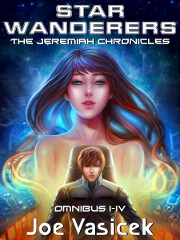
After Stars of Blood and Glory is published, I plan to put up Star Wanderers: Dreamweaver, hopefully within a month or two.  After that, I’d like to bundle parts I-IV into an omnibus and put that up as The Jeremiah Chronicles, in ebook as well as print-on-demand.  A lot of that depends on cash flow, though, since I plan to hire an illustrator and go all out.  If any of you have any suggestions for a good artist / cover designer, please let me know!  The Star Wanderers books take place in the same universe as the Gaia Nova series, but they have their own distinctive feel and I’d like to find someone whose art reflects that.

That’s just about all for now.  It’s getting late, and I plan to wake up early to write.  President’s day is kind of a useless holiday–in fact, most one-day holidays are kind of useless when you’re a freelancer.  So yeah.  Later!

That’s right!  Part IV of the Star Wanderers series is available for $2.99 on Amazon, Barnes & Noble, Kobo, and Smashwords.  You can also find it listed on Goodreads here.  Newsletter subscribers should get the Smashwords coupon code in an hour or two.

From the book description:

THEY’VE FINALLY FOUND A WORLD TO CALL HOME—BUT FIRST, THEY HAVE TO FIGHT FOR IT.

For years, Jeremiah has wandered the stars in search of a home. With his wife Noemi about to have a baby, he thinks he’s finally found a place to settle down. The Zarmina system lies on the edge of the Outworld frontier, but together with their friends, they hope to establish a thriving new colony. The only problem is that the system is already inhabited—by pirates.

The colonists no sooner arrive than they fall prisoner to Captain Helena and her band of rogues from the New Pleiades. She gives them an ultimatum: live like slaves on the planet’s surface, or breathe vacuum. With all their dreams about to be shattered, they have to find a way to fight back. But to do so may endanger everything—including the lives of the ones they love most.

This one was a lot of fun to write.  Everything from all the previous parts came together wonderfully, and the ending just blew me away.  I hope you enjoy reading it as much as I enjoyed writing it!

This novella concludes the main series arc for Star Wanderers, but I still have a lot of stories that I want to tell in this universe.  I plan to write a few stand-alone novelettes and novellas from the other characters’ points of view, perhaps expanding the series to include another arc.  Part V, Dreamweaver, is already written, and if all goes well, I should write Part VI (Wanderlust) over the next couple of weeks.

That’s just about all for now.  Thanks so much to everyone who has liked, shared, or reviewed the other Star Wanderers stories!  I think you’re going to like this one.  Enjoy!

So my plans to publish Star Wanderers have run into a little snag…Part II was rejected for distribution to iTunes, Sony, and other retailers, with an order to unpublish both parts and republish them as one work.  The order probably came because of this clause in the Smashwords Terms of Service:

9d. You further warrant the book represents a complete work:
• this is not a work-in-progress;
• the uploaded file is not a partial sample or sample chapter, or is not a collection of sample chapters, or not simply a catalog advertising other books
• the uploaded book represents a complete story with a beginning, middle and end; not a short serial

Now, I do not believe that I have knowingly violated any part of the agreement.  Each installment of Star Wanderers is a complete 15,000 to 17,000 word novelette with its own arc, including a beginning, middle, and end.  I have finished all four installments and only need to revise them before publishing, hopefully in a couple of months.  None of them contain sample chapters from any other work.

However, up until now I have seen this story mainly as a novel published in four parts, kind of like how Tolkien originally intended Lord of the Rings to be one giant book, published in three parts.  In my mind, “a novel in four parts” and “a series of four novelettes” are not mutual exclusive.  Apparently, Smashwords doesn’t think so.

All this makes me wonder, though: should I just drop my plans to publish this as a whole novel and instead keep it as four separate novelettes?  I intend to write a parallel series of the same events from Noemi’s point of view, and may expand that to include other viewpoint characters.  Maybe I should wait to novelize this series until I can include other scenes and chapters, turning it into a substantially different work.

This kind of puts me in an awkward position, though.  I’d originally planned to drop the price of Part II to $.99 after Part III comes out, and Part III to $.99 after releasing Part IV.  The idea was to keep the total price of all four parts below $4.95, the price point I’ve chosen for all my other novels.  But if Star Wanderers in its current form remains a series of four novelettes, it doesn’t make a lot of sense to drop the price of any one of them below $2.99 (except for the first one, which I still intend to make permanently free).

If I have to make a choice between unpublishing parts I and II of Star Wanderers and publishing it as one novel, or simply repackaging the parts that are out as separate and distinct works, I’d much rather do that.  It seems a truer reflection of the overall story structure, and gives me a lot more flexibility to add more in the future.

This is a pretty big shift, though, and I worry it may offend readers who expected me to drop the price according to the previous plan.  I really don’t have any excuse for that: it’s entirely my fault for misreading the Smashwords TOS, and I apologize.

For newsletter subscribers, though, I still plan to make each subsequent release available for free for the first two weeks following publication.  That’s a promise I made to my readers, and I’m not going to go back on it, no matter what I end up doing.  And if I do repackage Star Wanderers as a series of novelettes instead of a novel in four parts, I’m not going to make any substantial changes to the actual story of Part I or Part II–just the titles, and possibly the author’s note at the end.

All of this is still in the air, though, so if you have any ideas or suggestions to offer, I would very much like to hear them.  I still have a lot to learn as a writer, and the publishing landscape is changing so quickly that I really have no idea what I’ll be doing even a year from now.

The only thing I know for sure is that I’ll still be writing.

First of all, I recently did an interview with Elizabeth Baxter on her blog, Small Blonde Hippy. In it, I discuss Star Wanderers, Stars of Blood and Glory, and a bit about my path to becoming an indie author.  You can find it here–go check it out!

Second, in preparation for the new ebook versions of my novels which I plan to release soon, I’ve been going over some of the old blurbs and updating them.  It’s harder than you might expect!  I think the new ones are getting better, but I’d appreciate some feedback before I post them.  What do you think?

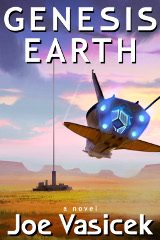
For Genesis Earth:

A BOY AND A GIRL ON A VOYAGE TO AN ALIEN STAR.

Michael Anderson never thought he would set foot on a world like Earth. He only studied planetology to satisfy his parents, two of humanity’s most brilliant scientists. But when they open a wormhole to an alien planet—one emitting a signal that can only be a sign of intelligent life—he soon becomes caught up in the mission to explore it.

His sole mission partner, Terra, doesn’t care nearly as much about the science as he does, though. The child of a bitter divorce, she sees the mission as a chance to escape from the expectations of others.

Before they can work out their differences, a mysterious alien ship begins to hunt them down. Alone, twenty light-years from the nearest human being, they must learn to open up and trust each other—but how can they do that when they can’t even agree why they’re there?

As Michael struggles to keep the mission from falling apart, he is forced to reexamine his deepest, most unquestioned beliefs about the universe—and about what it means to be human.

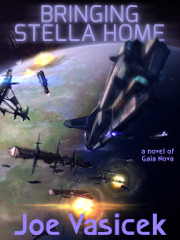
For Bringing Stella Home:

HE’LL GO TO THE ENDS OF THE GALAXY TO SAVE HIS BROTHER AND SISTER.

The New Gaian Empire is crumbling. An undefeatable enemy from the outer reaches of space is sweeping across the frontier stars, slagging worlds and sowing chaos. No one dares to stand up to them—no one, that is, except James McCoy.

As the youngest son of a merchanter family, James never thought he would get caught up in the Imperial wars. But when his home world falls to the barbarian Hameji, his brother and sister, Ben and Stella, are taken away as prisoners and slaves. With the rest of the galaxy thrown into chaos, only James has the determination to rescue them—even if it means losing everything in the process.

For Sholpan:

SHE’D RATHER DIE THAN BE A SLAVE TO THE CONQUERORS OF HER HOME WORLD.

Stella McCoy never thought she’d fall prisoner to the barbarian Hameji. The oldest daughter of a working class family, all she wanted was to finish her apprenticeship and start a career an astrogator. But when the Hameji conquer her home world with their starfaring battle fleets, she is forced against her will to become a concubine to one of their highest ranking warlords.

Stella would rather die than spend the rest of her life as a concubine. Fortunately, as she looks for a chance to escape, she starts to make friends in high places. But in the dangerous world of harem politics, with new friends come new enemies—ones that have the power to destroy her.

One of the changes I plan to make is to insert the blurb immediately before the first chapter.  I’ve heard that a lot of ebook readers are downloading so many free books and samples that it often takes months before they get around to reading them. This parallels my own experience, so I figure it’s a good idea to have something in the beginning to remind readers what the book is and why they picked it up.

Other than that, no big changes except fixing typos and formatting errors.  I’m not the kind of writer who makes sweeping changes to a published story based on reviews, one-star or otherwise.

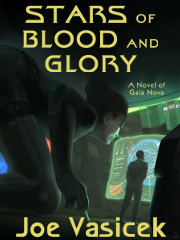
In other news, I’m almost finished with the second draft of Stars of Blood and Glory.  This has been a surprisingly fast revision, but then again, that might be because I haven’t sent it out yet to my first readers.  Based on their feedback, I’ll probably do another draft before putting it in the publishing queue.

Star Wanderers is going to be my main focus until the end of the year, though.  I’ve gotten a lot of excellent feedback on Part II, and should start the revisions in the next couple of days.  With luck, I’ll have it published by mid-July.  Part III is going to take a little more time, but I’m pretty confident I’ll have it up by October at the latest.

For that to happen, though, I need to get back to writing.  So long!