The mountain air rang with the shrillness of their fury and the ardor of their unquenchable blood lust.
From A Hill On Which To Die by Joe Vasicek
The mountain air rang with the shrillness of their fury and the ardor of their unquenchable blood lust.
From A Hill On Which To Die by Joe Vasicek
Really interesting discussion of Tolkien’s Lord of the Rings, and Gollum’s story arc in particular.
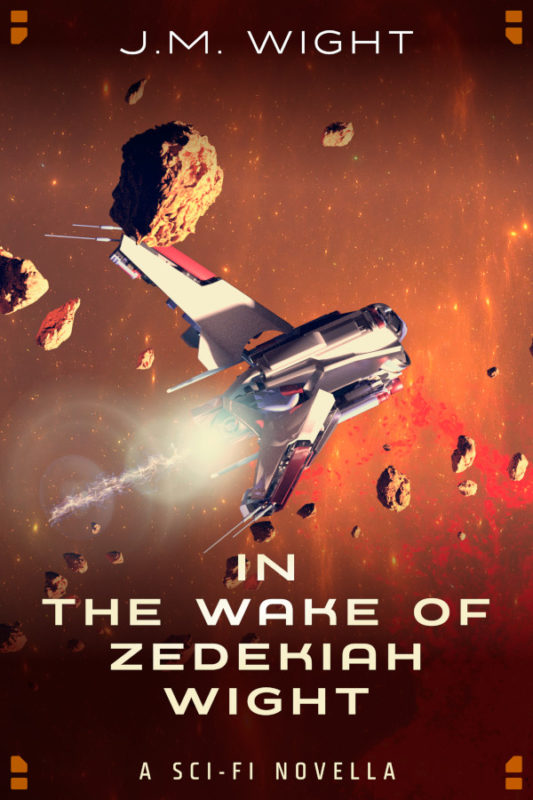
In the Wake of Zedekiah Wight is a dark, morally charged space opera about smugglers, pirates, crime families, slavery, scripture, and the terrible cost of justice in a corrupt galaxy. It delivers a tense, fast-moving science fiction adventure with the hard edges of military SF, the moral intensity of religious fiction, and the larger-than-life presence of a vigilante privateer who may be a madman—or exactly the kind of man the galaxy needs.
If you love…
…then In the Wake of Zedekiah Wight is probably your kind of story.
In the Wake of Zedekiah Wight follows Captain Victor Andrecek, an ex-rebel commodore turned smuggler, as a suspicious distress signal pulls his small freighter crew into the path of Zedekiah Wight, a feared privateer whose brutal crusade has made him enemies among pirates, crime lords, slavers, and empires alike. Along the way, the story explores moral compromise, righteous judgment, human trafficking, rebellion, loyalty, and the difference between revenge and justice. The result is a tense, violent, scripture-haunted space opera that feels both pulpy and prophetic: a fast-paced adventure about what happens when ordinary sinners are forced to choose sides in a galaxy where evil has become respectable.
Fans of Robert E. Howard’s Solomon Kane will recognize the appeal of a grim, uncompromising wanderer who brings judgment to evildoers, but In the Wake of Zedekiah Wight takes that archetype into a far-future space opera setting of jump-hubs, smugglers, superintelligences, battle armor, crime families, and galactic power politics. Where many vigilante stories focus on lone-wolf revenge, this story leans into conscience, command, loyalty, and the terrifying question of whether justice can remain just when the world itself has gone mad.
It also stands apart from mainstream space opera by treating religious imagery and scripture as central to the story’s moral atmosphere rather than as exotic window dressing. The Isaiah references, the biblical cadence, and the question of who Zedekiah Wight really is give the story a distinctive identity: part military SF thriller, part anti-slavery crusade, part religious science fiction, and part dark frontier adventure.
If you’re looking for lighthearted space adventure, cozy science fiction, secular-only space opera, or a clean-cut hero who never gets blood on his hands, this probably isn’t that kind of book. The story includes brutal violence, disturbing criminal evil, and morally uncomfortable questions about justice, vengeance, and complicity.
But if you want a dark yet purposeful science fiction story where evil is treated as evil, where conscience still matters, and where redemption is possible even for characters who have compromised themselves, you’ll feel right at home.
I wrote Zedekiah Wight because there comes a point when the lies, hypocrisy, corruption, and gaslighting become too much to bear, and you either take a stand or go quietly insane. This story grew out of my love for science fiction, my fascination with scripture—especially Isaiah—and my desire to create a character who feels less like a conventional protagonist and more like a force of nature. Zedekiah’s methods are brutal, and readers may argue over whether he is righteous, mad, or both, but that tension is exactly what makes the story matter to me: in a galaxy where powerful people profit from evil while calling it good, what kind of man would it take to refuse the lie completely?








Explore my other standalone books here.
Return to the book page for In the Wake of Zedekiah Wight.
I’ve been on a bit of a Beethoven kick recently. His symphonies really are the best overall writing music out there. So when this crossed my feed, I had to check it out. It’s not the only heavy metal version of Moonlight Sonata I’ve seen, but I do think it’s the best.
The stars snapped back into focus, cold and clear in their new constellations.
Captive of the Falconstar by Joe Vasicek

The Butterfly Kid by Chester Anderson
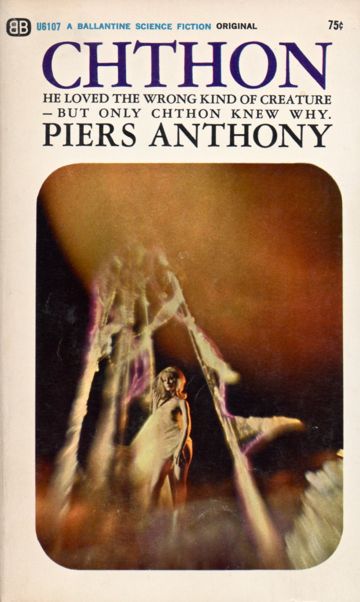
Chthon by Piers Anthony

The Einstein Intersection by Samuel R. Delany
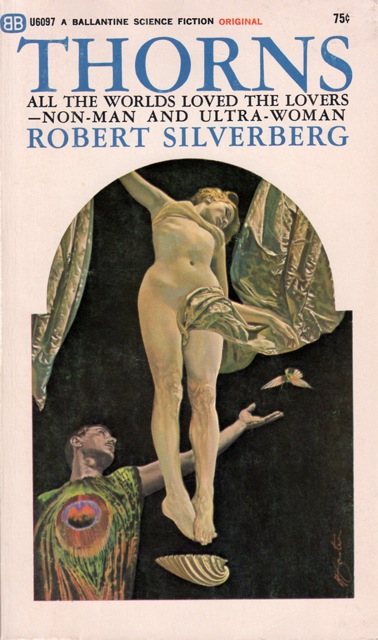
Thorns by Robert Silverberg

Lord of Light by Robert Silverberg
I’m not a huge fan of New Wave science fiction, and by 1968, that was the hot new trend that was sweeping the genre. Of the five books nominated, I DNFed three and screened out the other two using AI. Here’s the breakdown:
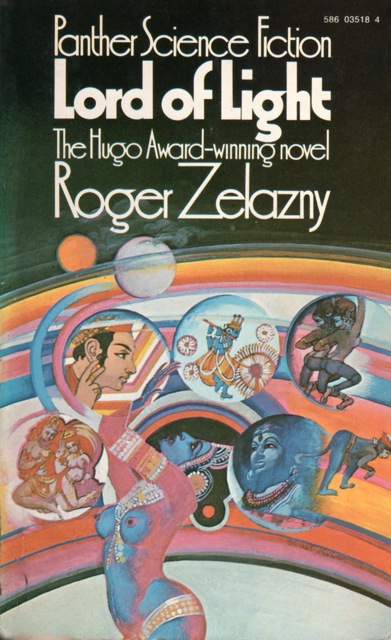
I tried to read Lord of Light by Roger Zelazny, but just didn’t get into it. It was too Eastern and pseudo-mystical for me. With that said, it’s not a bad book, so I could probably be persuaded to go back and try it again. It’s just not for me.
Strangely, I’ve found that to be true of most of Zelazny’s books and stories… except for his Chronicles of Amber, which I love. Granted, the last couple books in the series are turning into a bit of a slog (I’m currently in the middle of book 9), but the first five books following Corwin are absolutely fantastic. I was hooked from the first page of the first book, unlike every other Zelazny title, which usually loses me after 30 or 40 pages.
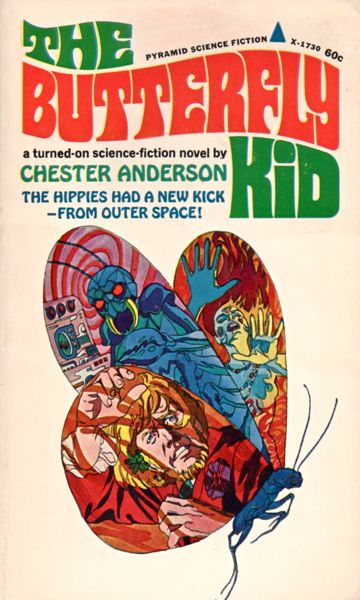
The Butterfly Kid was really hard to find, because the Orem Public Library AND the BYU Library don’t carry it—and the BYU Library has one of the best science fiction collections west of the Mississippi. So I read the free sample on Amazon, and that was enough to DNF it. Way too psychadelic and trippy for me. The whole book is basically a 200 page drug trip, with an alien invasion thrown in for good measure. No wonder BYU doesn’t carry it.
The Einstein Connection was probably the book that made me decide to blacklist Samuel R. Delany and never read anything else he’s written (that, and the fact that he endorsed NAMBLA). There’s a lot of weird and twisted sexual content, including (if I remember correctly) some sexual content involving children. There’s a reason why Neil Gaiman wrote such a glowing introduction to the book, extolling all the reasons why he loves all things Delany. Bunch of sick perverts if you ask me.
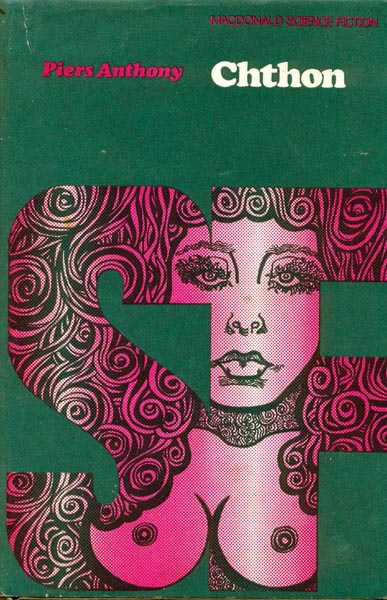
I’ve tried to read some Piers Anthony before, but found it very difficult because of all the sick old man vibes he gives off. Which is a shame, because he’s a pretty decent writer. But everything I’ve tried to read of his has a weird obsession with rape, or of the necessity of women to submit to male sexual needs (including the needs of strangers). So when ChatGPT told me this about Chthon, I decided I didn’t need to read it:
This appears to include rape, incest/Oedipal sexual themes, coercive/abusive sexuality, and a race of women whose narrative function is tied to abuse, desire, and destructive obsession. Several reader reviews specifically warn about rape, incest, misogyny, and violence against women, with one review describing “cold scenes of both rape and incest” and objecting that the story seems to frame the perpetrating character too sympathetically.
The setup itself is grim: Aton Five is condemned to the subterranean prison planet Chthon after falling in love with a dangerous “Minionette,” and the novel is described by SFWA’s Nebula page as dark, grim, and heavily prison-sequence driven. The tone seems psychologically oppressive rather than hopeful or adventurous.
Robert Silverberg has a very similar problem, though he’s not nearly as overt in his sick old man vibes as Piers Anthony. But I don’t think I’ve ever read a Silverberg novel that I didn’t end up DNFing for weird and disturbing sexual content. Here’s what ChatGPT said about Thorns:
High concern. There is definitely sexual content, and it sounds deeply uncomfortable rather than erotic in an ordinary adult-romance sense. Multiple reader descriptions flag a bizarre or disturbing sex scene, and the central relationship involves a seventeen-year-old girl paired with a much older, physically altered man under manipulative circumstances.
I did not find evidence of a conventional rape scene in the sources I checked, but the book’s whole setup involves sexual/reproductive exploitation: Lona is used by scientists for her eggs, becomes the biological mother of one hundred children, and is then denied access to them. That is not “sexual violence” in the ordinary on-page assault sense, but it is very much reproductive exploitation and psychological violation.
This sounds like one of Silverberg’s darker psychological SF novels. The central figure, Duncan Chalk, literally feeds on other people’s suffering and engineers misery as entertainment. The book seems interested in pain, isolation, bodily alienation, emotional manipulation, and the public consumption of private suffering.
In fact, I’m pretty sure that ChatGPT flagged its own description of the novel as potentially violating its content guidelines, which is never a good sign.
So there you have it. Another bad year for science fiction—which tends to support my thesis that SFWA ruined the genre by starting it down the long march through the institutions. SFWA was founded in 1965, and Silverberg was the president from ’67 to ’68.
(As an interesting side note, every one of these novels had at least one edition featuring cover art with topless female nudity and visible nipples.)
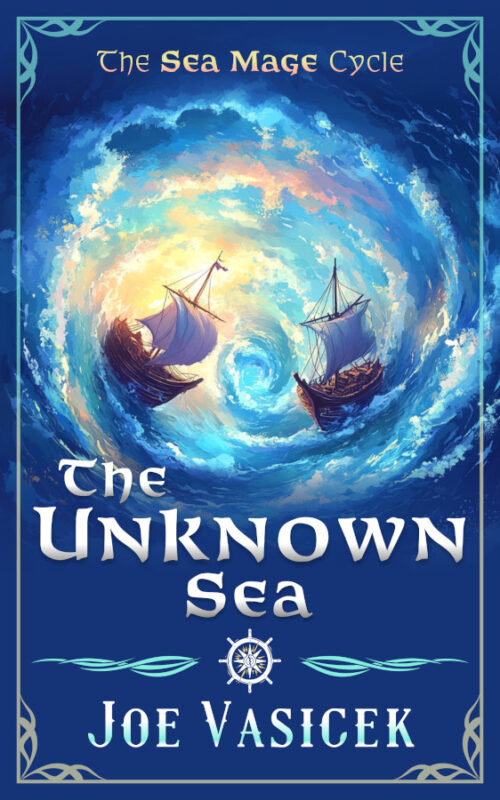
I’ve been making good progress on The Unknown Sea this week, pushing forward at a very good rate now that my wife is at home watching the kids. She’s got the next couple of months off for the summer, allowing me to write full-time, and I plan to take advantage of that as much as I can. This was the first week of that, and while I still feel like I’m ramping up to full speed, I did get quite a bit of writing done.
Right now, The Unknown Sea is at about 50% for the AI draft, 28% for the rough human draft, 22% for the revised human draft, and 11% for the final polished draft. I’m experimenting with pushing through all of those draft phases at once, obviously with different parts of the novel being at different stages. If everything proceeds according to my outline, the final draft will clock in at around sixteen chapters, 53 scenes, and between 65k to 70k words (or around 180 – 220 pages).
I probably won’t be able to finish it before the end of May, but I do think I can finish it by mid-June. It’s going to take a lot of work, but I’ve got the time now, so it’s mostly just a matter of buckling down and making it happen. It’s about the same length as Captive of the Falconstar, which took about 120 writing hours to finish, and I’ve already put in about 50 writing hours. To finish The Unknown Sea by May 15th, I need to average about 3.5 writing hours per day, which is going to be a bit tricky since 1) I still have a bunch of publishing tasks to work on, and 2) we have a family trip to Coeur D’Alene in the middle of that, but I think I can manage it.

I would really like to have it sufficiently finished so that I can start work on Lord of the Falconstar before Captive of the Falconstar releases in July. That way, I can estimate how much time I need to finish Lord of the Falconstar and have it up for preorder. But I may go ahead and put it up for preorder anyway, just with a long enough lead-time that I know I can have the book done before then.
What I’ll probably do is put The Unknown Sea up for preorder with a release date around October-November 2026, and Lord of the Falconstar up with a release date around January-February 2027. I’ve got a rough AI draft done for Lord of the Falconstar, but not much more than that, and I probably need to update some of the character cards and chapter prompts, which is also going to take time. So Lord of the Falconstar probably won’t come out until sometime in 2027, regardless.
J.R. Handley was kind enough to invite me onto his podcast, Blasters and Blades, where we talked about Captive of the Falconstar, my latest book release. We talked about all sorts of other sci-fi and fantasy things too. Check it out!
I don’t usually pay any attention to the infighting among the various pundits and media personalities, even on my own side of the aisle, but as a former Daily Wire subscriber I found this very interesting. Not sure I totally agree with Malcolm & Simone on everything here, but they did share a very interesting perspective, especially as conservative influencers who (allegedly) got treated pretty dirty by Ben Shapiro as they were just getting started. If you follow any conservative media, you’ll probably find this interesting.
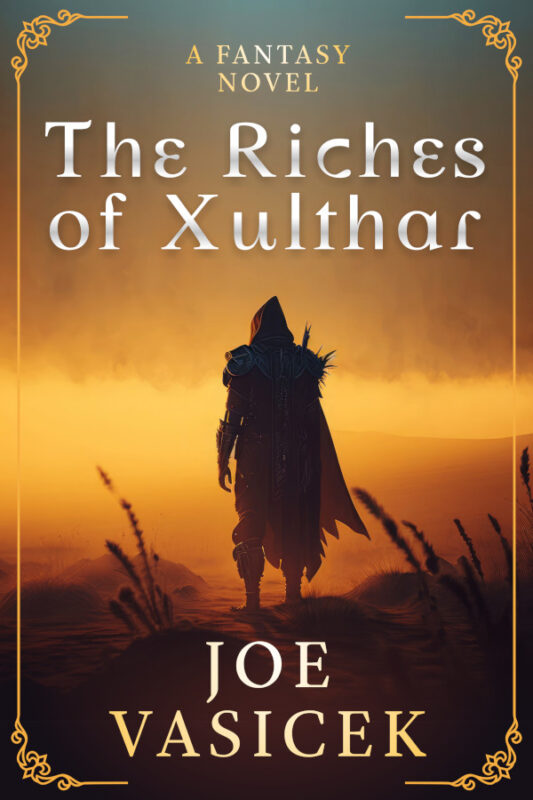
The Riches of Xulthar is a sword-and-sorcery desert adventure about a fallen nobleman, a freed slave woman, and a legendary lost city whose treasure may be more curse than blessing. It delivers a fast-moving heroic fantasy quest with cursed coin, dark sorcery, ruined temples, undead servants, moral temptation, and a slow-burning bond between two wounded people learning what freedom really means.
If you love classic sword-and-sorcery adventures with lost cities, cursed treasure, desert ruins, dark kings, monster-haunted catacombs, and heroes who have to fight both outward evil and inward temptation, then The Riches of Xulthar is probably your kind of story.
If you enjoy fantasy about honor, freedom, slavery, moral courage, and the corrupting power of wealth, this story gives those themes a mythic adventure shape: a dangerous quest across the wastes, a cursed city at the end of the road, and two protagonists who must decide what they are truly willing to serve.
If you like romantic fantasy where the emotional bond grows out of danger, trust, sacrifice, and shared moral struggle, Roderick and Laria’s journey gives the story a strong character-driven heart beneath the sword fights and sorcery.
If you enjoy fantasy that feels old-school in its adventure structure but more intimate in its emotional focus, The Riches of Xulthar blends pulp adventure, moral fantasy, and redemptive romance into a compact, high-stakes quest.
Roderick is a disgraced nobleman seeking the lost city of Xulthar in the hope of breaking the curse that destroyed his family’s honor. Along the way, he rescues Laria, a slave woman who has never truly owned anything—not even herself—and their journey through the desert becomes as much about freedom, agency, and love as it is about cursed treasure and dark magic. The tone is adventurous, mythic, sensual, and morally serious, with fast-paced action, eerie ruins, dangerous supernatural encounters, and a hopeful emotional arc beneath the darkness.
Readers who enjoy Robert E. Howard-style lost-city adventure, classic sword-and-sorcery quests, and treasure-hunting fantasy will recognize the familiar pleasures: desert wastes, ancient ruins, sorcerous kings, monster-haunted temples, and a warrior with a sword in his hand. But The Riches of Xulthar turns the treasure quest inward by asking whether wealth can ever restore honor, whether freedom is worth its burden, and whether a man can reject the very prize he set out to claim. Unlike many old-school sword-and-sorcery stories, the female lead is not merely a prize, temptation, or rescued captive; Laria’s moral insight and growing agency become essential to the heart of the story. The result is a heroic fantasy adventure that uses the lost-city quest to explore slavery, self-mastery, family, corruption, and the kind of love that makes freedom meaningful.
You won’t find a sprawling epic fantasy cast, court intrigue, or a heavily political worldbuilding saga; this is a focused sword-and-sorcery quest built around two central characters and one cursed destination. You also won’t find nihilistic grimdark: the story contains violence, slavery, sensual temptation, dark magic, and peril, but its moral center remains hopeful. This is not a sanitized cozy fantasy, but neither is it cynical or despairing.
What I love about The Riches of Xulthar is that it takes the classic fantasy question—“What if the treasure is cursed?”—and makes it personal. Like Queen of the Falconstar, this is a story about power, agency, and a woman learning to stand in a world that wants to use her, but here that struggle is filtered through mythic sword-and-sorcery rather than space opera. Roderick’s quest begins as a search for wealth and restored honor, but the real treasure is the freedom he and Laria learn to choose together: freedom from slavery, freedom from despair, freedom from the lies of cursed power, and freedom to build a new life out of the ruins of the old one.
Explore my other standalone books here.
Return to the book page for The Riches of Xulthar.