Daily Wire is an anti-Mormon channel now

About a week ago, the Daily Wire posted an article on their site titled “7 Reasons Joseph Smith Was a False Prophet” by Matt Fradd. This article was adapted from some exclusive content on Matt Fradd’s DW channel and released under the Daily Wire banner. Needless to say, it caused quit a commotion among DW’s Latter-day Saint subscribers.

This is not the first time the Daily Wire has shown a surprising degree of antipathy toward the Church of Jesus Christ of Latter-day Saints. About a year ago, Phil Cabot, one of DW’s producers, posted on his personal X account that Mormons aren’t Christians, and got into some heated online arguments about that. A couple months ago, shortly after Matt Fradd joined the Daily Wire as a host, he interviewed Joe Heschmeyer, an anti-Mormon who bizarrely argued that Mormonism is a “species of atheism.” And when the mass shooting at the church in Michigan happened last year, the Daily Wire’s coverage went out of the way to avoid using the full name of the Church of Jesus Christ of Latter-day Saints, only editing the article after receiving backlash for it.

But all of these things were relatively minor. Phil Cabot is entitled to express his personal opinions on his own X feed. Matt Fradd can interview whoever he wants on his own show. And lots of news outlets fail to mention the full name of the church, intentionally and otherwise. However, this recent article—which was posted under the Daily Wire banner, not Matt Fradd’s channel—crosses the line. It demonstrates that the Daily Wire, as a company, has chosen to oppose the Church of Jesus Christ of Latter-day Saints and post openly anti-Mormon content. Which means that if you subscribe to the Daily Wire, your money will fund anti-Mormon content.

Andrew Klavan, my personal favorite Daily Wire host, took some heat for his take on the whole controversy. His response was basically “come on guys, can’t you take a joke?” Which is an incoherent thing to say, considering that the 7 Reasons article wasn’t intended as joke at all. But Klavan’s response makes sense when you realize he saw The Book of Mormon Musical over the weekend, and probably didn’t read Matt Fradd’s article at all. His explanation makes a lot more sense.

With that said, I didn’t cancel my family’s DW membership in a fit of outrage. I canceled it because the Daily Wire has clearly become an anti-Mormon channel, and I simply don’t want my money to fund that sort of content.

The question here for Latter-day Saints is this: is your religion more important to you than your politics, or do your politics come before your religion? This is the position the Daily Wire has placed us in. If you continue to keep your DW membership because you want to support their reporting and their conservative political activism—both of which are very good—know that you are doing so at the expense of your faith.

With all of that said, I actually don’t think it’s stupid of the Daily Wire to do this. With the collapse of the woke left and the ongoing cultural shift toward Christian revival, the next big fight in the culture wars is going to be a relitigation of all the old sectarian divisions within Christianity. Which means that the conservative Christian right is going to need a new enemy to hold them all together. The last time we had a major national revival, that enemy was the Catholics, which is how we ended up with Prohibition and immigration restrictions targeting (among other groups) the Irish and Italians. But all the Christian denominations hate the Mormons, partly out of how they see us as uniquely heretical, and partly because of how threatened they feel because of our church’s success.

The Daily Wire has been struggling a lot recently, and it appears that they are desperate to find a new brand of outrage bait to fill the hole that has been made by the collapse of the woke left. If it’s stupid of them to turn on the Mormons, it’s because they’re doing it too early. But ultimately, this is the cultural direction the conservative right is going to take. The Daily Wire is just ahead of the curve.

That’s why I canceled our DW membership. I encourage all my fellow members of the Church of Jesus Christ of Latter-day Saints to do the same.
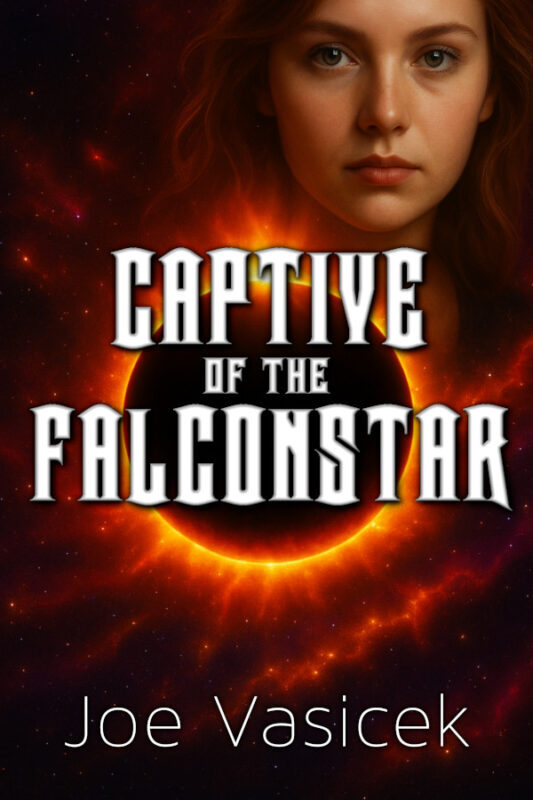

The Moral Cost of Revenge in Captive of the Falconstar

Revenge can feel like freedom when every other kind of freedom has been taken away. In Captive of the Falconstar, a captive woman begins with one simple desire: to go home, reclaim her true name, and return to the life that was stolen from her. But as captivity, betrayal, and humiliation harden inside her, revenge begins to look like the only path left—not just a way to punish her captors, but a way to feel powerful again.

That is what makes the theme so morally dangerous. The desire for revenge is understandable, even righteous in its beginnings, because it grows from real injustice. But revenge does not simply restore what was lost. It reshapes the wounded, narrows their choices, and asks whether striking back is worth the cost to the soul.

Where the Idea Came From

The emotional center of this theme comes from Sonya’s captivity and the way her longing for home is slowly twisted into a hunger for revenge. At the beginning of the book, Sonya dreams of Petyr and Graznav Station, waking to the bitter reality that she is aboard the Falconstar, forced to serve Zlata—now Lady Zenoba—who has embraced the identity and power of the Hameji. Sonya’s first act of resistance is not violence, but memory: insisting that her name is Sonya, not Gulchen, and clinging to the hope that “somedayshift” she will be free.

But the more Sonya is denied escape, the more revenge begins to replace home as the thing that keeps her alive. Genzerig recognizes this weakness and exploits it. He does not merely offer her freedom; he asks whether she wants the Valdamar Clan to suffer for what they have done. When Sonya accepts, revenge gives her “some measure of control over her life”—but it also places that life in the hands of another manipulator. That tension is the seed of the theme: revenge begins as Sonya’s attempt to reclaim agency, but the farther she follows it, the more she discovers that revenge has its own chains.

How the Moral Cost of Revenge Shapes the Story

The moral cost of revenge shapes Captive of the Falconstar by turning captivity into something more dangerous than physical imprisonment. At first, anger helps the wounded survive. It preserves memory, identity, and dignity in a world determined to rename, reshape, and possess them. But as the story unfolds, that anger becomes vulnerable to manipulation. Revenge begins to offer purpose, but that purpose comes through secrecy, deception, and the temptation to treat every relationship as a battlefield.

This is especially powerful because the book refuses to make revenge feel simple. The people who have caused harm are not flattened into faceless monsters, and the people seeking revenge are not magically purified by their suffering. As emotional ties shift and loyalties become complicated, revenge becomes harder to separate from betrayal. The deeper the characters go, the more they must ask whether they are pursuing justice, survival, power, or merely the illusion of control.

That is where the revenge arc becomes most painful. Revenge promises agency, but it can also trap a person inside choices made from fear, grief, and humiliation. By the time the path begins to look darker than expected, turning back may no longer be easy. In a story filled with space opera politics, captivity, dynastic ambition, rival loyalties, and morally gray choices, revenge becomes one of the book’s central emotional engines: a wounded person reaching for freedom, only to discover that vengeance can become another kind of captivity.

What the Moral Cost of Revenge Says About Us

The moral cost of revenge reveals how easily pain can disguise itself as justice. When someone has been wronged, betrayed, or stripped of dignity, the desire to see the guilty punished is deeply human. But Captive of the Falconstar asks what happens when revenge becomes the story a wounded person tells herself in order to keep going. Sonya’s hunger for revenge is not irrational; it grows from real suffering. Yet revenge cannot give her back the life she lost, and it cannot restore the innocence that captivity destroyed. Instead, it risks making her more like the people who used her: calculating, secretive, and willing to turn intimacy into leverage. The hope in this theme lies in the possibility that even after walking far down the path of vengeance, a person may still recognize the cost—and still long for something better than destruction.

Why This Theme Matters to Me

After everything that happened to Sonya in the previous book, I wanted to give her a more active role and make her more of an agent in her own story. That was why I chose to give her a revenge arc: because revenge is one of the most emotionally understandable temptations in fiction. When a character has been genuinely wronged, part of us wants to see them strike back. But I’m more interested in what revenge does after that first rush of satisfaction fades—how it narrows the soul, how it keeps old wounds open, and how it can trap someone in the very pain they are trying to escape. In Captive of the Falconstar, I wanted to explore a revenge arc that is not simple or clean, but tragic, human, and morally complicated.

Where to Get the Book

Buy from Amazon Kindle
Buy from Apple Books
Buy from Barnes and Noble Nook
Buy from Smashwords

Related Posts and Pages

Explore the series index for The Falconstar Trilogy.

Return to the book page for Captive of the Falconstar.

How I Would Vote: 2026 Hugo Awards (Best Novel)

The Nominees

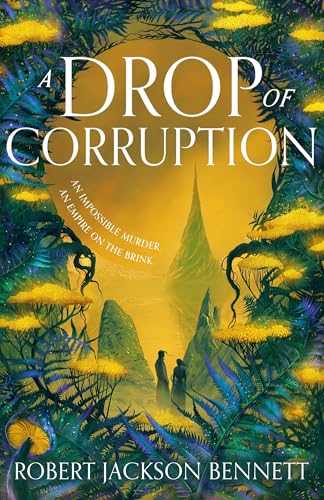
A Drop of Corruption by Robert Jackson Bennett

The Everlasting by Alix E. Harrow

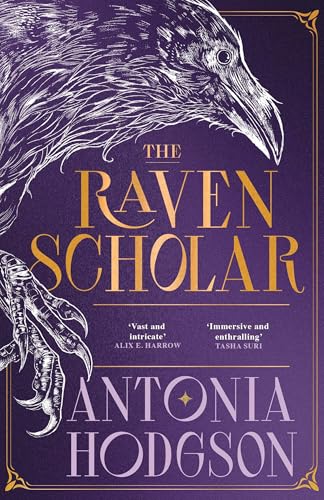
The Raven Scholar by Antonia Hodgson

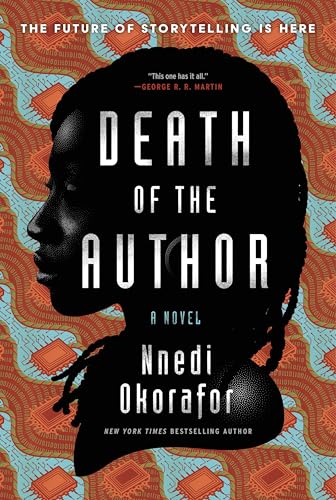
Death of the Author by Nnedi Okorafor

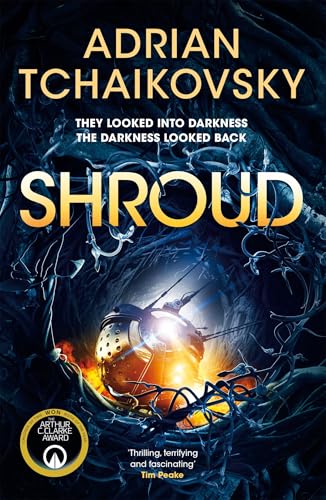
Shroud by Adrian Tchaikovsky

The incandescent by Emily Tesh

The Actual Results

TO BE DETERMINED

How I Would Vote

  1. No Award

Explanation

The Hugo nominees for 2026 just came out, and I have to say, deciding how I would vote on this ballot has been the easiest post I’ve done in this series. All of these books fail—all of them. I don’t even have to read them to know how I would vote. Thank you, ChatGPT, for helping me screen these books.

(Fun fact: I have more active subscribers on my email list (meaning their last activity was less than 90 days ago) than people who cast ballots for the Hugo nominees. Almost twice as many active subscribers, in fact. It’s not even close.)

Why do I use ChatGPT to screen my books? Because of a terrible experience I had reading The Man Who Folded Himself by David Gerrold. It started as a fun time travel adventure about a kid who gets a fantastic time travel belt, and uses it to do awesome things. But then, a future version of himself shows up and starts grooming him sexually, and before you know it, the whole book is literally about him fucking himself. I was so repulsed and disgusted from that reading experience that I vowed I would not read any more Hugo nominated books until I had screened them with AI first.

I’ve trained ChatGPT to look for five kinds of content that I personally find objectionable. Those are:

  1. Explicit sexual content, especially sexual violence,
  2. Explicit language and profanity,
  3. Violence against children,
  4. “Woke” themes or ideologically leftis messaging, and
  5. Nihilisim

If a book is only borderline on one or two of the categories, I may still read it if the book description interests me. But if it’s hardcore over the line on at least one of those things, I won’t read it. And for the 2026 Hugo Awards, ever single book fails miserably in at least one of those categories.

A Drop of Corruption is a direct sequel to The Tainted Cup, the book that won Best Novel in last year’s Hugo Awards, which also failed my screening criteria (for sexual content, woke messaging, and profanity), so that was enough of a basis not to read the sequel. But ChatGPT also says there’s sex trafficking and pedophilia in this one, which is enough to fail this book on its own.

I don’t think I’ve ever read a book by Alix Harrow that I didn’t DNF, and I certainly won’t start with The Everlasting. According to ChatGPT:

One content-warning review rates the spice as “severe,” with open-door intimacy in chapters 17 and 22; StoryGraph also flags graphic sexual content.

Child death is flagged by some readers, along with war and repeated death.

One review counts 27 uses of f-word and 3 uses of c-word; profanity rated severe.

[It also features] Queer-inclusive / bisexual themes, gender-norm challenges, feminism, anti-fascist themes.

Not a hard choice there at all. Here’s what it said about The Raven Scholar by Antonia Hodgson:

StoryGraph user warnings include graphic child death among other violent content.

Ever since having children of my own, I do not do any sort of violence against children. I just can’t stand it. I loved Hyperion, but the subplot about the girl who gets the Merlin disease and grows backwards just completely wrecked me. Thank goodness it has a happy ending, because otherwise I probably would have burned my copy of The Fall of Hyperion. So I’m really not kidding when I say I don’t do violence against children.

Surprisingly (or perhaps not), most of the books this year failed on that particular point. Consider what ChatGPT said about The Incandescent by Emily Tesh:

StoryGraph flags child abuse and child death, and the premise involves a magical school where demons prey on children.

Bisexual female protagonist, neurodiversity representation, critique of elite education, class privilege, and capitalism.

I suppose this is a side effect of the ideological purity of the awards, since one of the defining issues of the modern left is abortion. When your political faction literally celebrates the murder of children, should it come as a surprise that it produces so much anti-family and anti-natalist fiction?

Anyways, the last two books failed primarily on the “woke” messaging. They’re the ones I’m most likely to reconsider my decision to skip, though I’d have to hear a recommendation from someone I really trust. I’m particularly reluctant to read Death of the Author, just because I usually can’t stand when writers write about what it’s like to be a writer. Here’s what ChatGPT said:

Feminism, disability autonomy/representation, racism, sexism, transphobia, Nigerian-American cultural conflict, and publishing/representation discourse are prominent.

As for Shroud by Adrian Tchaikovsky, that’s probably the one of these books that I’m still the most on the fence, but from what I can tell with ChatGPT’s screening, it seems like he’s gone all-in on the woke messaging in order to appeal to the Hugo voters, and that’s enough for me to give it a pass. Here’s what ChatGPT said:

Strong anti-corporate, anti-colonial, environmental/extraction critique; one review frames it around humanity, colonization, corporate strip-mining, and moral corruption.

So there you have it. Not a hard choice. If I were voting in the Hugos this year, I’d give it a “no award” for the Best Novel category. As it stands, though, there is absolutely no way I’m giving these MFers any of my money, so I won’t be voting. It will be mildly interesting to see which species of perversion and woke leftist pathology will win this increasingly irrelevant award.

Jurassic Park raptor scene with scientifically accurate Utahraptors

They call them Velociraptors, but they’re really Utahraptors. The actual Velociraptor was only the size of a Labrador or a German Shepherd.

My kids are really into dinosaurs right now, so we’ve been going to all the local museums and checking out lots of dinosaur books from the library. As scary as the dinosaurs were in the original Jurassic Park, I think they’re even scarier with feathers.

How I Would Vote Now: 1980 Hugo Awards (Best Novel)

The Nominees

The Fountains of Paradise by Arthur C. Clarke

On Wings of Song by Thomas M. Disch

Harpist in the Wind by Patricia A. McKillip

Jem by Frederik Pohl

Titan by John Varley

The Actual Results

  1. The Fountains of Paradise by Arthur C. Clarke
  2. Titan by John Varley
  3. Jem by Frederik Pohl
  4. Harpist in the Wind by Patricia A. McKillip
  5. On Wings of Song by Thomas M. Disch

How I Would Have Voted

(Abstain)

Explanation

I didn’t like any of the books this year, though none of them were particularly objectionable or bad (at least, not of the ones I read). The Fountains of Paradise just didn’t hold my interest, and I got bored and put it down. As for Harpist in the Wind, I never got to it because I ended up DNFing the first book in the trilogy, The Quest of the Riddle-Master. I wanted to like it, but I was just totally lost, especially when some of the characters were dead… maybe? Or maybe it was a dream? McKillip is clearly a beautiful writer, but writing a clear and engaging plot is clearly not her strength.

As for the other three, I screened them for objectionable content with AI, and based on that, I chose not to read them. I’ve found that I have to do this with all the Hugo Award nominees because some of the books are just way beyond the pale. On Wings of Song is apparently about a 14 year old child’s supernatural sexual awakening. Titan is apparently about a bunch of libertine, pansexual astronauts on a starship making first contact (in more ways than one) and spreading free love across the galaxy. Jem is apparently about the evils of colonialism and capitalism in a world where Malthus was right and Thomas Sowell is wrong (and you thought Ayn Rand’s preaching was bad).

1980 was the tail end of the New Wave, when science fiction went totally woke before “woke” was even a thing. But by this point, the movement was already starting to feel tired. It wasn’t until the mid-80s that a lot of these toxic ideologies were in full retreat, making room for some truly great books like Ender’s Game and Hyperion. At the same time, because the movement was already starting to burn itself out, none of these New Wave books is particularly terrible. Just more of the same tired thing.

April Reading Recap

Books That I Finished

Trouble Shooter by Louis L’Amour

The Irrational Decision by Benjamin Recht

On Writing & Failure by Stephen Marche

The Coming Wave by Mustafa Suleyman

The Fellowship of the Rings by J.R.R. Tolkien

The Seven Mountains Mandate by Matthew Boedy

Rivers West by Louis L’Amour

Anna Karenina by Leo Tolstoy

Moroni’s America by Jonathan Neville

The AI-Driven Leader by Geoff Woods

The Lost Gems of Genesis by Jonah R. Barnes

Twelve Months by Jim Butcher

The Man From the Broken Hills by Louis L’Amour

Books That I DNFed

  • The Riddle-Master of Hed by Patricia A. McKillip
  • The Anatomy of Genres by John Truby
  • Boneshaker by Cherie Priest
  • Strata by Laura Poppick
  • Salt Lakes by Caroline Tracey
  • Blindsight by Peter Watts

Tim Pool destroys libertarianism

It’s been a while, but this discussion really blew me away when I first listened to it. The guest (and kudos to him for having a fair and honest debate) basically brought up all the typical libertarian talking points, and Tim Pool shredded all of them in a way that made my jaw hit the floor. The debate gets really interesting around 1:01:40.